Executive Overview
In the fast-paced ecosystem of internet culture, seasonal trends often arrive with predictability, yet occasionally a format emerges that captures the collective imagination through its sheer absurdity, hyper-specificity, and deadpan delivery. Enter the "Hope Whoever Stole My Amazon Package" meme—a viral snowclone format that dominated social media platforms, particularly X (formerly Twitter), during the October 2026 Halloween season.
At first glance, the trend mimics a genuinely frustrating modern grievance: porch piracy, the ubiquitous nuisance of online shopping where delivered goods are pilfered from doorsteps before the recipient can retrieve them. However, the format quickly subverts expectations. Instead of reporting a stolen trove of electronics, everyday essentials, or high-value items, users share fabricated or absurd Amazon purchase histories. These logs reveal components for hyper-niche, highly specific, and often completely ridiculous Halloween costumes. Paired with the signature caption template—"Hope whoever stole my Amazon package [X]"—where "X" reveals the intended costume, the joke transforms a mundane neighborhood crime into a canvas for surrealist comedy, niche pop-culture references, and deeply ironic self-deprecation.
This report provides an exhaustive investigative breakdown of the phenomenon. We explore its accidental origins, map its rapid digital dissemination across various subcultures, analyze quantitative metrics of its viral spread, and examine how internet users weaponized mundane logistical interfaces to craft high-level comedy.
Detailed Chronology: From Porch Piracy Paranoia to Viral Phenomenon
Genesis: The Spark on X (October 11, 2026)
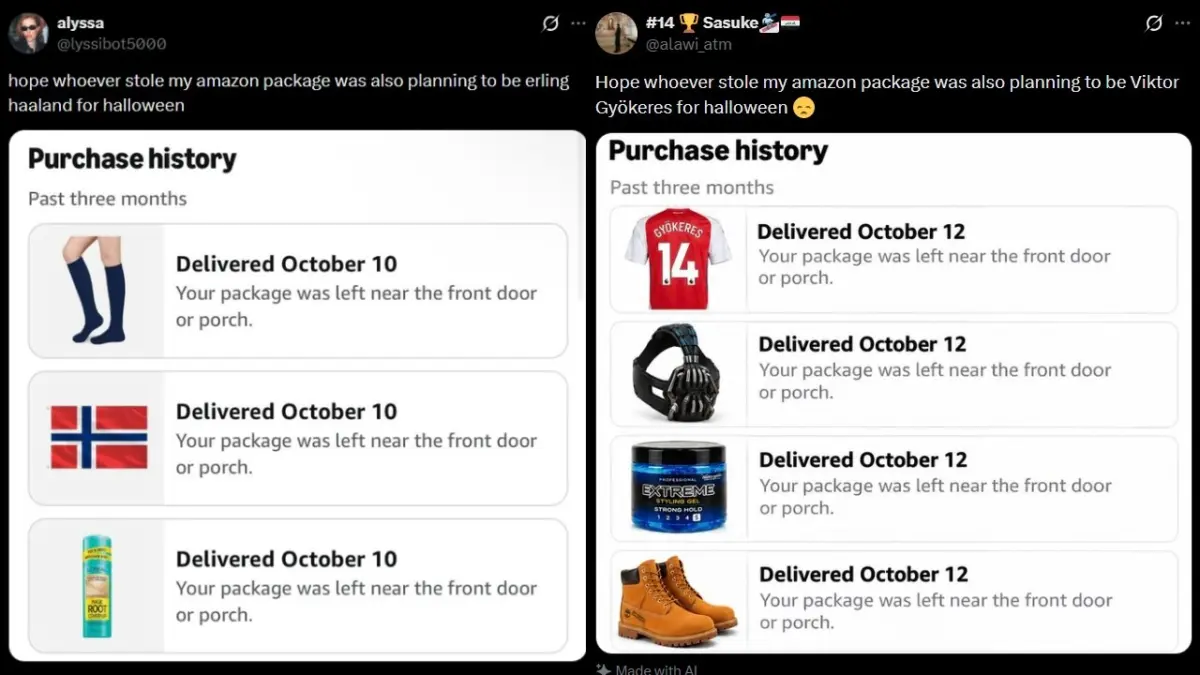
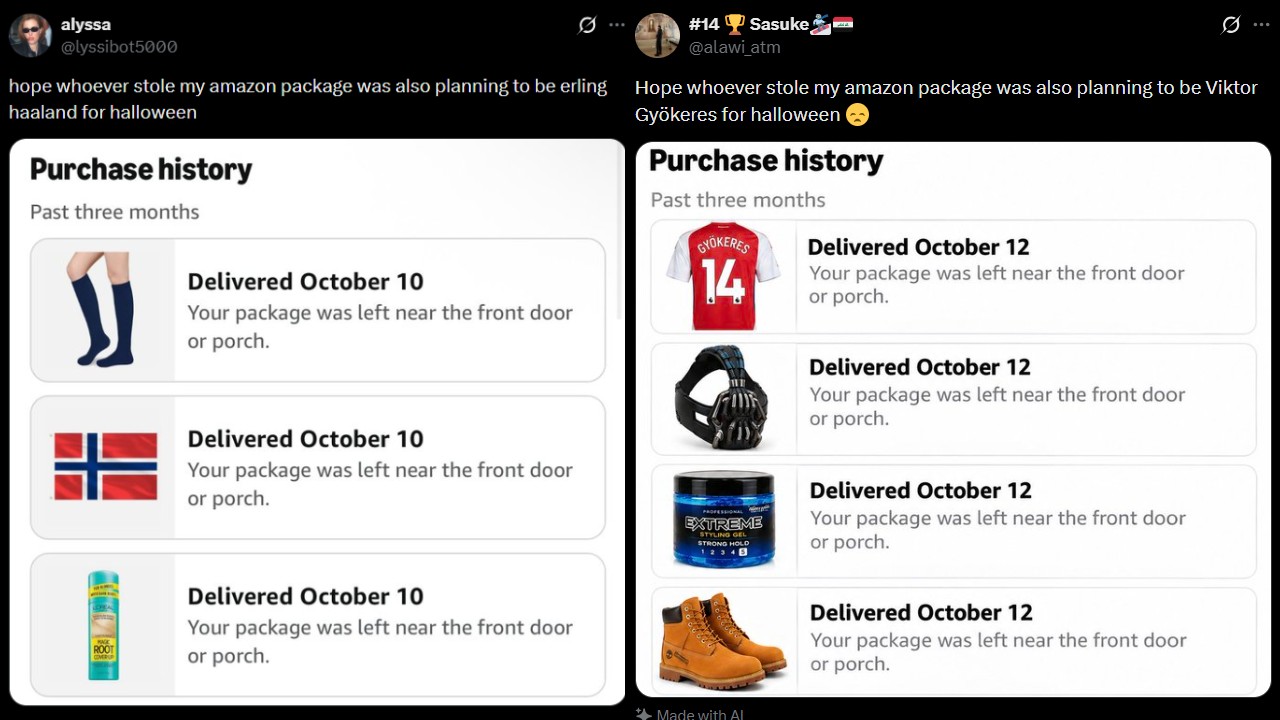
The cultural phenomenon did not emerge from a coordinated marketing campaign or a legacy media stunt; rather, it was born out of organic, deadpan improvisation. On October 11th, 2026, X user @lyssibot5000 published a post that would inadvertently launch one of the autumn’s most recognizable meme templates.
The post featured a cropped screenshot of an Amazon delivery history interface. The digital receipt detailed multiple items delivered simultaneously to a front porch on October 10th—the standard logistical footprint of a multi-part costume order. Above the screenshot, @lyssibot5000 wrote a deceptively casual caption:
"hope whoever stole my amazon package was also planning to be erling hallaand for halloween."
The juxtaposition was immediate and effective. Erling Haaland—the towering, Nordic star striker for Manchester City known for his distinct blonde hair and prodigious goal-scoring—is an intensely specific figure to dress up as. The idea of a porch pirate unwittingly inheriting a specialized athletic wig, custom sports jerseys, or specific footwear to pull off a Haaland impersonation struck a chord with internet users. Within five days, the foundational post rocketed past 176,000 likes, amassing over 1.5 million views and establishing the structural blueprint for a new meme format.
The Spread: Escalation into Absurdism (October 14–16, 2026)
As is typical of successful snowclone formats, the internet immediately sought to outdo the original premise by pushing the concept further into abstraction and hyper-specificity.
- October 14, 2026: User @chaeryliv adapted the template to fit hyper-online music fandoms, posting a purchase history claiming their stolen package contained components to dress up as the exact album cover of Olivia Rodrigo’s stylistic aesthetic, generating over 50,000 likes in 48 hours. Later that same day, user @0NEMORETlME leaned into internet surrealism, claiming the stolen goods were intended for a costume of "Why"—a reference to a viral image of a woman wearing a plague doctor mask overlaid with the single-word caption "why." This post captured over 150,000 views in two days.
- October 15, 2026: The gaming community seized upon the format. User @SpaghettiSpace_ posted a delivery log indicating they were planning to dress up as the Ascent B Site triple boxes from the tactical shooter Valorant. The notion of a human attempting to cosplay as architectural geometry and static cover boxes within a video game map resonated deeply with the gaming subculture, drawing over 10,000 likes within a single day.
- October 16, 2026: Cultural touchstones continued to diversify. User @baddaysareover applied the formula to reality television lore, claiming they were robbed of the pieces needed to embody "Nene" (a nod to iconic Real Housewives moments), proving that the template could absorb any corner of media fandom.
Supporting Context & Metrics
Anatomy of the Joke: Why the Snowclone Works
From a media studies perspective, the "Hope Whoever Stole My Amazon Package" meme succeeds because it weaponizes several reliable pillars of modern digital humor:
- The Subversion of Grievance Culture: Social media timelines are perpetually saturated with genuine complaints about crime, delivery failures, and corporate customer service. By hijacking this recognizable complaint structure for comedic ends, creators create immediate cognitive dissonance. The reader expects anger and indignation; they receive absolute absurdity.
- The Hyper-Niche Reference: The comedy often scales with how impossible or ridiculous the resulting costume would be to assemble accidentally. While dressing as a famous athlete is funny, dressing as an in-game map geometry asset or a hyper-specific pop-culture deep cut elevates the joke from a simple gag to an exercise in communal in-group signaling.
- The Visual Authenticity: By utilizing screenshots of actual Amazon delivery confirmations ("Your package was left near the front door or porch"), the posts trick the eye into reading them as authentic updates before the punchline lands. The mundane visual language of corporate logistics acts as a deadpan straight man to the chaotic creativity of the user.
Quantitative Reach and Platform Velocity
While comprehensive search engine indexers noted a lag in traditional search interest queries—largely because users consumed and shared the meme natively on social media feeds rather than searching for its historical context—the engagement metrics on individual posts demonstrated massive organic velocity.
- Average Engagement: Top-tier iterations of the meme consistently cleared tens of thousands of likes within 24 to 48 hours.
- Cross-Pollination: The trend successfully bridged multiple distinct online communities, seamlessly migrating from sports fandoms (Erling Haaland, Giancarlo Stanton, Chicago Cubs fans) to high-fashion/pop-culture circles (Lorde’s 2017 MTV Video Music Awards appearance, niche album art) and competitive gaming spaces.
Various Examples Across Subcultures
To understand the full breadth of the trend, one must examine how different digital subcultures localized the template to reflect their unique inside jokes:
- Sports & Athletics: User @ricericebaby22 applied the template to New York Yankees slugger Giancarlo Stanton, highlighting the comedic potential of imagining a porch pirate receiving massive athletic protective gear or pinstriped apparel. Similarly, user @suzukiplsstay posted a delivery log claiming they were robbed of the components needed to dress up simply as "a Cubs fan"—a self-deprecating nod to sports fandom misery.
- Music & Pop Culture History: User @gabosarchive targeted indie-pop history, claiming their stolen goods were meant to recreate Lorde’s infamous look from the 2017 VMAs. Meanwhile, user @winternet went into the realm of corporate and tech meme culture, joking that their stolen package was meant to assemble a costume of tech executive Alexandr Wang.
- Cinema & Film Twitter: User @cinephilishh utilized the template to reference "Digger Rockwell," filtering mainstream meme formats through the lens of dedicated cinephile circles.
Official Statements and Industry Impact
As an entirely organic, decentralized internet phenomenon, the "Hope Whoever Stole My Amazon Package" meme did not originate from corporate marketing desks, nor did it elicit formal press releases from Amazon’s public relations department. However, its existence speaks volumes about the shifting relationship between consumers and e-commerce infrastructure.
Logistical touchpoints—such as tracking links, delivery window notifications, and "photo-confirmed" porch drop-offs—have become universal cultural experiences for digital natives. By turning the mundane interface of a delivery confirmation into a theatrical stage for Halloween comedy, users demonstrated how everyday corporate infrastructure can be re-contextualized into a blank canvas for participatory internet culture.
Future Outlook
As the October 2026 Halloween season concluded, the immediate peak of the "Hope Whoever Stole My Amazon Package" trend began to stabilize, ceding ground to newer winter holiday formats. Yet, the template leaves a lasting footprint on the taxonomy of snowclone humor.
Much like previous viral formats that rely on fabricated receipts, text message screengrabs, or mock customer service interactions, the "Stolen Amazon Package" joke proved that internet users possess an endless appetite for turning real-world anxieties—such as mail theft and package anxiety—into surrealist communal play. Whether the format will experience a resurgence during subsequent holiday shopping seasons or remain a localized artifact of the autumn 2026 meme cycle remains to be seen. What is certain, however, is that porch pirates everywhere were retroactively imagined as unwitting participants in some of the most bizarre, hyper-specific costume events in digital history.