Executive Overview
In the fast-paced ecosystem of internet culture, seasonal trends arrive with predictable frequency, yet few capture the specific absurdism of modern life quite like the latest viral phenomenon sweeping social media. As October 2026 unfolds, users across the platform X (formerly Twitter) have transformed a universal urban frustration—porch piracy—into a canvas for surrealist comedy.
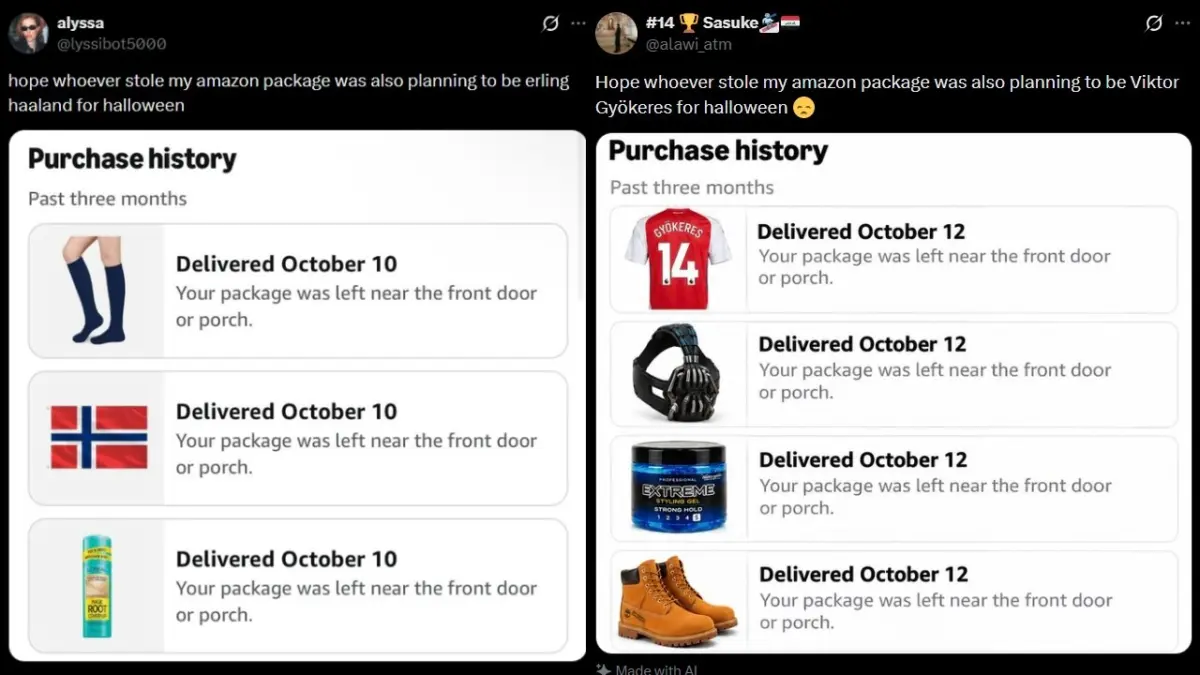
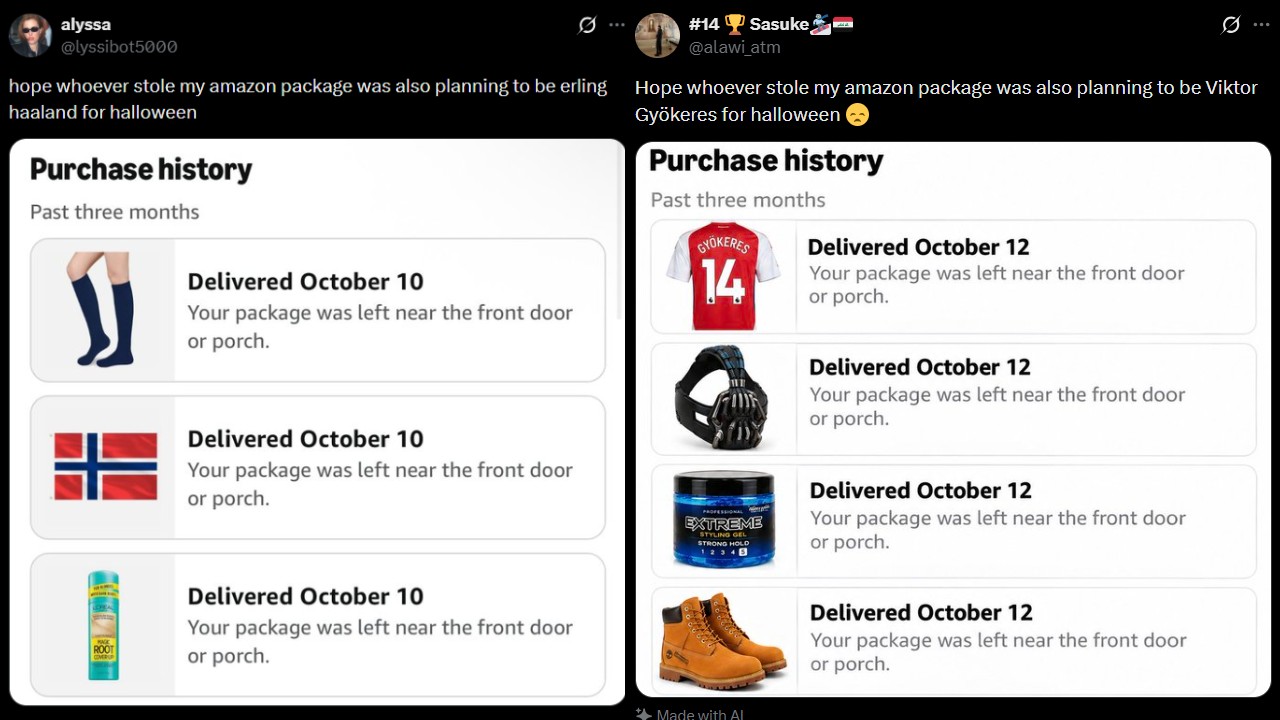
The trend centers on a deceptively simple phrasal template: "Hope whoever stole my Amazon package [X]," where the variable X reveals an increasingly bizarre, highly specific, or entirely abstract Halloween costume concept. Accompanied by a doctored or fabricated screenshot of an Amazon delivery confirmation history, these posts playfully feign resignation over missing deliveries while actually showcasing elaborate, deeply niche, or physically impossible costume plans.
What began as a single lighthearted post about an Erling Haaland football kit has rapidly snowballed into a widespread participatory meme format. It highlights how internet users collectively weaponize everyday grievances—in this case, package theft—and turn them into vehicles for absurd, hyper-specific pop culture humor. This report provides an investigative breakdown of the trend’s origins, its rapid acceleration across diverse digital subcultures, its mechanical blueprint, and what its sudden rise tells us about the current state of social media engagement.
Detailed Chronology: From Porch Piracy to Viral Phenomenon
The trajectory of the "Hope Whoever Stole My Amazon Package" meme offers a textbook case study in how modern viral content replicates and mutates within days. The timeline below charts the movement from its accidental inception to a full-scale platform-wide phenomenon.
The Spark: October 11, 2026
The trend traces its lineage directly to a post made on October 11th, 2026, by X user @lyssibot5000. Facing the all-too-common autumn reality of missing e-commerce deliveries, the user uploaded a screenshot of their Amazon purchase history spanning the previous three months, highlighting multiple items marked "Delivered near the front door or porch."
The accompanying caption read:
"hope whoever stole my amazon package was also planning to be erling haaland for halloween."
The juxtaposition of a mundane porch theft complaint with the hyper-specific identity of Manchester City striker Erling Haaland struck an immediate chord. The post resonated due to its deadpan delivery, pulling in over 176,000 likes within five days and setting a stylistic template that other users were eager to replicate, subvert, and expand upon.
The Proliferation: October 14–15, 2026
Following the blueprint laid out by @lyssibot5000, the meme broke containment from sports and lifestyle humor into more esoteric subcultures over the subsequent 72 hours.
- The Pop Culture Aesthetic (October 14): User
@chaerylivadapted the format to target niche music fandoms, posting a purchase history meant to recreate the album cover of You Seem Pretty Sad for a Girl So in Love featuring Olivia Rodrigo. The post quickly accumulated over 50,000 likes. - Meme Meta-Commentary (October 14): Pushing the format deeper into internet abstraction, user
@0NEMORETlMEclaimed their stolen package contained the components necessary to dress as "Why"—a viral meme image of a woman wearing a plague doctor mask. The post pulled in over 150,000 views in two days. - Gaming Subculture Integration (October 15): The gaming community joined the fray when user
@SpaghettiSpace_posted a delivery history claiming they had intended to dress as the "Ascent B Site triple boxes" from the tactical shooter Valorant. This radical leap from dressing as a person to dressing as inanimate map geometry marked a turning point, proving the meme’s limitless scalability.
Diversification and Peak Saturation: October 16, 2026 and Beyond
By mid-October, the format had become a standardized meme template. Submissions flooded feeds across X, ranging from deep-cut music references (such as Lorde’s iconic 2017 MTV Video Music Awards outfit) to corporate figures (tech executive Alexandr Wang) and sports memorabilia jokes (Giancarlo Stanton and Chicago Cubs fandom kits).
Rather than fading out as a one-hit wonder, the joke evolved into an ongoing creative exercise in how obscure a Halloween costume could be made to look like a realistic pile of unorganized Amazon purchases.
Supporting Context & Metrics: Decoding the Appeal
To understand why this specific meme resonated so deeply in October 2026, one must examine both the cultural anxiety it taps into and the structural mechanics that make the joke work.
The Psychology of Porch Piracy Humor
Porch piracy—the theft of packages left unattended on doorsteps—is a genuine modern nuisance, particularly during the autumn and winter holiday buildup. By framing a crime as a mild inconvenience repurposed for holiday cosplaying, users effectively neutralize a real-world frustration through humor. The joke relies on a profound bait-and-switch: the audience expects a genuine complaint about property loss, only to be confronted with the absurd reality that someone has allegedly stolen a box containing the exact geometric pieces required to look like a set of video game boxes or a specific pop star’s vintage red-carpet look.
Structural Anatomy of the Meme
Every successful viral format relies on a reliable architectural skeleton. The "Stolen Amazon Package" meme is built upon three mandatory pillars:
- The Visual Proof: A screenshot of an Amazon purchase or delivery history interface. Crucially, the items themselves are rarely explicitly named in the screenshot text, leaving the audience to trust—or rather, laugh at the impossibility of—the user’s claim that multiple random shipments equaled a cohesive costume.
- The Phrasal Snowclone: The invariable use of the opening clause, "Hope whoever stole my Amazon package…" This linguistic anchor ensures algorithmic recognition and signals to other users immediately that a joke is underway.
- The Absurd Reveal (X): The punchline, wherein the intended costume is revealed to be something non-human, hyper-niche, or physically absurd. The wider the gap between standard Halloween costumes (ghosts, witches, superheroes) and the stated costume (a baseball player, a specific album cover, a piece of structural architecture), the more successful the post.
Quantitative Engagement
While direct search interest metrics remain unquantified by traditional trackers due to the recency and fast-moving nature of the trend, the localized engagement metrics on X demonstrate massive reach:
- Core foundational posts regularly cleared 50,000 to 170,000 likes within days of posting.
- Impression counts for top-tier variations routinely crossed the 1.5 million to 2 million views threshold.
- The format successfully bridged multiple distinct internet demographics—spanning sports fans, gaming communities, pop music stans, and general shitposters—demonstrating rare cross-community appeal.
Official Statements & Community Reactions
As the trend saturated timelines, public reactions ranged from amused admiration for the creativity of internet users to wry commentary on the state of modern delivery logistics.
Social media commentators and digital culture analysts noted that the meme represents a maturation of text-and-screenshot formats. Unlike traditional photo edits, these posts require minimal technical skill—often relying simply on inspecting element text or capitalizing on the chaotic nature of real multi-item delivery notifications—making them exceptionally easy for casual users to reproduce.
While neither Amazon nor any of the public figures referenced in the costume jokes (such as Erling Haaland or Giancarlo Stanton) issued formal corporate statements regarding the meme, online chatter reflected a shared cultural weariness of delivery notifications. As one viral comment summarized: "We are all just waiting for a box that will never arrive, and if it does arrive, we are apparently dressing as structural map elements from tactical shooters."
Future Outlook: The Lifecycle of Seasonal Memes
As Halloween 2026 approaches, the "Hope Whoever Stole My Amazon Package" trend stands as a textbook example of how internet culture operates during seasonal inflection points.
Longevity and Shelf Life
Because the meme is intrinsically tied to the autumn costume-buying season, its peak relevance is tightly bound to the weeks leading up to October 31st. However, the underlying template possesses structural flexibility that could allow it to survive past Halloween. Similar phrasal snowclones have historically transitioned into year-round formats by swapping out holiday costumes for generic life events, major sports seasons, or general consumer complaints.
Key Takeaways for Digital Trends
- Relatability Breeds Participation: By anchoring the joke in a universally recognized annoyance (waiting for deliveries), the meme lowers the barrier to entry for creators and viewers alike.
- Niche is King: The comedic value of the trend increases exponentially the more obscure the reference X becomes. Mainstream costumes fail to generate the same viral traction as deeply localized internet lore.
- The Evolution of Complaint Culture: Modern internet users increasingly prefer turning institutional or systemic annoyances into surrealist art rather than traditional venting.
Whether the format returns next autumn or fades away once the last Halloween decorations are packed away, the "Stolen Amazon Package" meme has securely cemented its place in the 2026 digital canon—proving once again that human creativity thrives even in the face of missing e-commerce deliveries.