Executive Overview
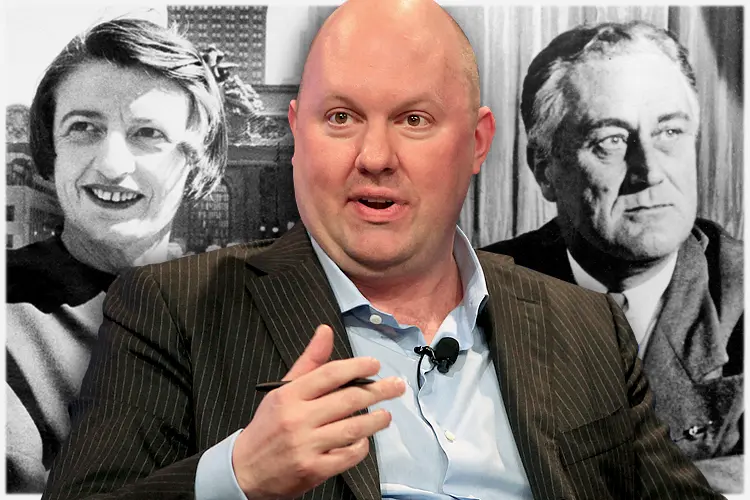
In the grand tradition of American political rhetoric, the architects of Silicon Valley have mastered a fascinating linguistic sleight of hand. They project the sweeping, utopian optimism of Franklin D. Roosevelt—speaking grandly of ending poverty, curing disease, and ushering in an era of universal abundance—while adhering strictly to the hyper-individualistic, anti-regulatory ethos of Ayn Rand. At the epicenter of this philosophical contradiction stands Marc Andreessen, co-creator of the pioneering Mosaic web browser, co-founder of Netscape, and currently a titan of venture capital through his firm, Andreessen Horowitz.
When Andreessen unleashed a barrage of nearly 100 interconnected tweets laying out a "unified theory of tech utopia," he captured the collective mindset of contemporary Big Tech. His core thesis was deceptively simple: technological innovation is an unstoppable, benevolent force that will inevitably eradicate scarcity, automate away human drudgery, and leave humanity free to pursue high-minded creative endeavors. The only catch, according to Silicon Valley’s ruling class, is that we must systematically dismantle regulatory roadblocks, strip away bureaucratic oversight, and get completely out of the way of "disruptive" capital.
Yet, beneath this glossy veneer of techno-optimism lies a glaring paradox. Andreessen’s grand vision relies heavily on the paradoxical necessity of a robust social welfare safety net to catch the millions of workers displaced by automation. However, the political and economic coalition driving this libertarian dreamscape utterly refuses to fund it. As wealth concentrates at the very top, the modern tech elite champion policies that suppress wages, slash capital gains taxes, and resist corporate contributions to the public good. This article investigates the dangerous disconnect between Silicon Valley’s utopian rhetoric and the stark, unequal economic reality it accelerates.
Detailed Chronology: The Genesis of a Digital Manifesto
To understand how Silicon Valley arrived at this ideological crossroads, one must trace the public awakening and digital declarations of its most prominent leaders.
Early 1990s–2000s: The Commercialization of the Web
Marc Andreessen first secured his place in history as a student programmer at the National Center for Supercomputing Applications (NCSA), where he led the development of Mosaic—the graphical web browser that transformed the internet from a niche academic and military tool into a consumer medium. Following Mosaic, Andreessen co-founded Netscape Communications Corporation, igniting the dot-com boom. This era established the foundational mythos of Silicon Valley: that brilliant technologists operating outside the clumsy purview of government intervention could single-handedly democratize human access to information.
January – June 2014: The Twitter Renaissance
After maintaining a relatively low profile on social media for years, Andreessen aggressively re-engaged with Twitter on January 1, 2014. Using his handle @pmarca, he began pumping out a relentless stream of commentary on economics, startups, and public policy.
The campaign culminated on June 1, 2014, when Andreessen launched an unprecedented multi-part tweet storm spanning nearly 100 individual posts. Divided into seven thematic threads, the manifesto systematically argued that technological innovation would solve systemic bottlenecks in education, healthcare, and resource distribution. He explicitly dismissed fears of job-stealing automation as modern Luddism, painting a picture of an automated future where basic material wants are entirely satisfied.
Mid-2014 to Present: The Ideological Backlash
Andreessen’s digital manifesto immediately triggered a fierce intellectual debate across political and economic spheres. Critics, economists, and labor advocates pointed out the gaping holes in his trickle-down techno-capitalism. Rather than ushering in a frictionless utopia, the rise of platform capitalism and the "sharing economy" (exemplified by Andreessen-backed giants like Airbnb and Lyft) laid bare a new economic order: one where platform founders accumulate astronomical fortunes while service providers struggle within precarious, gig-based labor markets devoid of traditional benefits or job security.
Supporting Context & Metrics: The Mechanics of Modern Inequality
To evaluate Andreessen’s claims, one must pit his techno-optimistic assertions against the empirical realities of contemporary labor markets, wage stagnation, and wealth concentration.
The Luddite Fallacy vs. Data-Driven Reality
Andreessen’s core defense relies on historical precedent: past technological revolutions—most notably the Industrial Revolution—initially sparked panic over lost jobs, but ultimately created vastly more employment opportunities and raised global living standards.
However, modern economists argue that the current wave of automation is fundamentally different. While the Industrial Revolution largely replaced physical muscle with steam and mechanical power, demanding unskilled human labor to operate machinery, the digital and artificial intelligence revolution is systematically squeezing both blue-collar and white-collar workers. Self-driving technology threatens millions of truck, taxi, and delivery drivers; algorithmic management and fully automated warehouses are reshaping logistics; and generative AI is rapidly encroaching on fields once thought immune to automation, such as law, coding, and creative arts.
Stagnant Wages in an Era of Exponential Innovation
During the exact historical window characterized by runaway tech innovation and surging productivity, median household incomes for the vast majority of Americans have stagnated or declined in real terms.
| Economic Indicator | 1980s–1990s Benchmark | Current Silicon Valley Era |
|---|---|---|
| Productivity Growth | Steady upward climb | Accelerated by digital automation |
| Real Wage Growth (Middle Class) | Moderate alignment with productivity | Flat/Stagnant relative to corporate profits |
| Top 1% Wealth Share | Historical baseline | Reached historic highs, rivaling the Gilded Age |
| Gig Economy Labor Protections | Standardized (W-2, benefits) | Fragmented (1099, independent contractors) |
As French economist Thomas Piketty famously demonstrated, the fundamental formula of modern capitalism ($r > g$, where the rate of return on capital exceeds overall economic growth) naturally concentrates wealth in the hands of asset owners. Silicon Valley’s elite are the living embodiment of this equation. Founders and venture capitalists amass billions of dollars through equity stakes in "sharing economy" platforms, while the actual workers—the drivers, cleaners, and couriers—absorb the financial risks and wear-and-tear of everyday survival.
Official Statements and Ideological Battlegrounds
The friction between Silicon Valley’s political rhetoric and its economic policy preferences is starkly visible in its approach to governance and taxation.
Marc Andreessen’s core policy prescription rests on a self-reinforcing feedback loop:
- Unfettered Markets: Derecognize and deregulate tech platforms, allowing disruptive companies to scale rapidly without old-economy safety, health, and labor restrictions.
- Exponential Wealth Generation: Let the resulting market-driven prosperity create massive streams of new capital.
- The Safety Net: Use the immense wealth generated by tech innovation to fund a robust social welfare safety net that protects those displaced by automation.
Yet, this theoretical loop breaks down entirely when translated into real-world political lobbying. The political figures championed and financed by Silicon Valley’s elite consistently advocate for policies diametrically opposed to expanding the social safety net.
Consider the political alignment of the region’s elite. When tech billionaires and venture capitalists pour millions into political campaigns—such as backing congressional candidates like Ro Khanna in Silicon Valley—their legislative priorities overwhelmingly center on keeping capital gains taxes low, reducing corporate tax burdens, and opposing regulatory overreach.
Silicon Valley does not want to pay for the safety net it rhetorically champions. When confronted with proposals for wealth taxes, universal basic income funding models derived from corporate revenues, or mandatory employee classification, the tech lobby fights back with ferocious legal and financial opposition. The result is a political philosophy that mirrors Ayn Rand’s Objectivism—celebrating the heroic, self-interested creator while scorning collective public investment—packaged in the optimistic, humanitarian terminology of Franklin D. Roosevelt.
Future Outlook: Navigating the Dislocation
As we look toward the horizon of autonomous logistics, ubiquitous artificial intelligence, and platform-driven labor markets, the central question remains: How can society bridge the widening chasm between technological capability and human welfare?
1. The Realities of Transition
Even if Andreessen’s ultimate techno-utopia is mathematically possible—a world of abundant resources and ubiquitous affluence reminiscent of Star Trek—the transition phase will be fraught with massive social and economic dislocation. The transition from industrial labor to a service-and-gig economy has already proven painful for millions of families. Moving from a service economy to a fully automated post-labor economy will require far more than simply "getting out of Silicon Valley’s way."
2. The Imperative of Democratic Governance
Leaving the distribution of future wealth entirely to the discretion of venture capitalists and platform monopolies will only accelerate hyper-inequality. History shows that wealthy elites rarely deploy their fortunes altruistically for the general welfare without sustained democratic pressure, robust taxation, and institutional guardrails.
If governments are to establish a safety net capable of withstanding the shocks of mass automation, that funding cannot rely on the charitable whims of trickle-down techno-capitalism. It must come from binding, systemic fiscal policies that ensure the beneficiaries of technological disruption pay their fair share toward public infrastructure, education, and social security.
3. Conclusion
Marc Andreessen’s unified theory of tech utopia serves a very specific, highly functional purpose: it provides a sophisticated moral and intellectual justification for the tech elite to keep doing exactly what they are doing. By framing deregulation as a humanitarian crusade to end poverty, venture capitalists can bypass legitimate democratic scrutiny while consolidating wealth and power.
Until Silicon Valley reconciles its Ayn Rand-style hostility toward taxation and regulation with its FDR-esque rhetoric about the common good, its vision of the future will remain a house of cards—built for the privileged few, while the rest of society flounders in the digital age.