Executive Overview
Stephen King’s bibliographic footprint spans over half a century, generating a staggering literary landscape that has birthed dozens of cinematic interpretations. From timeless coming-of-age dramas to relentless supernatural nightmares, Hollywood has continuously returned to the master of horror’s bibliography. Yet, as streaming platforms rotate their licensing libraries and modern television series continue to reinvent classic texts, one cinematic benchmark remains entirely peerless: Brian De Palma’s 1976 supernatural horror masterpiece, Carrie.
Anchored by a career-defining, harrowing central performance from Sissy Spacek, Carrie fundamentally altered the DNA of the modern horror genre. It proved that psychological torment, teenage alienation, and supernatural fury could be woven into a cohesive, high-art cinematic tapestry. However, time is running out for subscribers looking to experience this milestone on-demand. Carrie is officially scheduled to depart HBO Max on November 30, closing a vital streaming window for what many critics and horror historians consider the single greatest Stephen King adaptation ever committed to film.
This article explores the profound cultural impact of De Palma’s classic, examining its narrative core, Stephen King’s own retrospective validation of the project, its box-office pedigree, and its enduring legacy in the face of contemporary adaptations.
Detailed Chronology: From Manuscript to Masterpiece
To understand the monumental cultural shockwave Carrie delivered upon its release in November 1976, one must trace its journey from a struggling manuscript discarded in a trash can to a multi-million-dollar cinematic phenomenon.

The Birth of an Outcast
In the early 1970s, a struggling high school English teacher named Stephen King lived in a cramped double-wide trailer in Hermon, Maine, working on a novel about a bullied girl with telekinetic powers. Frustrated by his lack of progress and doubting his ability to write convincing female characters, King crumpled up the initial pages and threw them into the household trash. It was his wife, Tabitha King, who rescued the pages from the bin, smoothed them out, and insisted that the premise held visceral, urgent power.
King completed the novel, publishing it in 1974 through Doubleday. While it was not an instant overnight sensation, it garnered enough commercial and critical momentum to catch the eye of Hollywood producers. Enter United Artists and visionary director Brian De Palma, who was fresh off the success of Phantom of the Paradise and looking to pivot into mainstream suspense.
Casting and Production
De Palma, alongside casting director Joy Todd, conducted an exhaustive search for the titular protagonist. Hundreds of young actresses auditioned, but it was Sissy Spacek—who initially attended the casting call merely as a favor to production designer Jack Fisk—who claimed the role. Dressed in a sailor dress her mother had made for her, smeared with Vaseline in her hair, and projecting an aura of heartbreaking vulnerability, Spacek embodied Carrie White instantly.
The film also served as an essential launching pad for emerging talent. A young John Travolta, stepping into the role of the vicious, dim-witted bully Billy Nolan, brought a dangerous, unpredictable energy to the screen. Alongside Spacek, Piper Laurie delivered a masterclass in religious fanaticism as Margaret White, Carrie’s abusive and deeply unstable mother.

The Prom Climax and Cultural Explosion
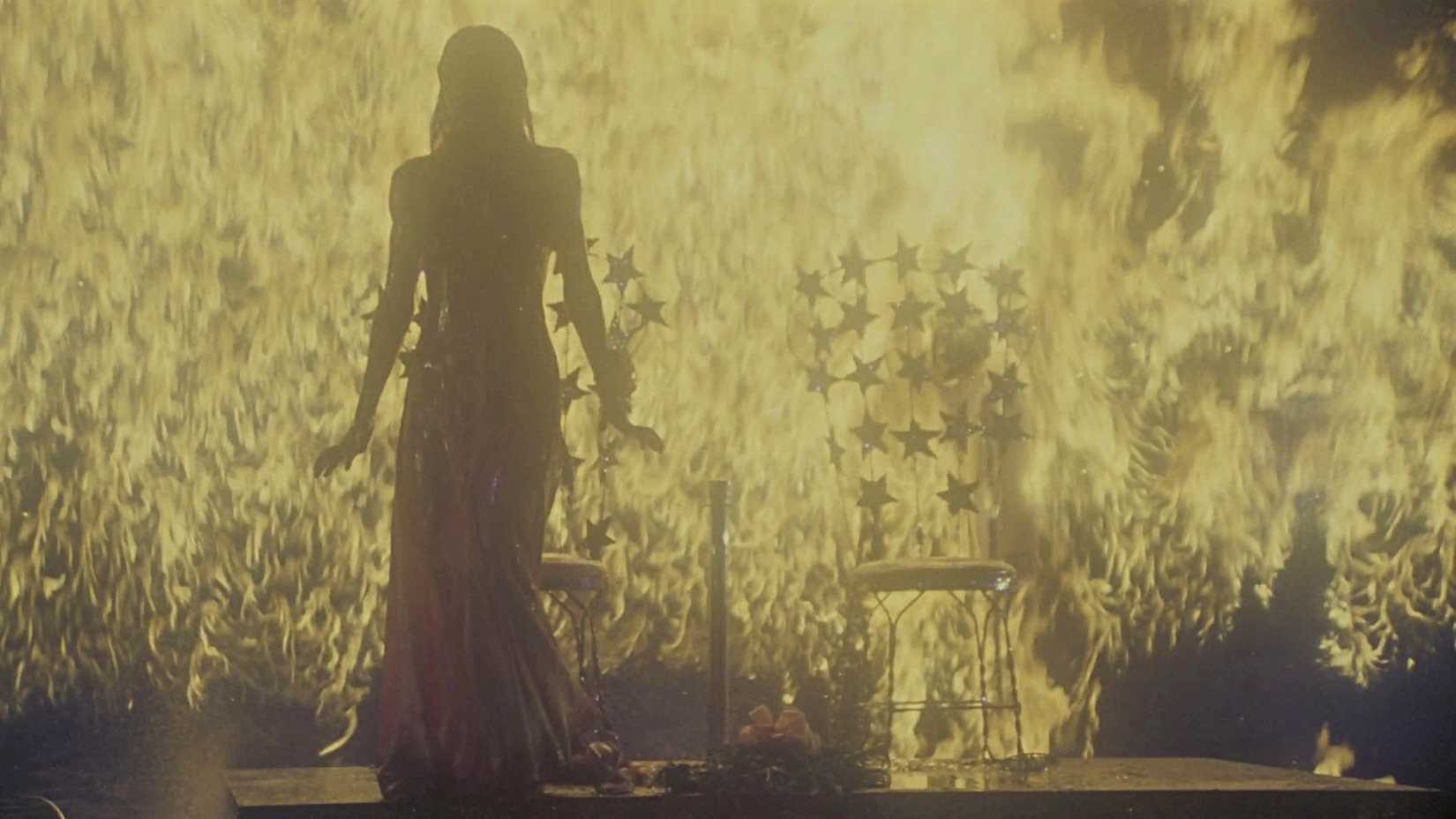
Filmed largely in Southern California—utilizing high school gymnasiums and elaborate set pieces—the production culminated in the legendary prom sequence. The scene, utilizing De Palma’s signature split-screen techniques, slow-motion framing, and Pino Donaggio’s shrieking, Bernard Herrmann-esque musical score, became an instant cinematic touchstone. The moment the bucket of pig’s blood tips onto Spacek’s head, the film shifts from a sympathetic tragedy into an operatic, unforgiving bloodbath of supernatural vengeance. Upon its theatrical release, Carrie became an unprecedented commercial smash, grossing $33.8 million against a modest $1.8 million budget and securing Academy Award nominations for both Sissy Spacek and Piper Laurie.
Supporting Context & Metrics: The Box Office and Critical Legacy
The triumph of Carrie extended far beyond standard box office returns; it served as the critical catalyst that legitimized Stephen King as a viable cinematic commodity. Prior to 1976, horror adaptations were frequently treated as B-grade exploitation cinema. De Palma’s elevated direction infused the narrative with art-house sensibilities, utilizing expressionistic lighting, voyeuristic camera angles, and psychological depth.
Financial and Critical Metrics
| Metric Category | Data Point | Context |
|---|---|---|
| Production Budget | $1.8 Million | Extremely modest for a major studio supernatural thriller in the mid-1970s. |
| Box Office Gross | $33.8 Million | A staggering return on investment, cementing the film as a major commercial hit. |
| Academy Award Nominations | 2 Nominations | Sissy Spacek (Best Actress) and Piper Laurie (Best Supporting Actress). |
| Rotten Tomatoes Score | 94% (Original 1976 Film) | Reflects near-universal and enduring critical acclaim over nearly five decades. |
Paving the Way for King’s Cinematic Universe
The monumental success of Carrie essentially greenlit the modern Stephen King cinematic era. Without the financial vindication and critical respectability afforded by De Palma’s film, major studios might never have trusted Stanley Kubrick with The Shining (1980), Lewis Teague with Cujo (1983), or Rob Stand with Stand by Me (1986). Carrie proved that King’s literary worlds—imbued with anxieties regarding adolescence, religious trauma, and small-town cruelty—could seamlessly translate to the silver screen without losing their psychological gravity.
Official Statements & Authorial Perspectives
Authors are notoriously protective of their literary creations, and Stephen King is no exception. Over the decades, the writer has been remarkably candid regarding Hollywood’s interpretations of his work. While he has frequently clashed with filmmakers over radical narrative departures—most famously expressing vocal disdain for Stanley Kubrick’s The Shining, which he famously characterized as "a big, beautiful Cadillac with no engine inside it"—King’s perspective on Brian De Palma’s Carrie stands in stark, appreciative contrast.
Stephen King on De Palma’s Vision
In retrospective interviews, including a comprehensive discussion with Cinefantastique, King openly praised De Palma’s creative license, acknowledging that the cinematic adaptation elevated certain elements beyond his original prose:
"Sissy Spacek was excellent, but right behind her — in a smaller part than it should have been — was John Travolta," King noted, reflecting on the film’s ensemble cast. "He played the part of Billy Nolan the way I wish I’d written it, half-funny and half-crazy."
While the novel relies heavily on epistolary framing devices—incorporating fictional newspaper clippings, government reports, and scientific essays to document the destruction of Chamberlain, Maine—De Palma streamlined the narrative into a breathless, linear thriller. King recognized that despite these structural shifts, De Palma successfully captured the beating heart of the text: the terrifying, universal agony of high school alienation and the dangerous consequences of pushing a marginalized individual past their breaking point.
Future Outlook: Modern Revivals and the Streaming Imperative
As the entertainment landscape continues to evolve, the intellectual property of Carrie remains as fertile as ever. Recent years have seen alternative interpretations of King’s inaugural novel, most notably Mike Flanagan’s acclaimed television adaptation for Amazon Prime Video, which currently holds a robust 85% Tomatometer score on Rotten Tomatoes. Flanagan’s serialized approach allowed for a deeper exploration of the source material’s epistolary elements and secondary characters, earning favor with contemporary audiences.
Why the 1976 Original Endures
Despite modern re-imaginings and technological advancements in visual effects, the 1976 original maintains its crown for several distinct reasons:
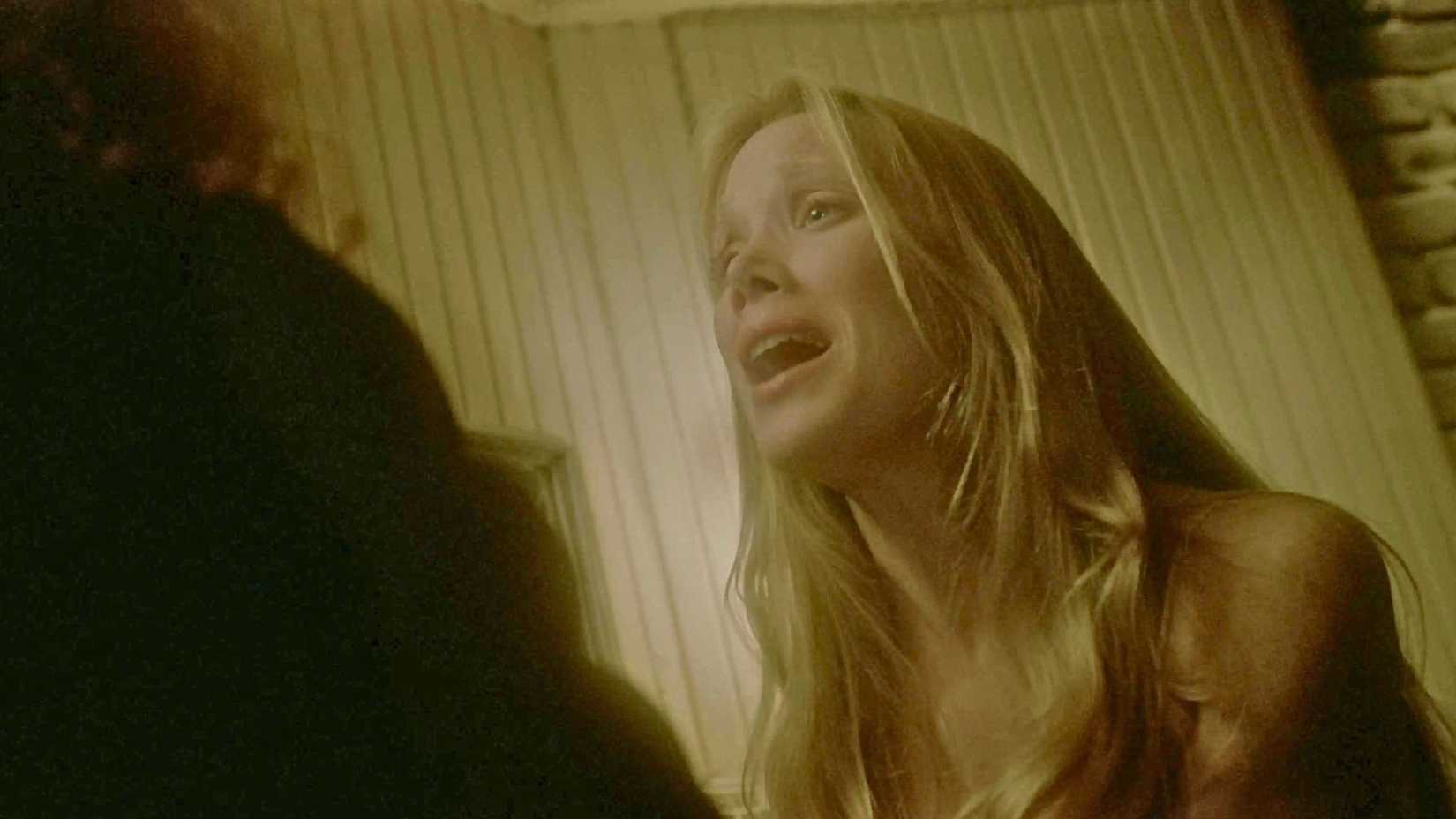
- Physicality and Performance: Sissy Spacek’s portrayal of Carrie White relies on micro-expressions—a subtle eye twitch, a hunched posture, a hesitant smile—that communicate the depths of abuse and emerging power far more effectively than CGI ever could.
- Pioneering Aesthetic: Brian De Palma combined French New Wave camera movement with classic American horror tropes, creating a visual grammar that subsequent teen horror and slasher films copied for decades.
- The Emotional Catharsis: The prom massacre is not merely a sequence of mindless slaughter; it operates as a tragic, inevitable explosion of pent-up societal cruelty, making Carrie’s vengeance simultaneously horrifying and deeply cathartic.
The November 30 Deadline
With Carrie officially leaving HBO Max on November 30, enthusiasts of the horror genre face a strict ticking clock. Whether you are a lifelong devotee of King’s bibliography or a newcomer looking to understand the foundation of modern supernatural horror, streaming availability for this specific cinematic artifact is fleeting.
As the holiday season winds down, hiding from family obligations to watch a telekinetic teenager unleash divine retribution upon her tormentors remains a time-honored tradition. For those who value the absolute pinnacle of Stephen King screen adaptations, the instruction is clear: stream it before it vanishes into the digital ether.