Executive Overview
In the final week of August 2026, Meta Platforms Inc. resolved one of the most damaging legal chapters in its corporate history, agreeing to a monumental $18 billion multistate settlement with 29 U.S. states over allegations that its social media platforms systematically exploited and harmed children. Yet, less than a fortnight after this historic concession, the tech giant took its most daring leap forward. Rather than retreating to lick its wounds, Meta unveiled "Muse"—an advanced, proactive personal AI agent that represents the company’s most ambitious consumer technology play since the dawn of the mobile internet.
The launch of Muse presents a profound paradox of consumer trust. To function as designed, Muse requires access to an unprecedented repository of highly sensitive, real-time personal data. Unlike traditional social networks that passively track clicks, likes, and browsing habits, Muse is built to integrate directly with a user’s daily workflows. It connects to emails, personal calendars, financial accounts, smart home devices, health and fitness trackers, and location services.
This move signals a decisive shift in the Silicon Valley AI arms race. The industry is rapidly moving past the "ChatGPT era"—characterized by passive chatbots that respond to prompts—into the era of "agentic AI," where autonomous software agents execute complex tasks on behalf of users. However, for Meta, this transition hinges on a critical question: Can a company plagued by a decade of privacy scandals, regulatory penalties, and child safety lawsuits convince the public to hand over the keys to their digital lives?

Detailed Chronology: From Legal Reckoning to Technological Rebirth
To understand the audacity of the Muse launch, one must look at the compressed timeline of events leading up to September 2026. The launch is not an isolated product release; it is a calculated counter-offensive designed to redefine Meta’s relationship with its user base and the regulatory bodies governing it.
+-----------------------------------------------------------------------------+
|                                  2026 TIMELINE                              |
+-----------------------------------------------------------------------------+
|                                                                             |
|  [Feb 18]  Mark Zuckerberg testifies in LA Superior Court over teen addiction|
|                                                                             |
|  [Aug 07]  New Mexico Court orders Meta to pay $942M in child safety case    |
|                                                                             |
|  [Aug 26]  Meta agrees to a historic $18B multistate settlement             |
|                                                                             |
|  [Sep 08]  Meta officially launches "Muse" personal AI agent in the U.S.    |
|                                                                             |
+-----------------------------------------------------------------------------+
February 2026: The Los Angeles Testimony
The year began under a cloud of intense legal scrutiny. On February 18, 2026, Meta CEO Mark Zuckerberg was called to testify in a landmark trial at the Los Angeles Superior Court. During his testimony, Zuckerberg faced aggressive questioning regarding Instagram’s age-verification failures and downplayed the financial significance of teenage users to Meta’s broader advertising model. The trial laid bare internal documents showing that the company was acutely aware of the addictive loops built into its algorithms.
August 2026: The Financial Hammer Falls
By August, the regulatory pressure reached a boiling point:

- August 7, 2026: A New Mexico court ordered Meta to pay a staggering $942 million following a state attorney general investigation into systemic child exploitation and safety failures on Facebook and Instagram.
- August 26, 2026: Meta finalized a historic $18 billion settlement with a coalition of 29 states. The settlement addressed a wave of lawsuits accusing the company of deliberately designing features that hooked young minds and fueled a youth mental health crisis.
September 2026: The Unveiling of Muse
A mere twelve days after the $18 billion settlement, Meta pivoted. On Tuesday, September 8, 2026, the company launched Muse for its U.S. audience. By introducing a tool designed to manage everyday chores, schedule appointments, and execute financial transactions, Meta sought to shift the public narrative from "data exploiter" to "essential daily utility."
Supporting Context & Metrics: How Muse Works
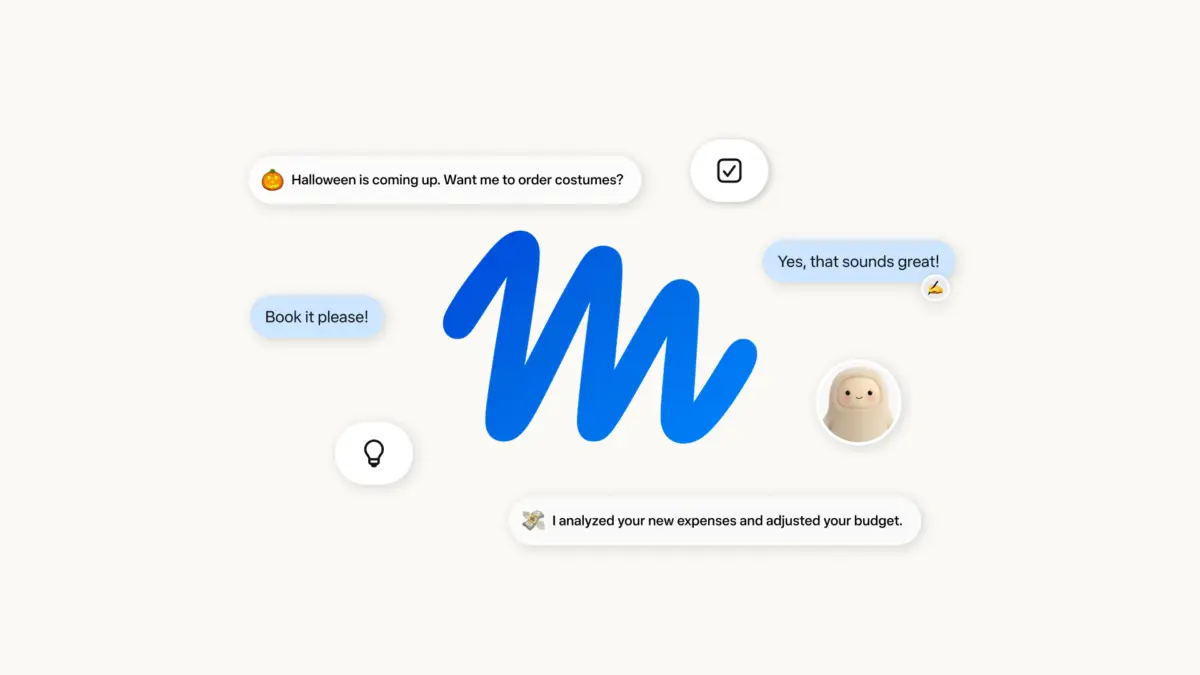
Muse is built on the premise that consumers are experiencing "app fatigue" and decision paralysis. Rather than forcing users to jump between separate applications to book travel, coordinate dinner plans, or pay bills, Muse serves as a centralized, intelligent orchestrator.
The Agentic Capabilities
Meta has positioned Muse as an action-oriented partner. The company claims the agent can seamlessly execute several complex workflows:

- Financial Transactions: Leveraging an integration with Stripe’s "Link" service, Muse can complete purchases, manage subscription checkouts, and lower utility bills by negotiating or searching for optimized rates.
- Daily Logistics: Muse can parse a user’s Instagram "Reels" to extract recipes and compile them into organized grocery lists, draft and send party invitations, fill out complex PDF forms, and coordinate calendar availability.
- Cross-App Communication: It can autonomously draft and send emails, coordinate travel bookings, and interact with smart home systems.
+-----------------------------------------------------------------------------+
|                            MUSE SYSTEM INTEGRATIONS                         |
+-----------------------------------------------------------------------------+
|                                                                             |
|                      +-------------------------------+                      |
|                      |             MUSE              |                      |
|                      +---------------+---------------+                      |
|                                      |                                      |
|             +------------------------+------------------------+             |
|             |                        |                        |             |
|     +-------v-------+        +-------v-------+        +-------v-------+     |
|     |  APIs / SDKs  |        | Stripe (Link) |        | Browser Engine|     |
|     |  (Calendars,  |        | (Secure Paid  |        | (For Legacy   |     |
|     |   Smart Home) |        | Transactions) |        |  Websites)    |     |
|     +---------------+        +---------------+        +---------------+     |
|                                                                             |
+-----------------------------------------------------------------------------+
Technical Architecture: Muse Spark 1.3 and the Connection Engine
Under the hood, the agent is powered by Muse Spark 1.3, Meta’s latest proprietary foundation model optimized for tool usage and low-latency reasoning.
To connect with third-party applications, Muse utilizes a tiered integration model:
- Native Connectors: Pre-built integrations for major productivity, dining, and fitness applications.
- Public APIs: If a user’s preferred service lacks a native connector but features a public API, Muse can link to it using user-provided credentials.
- Browser-Based Access: In cases where no API exists, Muse can use a secure, background browser instance to navigate websites, input information, and complete tasks exactly as a human user would.
Monetization and Pricing Tiers
While Meta’s core business model has historically relied on targeted advertising, Muse introduces a subscription-based software-as-a-service (SaaS) model. To encourage adoption, Meta requires a payment card on file to activate the service, even for those starting on the free tier.

| Plan | Price (Monthly) | Target Audience | Key Features |
|---|---|---|---|
| Free Tier | $0 | Casual Users | Basic task automation, usage meter alerts, access via web/mobile. |
| Power | $20 | Power Users | High-volume task offloading, priority processing, early access to new integrations. |
| Maximum | $100 | Enterprise / Prosumers | Unlimited background execution, advanced multi-step workflows, dedicated resources. |
Official Statements and Security Frameworks
Recognizing that consumer anxiety over privacy is the single greatest
barrier to adoption, Meta accompanied the launch of Muse with a highly detailed, technical security brief.
The "Muse Secure VM" and the Sentinel Agent
Meta’s security whitepaper outlines a specialized sandbox environment designed to isolate user data. According to the company:

"Muse operates within a dedicated, secure virtual machine—the Muse Secure VM—which provides a completely isolated browser environment. This architecture ensures that sensitive credentials, payment details, and passwords are encrypted locally and never exposed directly to the primary AI model."
To police the AI’s behavior, Meta has implemented a dual-agent system. While Muse executes user instructions, a secondary, system-level program called the Sentinel Agent runs alongside it in the virtual machine. The Sentinel operates independently of Muse, acting as a real-time security guard. It monitors outgoing traffic to prevent credential leaks, blocks unauthorized purchases, and ensures that Muse does not access unauthorized data directories.
Furthermore, Meta has made an explicit policy commitment to separate Muse from its primary revenue driver:

"Data collected during conversations with Muse, as well as information processed by the agent, is strictly quarantined. This data will not be shared with Meta’s advertising systems, nor will it be used to target ads on Facebook, Instagram, or Threads."
The Shadow of History
Despite these assurances, independent security analysts and privacy advocates remain highly skeptical. Meta’s corporate history is marked by a series of high-profile data violations that contradict its current promises of airtight security:
- The 2011 FTC Consent Decree: Meta (then Facebook) settled charges that it systematically deceived consumers by making private data public without explicit consent.
- The 2019 Plaintext Password Incident: Meta admitted that it had stored hundreds of millions of user passwords in readable, plaintext format within its internal servers for years, exposing users to internal and external breaches.
- The $5 Billion FTC Settlement (2019): Following the Cambridge Analytica scandal—where the personal data of over 87 million users was harvested without consent—the FTC hit Meta with a record-breaking $5 billion fine for violating its 2011 privacy agreement.
- The 2023 FTC Violations: The FTC accused Meta of failing to comply with the 2019 settlement terms, particularly regarding the monetization of youth data and third-party developer access restrictions.
Future Outlook: The Agentic Era and the Battle for the Digital Proxy
The launch of Muse marks the beginning of a larger, highly competitive transition toward agentic AI. Meta is not alone in this pursuit. The competitive landscape is quickly filling with rival offerings:

- Anthropic’s Claude Cowork is targeting enterprise workflows and collaborative office environments.
- Google’s Gemini Spark leverages deep integration with the Android operating system and Google Workspace.
- Independent startups like the creators of Instinct are pushing boundaries, though they have already drawn criticism for aggressive terms of service that demand "perpetual and irrevocable" rights to user data for model training.
+-----------------------------------------------------------------------------+
|                          AGENTIC AI LANDSCAPE (2026)                        |
+-----------------------------------------------------------------------------+
|                                                                             |
|   [Enterprise & Work]                                  [Consumer & Utility] |
|   - Claude Cowork (Anthropic)                          - Muse (Meta)        |
|   - Gemini Workspace (Google)                          - Gemini Spark       |
|                                                                             |
|                                [Emerging Startups]                          |
|                                - Instinct Assistant                         |
|                                - Browser-based AI Agents                    |
|                                                                             |
+-----------------------------------------------------------------------------+
The Strategy of Personalization
To bypass the trust barrier, Meta is relying on psychological design. Rather than presenting Muse as a cold, sterile utility, the company has designed the agent to be highly customizable. Users can name their agent, choose its visual avatar, select its voice, and fine-tune its communication style.
This strategy of anthropomorphization is deliberate. By encouraging users to build a personal connection with their assistant, Meta hopes to foster an emotional trust that can override historical corporate skepticism.
Conclusion
As Muse rolls out across the United States—expanding from its web portal at muse.ai and WhatsApp chats to iOS, Android, and eventually Meta’s smart glasses—it represents a high-stakes bet. Meta is wagering that the sheer convenience of an AI that "does things for you" will ultimately outweigh the public’s lingering concerns over data privacy. If successful, Meta will transform itself from a social media network into the foundational operating system of daily life. If it fails, or if a security vulnerability exposes the connected bank accounts and emails of Muse users, it could trigger a regulatory and financial backlash that makes the $18 billion youth harm settlement look minor by comparison.