Executive Overview
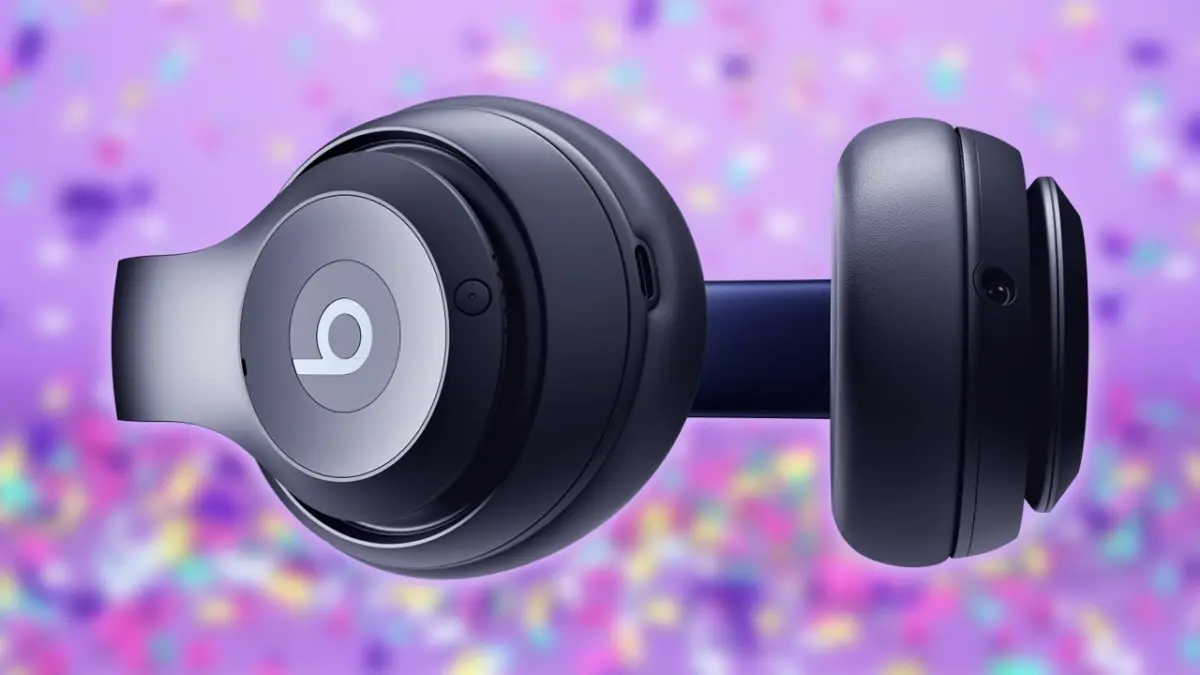
In the fast-paced ecosystem of modern consumer electronics, finding a high-end audio device that balances premium engineering, ecosystem versatility, and aggressive pricing is a rare occurrence. This dynamic has shifted dramatically during the current retail sales cycle. While the broader e-commerce landscape is fixated on Amazon’s flagship Prime Day event, competitor retail giant Walmart has launched a disruptive counter-offensive, slashing the price of the Beats Studio Pro Wireless Noise Canceling Headphones to an unprecedented $119 with complimentary shipping.
Representing a staggering 60% discount from their standard manufacturer’s suggested retail price (MSRP) of $300, this historic markdown shatters previous pricing floors for Beats’ premier over-ear headphones. Available in sleek, minimalist colorways including black and white, the deal positions the Beats Studio Pro not merely as an alternative, but as the definitive value proposition in the high-end personal audio market.
Owned by Apple, Beats occupies a fascinating intersection in the audio industry: it bridges Cupertino’s proprietary ecosystem magic with cross-platform inclusivity that Apple-branded products historically avoid. For consumers caught in the dilemma of choosing between luxury hardware and financial pragmatism, the Beats Studio Pro at $119 eliminates the compromise. It undercuts Apple’s own premium flagship, the $400 AirPods Max, by nearly 70% while delivering features, battery longevity, and cross-platform compatibility that arguably make it a more sensible daily driver for the average consumer.
This comprehensive report explores the anatomy of this historic retail deal, a detailed chronology of the product’s market positioning, the underlying technological metrics that make the Beats Studio Pro a formidable audio contender, the strategic retail maneuvering behind Walmart’s anti-Prime Day push, and the future outlook for the over-ear headphone market.
Detailed Chronology: From Apple Integration to Retail Disruption
To understand the weight of the $119 price point, one must trace the evolutionary trajectory of the Beats Studio Pro and how they entered the competitive arena.
The Launch and Positioning Phase
When Apple acquired Beats Electronics in 2014 for $3 billion, industry analysts questioned whether the bass-heavy, lifestyle-oriented brand would be absorbed into Apple’s minimalist design philosophy or allowed to maintain its distinct cultural identity. Over the ensuing decade, the answer became clear: Beats operates as Apple’s accessible, youth-oriented, and cross-platform sibling.
The launch of the Beats Studio Pro represented a massive leap forward for the brand. Built to succeed the aging Studio 3 wireless headphones, the Studio Pro were engineered from the ground up to compete directly with elite active noise-canceling (ANC) powerhouses like the Sony WH-1000XM5 and Bose QuietComfort Ultra. At its launch price of $300, the headphones were positioned as a premium product for listeners who wanted audiophile-adjacent performance without crossing into the ultra-luxury tier inhabited by the $549 (originally $549, now frequently found at $450-$500) AirPods Max.
The Pricing Erosion and the Prime Day Battleground
As with many consumer electronics, premium headphones experience a predictable curve of price erosion leading up to major retail holidays. Throughout late 2023 and 2024, the Beats Studio Pro frequently saw routine discounts ranging from $179 to $199 during standard promotional windows. However, hitting the psychological threshold of sub-$150 was considered a rare event reserved for flash sales.

Enter the current retail cycle. As Amazon rolled out its massive Prime Day infrastructure, competing retailers like Walmart, Best Buy, and Target faced immense pressure to capture consumer wallets before Amazon could lock them into its ecosystem. Rather than matching Amazon’s catalog item-for-item, Walmart executed a high-impact "spoiler" strategy. By dropping the Beats Studio Pro to an all-time low of $119, Walmart effectively co-opted the consumer conversation around Prime Day savings, shifting attention to its own storefront.
This pricing strategy capitalizes on a critical consumer psychology principle: anchoring. When a buyer sees a $300 product marked down by $181 (60% off), the perceived value skyrockets. Within hours of going live, stock levels across both black and white colorways experienced significant volatility, signaling that the market had responded aggressively to the discount.
Supporting Context & Metrics: Engineering and Performance Breakdown
A massive discount means little if the underlying product fails to deliver on performance. Despite the aggressive $119 price point, the Beats Studio Pro are engineered with top-tier components that rival headphones costing two to three times as much.
Acoustic Architecture and Custom Transducers
At the core of the Beats Studio Pro is a custom 40mm active acoustic driver designed to deliver near-zero distortion even at high volumes. According to internal engineering metrics provided during the product’s rollout, the transducer features a integrated digital processor that optimizes the overall frequency response for a powerful, balanced profile. Unlike older iterations of Beats hardware—which were frequently criticized for overwhelming, muddy bass—the Studio Pro offers a refined, neutral soundstage that handles complex acoustic tracks, hip-hop, electronic music, and spoken-word audio with equal dexterity.
Active Noise Cancellation (ANC) and Transparency Mode
The headset features fully adaptive Active Noise Cancellation, which continuously monitors environmental noise in real-time—sampling at a rate of 48,000 times per second—to neutralize external sounds. Whether utilized in a bustling open-plan office, a transatlantic flight, or a noisy commuter train, the ANC algorithm effectively dampens low-frequency rumbles and mid-range chatter.
Conversely, when situational awareness is required, the Transparency mode blends external ambient sounds seamlessly into the listening experience, utilizing external beamforming microphones to ensure natural vocal clarity without removing the headset.
Ecosystem Agnosticism: The Apple vs. Android Bridge
One of the most profound technological advantages of the Beats Studio Pro—and a major selling point when compared directly to Apple’s AirPods Max—is its dual-ecosystem mastery.
- For Apple Users: The Studio Pro integrates deeply with Apple’s proprietary hardware via the custom Apple silicon (specifically the custom Beats chip, which mirrors much of the H1/H2 functionality). Users enjoy one-touch pairing across all iCloud-connected devices, "Hey Siri" hands-free activation, personalized spatial audio with dynamic head tracking, and robust integration with the Apple "Find My" network.
- For Android Users: Unlike AirPods, which lose critical features when paired with non-Apple hardware, the Beats Studio Pro treats Android users as first-class citizens. The headphones support Google Fast Pair for instant one-touch connection, Google Audio Switch for seamless audio routing between an Android phone and tablet, and Google Find My Device for tracking lost units. Furthermore, a dedicated Beats companion app for Android allows users to manage software updates, customize control profiles, and adjust listening modes directly from an Android interface.
Battery Longevity and Power Management
Battery anxiety remains a primary consumer pain point in the wireless audio market. The Beats Studio Pro addresses this head-on with an industry-leading battery profile:

- Wireless Playback: Up to 40 hours of continuous playback on a single charge with ANC and Transparency modes turned off, and up to 24 hours with ANC or Transparency enabled.
- Fast Charging (Fast Fuel): A proprietary rapid-charging technology provides up to 4 hours of playback from a mere 10-minute charge via USB-C.
- Lossless Wired Audio: Uniquely, the built-in USB-C port does not serve solely for power delivery. It supports simultaneous audio streaming and charging, allowing users to plug directly into a phone, tablet, or laptop for high-resolution, lossless digital audio. Additionally, a traditional 3.5mm analog input is retained for legacy hardware compatibility, complete with three distinct built-in sound profiles (Beats Signature, Entertainment, and Conversation) when utilizing USB-C audio.
Official Statements and Industry Analysis
Retailers and industry experts have weighed in heavily on what this massive discount signifies for the broader consumer electronics market.
Retail analysts note that profit margins on hardware peripherals like headphones are typically tight, meaning a 60% price slash likely brings the sale price close to, or even slightly below, standard wholesale acquisition costs.
"When a tier-one retailer like Walmart drops a premier Apple-backed audio product by 60% during a rival sales event, it signals a strategic shift from pure profit-margin capture to customer acquisition and inventory velocity," explains Sarah Jenkins, senior retail analyst at Consumer Goods Insights. "Consumers who purchase the Beats Studio Pro at $119 are locked into a positive brand experience with Walmart while actively bypassing Amazon. More importantly, it proves that the mid-tier luxury audio market is fiercely competitive; brands cannot rely on name recognition alone to command $300 price points when consumers are tightening their discretionary budgets."
From the manufacturer’s perspective, Apple and Beats view high-volume promotions as a crucial pipeline to introduce younger demographics into their broader hardware and services ecosystems. By lowering the barrier to entry from $300 to $119, thousands of Android and iOS users who might have otherwise purchased budget brands like Anker Soundcore or Skullcandy are suddenly brought into the premium audio fold.
Future Outlook: The Over-Ear Headphone Landscape
The unprecedented pricing of the Beats Studio Pro at $119 sets a new benchmark for what consumers should expect from high-end audio hardware sales moving forward. As the market matures, several key trends are emerging:
- The Collapse of the Mid-Tier Pricing Bubble: For years, manufacturers attempted to sustain a comfortable middle ground between $250 and $350 for wireless headphones. However, aggressive discounting by giants like Walmart and Amazon demonstrates that consumers view this tier with skepticism unless accompanied by radical feature sets. Discounts of this magnitude suggest that future generations of over-ear headphones will either need to justify their high launch prices through breakthrough innovation (such as health-monitoring sensors or advanced biometric tracking) or launch at more accessible price points from day one.
- Cross-Platform Parity as the New Standard: The success of the Beats Studio Pro proves that consumers increasingly reject walled gardens. The ability of the Studio Pro to perform with equal competence on an iPhone 15 Pro and a Samsung Galaxy S24 has broadened its market appeal exponentially. Future hardware developers ignoring cross-platform functionality will likely see their addressable market severely limited.
- The Longevity of Wired/Wireless Hybrids: As smartphone manufacturers continue to strip away legacy ports, the inclusion of high-resolution USB-C audio in devices like the Beats Studio Pro points toward a resurgence of wired fidelity coupled with wireless convenience. Consumers are demanding hardware that outlives transient Bluetooth standards, favoring gear that can plug directly into modern computing ecosystems.
Conclusion
For shoppers navigating the chaotic waters of seasonal sales events, the current Walmart promotion on the Beats Studio Pro Wireless Noise Canceling Headphones stands out as a rare beacon of genuine value. At $119 (60% off), buyers receive an uncompromising package: elite active noise cancellation, pristine acoustic architecture, 40-hour battery performance, seamless dual-ecosystem integration across both Apple and Android devices, and the build quality expected from a premier audio brand.
Whether this price point will become a permanent fixture of retail discounting or remain a fleeting, stock-limited flash sale is uncertain. However, for anyone currently weighing an upgrade to their daily listening gear, the window to secure one of the market’s best over-ear headphones at a fraction of its original cost is wide open—at least until inventory runs dry.