Executive Overview
For over two decades, a single, persistent question has echoed across internet forums, social media comment sections, and video-sharing platforms: “Can he beat Goku though?”
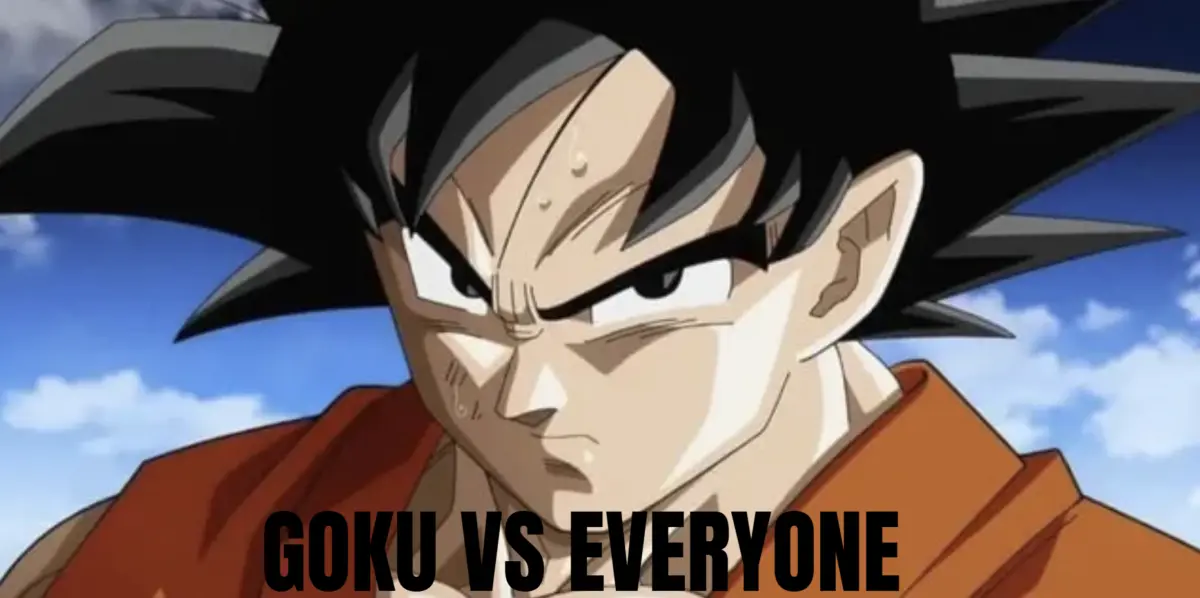
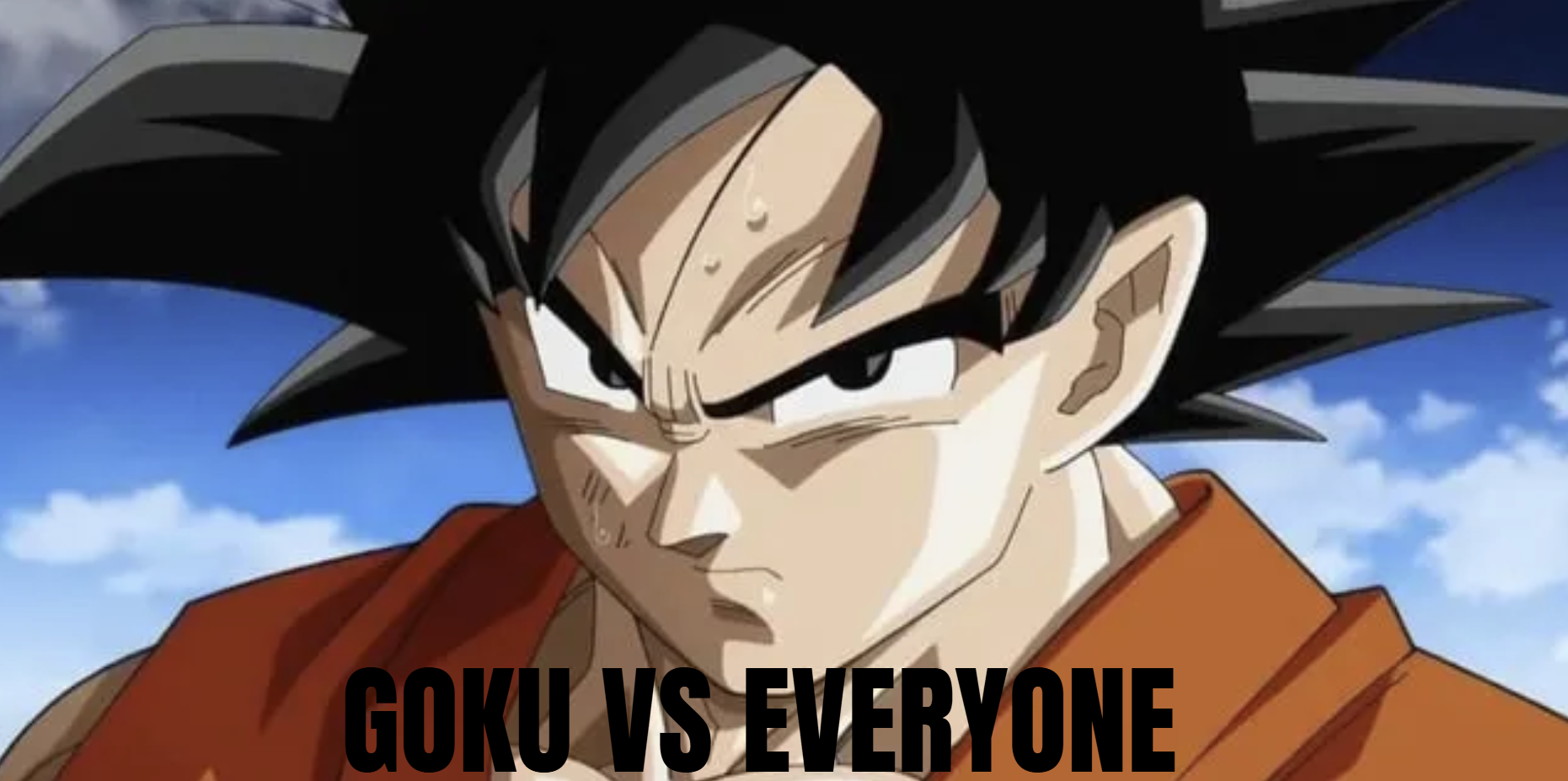
Originating as earnest nerd-culture debates about fictional combat supremacy during the late 1990s and early 2000s, the concept of pitting Son Goku—the beloved, spiky-haired protagonist of Akira Toriyama’s iconic Dragon Ball franchise—against virtually any other fictional entity has evolved into a monolithic internet phenomenon known simply as "Goku VS."
What began as meticulous, panel-by-panel comparisons of speed, strength, and energy projection in early web forums has transformed over the years. Today, Goku VS functions simultaneously as a genuine subculture of competitive power-scaling and an endlessly malleable ironic meme format. From legendary multi-platform debates against DC Comics’ Superman to surreal, absurd internet showdowns against cosmic abstract concepts, reality-warping magical girls, and even the internet itself, Goku has become the ultimate benchmark for fictional power.
This deep dive explores the origins, evolution, and cultural legacy of the Goku VS phenomenon. We will examine how an ordinary martial artist from a weekly manga transformed into a universal internet litmus test, analyze its most famous historical matchups, and look at how modern online communities continue to parody and reinvent the eternal debate of fictional dominance.
Detailed Chronology: From Magazine Spreads to Viral TikToks
The trajectory of the Goku VS phenomenon traces the broader evolution of internet fandom, moving from print journalism to message boards, YouTube analytical essays, and finally short-form algorithmic video platforms.
The Print Era and Early Crossover Fandom (Late 1990s–2002)
Long before dedicated social media platforms existed, fans of speculative fiction gathered on early web boards, Usenet groups, and IRC channels to debate fictional match-ups. However, the concept broke into mainstream geek consciousness in October 2002 with the publication of Wizard Magazine #133.
In an “East vs. West” feature, the magazine pitted Goku against Superman in a high-profile, multi-page theoretical battle written and illustrated by industry professionals. In this scenario, crafted by Long Vo and Udon Studios, Goku—manipulated into believing a parallel Earth held an eighth Dragon Ball—crosses dimensions and immediately throat-slams the Man of Steel into the moon. While Superman ultimately triumphs in that specific print publication’s narrative, the seed was planted. The idea that characters from fundamentally different universes could—and should—clash captured the collective imagination of a generation.
The Forum Wars and YouTube Era (2000s–2010s)
As broadband internet became ubiquitous, fan communities migrated to dedicated spaces like SpaceBattles, Comic Vine, and various anime-specific forums. Here, discussions shifted from casual entertainment to rigorous, almost academic "power-scaling." Users calculated explosive yields, speed-of-light travel metrics, and multi-dimensional scaling arguments.
This era also birthed the web series Death Battle in 2010, produced by ScrewAttack (now Death Battle). The show institutionalized fictional match-ups, producing high-production-value animated fights that systematically analyzed combatants’ statistics. When Death Battle famously pitted Goku against Superman—not once, but across three separate iterations, with Superman emerging victorious in each under their established metrics—it sparked massive fan outrage, record-breaking viewing numbers, and cemented Goku vs. Superman as the gold standard of internet crossover debates.
The Memeification and Modern Short-Form Boom (2010s–Present)
By the mid-2010s, the sheer ubiquity of fans asking "Can Goku win?" regardless of the context transformed the debate into a self-aware joke. This birthed catchphrases like "Goku Solos" and the ubiquitous query "But can he beat Goku though?" injected arbitrarily into discussions about characters from completely unrelated media, such as Breaking Bad, Twilight, or historical documentaries.
In the late 2010s and early 2020s, platforms like Twitter, Tumblr, and TikTok accelerated this trend through formats like the "Your Fave" meme. Creators began producing ironic slander videos, tier lists, and absurd matchups—pitting Goku against conceptual entities, gag characters like Saitama (One-Punch Man), or reality-warping entities like Ultimate Madoka (Puella Magi Madoka Magica). Today, Goku VS operates in a perpetual state of meta-irony, where earnest debaters and shitposters coexist in a chaotic ecosystem of edits, reaction videos, and comment-section wars.
Supporting Context & Metrics: The Anatomy of a Power-Scaling Debate
To understand why Goku occupies such a central role in internet debates, one must understand the mechanics of power-scaling culture. Power-scaling is an analytical subculture wherein fans evaluate fictional characters based on feats of strength, durability, agility, and hax (special abilities that bypass conventional durability, such as reality warping, mind control, or conceptual erasure).
Why Goku?
Several intrinsic factors make Son Goku the ideal baseline for power-scaling:
- Incremental Progression: Across Dragon Ball, Dragon Ball Z, Dragon Ball Super, and various movies, Goku scales linearly from a super-strong martial artist to a universe-shaking deity capable of clashing fists with gods of destruction. This provides scalers with distinct "tiers" (e.g., Saiyan Saga, Super Saiyan, Super Saiyan Blue, Ultra Instinct) to match against opponents at various power levels.
- The "Limitless Growth" Narrative: A core thematic element of Dragon Ball is that Goku constantly breaks his limits to surpass his previous boundaries. This narrative framing encourages fans to argue that given enough time in a fight, Goku will adapt, evolve, and find a way to win.
- Cultural Penetration: Dragon Ball is arguably one of the most widely recognized anime franchises globally. Because millions of viewers are familiar with Goku’s baseline abilities, he serves as an accessible universal currency for cross-franchise comparisons.
Case Studies: Iconic Matchups
- Goku vs. Superman: The definitive East-meets-West debate. While Western comic book writers often imbue Superman with limitless or narrative-breaking capacities (such as drawing power directly from a yellow sun or repairing the fabric of reality with a punch), Japanese shonen writing structures Goku’s power around martial arts mastery, ki control, and transformative multipliers. The ideological clash between American comic book lore and Japanese shonen progression fuels endless analytical essays.
- Goku vs. Madoka Kaname: A classic matchup between raw physical might and conceptual divinity. While Goku possesses universal-to-multiversal destructive capacity and master-level hand-to-hand combat skills, Ultimate Madoka exists as a metaphysical law of the universe, operating on a conceptual plane where conventional combat metrics do not apply. Debates over this matchup highlight the split in power-scaling between physical feats and conceptual hax.
- Saitama vs. Goku: Pitting the protagonist of One-Punch Man—whose entire narrative premise is that he can defeat any opponent with a single punch—against Goku, who relies on escalating tension and arduous transformations, creates a fascinating clash of storytelling philosophies. Saitama represents a gag-humor satire of power-scaling, while Goku represents the pinnacle of earnest shonen progression.
Official Statements & Community Perspectives
While corporate entities rarely weigh in officially on fan-made crossover battles, creators and industry professionals have frequently acknowledged the cultural gravity of the Goku VS phenomenon.
Akira Toriyama, the legendary creator of Dragon Ball (who passed away in early 2024), historically maintained a lighthearted, detached view of his characters’ power levels, often scaling characters based on narrative necessity rather than rigid numerical power levels (which were infamously abandoned within the manga itself after the Frieza Saga). However, Toei Animation and official game developers have occasionally nodded to fan culture through promotional material, crossover titles like Super Dragon Ball Heroes, and promotional trailers that deliberately highlight titanic clashes.
Prominent internet historians and media analysts note that Goku VS represents a unique democratization of media consumption. In an era where audiences are inundated with sprawling cinematic universes and interconnected media, power-scaling allows fans to actively participate in world-building and narrative construction.
As noted by prominent anime essayists on platforms like YouTube and TikTok, the joke of "Goku Solos" has effectively inverted traditional literary criticism. Instead of analyzing themes, character arcs, or emotional resonance, online fan communities reduce complex works of art down to a single binary question: Could they survive a Kamehameha?
Future Outlook: The Endless Horizon of Hypothetical Combat
As long as fiction continues to produce powerful heroes, reality-warping deities, and cosmic entities, the Goku VS phenomenon shows no signs of slowing down.
The rise of artificial intelligence, advanced video editing software, and generative animation tools has given modern fans unprecedented capability to visualize these dream scenarios. Where early 2000s fans had to rely on static magazine panels or text-based forum arguments, today’s creators produce cinematic, high-framerate 3D animations and TikTok edits that bring absurd matchups to life with astonishing fidelity.
Furthermore, as new iterations of the Dragon Ball franchise continue to release—such as Dragon Ball Daima and ongoing chapters of the Dragon Ball Super manga—Goku’s arsenal of techniques, transformations, and cosmic feats continues to expand. Each new power-up breathes fresh life into decades-old debates, ensuring that generations of fans will continue to argue over speed-blitzes, energy multipliers, and dimensional tiering.
Ultimately, Goku VS has transcended its origins as a simple anime debate. It has become a foundational pillar of internet folklore—a shared digital language through which fans across the globe engage with fiction, poke fun at their own obsessive tendencies, and celebrate the timeless joy of asking the ultimate playground question: Who would win in a fight?