Executive Overview
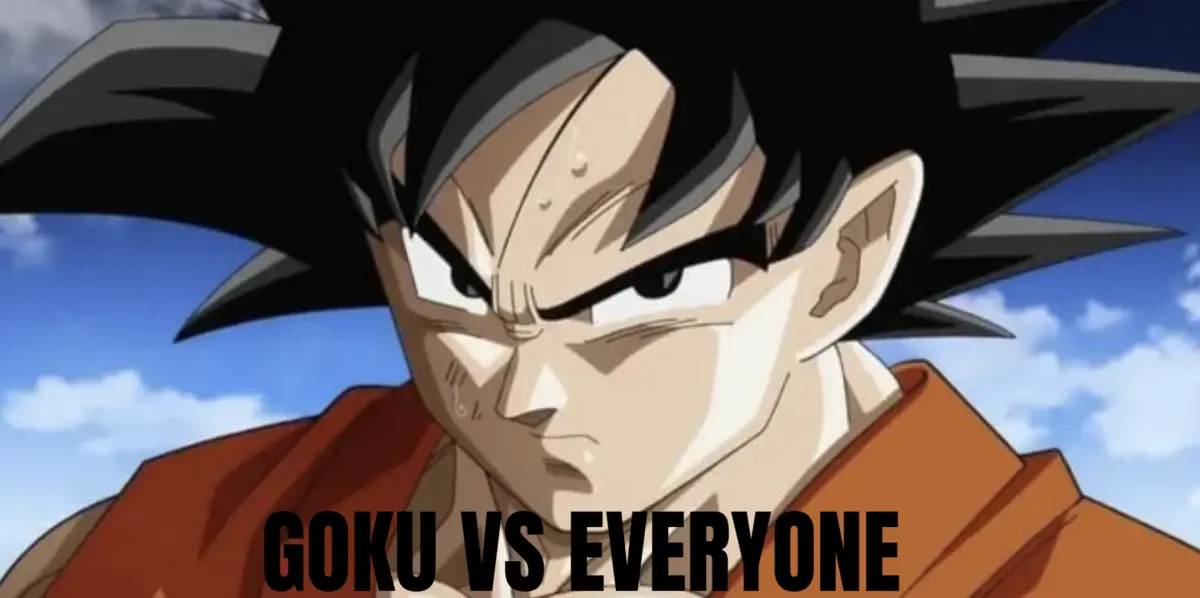
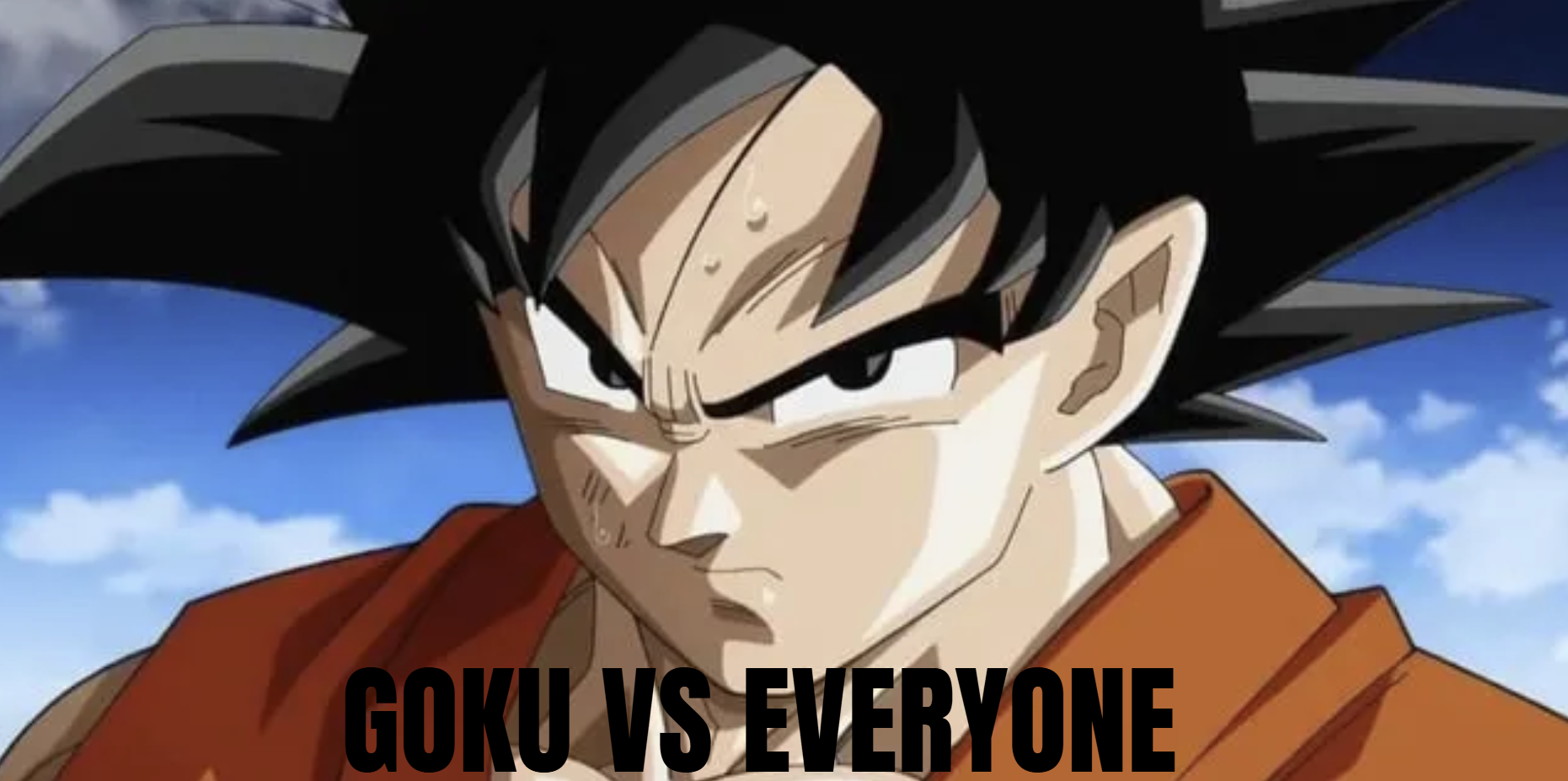
In the vast ecosystem of internet subcultures, few tropes have endured, mutated, and dominated online discourse quite like the concept of "Goku VS." At its core, the phenomenon refers to a longstanding internet tradition of pitting Son Goku—the iconic, spiky-haired protagonist of Akira Toriyama’s legendary Dragon Ball franchise—against virtually any other fictional character, abstract concept, or inanimate object in hypothetical combat.
What began in late-1990s and early-2000s web forums as earnest, albeit speculative, discussions regarding character abilities has systematically transformed over the last two decades. Today, "Goku VS." operates on a dual track: it remains a genuine cornerstone of anime power-scaling communities, while simultaneously serving as a tongue-in-cheek meta-meme that parodies the very nature of nerd fandom arguments.
Equipped with catchphrases like "Goku Solos" and the ubiquitous refrain "But can he beat Goku though?", internet users across platforms such as TikTok, X (formerly Twitter), Reddit, and Tumblr have weaponized the Saiyan warrior’s boundless power ceiling. Whether juxtaposed against mainstream superheroes like Superman, reality-warping magical girls like Madoka Kaname, or satirical powerhouses like Saitama from One-Punch Man, Goku occupies a unique space in digital folklore. He is simultaneously the ultimate standard of fictional strength and the ultimate punchline. This in-depth investigative feature explores the origins, evolution, cultural spread, and lasting legacy of one of the internet’s most persistent shared delusions and triumphs.
Detailed Chronology: From Print Magazines to Digital Memetic Dominance
The Genesis: Late 1990s to Early 2000s Forum Culture
The roots of the "Goku VS." phenomenon predate modern social media, tracing back to the nascent days of dial-up internet forums, early message boards, and Usenet groups. As anime crossed over into Western mainstream consciousness following the explosive popularity of Dragon Ball Z on television, fans naturally gravitated toward cross-universe comparisons. Questions such as "Could Goku beat Spider-Man?" or "How would Goku fare against a Jedi?" fueled endless digital ink.
This subculture broke into mainstream print consciousness in October 2002, courtesy of an issue of Wizard Magazine. Famed for its pop-culture insights and comic book coverage, issue #133 featured a dedicated "East vs. West" segment penned by writers and artists at Udon Studios. The feature pitted Goku against DC Comics’ premier icon, Superman.
In this hypothetical narrative, a universe-hopping confrontation orchestrated by the wizard Babidi led to a brutal, planet-shaking brawl on the moon. The comic showcased Goku’s instantaneous transmission, martial arts mastery, and Super Saiyan transformations clashing directly against the Man of Steel’s invulnerability and heat vision. Though Wizard’s crossover story ended with a nuanced stalemate and mutual respect, it planted a seed that would blossom into the internet’s most fiercely contested debate.
The 2010s: The Birth of the "Goku Solos" Era
As web video platforms like YouTube matured, the debate format found a new home. Channels dedicated to calculating feats, speeds, and destructive capacities emerged, institutionalizing power-scaling as a legitimate sub-genre of digital content creation. Most notably, the web series Death Battle thrust Goku into official, research-backed combat simulations, most famously against Superman on multiple occasions. Under Death Battle’s specific ruleset, Superman emerged victorious in each encounter, sparking massive multi-fandom firestorms that lasted for years.
Simultaneously, the sheer ubiquity of Goku in these debates inspired fatigue and humor. By the early 2010s, anime fans began noticing a predictable pattern: no matter how obscure, powerful, or narrative-driven an unrelated fictional universe was, a Dragon Ball fan would inevitably show up in the comment section to ask, "Can they beat Goku?"
This behavioral trend birthed the classic rhetorical weapon: "But Can He Beat Goku Though?" Shortly thereafter, the phrase "Goku Solos" entered the lexicon. It was deployed as an unironic declaration of absolute supremacy by die-hard fans, and later adopted by ironists as a catch-all phrase to dismiss complex narrative scaling entirely.
The Late 2010s to Present: The Post-Irony and "Slander" Era
By the late 2010s and early 2020s, the "Goku VS." phenomenon underwent a postmodern evolution. Merging with the "Your Fave" meme format across Twitter, Tumblr, and TikTok, internet users began intentionally matching Goku against hopelessly mismatched or absurdly weak opponents—or conversely, against abstract conceptual entities like "depression," "taxes," or "a single microscopic cell"—only to declare that Goku would somehow still lose.
Short-form video platforms became ground zero for "slander videos," fast-paced edits driven by energetic phonk music, intentionally low-resolution images, and satirical text overlays. Creators gleefully poked fun at toxic power-scalers, turning the very mechanics of fictional debates into high-art performance comedy.
Supporting Context & Metrics: Analyzing the Matchups
To understand why Goku remains the epicenter of these debates, one must examine the specific high-profile matchups that have sustained the trend for decades.
1. Goku vs. Superman: The Ancestral Rivalry
No discussion of fictional combat is complete without acknowledging the Goku vs. Superman rivalry. It is the grandfather of all internet matchups.
- The Arguments: Proponents of Goku point to his ever-expanding limits, divine training under celestial beings (Whis, Beerus), and universe-shaking clashes that threaten the fabric of reality itself (such as his fights with Beerus in Dragon Ball Super). Superman advocates, meanwhile, highlight the character’s status as a narrative archetype of limitless, sun-dipped power, capable of lifting infinite weight and surviving stellar explosions.
- Cultural Impact: This debate established the blueprint for all future crossover arguments, setting rigorous standards for how fans analyze speed, durability, and special abilities.
2. Goku vs. Madoka Kaname: Physical Might vs. Conceptual Reality
Pitting Son Goku against Madoka Kaname from the psychological dark fantasy series Puella Magi Madoka Magica represents the ultimate clash of philosophies within modern anime discourse.
- The Arguments: Goku represents the pinnacle of traditional shonen progression—hard work, martial arts discipline, physical transformation, and raw kinetic energy. Madoka, specifically in her "Ultimate Madoka" (Madokami) form, transcends physical reality altogether. She becomes a universal, conceptual law of the universe, erasing witches across all timelines before they are born.
- Cultural Impact: This matchup is frequently used in TikTok "edit wars" to highlight the divide between "street-level/universe-buster" shonen protagonists and "conceptual/reality-warping" magical girls. It remains a goldmine for ironic commentary regarding power-scaling logic.
3. Saitama vs. Goku: Gag Humor vs. Battle Shonen Logic
The rivalry between Saitama (One-Punch Man) and Goku bridges two different schools of manga writing.
- The Arguments: Saitama’s entire satirical premise is that he can defeat any opponent with a single punch, operating outside traditional logical scaling. Goku, conversely, earns every ounce of his power through arduous struggle, broken bones, and transformations.
- Cultural Impact: Fans endlessly debate whether Saitama’s narrative gag-power transcends the canonical power-scaling of the Dragon Ball universe, generating millions of views across fan art and animated YouTube breakdowns.
Official Statements and Fandom Perspectives
While "Goku VS." is largely a grassroots cultural phenomenon driven by fans rather than corporate mandates, key industry figures and creators have occasionally weighed in on the legacy of cross-universe debates.
In various interviews over the years, voice actors, localization directors, and anime historians have marveled at the longevity of Akira Toriyama’s creation. While Toriyama himself was famously focused on the humor, heart, and pacing of his storytelling rather than meticulous power-scaling spreadsheets, figures within the Western anime localization sphere have noted that Goku’s enduring appeal lies in his simple, pure motivation: he simply wants to find strong opponents and push his own limits.
Prominent content creators within the "AniTox" and "Power-Scaling" digital niches offer distinct perspectives:
- The Scalers: "Power-scaling isn’t just about picking favorites; it’s an analytical hobby," explains a prominent TikTok creator known for data-driven anime breakdowns. "Goku provides a baseline. Because his feats span decades of media, movies, and manga, he is the metric by which all other anime characters are measured."
- The Ironists: Conversely, meme creators view the phenomenon through a lens of absurdism. "When someone says ‘Madoka solos Goku,’ nobody is actually reading physics textbooks," notes a leading purveyor of anime slander edits. "We’re mocking the hyper-serious nature of fan communities. It’s about creating the most ridiculous narrative mental image possible."
Future Outlook: The Indestructible Legacy of the Saiyan
As the digital landscape continues to fragment across new platforms and AI-generated content reshapes how fans interact with media, the "Goku VS." meme shows no signs of slowing down.
With the ongoing continuation of the Dragon Ball franchise—including new anime adaptations, video games, and manga chapters—Goku’s arsenal of transformations and feats will inevitably expand, providing fresh fuel for online debates. Simultaneously, as internet culture grows increasingly self-referential, the layers of irony surrounding the "Goku Solos" mantra will likely grow even thicker.
Ultimately, the "Goku VS." phenomenon is much more than a collection of silly arguments about who would win a fight. It is a unifying language for global fandoms. It bridges language barriers, generational gaps, and opposing subcultures. Whether approached with the meticulous dedication of a stat-counting theorist or the laughing detachment of a shitposter, the question remains undefeated: Can they beat Goku though? Until the internet goes dark, the answer will always be up for debate.