Executive Overview
In the grand pantheon of video game iconography, few symbols are as instantly recognizable as Fallout’s Vault Boy. With his broad grin, blonde cowlick, and cheerful thumbs-up—often posed against a backdrop of apocalyptic ruin or nuclear devastation—the smiling mascot has become the undisputed face of one of entertainment’s most enduring multi-billion-dollar franchises. Yet, gaming history reveals a fascinating near-miss: Fallout almost launched without its most famous ambassador.
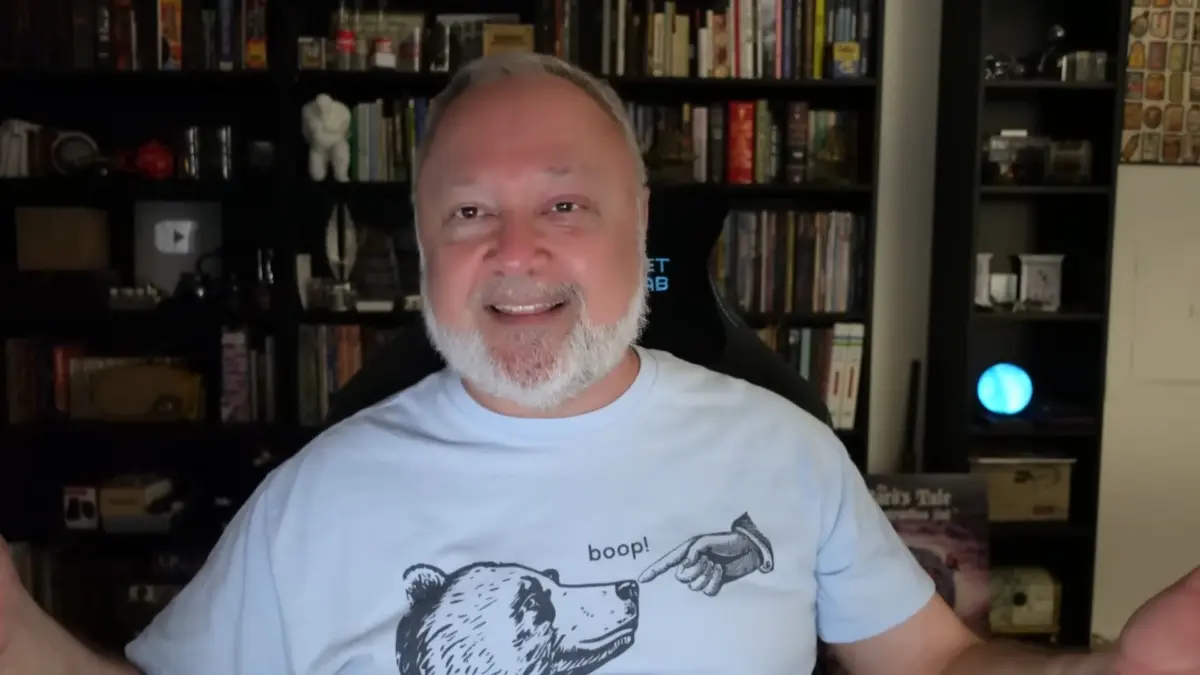
Recent revelations from Fallout co-creator Tim Cain, corroborated by archival reporting from the late 1990s, have brought to light the intense creative friction that occurred during the title’s early development under Interplay Productions. Long before the wasteland became a household name, Fallout was originally engineered to run on the ruleset of GURPS (Generic Universal Role-Playing System), a sophisticated tabletop system published by Steve Jackson Games (SJG)—not to be confused with the British designer of the same name who co-founded Games Workshop.
What began as a promising licensing partnership quickly devolved into a bitter creative dispute. Steve Jackson Games took issue with multiple core design pillars of Interplay’s fledgling post-apocalyptic project. Among their primary grievances were the visceral violence of the game’s cinematic opening and the aesthetic tone of its user interface. Most shockingly, SJG specifically demanded the total removal of the Monopoly-inspired cartoon mascot that would eventually become the legendary Vault Boy.
Facing strict creative oversight, potential legal threats, and an escalating stalemate, Interplay made a defining pivot. Rather than completely compromising their artistic vision, the developers severed ties with Steve Jackson Games, stripped out the GURPS mechanics, engineered their own proprietary SPECIAL system, and kept their cartoon mascot. This retrospective examines how a contentious boardroom dispute over a smiling cartoon character fundamentally shaped the DNA of modern role-playing video games.
Detailed Chronology: From Tabletop Ambitions to Digital Wastelands
To understand how close Fallout came to losing its identity, one must journey back to the mid-1990s, an era when Interplay Productions was carving out a dominant space in the computer role-playing game (CRPG) market. Fresh off successes like The Bard’s Tale and Wasteland, developer Tim Cain and his team set out to build a spiritual successor to Wasteland.
Phase 1: The GURPS Partnership and Initial Alignment
In the early stages of development, the Interplay team recognized that engineering a deeply tactical, open-world RPG from scratch required a robust, pre-tested ruleset. They secured a licensing deal with Steve Jackson Games to utilize GURPS. The system’s modularity and granular skill-based progression seemed tailor-made for a gritty, alternate-history retro-futuristic wasteland.
For a brief period, the collaboration hummed along. The game was even referred to internally and externally as a GURPS adaptation. However, as production ramped up and Interplay began drafting conceptual assets—including the game’s dramatic opening cinematic and the signature UI iconography for skills and perks—discrepancies in creative vision began to widen into chasms.
Phase 2: The Escalation of Creative Discontent
The core of the conflict lay in a fundamental disagreement over tone and artistic execution. While Interplay envisioned a dark, satirical world wrapped in a 1950s atomic-age aesthetic—where horrific violence was juxtaposed with pitch-black, cartoonish dark humor—Steve Jackson Games held a much more traditional, sober vision for how their intellectual property and system should be represented.
According to historical records and contemporary industry coverage, the friction came to a head over several distinct issues:
- The Opening Cinematic: The introductory video of Fallout, famous for its stark depiction of a smiling soldier executing a bound prisoner in a ruined Anchorage before the camera pulls back to reveal a burning America, was met with immediate hostility from the tabletop publisher. Jackson and his team found the violence gratuitous and tonally misaligned with their expectations.
- Sprite and Weapon Detail: SJG advocated for larger character sprites on screen with significantly more granular details applied to weaponry and equipment, pushing the visual design toward a more literal, tactical tabletop representation.
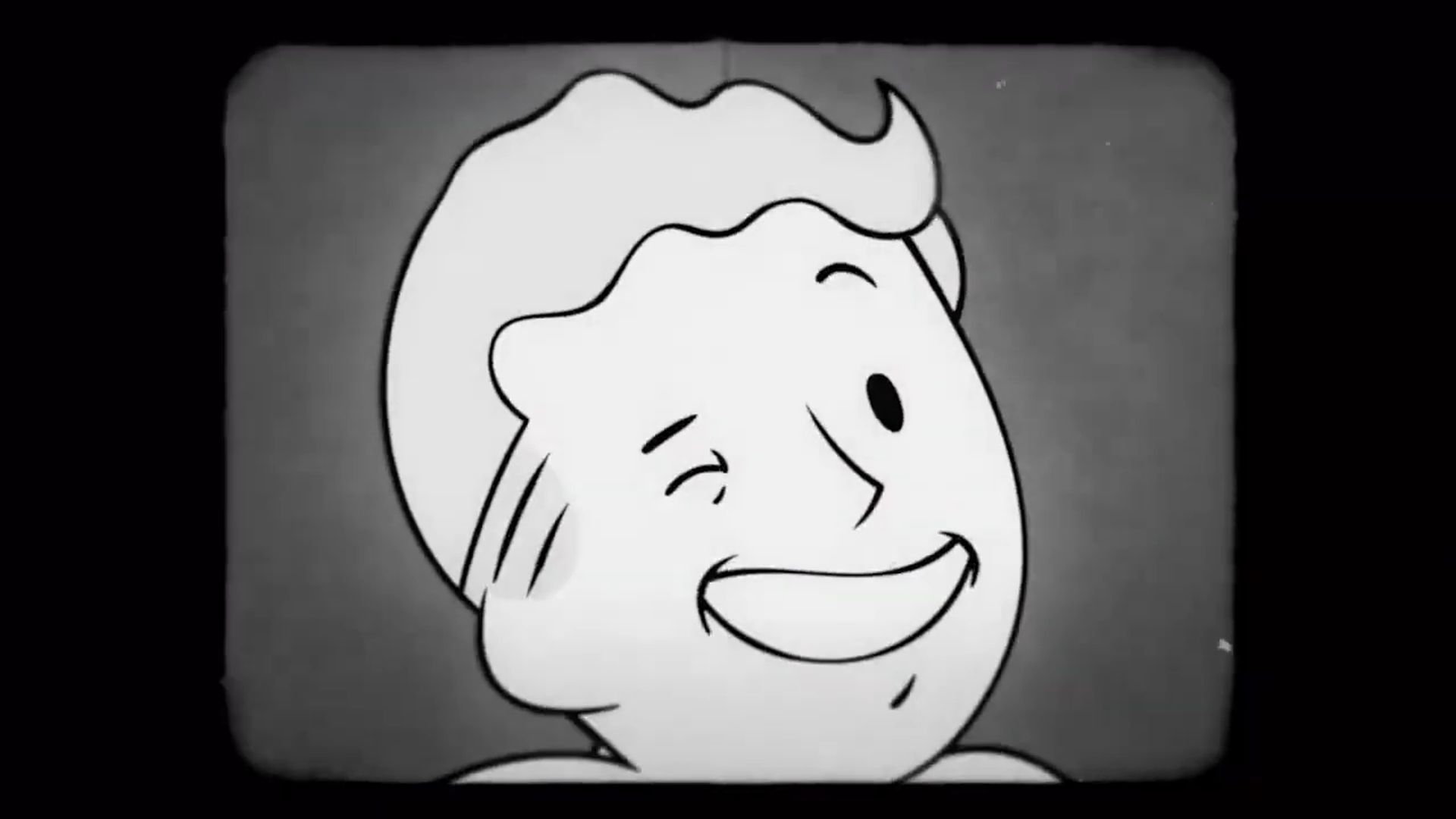
- The Cartoon Iconography: Most critically, the publisher took aim at the whimsical, Monopoly-style cartoon characters utilized to represent the game’s myriad perks, skills, and status effects. Among these was the prototype iteration of Vault Boy.
Phase 3: The Ultimatum and the Divorce
By early 1998, the relationship had soured beyond repair. In the April 1998 issue of PC Gamer, columnist Michael Wolf interviewed Interplay’s Feargus Urquhart regarding the fallout (pun intended) of the partnership. Urquhart noted that Jackson invoked clauses in the contract granting him extensive control over the environment in which the GURPS license was deployed.
Matters came to a point of no return when Steve Jackson essentially issued an ultimatum: either Interplay conform to SJG’s sweeping design mandates—including the total removal of the cartoon mascots and a dramatic toning down of the introduction—or face formal legal action.
Rather than bogging down development in red tape, litigation, and crippling creative compromises, Interplay made the decisive gamble to walk away from the license entirely. The team wiped the GURPS framework from the code, hastily engineered their own internal statistical framework—which would evolve into the iconic SPECIAL (Strength, Perception, Endurance, Charisma, Intelligence, Agility, Luck) system—and boldly retained the very cartoon mascot that Steve Jackson Games had so vehemently rejected.
Supporting Context & Metrics: The Anatomy of a Bulletproof Icon
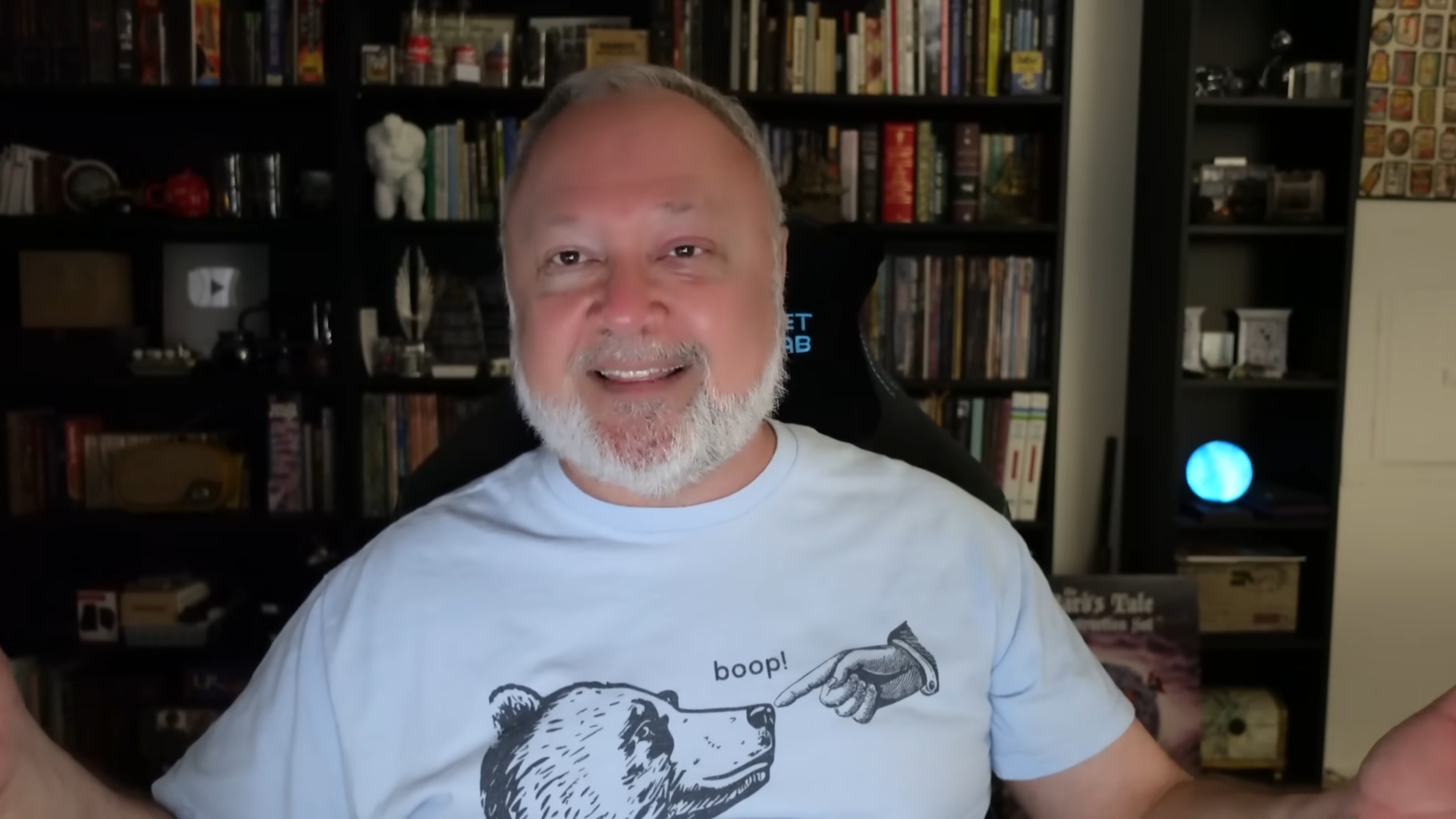
The irony of Steve Jackson Games’ aversion to the Vault Boy is sharply highlighted by the mascot’s subsequent cultural ubiquity. Tim Cain, in recent historical deep-dives into the development of Fallout, has emphasized why keeping the cartoon illustrations was a non-negotiable victory for the design team.
+-------------------------------------------------------------------+
|                   THE EVOLUTION OF FALLOUT'S IDENTITY             |
+---------------------------+---------------------------------------+
| Original Plan             | Steve Jackson's GURPS Ruleset         |
| Core Conflict             | Tone, Cinematic Violence, UI Art      |
| The Ultimatum             | Remove Vault Boy or Face Legal Action |
| Interplay's Response      | Drop the License, Keep the Mascot     |
| The Result                | Creation of SPECIAL & Vault Boy Legacy|
+---------------------------+---------------------------------------+
Usability and Readability at Icon Scale
From a purely utilitarian design perspective, Cain notes that having consistent, highly readable cartoons for dozens of individual perks and skills was an absolute necessity. In 1997, PC monitors operated at much lower resolutions, and UI inventory space was at a premium.
Complex, photorealistic icons would have blurred into indistinguishable pixels at thumbnail scale. The bold lines, expressive faces, and clear silhouettes of the Vault Boy illustrations—heavily inspired by 1950s advertising art and corporate mascot design (such as the Monopoly Man and Rich Uncle Pennybags)—ensured that players could instantly comprehend whether a perk related to "Bloody Mess," "Action Boy," or "Lockpick" simply by glancing at the icon.
Economic and Cultural Impact Metrics
While exact financial allocations for early 90s CRPG marketing are scarce, the long-term economic valuation of the Fallout intellectual property speaks volumes about the wisdom of Interplay’s defiance:
- Franchise Longevity: Spanning over two decades across mainline titles (Fallout 1 through 4), spin-offs (Fallout: New Vegas, Fallout 76), and a critically acclaimed Amazon Prime television adaptation, the franchise has generated billions of dollars in global revenue.
- Brand Recognition: Vault Boy consistently ranks among the top ten most recognizable corporate and gaming mascots in modern pop culture, appearing on everything from collectible Funko Pops and apparel to energy drinks and hardware collaborations.
- Critical Reception: The original 1997 release of Fallout secured universal critical acclaim, heavily praised for its uncompromising dark satire, a tone that would have been fundamentally neutered had Interplay acquiesced to SJG’s demands.
Official Statements and Archival Insights
The narrative surrounding the split has occasionally seen divergent perspectives from the key principals involved, adding a layer of classic industry folklore to the tale.
Steve Jackson’s Perspective
For his part, Steve Jackson has expressed retrospective bemusement regarding how the partnership dissolved. In various interviews over the years, Jackson maintained that he was largely unaware of an active crisis until journalists began cold-calling him for statements regarding the sudden termination of the deal. From the tabletop publisher’s viewpoint, the transition from paper to silicon involved creative territory that was moving too far outside their brand’s comfort zone, leading to protective corporate maneuvers over their intellectual property rights.
Interplay’s Perspective: Feargus Urquhart and Tim Cain
Interplay’s leadership team, however, remembers the friction as an untenable creative roadblock. As Feargus Urquhart detailed to PC Gamer in 1998, the contract’s vague provisions regarding environmental control gave the tabletop publisher immense leverage to micromanage the video game’s artistic expression.
Tim Cain’s recent commentary further illuminates the absurdity of the dispute in hindsight. The notion that a grinning, satirical cartoon character—designed to embody the grotesque corporate optimism of the pre-war United States juxtaposed against total nuclear annihilation—was rejected for "not fitting the tone" misses the entire satirical thesis of Fallout. The cheerful corporate mascot is, ironically, the precise narrative anchor that makes the bleakness of the wasteland land so effectively.
Future Outlook: The Enduring Legacy of an Unlikely Survival
As the Fallout universe continues to expand into new mediums—fueled by the massive global resurgence following Amazon’s hit television series and ongoing developments in Bethesda Softworks’ stable of games—the historical ripple effects of the 1997 Interplay-SJG split remain astonishingly clear.
Had Interplay chosen the path of least resistance—had they folded to Steve Jackson’s ultimatums, scrubbed the Monopoly-style cartoons, muted the opening cinematic, and reframed the game’s visual identity to match traditional tabletop constraints—Fallout might have launched as a tighter, more conventional GURPS adaptation. But it almost certainly would have lost its soul.
Instead, the developers chose artistic autonomy. They traded a well-known tabletop brand for an unproven, homemade acronym (SPECIAL) and doubled down on a cartoon mascot that warned us with a bright, sunny smile that war, indeed, never changes. Today, as millions of fans don Vault 111 jumpsuits and plaster Vault Boy decals across their Pip-Boys, the gaming world can collectively breathe a sigh of relief that Steve Jackson Games lost that argument over a cartoon thumb-up.