Executive Overview
The widespread adoption of artificial intelligence has fundamentally altered the knowledge economy. Generic large language models have effectively commoditized foundational information, allowing virtually anyone to query ChatGPT for a marketing pitch, a content strategy, or an analytical framework. However, this democratization of data has introduced a new vulnerability: while generic AI can generate a first draft for almost anything, users struggle to validate whether the output is tactically sound.
Enter the next evolution of digital entrepreneurship—expert-backed artificial intelligence. By embedding a specialist’s time-tested frameworks, decision-making patterns, and operational insights directly into tailored AI utilities, knowledge businesses can transition from teaching people how to think to allowing them to use an expert’s cognitive process.
Co-created by Kelly Sinclair and Michael Stelzner, recent industry dialogues reveal that this paradigm shift drastically transforms client outcomes. Traditional digital courses suffer from notoriously low completion rates, hovering between 10% and 20% according to recent studies. Conversely, introducing guided, AI-powered tool suites—colloquially known as "bot squads"—elevates completion rates to an impressive 70% to 80%. By bridging the gap between passive education and active execution, domain experts can productize their methodologies, eliminate the friction of the blank page, and secure predictable, recurring revenue streams.
Detailed Chronology: From Strategy to Software
Building a profitable, client-facing AI ecosystem requires a systematic progression, moving from opportunity identification to structural design and ultimate technological deployment.
Phase 1: Identifying the High-Value Friction Points
Before writing a single prompt or deploying software, creators must diagnose where an AI tool will deliver maximal utility. Four diagnostic areas highlight the greatest friction points in the client journey:
- Repetition: This targets recurring inquiries where clients repeatedly ask the same foundational questions. Automating these interactions through customized AI ensures instant, contextualized answers.
- The Implementation Gap: Strategy without execution yields zero results. When clients receive a master plan but stall on taking action, an AI workflow can guide them step-by-step through the execution phase.
- The Skip Zone: Every expert encounters essential tasks that clients treat as optional because they perceive them as a "heavy lift." Removing blank-page syndrome with an AI-generated starting point eliminates this psychological resistance.
- The Confidence Gap: Addressing mindset issues where clients understand the theoretical steps but lack the self-assurance to execute them independently. Real-time validation and targeted feedback bridge this gap.
Phase 2: Structuring the Tool via the IPO Framework
Once an opportunity is mapped, the architecture of the tool must follow a reliable structure. Kelly Sinclair advocates for the IPO Framework (Input, Process, Output) to ensure user-agnostic tools produce highly personalized results:
- Input: The variables provided by the user, such as business descriptions, target demographics, raw datasets, or intake questionnaire responses.
- Process: The core intellectual property of the expert. This includes a clearly defined objective for the tool, explicit operational instructions, and deep training resources—such as coaching call transcripts, proprietary worksheets, frameworks, and benchmark examples.
- Output: The final, customized deliverable promised to the user, ranging from a tailored messaging document to a prioritized audit report or a platform-specific pitch deck.
Phase 3: Real-World Implementations
To visualize how the IPO framework operates in practice, consider three distinct applications deployed by seasoned industry professionals:
- Moxie (Messaging Strategy): Built by a communications doctorate holder to counter the objection that messaging requires months of work. Clients feed voice-of-customer research into the tool, which applies the creator’s methodology to synthesize actionable marketing language immediately.
- Valerie the Visibility Auditor: Developed by Kelly Sinclair to redirect entrepreneurs away from low-ROI daily social posting and toward high-value collaborations and media appearances. The tool evaluates weekly activities against an expert-designed return-on-investment framework.
- Multi-Step PR Suites: Created by a public relations coach, this three-bot system handles intake and messaging generation, identifies matching podcasts based on niche relevance rather than raw popularity, and drafts personalized pitches in the client’s distinct voice.
Phase 4: Choosing a Delivery Architecture
Selecting the right technology stack to build and distribute these tools involves distinct operational tradeoffs:
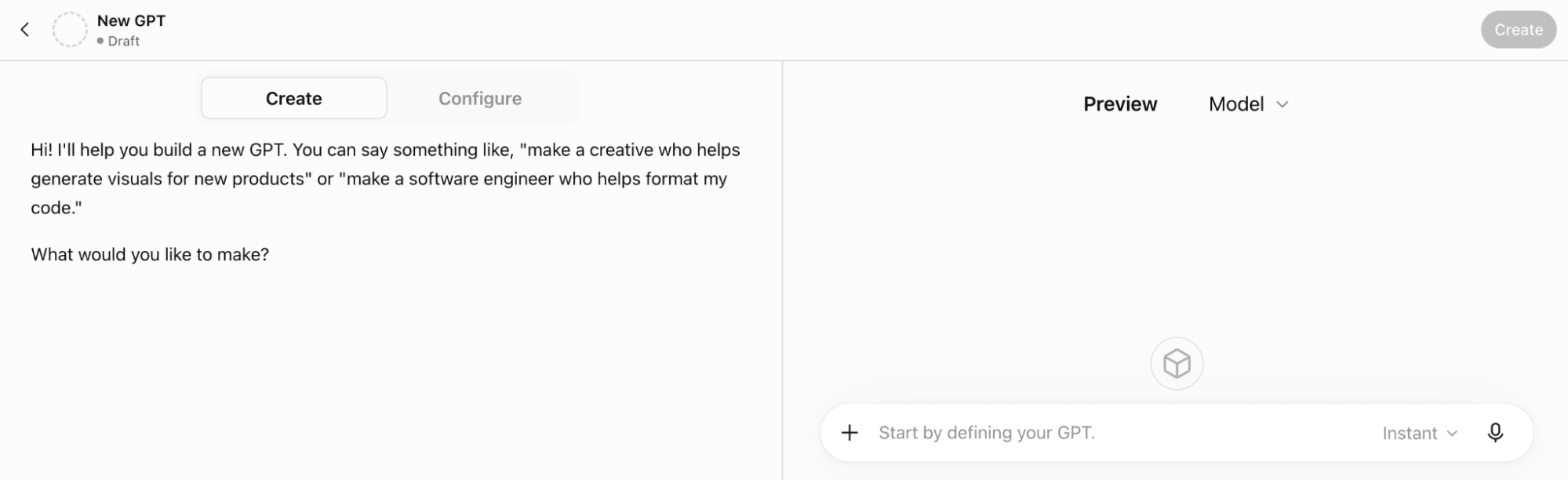
- Custom GPTs: The simplest entry point. They are easy to build conversationally within ChatGPT, making them ideal for proofs of concept or single-step workflows. However, they lack multi-step orchestration, pose access-control challenges in membership environments, and remain vulnerable to underlying model updates that can break functionality without warning.
- Claude Skills: Offering a significant capability upgrade, these allow for multi-agent orchestration where several tasks occur within a single connected workflow. Furthermore, they are portable across multiple platforms like ChatGPT and Gemini, though distributing them may expose underlying intellectual property.
- Custom Software via "Vibe Coding": Leveraging application builders like Lovable or advanced coding engines like Claude Code and OpenAI Codex allows non-technical creators to deploy standalone SaaS applications. While this grants total control over multi-tenancy, security, and user management, it requires the creator to willingly step into running a software business.
Supporting Context & Metrics
The push toward productized, expert-backed AI arrives at a critical juncture in the digital marketing landscape. According to recent industry reporting from comprehensive marketing surveys, professionals are largely navigating the artificial intelligence transition independently:

- 85% of practitioners learn artificial intelligence through self-directed experimentation.
- Only 7% receive formal institutional or corporate training.
- More than 50% personally fund their exploration of emerging software and tools.
This DIY approach underscores a massive market demand for guided, curated workflows. When clients purchase access to a bot squad, they are not merely buying raw computing power; they are purchasing curated clarity. They are bypassing the steep learning curve of prompt engineering and trial-and-error, stepping directly into an optimized methodology built by someone who has already solved the problem hundreds of times.
Furthermore, the data regarding course completion rates—jumping from an anemic 10%–20% baseline to 70%–80% with the inclusion of AI implementation tools—signals a fundamental restructuring of high-ticket consulting and digital education. Subscription models built around interactive tools command higher retention because clients refuse to relinquish utility that actively accelerates their workflow.
Official Insights & Methodological Best Practices
Deploying AI tools that bear an expert’s name and reputation requires stringent quality assurance. Because large language models are inherently non-deterministic—meaning the exact same prompt can yield varying outputs across multiple sessions—variability multiplies when users input entirely unique data sets.
Industry leaders emphasize the absolute necessity of rigorous testing before public deployment. Creators must subject their tools to stress-testing using diverse, edge-case user inputs to evaluate whether the generated outputs consistently meet the expert’s rigorous professional standards.
Additionally, optimization requires strategic resource allocation. As Sinclair notes, not every tier of a multi-step bot squad requires the most expensive, compute-heavy language model available. Routine intake steps can be effectively managed by lightweight models (such as Claude Haiku), while nuanced analysis and synthesis tasks can be routed to more sophisticated engines. This strategic matching preserves profit margins without degrading the quality of the final client deliverable.
Future Outlook
The transition from selling static information to offering dynamic, AI-powered implementation ecosystems represents the defining business model shift for experts, consultants, and coaches over the next decade.

As software development barriers continue to collapse through natural language coding interfaces and multi-agent orchestration, building bespoke operational software will no longer require a traditional engineering background. Instead, the ultimate competitive advantage will belong to domain experts who possess deep intellectual property, highly refined operational frameworks, and a distinct perspective on what actually works in their respective industries.
By packaging this expertise into secure, subscription-based tool suites, modern knowledge entrepreneurs can decouple their income from traded hours, drastically improve client success metrics, and build enduring digital assets that scale effortlessly in an AI-driven economy.