Executive Overview
Halloween has firmly established itself as one of the most culturally significant and creatively liberating holidays on the contemporary calendar. Far beyond simple costuming, the modern spooky season has evolved into a high-stakes arena for avant-garde self-expression, cinematic homage, and technical special effects artistry. Within the pantheon of seasonal cinema, few titles command the enduring, cross-generational reverence of Disney’s 1993 cult classic, Hocus Pocus. Set against the historic backdrop of Salem, Massachusetts, the film follows the accidental resurrection of the Sanderson sisters—three malevolent yet wildly charismatic witches who embark on a single night of nocturnal chaos, musical numbers, and comedic terror.
Among this triad of cinematic royalty, Winifred Sanderson—portrayed with unmatched theatrical brilliance by Bette Midler—stands supreme. With her instantly recognizable chipmunk pout, Queen-of-Hearts architectural coiffure, and imperious demeanor, Winifred remains an all-time favorite muse for seasonal dress-up. However, translating a live-action cinematic character known for exaggerated, almost caricature-like features into a compelling, wearable look requires advanced technical skill.
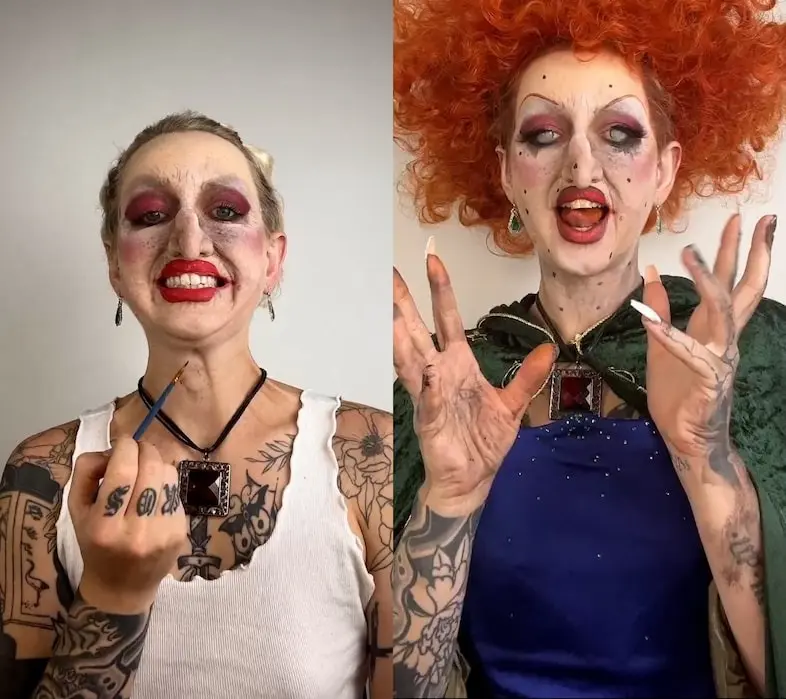
In response to the escalating demand for professional-grade DIY transformations, Dazed collaborated with visionary make-up and special effects artist Xalia, a prominent member of the Dazed Beauty Community. In an exclusive masterclass, Xalia breaks down the intricate, multi-step process required to authentically recreate Winifred Sanderson’s iconic visage. Far from a basic face-paint tutorial, this guide explores the convergence of traditional theatrical makeup techniques, prosthetic application, and precise contouring to achieve a screen-accurate result.
This report provides a comprehensive, step-by-step documentation of Xalia’s transformation process, exploring the foundational techniques, structural mechanics, and artistic philosophies that elevate simple holiday dressing into a masterclass of cinematic SFX artistry.
Detailed Chronology: The Step-by-Step SFX Transformation Blueprint
Recreating the complex physiognomy of Bette Midler’s Winifred Sanderson requires a meticulous, chronological approach to special effects makeup. Every phase builds structurally upon the last, moving from raw canvas preparation to sculptural prosthetics, dimensional illusion, and final character detailing. Below is the exhaustive, step-by-step chronology of the transformation process as detailed by SFX artist Xalia.
Phase I: Foundation and Prosthetic Integration
The transformation begins with the fundamental neutralization of the artist’s natural facial architecture to accommodate the exaggerated features of the character.
- Step 1: Brow Blocking and Neutralization. To completely erase the natural brow line—a crucial prerequisite for drawing on Winifred’s hyper-stylized, high-arched brows—the first step involves flattening and gluing down the eyebrows. Using professional-grade spirit gum or an extra-strength glue stick, the brow hairs are brushed upward in the direction of growth, pressed flat against the skin, and sealed with a translucent setting powder. This process is repeated to ensure a completely smooth, hairless canvas over which skin-matching products can be layered without texture interruption.
- Step 2: Prosthetic Nose Application. Winifred’s most defining facial feature is her prominent, downturned witch’s nose. Xalia utilizes a lightweight prosthetic nose piece to achieve this silhouette. Using medical-grade prosthetic adhesive (such as Pros-A-Ade or spirit gum), the artist applies glue along the outer edges of the prosthetic piece, carefully aligning it over the bridge of the nose. Pressure is applied evenly outward to eliminate air bubbles and ensure a seamless edge transition between the prosthetic piece and the natural skin.
- Step 3: Color Correction and Skin-Tone Matching. Once the prosthetic is securely anchored, the raw latex or foam-latex must be visually melted into the artist’s complexion. Liquid foundation and specialized color-correcting pigments are stippled across the prosthetic surface. Continuous, patient blending is required at the seams to eradicate any demarcation lines. Once the foundation is uniformly distributed, the entire nose structure is heavily baked with translucent setting powder to eliminate shine, absorb excess oils, and lock the base pigments into place.
Phase II: Dimensional Sculpting and Texture Mapping
With the base structure established, the artist shifts focus to creating the aged, gaunt skeletal structure characteristic of a centuries-old witch.
- Step 4: Contour Mapping and Age Simulation. Moving beyond standard cosmetic contouring, this step requires utilizing deep contour shades to physically alter the perception of bone structure. Contour pigment is applied heavily along the hollows of the cheeks, but unlike standard beauty applications, the line is extended further along the cheekbone and blended upward, wrapping dramatically around the eye socket. This creates a sunken, hollowed-out expression.
- Step 5: Dynamic Skin Spotting. To emulate the weathered, organic texture of aged skin that has endured centuries of exposure to elements and dark magic, the artist utilizes a specialized flicking technique. By loading an old makeup brush or a toothbrush with diluted brown and ochre pigments and pulling back the bristles, fine, random speckles and age spots are flicked across the face and high points of the cheeks.
Phase III: Fine Detail Work and Expression Lines
The third phase introduces intricate linework to simulate deep wrinkles, sharp facial expressions, and the distinctive theatrical features of the Sanderson matriarch.
- Step 6: Base Eyeshadow Application. A deep, moody eyeshadow shade—incorporating rich burgundies, bruised purples, or charcoal blacks—is packed onto the eyelid and aggressively blended outward to create a hollow, haunted gaze that mirrors Winifred’s intense cinematic presence.
- Step 7: Precision Wrinkle Rendering. Utilizing a fine-tip detailing brush and a darker contour cream or water-activated paint, the artist physically draws in the character’s signature wrinkles. Particular focus is dedicated to the nasolabial folds (smile lines) around the mouth and the crow’s feet radiating from the corners of the eyes.
- Step 8: Cervical Contouring. Aging does not stop at the jawline. To maintain continuity, wrinkles and sagging lines are painted down the neck and gently blended upward using a sponge or fluffy brush. This creates a subtle, multidimensional effect that reads convincingly under both direct lighting and shadow.
Phase IV: Character Accents and Finishing Details
The final phase introduces the hyper-stylized cosmetic flourishes that instantly signal the character to any viewer.
- Step 9: Dramatic Over-Lining and Lip Shaping. Winifred Sanderson is universally famous for her exaggerated "chipmunk pout"—a tiny, perfectly rounded, crimson-lipped expression. Using a bold red lipstick and a precision lip liner, the artist completely ignores the natural lip borders. The lips are drawn significantly smaller and more rounded right at the center of the mouth, creating a distinct, vintage 1930s-meets-17th-century aesthetic.
- Step 10: Arched Brows and Facial Moles. With a fine liner brush, the freshly blocked brows are replaced with impossibly thin, sharply arched, high-drama eyebrows set at an imperious angle. Additionally, the artist paints signature facial moles on the cheek and chin to complete the classic silhouette.
- Step 11: Ocular and Dental Transformation. To finalize the transformation, the final accessories are integrated: voluminous false eyelashes are applied to open up the eye, theatrical fake teeth are inserted to alter the speech patterns and jaw line, and striking white or pale blue contact lenses are put in place to strip away humanity and complete the resurrected witch aesthetic.
Supporting Context & Metrics: The Cultural and Economic Footprint of Hocus Pocus
To fully understand why tutorials like Xalia’s resonate with millions of modern audiences, one must examine the staggering cultural persistence and economic impact of Hocus Pocus within the modern entertainment and holiday landscape.
The Box Office Paradox and Cult Resurrection
Released by Walt Disney Pictures on July 16, 1993, Hocus Pocus was initially far from a commercial blockbuster. Directed by Kenny Ortega and starring Bette Midler, Sarah Jessica Parker, and Kathy Najimy, the film grossed approximately $39.5 million domestically against a production budget estimated at $28 million. Critically, it received mixed reviews upon release, with mainstream reviewers finding the tone uneven.
However, the film found its true audience in the burgeoning era of home video and cable television. Throughout the late 1990s and 2000s, Hocus Pocus became an annual autumn ritual, heavily rotated on networks like Disney Channel and Freeform (formerly ABC Family) during their beloved "31 Nights of Halloween" programming block.
Metrics of Seasonal Dominance
- Viewership Retention: Year after year, Hocus Pocus routinely pulls in millions of concurrent viewers during October broadcasts, consistently outperforming contemporary seasonal releases in cable television ratings.
- Merchandise Expansion: The intellectual property has generated tens of millions of dollars in ancillary merchandise, ranging from Funko Pop figures and spirit jerseys to home decor, board games, and high-end cosmetic collaborations.
- The Sequel Phenomenon: Capitalizing on this enduring love, Disney released Hocus Pocus 2 in September 2022 on Disney+. The sequel shattered streaming records, becoming the most-watched movie premiere on the platform during its opening weekend, proving that the appetite for the Sanderson sisters had only intensified over nearly three decades.
The Evolution of Halloween Beauty Content
The intersection of classic cinema and digital-era DIY tutorials has revolutionized the creator economy. Platforms like Instagram, TikTok, and YouTube experience a massive surge in engagement every October, with SFX makeup tutorials serving as top-tier performing content. Creators within communities like the Dazed Beauty Community utilize these high-profile transformations to bridge the gap between high fashion, cinematic artistry, and accessible digital education. By breaking down complex prosthetic applications into digestible, step-by-step video formats, artists empower fans to transition from passive consumers of media into active, creative participants in Halloween culture.
Official Statements & Industry Perspectives
The proliferation of high-level SFX tutorials for classic characters reflects a broader shift in how modern beauty and entertainment intersect. Industry professionals, cultural commentators, and artists alike have weighed in on the cultural significance of character-driven transformations.
The Artistry of Transformation: Insights from Xalia
Reflecting on the philosophy behind her Dazed masterclass, SFX artist Xalia emphasizes the importance of balancing technical precision with theatrical reverence:
"Recreating a character as iconic as Winifred Sanderson isn’t merely about slapping on red lipstick and a witch hat. It’s an exercise in sculptural illusion. When you are dealing with a performance as larger-than-life as Bette Midler’s, your makeup has to match that energy. You are physically reshaping bone structure, playing with light and shadow, and exaggerating human anatomy to tell a story on the face. The magic of Halloween lies in that complete suspension of reality—looking in the mirror and seeing someone entirely different staring back at you."
The Cultural Legacy of the Sanderson Sisters
Speaking on the enduring appeal of the film and its characters, cultural historians and Disney executives have frequently noted the unique multigenerational bond the franchise creates. In interviews surrounding the release of Hocus Pocus 2, lead actress Bette Midler reflected on the unexpected longevity of her character:
"We had no idea when we were making the original film in 1993 that these women would become a permanent fixture of American autumn folklore. Winifred is delightfully wicked, deeply flawed, incredibly theatrical, and yet fiercely loyal to her sisters. There is something profoundly liberating about playing—and dressing up as—a character who refuses to apologize for taking up space, making noise, and causing magnificent trouble."
Beauty industry analysts point out that character transformations provide a vital outlet for creative experimentation that traditional beauty routines rarely afford. By leaning into prosthetics, dramatic contouring, and non-traditional color palettes, everyday beauty enthusiasts can step outside their comfort zones and master professional-grade techniques that would otherwise remain confined to Hollywood makeup trailers.
Future Outlook: The Next Generation of Cinematic SFX and Holiday Artistry
As we look toward the future of Halloween culture and digital beauty media, several key trends are poised to shape how audiences engage with cinematic character transformations.
1. The Democratization of Professional SFX Tools
What was once restricted to professional Hollywood makeup artists working with expensive silicone, foam latex, and specialized molding kits is increasingly accessible to the everyday consumer. Brands are now producing user-friendly prosthetic kits, water-activated paints, and skin-safe adhesives specifically packaged for the direct-to-consumer digital market. Tutorials like Xalia’s serve as crucial educational bridges, demystifying professional techniques and equipping home creators with the knowledge needed to achieve cinematic results in their own bedrooms.
2. The Rise of Immersive, Multi-Platform Fan Communities
The boundary between watching a film and participating in its universe continues to dissolve. With the expansion of augmented reality (AR) filters, virtual try-ons, and immersive digital communities like Dazed Beauty, fans do not just replicate makeup looks—they remix, modernize, and share them across global networks in real-time. Future Halloween seasons will likely see an even greater integration of physical SFX makeup with digital enhancements, creating hybrid visual art forms.
3. Sustainable and Reusable Prosthetics
As environmental consciousness permeates the beauty and entertainment industries, the future of SFX makeup is shifting toward sustainability. Artists and manufacturers are investing in reusable silicone prosthetics, eco-friendly glues, and non-toxic, cruelty-free cosmetic pigments that reduce single-use waste without compromising on the dramatic payoff required for characters like Winifred Sanderson.
Conclusion
The enduring legacy of Hocus Pocus—and the vibrant community of artists keeping its spirit alive through masterclasses like Xalia’s for Dazed—demonstrates that Halloween is much more than a single night of festivities. It is a vital cultural touchstone for artistic innovation, storytelling, and imaginative reinvention. By mastering the intricate art of blocking brows, blending prosthetics, over-lining lips, and painting simulated wrinkles, beauty enthusiasts do more than dress up as a witch; they step directly into cinematic history, keeping the magic of Salem alive for generations to come.