Executive Overview
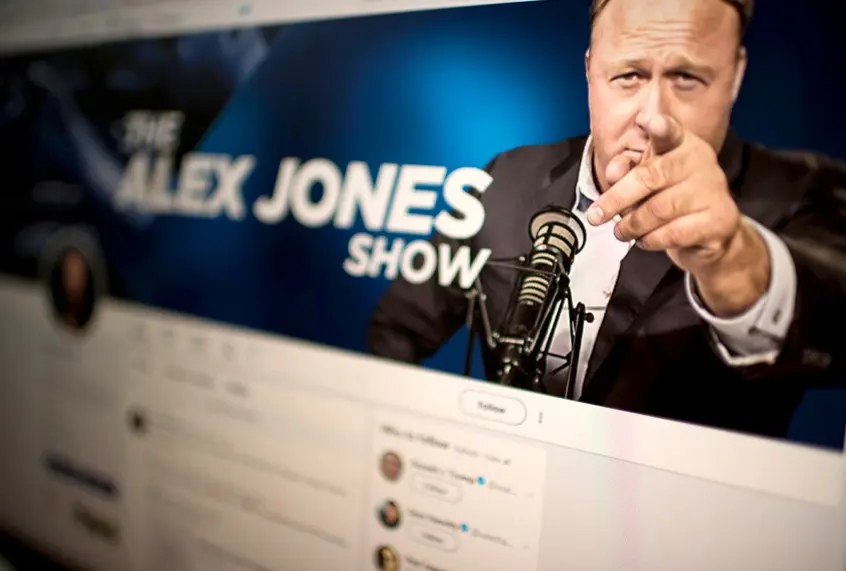
In a dramatic policy reversal that sent shockwaves through the tech and media landscapes, Twitter enacted a seven-day suspension of conspiracy theorist Alex Jones and his media platform, Infowars, in August 2018. The move marked a sharp departure from the microblogging platform’s previous stance of fierce defense regarding Jones’s digital footprint. For months, Twitter CEO Jack Dorsey and his executive team had resisted mounting public pressure to ban the far-right broadcaster, repeatedly citing a commitment to an open internet and a strict adherence to written platform rules that, at the time, Jones’s posts technically skirted rather than crossed.
However, a breaking point was reached when Jones used his personal account to call on supporters to ready their "battle rifles" against mainstream media organizations and other perceived adversaries. This explicit call to arms breached Twitter’s core safety policies prohibiting the promotion or incitement of violence against civilians.
The suspension placed Twitter at the epicenter of a broader, high-stakes reckoning across Silicon Valley. Prior to Twitter’s action, a coalition of tech giants—including Apple, Facebook, Pinterest, Spotify, and Google’s YouTube—had already coordinated to ban or severely restrict Jones and Infowars content for violating hate speech and harassment terms. While Twitter initially attempted to carve out a distinct philosophy centered on temporary "timeouts" and free-expression absolutism, the platform ultimately bowed to relentless scrutiny, transforming the debate over online moderation, hate speech, and the social responsibilities of tech monopolies into a watershed moment for the digital age.
Detailed Chronology of the Ban and Policy Reversal
The sequence of events leading to Twitter’s pivot on August 14, 2018, unfolded against a backdrop of coordinated cross-industry pressure and escalating infractions by Jones.
The Industry-Wide Crackdown
In the early days of August 2018, the digital ecosystem shifted dramatically. For years, major tech platforms had allowed Infowars and Alex Jones to operate under the protective umbrella of user engagement and "newsworthiness" exemptions. That protective shield shattered within a 48-hour window.
- Apple removed the Infowars podcast app from the App Store, citing violations of guidelines against hate speech.
- Spotify scrubbed multiple episodes of Jones’s podcasts for repeated violations of hate speech policies.
- Facebook removed four pages associated with Jones and Infowars, taking down content that glorified violence and used dehumanizing language against transgender people, Muslims, and immigrants.
- YouTube terminated Jones’s primary channel—which boasted over 2.4 million subscribers—alongside several auxiliary channels, citing repeated strikes for hate speech and harassment.
Twitter’s Initial Resistance
Amidst this unprecedented exodus, Twitter stood virtually alone. When pressed by digital civil rights advocates, journalists, and everyday users as to why Jones remained active on the platform, Jack Dorsey and company dug in their heels. Dorsey maintained that while Jones’s rhetoric was inflammatory, conspiratorial, and deeply offensive, it did not explicitly violate Twitter’s Terms of Service at the structural level.
Dorsey’s initial philosophy was rooted in a libertarian approach to platform governance: digital squares should resist bending to public outrage or the personal political leanings of tech executives. The prevailing corporate consensus inside Twitter was that preemptive or subjective bans would open a Pandora’s box of ideological censorship.
The Catalyst: "Battle Rifles" and the Suspension
The defensive posture collapsed on August 13, 2018. Jones posted a video link to his Twitter account in which he directly implored his followers to get their "battle rifles" ready for a conflict with the mainstream media and political opponents.
The post was an explicit, undeniable violation of Twitter’s anti-violence policy, which explicitly bans individuals or organizations from using or promoting violence against civilians to further their ideological or political causes.
Acting swiftly on the specific violation, Twitter locked Jones’s personal account and the official Infowars account out of core functions for seven days. The platform framed the punishment as a mandatory "timeout"—a temporary disciplinary measure designed to force compliance and reflection without resorting to an immediate, permanent death sentence for the accounts.
Supporting Context & Metrics: A History of Toxic Hoaxes
To fully understand the weight of Twitter’s disciplinary action, one must examine the sprawling, years-long record of harmful falsehoods peddled by Alex Jones through Infowars. Far from being a mere eccentric commentator, Jones had built a sprawling media empire predicated on weaponized misinformation, harassment campaigns, and malicious hoaxes that repeatedly spilled over into the physical world.
The Sandy Hook Defamation Lawsuits
Perhaps the most egregious chapter in the Infowars saga involved the systematic harassment of the families of children murdered in the 2012 Sandy Hook Elementary School massacre. Jones spent years broadcasting claims that the mass shooting was a "false flag" operation staged by the federal government using "crisis actors."
These broadcasts unleashed waves of targeted harassment, death threats, and stalking against grieving parents by Infowars adherents. The psychological toll prompted multiple families to file massive defamation lawsuits against Jones in Texas and Connecticut. These legal battles ultimately materialized into multi-million-dollar judgments that pushed Infowars toward bankruptcy, providing the financial and legal backdrop to the digital deplatforming movement.
A Catalog of Conspiracies
Jones’s platform relied on a revolving door of inflammatory falsehoods, including:
- 9/11 "Trutherism": Promoting theories that the United States government orchestrated or intentionally permitted the September 11 terrorist attacks.
- Targeted Harassment of Public Figures: Launching baseless allegations of pedophilia against high-profile political figures and investigators, including Special Counsel Robert Mueller during his investigation into Russian interference in the 2016 election.
- Public Health Misinformation: Falsely claiming that vaccines caused autism, and propagating hoaxes surrounding prominent civil rights and political events.
The Scale of the Platforms
Before the August 2018 bans, the numerical footprint of Jones’s digital empire was immense. Infowars videos pulled in tens of millions of views monthly across YouTube and Facebook. His Twitter accounts reached hundreds of thousands of followers, serving as a vital bridge to amplify his daily broadcasts and drive web traffic to his online store, where he sold dietary supplements and survivalist gear to monetize his outrage machine. The simultaneous actions by tech conglomerates effectively severed Jones’s primary arteries of audience acquisition.
Official Statements and the Battle Over Moderation Philosophy
The fallout from Twitter’s seven-day suspension triggered an intense public relations and philosophical debate led directly by CEO Jack Dorsey. In a high-profile interview with Lester Holt on NBC Nightly News, Dorsey defended the company’s handling of the situation while grappling with the contradictions of modern content moderation.
"We can’t build a service that is subjective just to the whims of what we personally believe... I feel any suspension, whether it be a permanent or a temporary one, makes someone think about their actions and their behaviors."
— Jack Dorsey, Twitter CEO
Dorsey elaborated that timeouts served a specific psychological and behavioral function within Twitter’s disciplinary framework. "Whether it works within this case to change some of those behaviors and change some of those actions, I don’t know," Dorsey told NBC News. "But this is consistent with how we enforce."
Clarifying the Stance on Social Media
Following the broadcast of the interview, Dorsey took to Twitter—the very medium under discussion—to clarify his remarks amid a flurry of misinterpretations from both political flanks. He sought to distinguish between broad policy enforcement and specific individual outcomes:
“To clarify: I was speaking broadly about our range of enforcement actions, when asked why we timeout functionality on Twitter. I don’t assume everyone will change their actions. Enforcement gets tougher with further reported violations.”
Critics on the left argued that Dorsey’s defense was a thinly veiled excuse for coddling hate speech and allowing bad actors to weaponize the platform for too long. They contended that Jones had crossed ethical and safety lines years prior, and that treating incitements to violence as mere policy infractions deserving of a "timeout" minimized the real-world physical danger posed by his followers.
Conversely, critics on the right seized upon the reversal as proof of ideological bias, arguing that Silicon Valley executives were bowing to progressive pressure campaigns—such as those spearheaded by watchdog organizations and researchers like Jared Holt—to silence conservative and anti-establishment viewpoints.
Future Outlook: The End of the Wild West on Social Media
The temporary suspension of Alex Jones in August 2018 served as a vital bellwether for the future of digital governance. It proved that even the most reluctant tech platforms could no longer maintain a hands-off approach to content moderation when public safety, brand risk, and corporate liability collided.
The Periscope Loophole and Permanent Bans
Even as the seven-day timeout ticked down, the limits of Twitter’s incrementalist strategy became apparent. While Jones was barred from tweeting or retweeting during his weeklong penalty, industry watchers noted a glaring loophole: he still retained access to Periscope, the live-streaming video platform owned by Twitter. For a brief window, Periscope stood as the last major streaming bastion available to Jones, as YouTube and Facebook had completely expunged his channels.
This anomaly highlighted the disjointed and reactive nature of tech policies at the time. Security experts and advocacy groups intensified their calls for unified industry standards. They argued that piecemeal suspensions and fragmented rules across different apps belonging to the same parent company allowed bad actors to simply pivot to adjacent features.
A Turning Point for Tech Governance
Ultimately, the Alex Jones deplatforming era established a new precedent. It signaled the definitive end of the "wild west" era of social media, where platforms claimed immunity from the real-world consequences of hosting extremist content under Section 230 protections.
By stepping across the rubicon of enforcement—however haltingly and belatedly—Jack Dorsey and Twitter acknowledged a sobering reality: digital public squares cannot survive without enforceable boundaries. The debate sparked by the 2018 suspension laid the groundwork for the more aggressive, institutionalized content moderation policies that would govern major tech platforms in subsequent years, forever altering how information, misinformation, and extremism are managed online.