Executive Overview
In the rapidly evolving landscape of artificial intelligence, one of the persistent friction points for power users and enterprise professionals has been the "stateless" nature of large language models (LLMs). Despite massive context windows, AI assistants have historically suffered from a form of digital amnesia, treating distinct workspaces, products, and chat threads as isolated silos. This structural limitation has forced users to repeatedly brief, context-set, and re-upload proprietary data when moving between different tasks.
To eliminate this systemic inefficiency, Anthropic has announced a major architectural overhaul of its Claude ecosystem. The safety-focused AI pioneer is officially merging the memory systems of its core chat interface and its collaborative workspace tool, Claude Cowork. This unified memory framework ensures that knowledge acquired by Claude in one interaction domain is dynamically preserved and accessible when the user transitions to another.
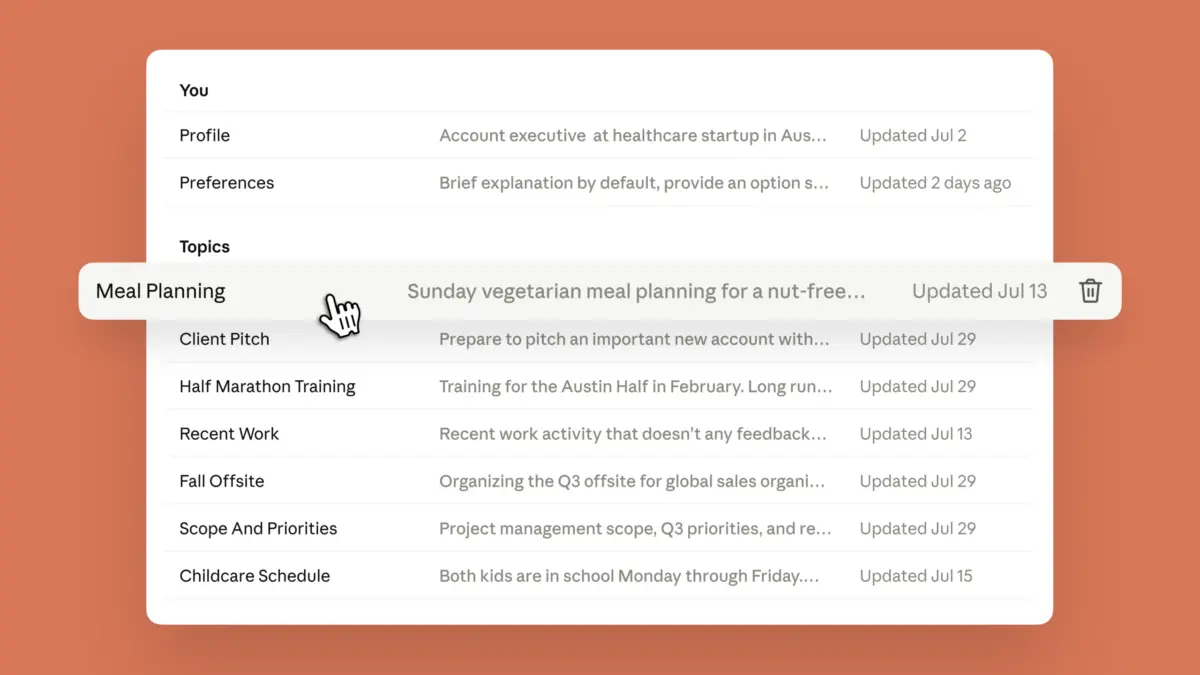
In tandem with this integration, Anthropic is introducing a comprehensive suite of user-facing data sovereignty tools. Users will now have granular visibility into Claude’s memory bank, allowing them to inspect, edit, or delete specific pieces of retained information. This release represents a significant step forward in Anthropic’s mission to transform Claude from a reactive conversational partner into a continuous, stateful digital coworker.
Detailed Chronology: The Evolution of Claude’s Memory Architecture
To understand the significance of this update, it is necessary to examine the historical trajectory of memory management in generative AI systems.
+-------------------------------------------------------------------------+
|                      EVOLUTION OF CLAUDE'S MEMORY                       |
+-------------------------------------------------------------------------+
| PHASE 1: Ephemeral Context (Early LLMs)                                 |
| - Stateless interactions; memory limited to current chat session.       |
| - High token costs; constant manual copy-pasting required.              |
+-------------------------------------------------------------------------+
| PHASE 2: Expanding the Window (Claude 2 & 3)                            |
| - Context window expanded to 100k-200k tokens.                          |
| - Document uploads allowed, but memory reset when starting new chats.   |
+-------------------------------------------------------------------------+
| PHASE 3: Fragmented Workspaces (Early 2026)                             |
| - Claude Cowork and Projects introduced.                                |
| - Context preserved within specific projects, but isolated from Chat.   |
+-------------------------------------------------------------------------+
| PHASE 4: The Unified Agentic Memory (Present)                           |
| - Cross-product synchronization (Chat <-> Cowork).                      |
| - Real-time, mid-session memory updates.                                |
| - Granular user-facing control, editing, and privacy guardrails.        |
+-------------------------------------------------------------------------+
The Ephemeral Context Era (Phase 1)
In the early iterations of consumer-facing AI chatbots, memory was strictly bound to individual chat sessions. Once a session was closed or a new thread was initiated, the underlying model reset to its baseline state. This stateless architecture required users to constantly re-input instructions, brand guidelines, and operational parameters—a repetitive process often referred to as the "rebriefing tax."
The Context Window Expansion (Phase 2)
As competition intensified, AI developers focused on expanding the "context window"—the amount of data a model can process in a single prompt. Anthropic led this charge, pioneering 100,000-token and eventually 200,000-token context windows. While this allowed users to upload entire books or codebases into active memory, it did not solve the problem of long-term, cross-session persistence. Every new conversation remained a blank slate.
The Fragmented Workspace (Phase 3)
To address the demands of collaborative and multi-step workflows, Anthropic introduced specialized environments, culminating in features like Claude Cowork and Projects. These environments allowed users to ground Claude in specific reference materials for targeted tasks. However, a frustrating divide remained: ideas brainstormed in the conversational chat interface could not be easily acted upon within Cowork without manual migration of the context.
The Unified Agentic Memory (Phase 4)
Announced on Tuesday, the latest update bridges this gap. By merging the memory backend of Claude Chat and Claude Cowork, Anthropic has created a shared, persistent cognitive layer.

Crucially, the mechanics of how Claude commits information to memory have also shifted. Previously, memory systems typically analyzed and summarized conversations only after a thread had ended. Claude will now identify and record key facts, preferences, and operational details in real-time as the conversation unfolds. This allows for immediate, mid-session synchronization, ensuring that any information shared in an ongoing chat is instantly accessible to Claude Cowork.
Supporting Context & Metrics: The Economics of Context and AI Agent Efficiency
The business case for unified memory systems is deeply tied to both operational efficiency and computational economics.
The Cost of Context Drift
In enterprise settings, the time spent re-establishing context with an AI tool translates directly to lost productivity. If an executive spends an average of five minutes per day re-uploading documents, pasting background briefs, or correcting an AI’s assumptions, the cumulative friction across an organization is substantial.
Furthermore, from a computational standpoint, constantly sending massive context histories to an LLM increases token consumption. Because API pricing and compute resources are directly tied to token volume, persistent, selective memory is far more efficient than repeatedly feeding raw historical logs into the prompt window.
| Memory Strategy | Computational Efficiency | User Friction | Context Accuracy over Time |
|---|---|---|---|
| Stateless (Session-Only) | Low (High token repetition) | High (Constant rebriefing) | High within session; zero across sessions |
| Naive RAG (Vector Search) | Medium (Retrieves relevant chunks) | Low | Variable (Can miss subtle behavioral context) |
| Unified Persistent Memory | High (Stores synthesized facts) | Low | High (Maintains state across all modalities) |
The User Experience: Bridge to Action
The immediate benefit of this integration is the elimination of the barrier between the ideation phase and the execution phase.
For example, a marketing manager might spend several days using Claude’s conversational interface to brainstorm a product launch strategy, refining the target demographics, tone of voice, and key deliverables. When the time comes to execute this strategy using Claude Cowork—perhaps to draft marketing copy, build email sequences, or generate project timelines—the manager no longer has to copy-paste those finalized details. Claude Cowork automatically references the knowledge gathered during the chat phase, seamlessly maintaining the continuity of the project.
Official Statements, Privacy Policies, and Governance
Recognizing that persistent memory raises immediate privacy and security concerns, Anthropic has built this feature with a strong focus on data governance and user control.
Granular User Control
Rather than keeping memory hidden within a proprietary database, Anthropic is exposing Claude’s memory bank directly to the user. Through a dedicated management interface, users can review exactly what Claude has remembered about them, their projects, and their workflows. Users have the unilateral authority to edit incorrect details or delete memories entirely, ensuring that the AI’s persistent state remains accurate and under human supervision.

Sensitive Data Guardrails and Opt-In Mechanics
By default, Anthropic has implemented strict safety filters to prevent Claude from proactively storing sensitive personal information. Claude’s memory system is programmed to ignore details regarding:
- Personal health data
- Race and ethnicity
- Religious beliefs and philosophical affiliations
- Political opinions and voting histories
- Gender identity and sexual orientation
However, recognizing that some users may want Claude to remember context related to these areas—such as a medical researcher tracking specific health studies or a political consultant drafting campaign materials—Anthropic has introduced an opt-in toggle labeled "include sensitive topics in memory." When enabled, Claude can store this information, but the application will actively notify the user whenever a sensitive topic is committed to its memory bank.
Absolute Exclusions
To protect user security and prevent identity theft or compliance violations (such as GDPR, HIPAA, or PCI-DSS), Anthropic has established a list of absolute exclusions. Under no circumstances will Claude store:
- Government-issued identification numbers (e.g., Social Security numbers, driver’s licenses, passport numbers)
- Financial account numbers or credit card details
- Criminal histories or legal proceedings
- Immigration status
- Any data that violates Anthropic’s Acceptable Use Policy
These exclusions are hardcoded into the system’s safety layer and cannot be bypassed, even if a user attempts to manually opt-in.
Future Outlook: The Road to Stateful Autonomous Agents
The merging of Chat and Cowork memories is a key step toward true agentic AI. As software agents transition from simple chatbots to autonomous systems capable of executing complex, multi-step workflows, persistent memory will be the foundation of their utility.
+--------------------------------------------------------------------------+
|                       THE FUTURE OF AGENTIC WORKFLOWS                    |
+--------------------------------------------------------------------------+
|  [Conversational Chat]  <--Real-Time Sync-->  [Collaborative Cowork]      |
|           |                                            |                 |
|     (Brainstorming)                             (Task Execution)         |
|                                                       /                 |
|                                                      /                  |
|             v                                        v                   |
|       +----------------------------------------------------+             |
|       |               Unified Memory Engine                |             |
|       |  - Stores organizational facts, style guides, etc. |             |
|       |  - Fully editable and auditable by the user.       |             |
|       +----------------------------------------------------+             |
|                                 |                                        |
|                                 v                                        |
|             [Autonomous Actions / Third-Party APIs]                      |
|             - Schedules meetings, drafts emails, pulls data.             |
|             - Operates with continuous context.                          |
+--------------------------------------------------------------------------+
Looking ahead, this unified memory model lays the groundwork for several anticipated advancements in the AI landscape:
- Organizational Memory Pools: In enterprise environments, the logical next step is the transition from individual user memory to shared, team-wide memory pools. This would allow Claude to maintain a collective understanding of a company’s goals, product lines, and brand voice across an entire department.
- Dynamic Tool Integration: With a persistent understanding of user workflows, Claude can more reliably decide when and how to invoke external APIs, databases, and software tools without needing explicit, repetitive instructions.
- Proactive Collaboration: As memory allows Claude to anticipate user needs based on historical patterns, the system can shift from a purely reactive tool to a proactive assistant, flagging potential inconsistencies or suggesting next steps in a project before being prompted.
The updated memory feature is enabled by default for all Claude users across the Free, Pro, and Max tiers. The unified system is active on web, desktop, and mobile platforms, though mobile users on iOS and Android will need to update their applications to the latest version to access the new controls. By addressing the "rebriefing" bottleneck, Anthropic has made Claude a more cohesive and capable partner for day-to-day productivity.