Executive Overview
In the sweeping landscape of modern cinema, the survival drama has often relied on familiar motifs: man versus nature, the unforgiving bite of the elements, the psychological toll of isolation, and the sheer, primal will to live. Films like The Revenant, The Grey, and 127 Hours have carved out a distinct cinematic language centered on isolated human suffering. Yet, the new survival drama Heart of the Beast, directed by David Ayer and penned by screenwriter Cameron Alexander, introduces a profoundly different dynamic to the subgenre.
At its core, this gripping and emotionally charged film shifts the focus from solitary endurance to shared survival. The lead actor possesses rugged, movie-star good looks, performs nearly all of his own stunts, and delivers an understated, deeply moving performance that anchors the picture. Brad Pitt is undeniably exceptional in this film. However, the titular heart of the narrative is not the Hollywood icon, but a remarkable dog named Odin—portrayed in his feature debut by Uber, a real-life former U.S. Army combat dog.
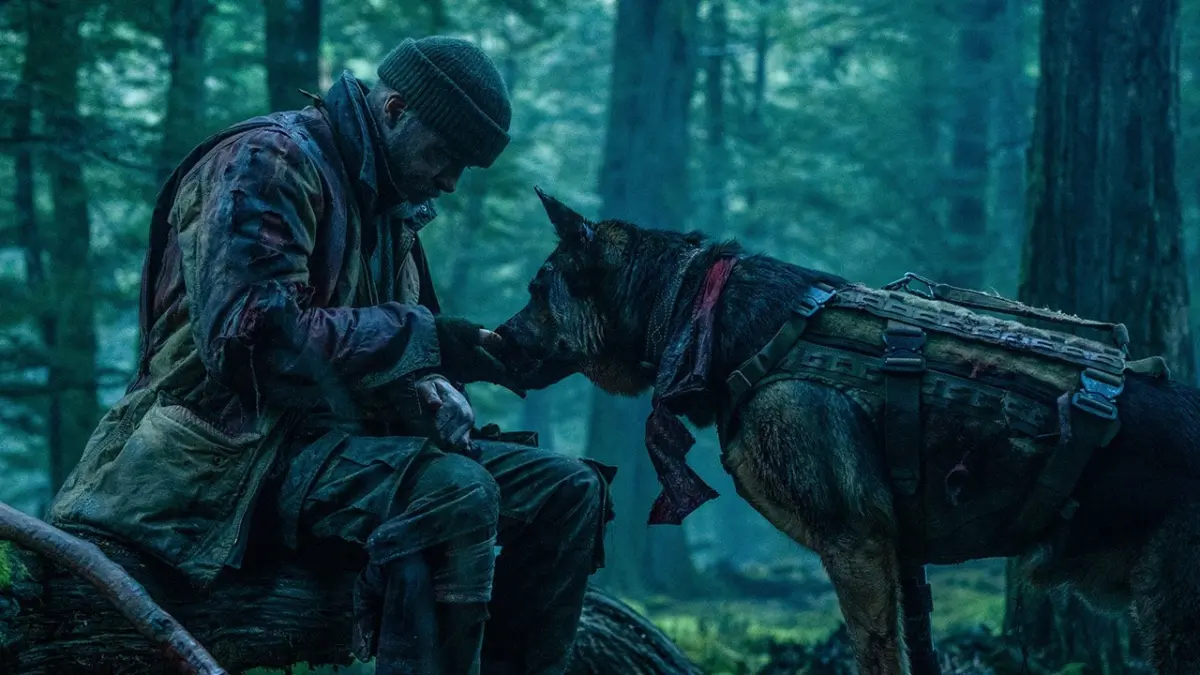
Opening on the soulful, battle-scarred face of Odin—complete with titanium teeth and a prosthetic leg stemming from his service—Heart of the Beast immediately establishes its thematic stakes. The film follows James Belmont (Pitt), a retired Green Beret, and Odin as they navigate a grueling 50-mile trek across the remote, unforgiving wilderness of Alaska. Following a sudden heart attack that forces James to crash-pilot his Cessna during a camping excursion, the pair must weather a relentless gauntlet of environmental hazards, injuries, wildlife, and their own compounding struggles with Post-Traumatic Stress Disorder (PTSD).
Blending visceral, physical action with an intensely tender exploration of cross-species companionship, Heart of the Beast successfully elevates itself above standard creature features and wilderness actioners. While minor pacing hurdles and uneven digital effects occasionally interrupt the immersion, the project stands out as a triumph of character-driven storytelling, anchored by a powerhouse physical performance from Pitt and an unforgettable canine protagonist.
Detailed Chronology: A 50-Mile Journey Through the Alaskan Crucible
The narrative arc of Heart of the Beast unfolds with a deliberate, haunting rhythm that mirrors the exhaustion of its protagonists.
Act I: The Catalyst and the Descent
The film opens in media res, plunging the audience into the quiet, communicative gaze of Odin. Within moments, the context of both man and beast is revealed: James Belmont, a battle-hardened veteran whose face is initially obscured to emphasize his guarded nature, lives in quiet solidarity with his canine companion. Both are living ghosts carrying the invisible scars of military combat.
Shortly after an early encounter with a weathered local miner—expertly brought to life by J.K. Simmons in a brief yet pivotal cameo that efficiently establishes the backstory of both protagonists—James and Odin take to the skies for a remote Alaskan camping trip. Tragedy strikes mid-flight when James suffers a debilitating heart attack while at the controls of his Cessna. His desperate attempt to land safely results in a violent crash deep within the untamed wilds, stripping them of communication tools, supplies, and immediate civil contact.
Act II: The Gauntlet of the Wild
What follows is a grueling multi-day trek. With an estimated 50 miles standing between them and the nearest passable road, James and Odin embark on a relentless march against time and mortality. Director David Ayer throws nearly every conceivable survival challenge at the duo. They navigate treacherous terrain, endure brutal weather systems, and fight off hypothermia.
The narrative pacing accelerates as external threats materialize. The duo encounters wolves and a towering grizzly bear, testing the limits of James’s battered frame and Odin’s prosthetic-aided mobility. Ayer crafts these sequences with visceral intensity, ensuring that every river crossing, frostbitten night, and predator encounter feels hazardous. Throughout this ordeal, James and Odin consistently come to each other’s aid. While James manages the mechanics of survival—setting up camp, building fires, and offering medical triage—Odin provides invaluable auditory early-warning systems and emotional anchoring, even if his contributions to campsite logistics remain predictably minimal.
Act III: Resolution and the Resilient Stare
As the journey nears its conclusion, the physical toll on James reaches a cinematic crescendo. The final stretch of the film strips away the noise of the wilderness, focusing squarely on the profound emotional connection between man and dog. The resolution avoids cheap sentimentality, opting instead for a quiet, hard-won survival that leaves both viewer and characters fundamentally transformed. It is in these final moments that Pitt’s subtle performance—specifically his expressive, world-weary eyes—delivers an emotional payoff that rivals the film’s most explosive action set-pieces.
Supporting Context & Metrics: Production Challenges and Cinematic Influences
To fully appreciate the scope of Heart of the Beast, one must examine the production realities, technical choices, and the rich cinematic lineage from which it draws inspiration.
Cinematic Lineage
Critics and audiences alike will note the strong DNA connecting Heart of the Beast to classic wilderness survival cinema. The film shares thematic and visual DNA with:
- The Grey (2011): For its unflinching look at isolation, predation, and the psychological burden of survival.
- The Revenant (2015): For its commitment to depicting the brutal, unforgiving physical toll of the American wilderness and the use of naturalistic lighting.
- Into the Wild (2007): For its exploration of the Alaskan interior as both a sanctuary and a lethal trap.
- Deliverance (1972) & 127 Hours (2010): For their visceral examinations of human endurance under catastrophic medical and environmental pressures.
- Never Cry Wolf (1983) & The Edge (1997): For centering human-animal relationships and respect for apex predators.
The Brad Pitt Physicality Metric
Brad Pitt is no stranger to on-screen punishment. Across a storied career that includes physical punishment in Fight Club, Snatch, Mr. & Mrs. Smith, Bullet Train, Fury, and Meet Joe Black, Pitt has routinely subjected his body to rigorous cinematic demands. However, Heart of the Beast arguably marks a new high-water mark for physical attrition. For approximately three-quarters of the runtime, Pitt’s character is relentlessly battered, bloodied, and pushed past biological limits. The production required an immense physical commitment, blending stunt work with raw, grounded endurance acting.
Technical Tributes and Missteps
- Cinematography: Mauro Fiore’s lush, sumptuous landscape cinematography frames the Alaskan wilderness as a character in its own right—capturing both its breathtaking beauty and its chilling indifference to human life.
- Score: Jared Michael Fry contributes a haunting, atmospheric musical score that amplifies the isolation of the setting without overwhelming the intimate character dynamics.
- CGI Limitations: While practical elements largely dominate, the film relies on digital effects for its wolves and grizzly bear. These CGI creatures occasionally draw unwanted attention, sticking out against the gritty realism of the physical locations. Fortunately, they avoid the severe uncanny-valley pitfalls seen in other animal-centric features like The Call of the Wild, though they remain a minor distraction in an otherwise visually authentic film.
- Flashback Critique: The narrative deployment of combat flashbacks has drawn mixed commentary from critics. While competently executed, they yield minimal new narrative information, as the core psychological and physical traumas of both James and Odin are already thoroughly communicated during the early encounter with J.K. Simmons’s miner character. Trimming these sequences might have streamlined the film’s pacing, though it speaks volumes about audience engagement that viewers simply wanted to return to the immediate survival narrative as quickly as possible.
Official Statements and Industry Insights
The unique nature of Heart of the Beast—particularly its canine-centric narrative and the casting of a real military veteran dog—has generated significant commentary from the creative team.
Director David Ayer, known for helming gritty, high-intensity dramas (Fury, End of Watch), noted in early press discussions that the primary challenge of the project was avoiding the saccharine traps typical of dog-centric cinema.
"We didn’t want to make a manipulative, tear-jerking animal melodrama," Ayer remarked during early production briefings. "We wanted to look at mutual survival through a lens of absolute authenticity. James and Odin aren’t just a man and his pet; they are two combat veterans whose mutual survival depends entirely on an unspoken, ironclad trust forged in the worst possible circumstances."
Screenwriter Cameron Alexander echoed these sentiments, emphasizing the research that went into understanding canine PTSD—a psychological condition increasingly recognized by organizations such as PetMD and military working dog handlers.
"Dogs experience psychological trauma from combat environments just as humans do," Alexander explained. "When you pair a retired Green Beret suffering from service-related trauma with a combat dog carrying physical titanium and psychological scars, you create an immediate, profound empathy. The script had to honor that psychological reality without anthropomorphizing the animal to an unrealistic degree. Uber [Odin] brought that truth to life effortlessly."
Industry analysts have also highlighted the film as a masterclass in minimalist performance art, praising Brad Pitt’s choice to lean away from dialogue-heavy exposition and toward non-verbal communication. In interviews regarding his preparation, production insiders noted that Pitt spent weeks bonding with Uber prior to filming, establishing the genuine on-screen chemistry that drives the emotional weight of the picture.
Future Outlook and Cultural Impact
As Heart of the Beast prepares for its broader theatrical and streaming rollout, its cultural footprint is already taking shape across several key domains:
- Redefining Animal-Centric Cinema: By treating its canine protagonist with respect, avoiding cheap emotional manipulation, and casting an actual rescue/combat dog with authentic physical attributes, the film sets a new benchmark for how animals are integrated into dramatic storytelling. It challenges Hollywood to move away from over-reliance on expressive CGI animals in favor of spotlighting real rescue animals and ethical animal handling.
- Highlighting Veteran and Working Dog Mental Health: The realistic depiction of PTSD in both a human soldier and a military working dog opens vital conversational space regarding the long-term care of service animals post-deployment. Organizations dedicated to military working dog retirement and veteran mental health support are poised to leverage the film’s platform to advocate for expanded resources.
- A Career Milestone for Brad Pitt: For an actor who has continually reinvented his cinematic persona over decades, Heart of the Beast cements Pitt’s status as a master of physical and non-verbal acting. The performance proves that even after decades at the apex of global stardom, Pitt remains willing to subject himself to grueling, grounded physical trials in service of emotionally resonant storytelling.
Verdict
Heart of the Beast pleasantly surprises at nearly every turn. While it traverses visceral wilderness terrain familiar to fans of The Grey, The Revenant, and Into the Wild, director David Ayer’s film distinguishes itself through the primal, unbreakable bond uniting a broken man and his three-legged canine companion.
Brad Pitt delivers a performance that asks for his absolute physical all, yet it is his understated, heartbreaking vulnerability that lingers long after the credits roll—outlasting even the most gruesome injuries his character sustains. Propelled by Uber’s unforgettable turn as Odin, Heart of the Beast stands out as a powerful canine screen hero epic and an essential cinematic journey of survival, redemption, and unconditional devotion.