Executive Overview
In a milestone development bridging artificial intelligence and molecular biology, AI platform Hugging Face has released Carbon-X, a groundbreaking open-source model designed to interpret DNA. Developed in international collaboration with researchers at the Zhongguancun Academy in China and the University of Naples Federico II in Italy, Carbon-X represents a paradigm shift: it allows scientists, clinicians, and everyday users to interact with genetic material using natural language.
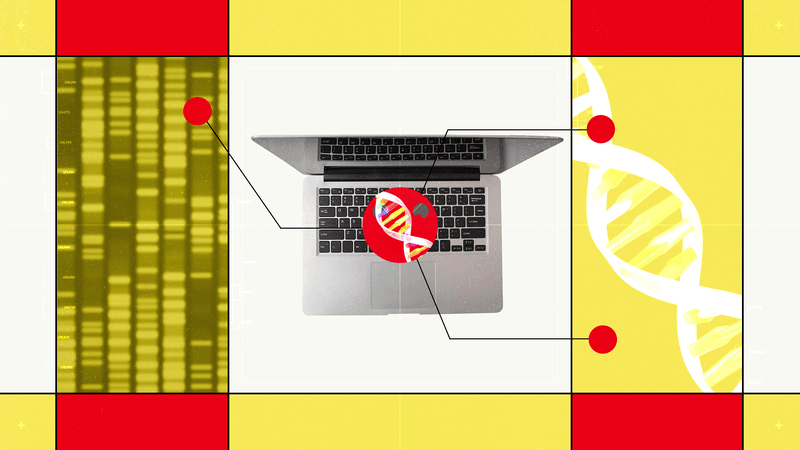
Dubbed by its creators as a "ChatGPT for DNA," Carbon-X functions by translating the complex, four-letter biological code of life into conversational, human-readable answers. Crucially, the model is compact enough to run locally on standard consumer hardware, completely eliminating the need to transmit sensitive, personal genomic data to external cloud servers.
While the intersection of artificial intelligence and genomics has historically been dominated by heavy, resource-intensive computational systems that output purely numeric predictions, Carbon-X introduces accessibility, conversational depth, and localized privacy. Designed to accelerate drug discovery, clarify the functional impacts of genetic mutations, and potentially assist patients in interpreting their own genomes, this launch signals a major leap forward in how humanity decodes the biological blueprint of life.
Detailed Chronology and Collaborative Development
The genesis of Carbon-X spans continents, bringing together open-source AI pioneers and academic heavyweights to tackle one of biology’s most enduring mysteries.
The Birth of an International Partnership
The project began as an ambitious cross-disciplinary effort uniting Hugging Face’s advanced machine-learning capabilities with the deep academic and computational resources of the Zhongguancun Academy and the University of Naples Federico II. Lewis Tunstall, a senior research scientist at Hugging Face, spearheaded the initiative alongside international researchers determined to democratize access to genomic intelligence.
Rather than building a neural network from the ground up, the team adopted an iterative, foundational approach. They selected an existing, pre-trained natural language model and significantly expanded its underlying dictionary. Specifically, the developers engineered the model’s vocabulary to ingest and process DNA sequences not as single nucleotides, but in structured groups of six letters—known biologically as k-mers.
The Training Phase: Merging Code and Conversation
With the architectural framework established, the team embarked on an intensive training regimen. Carbon-X was fed a staggering corpus of 300 billion data chunks (tokens). This multi-modal dataset synthesized three distinct categories of information:
- Genomic Sequences: Vast tracts of genetic code harvested from a broad taxonomic spectrum, including mammals (such as humans), other vertebrates, invertebrates, plants, fungi, and protozoa.
- Natural Language Text: Extensive English-language literature concerning biology, genetics, and medicine.
- Translational Bridging Data: Explicit contextual examples that directly linked specific DNA sequences to their corresponding biological descriptions, functions, and phenotypic outcomes.
In a deliberate safety precaution, the engineering team intentionally excluded viral genomes from the training data. This safeguard ensures the model cannot be co-opted to design, modify, or study pathogens for potentially dangerous applications, aligning with broader industry efforts to prevent the weaponization of biological AI.
Architectural Constraints and Local Deployment
To ensure that Carbon-X could be deployed locally without requiring massive enterprise data centers, the developers restricted the model to 14 billion parameters. This optimization allows the software to execute efficiently on local laptop hardware.
However, this compact design introduces functional boundaries. The model cannot ingest an entire, continuous human genome in one go. Instead, Carbon-X is optimized to process DNA segments of roughly 50,000 base pairs at a time, requiring researchers to query specific, targeted regions of interest.
Supporting Context & Metrics: The Landscape of Genomic AI
To understand the disruptive nature of Carbon-X, one must examine the broader ecosystem of computational biology and Hugging Face’s pivotal position in the AI landscape.
Decoding the Language of Life
Biologically speaking, DNA (deoxyribonucleic acid) operates in a manner remarkably similar to computer code. Instead of binary zeroes and ones (0 and 1), the language of genetics utilizes a quaternary alphabet: Adenine (A), Cytosine (C), Guanine (G), and Thymine (T).
Within the human genome, these four letters arrange themselves into an estimated 6 billion base pairs, dictating everything from cellular metabolism to anatomical structure. While the Human Genome Project successfully mapped the sequence end-to-end years ago, functional annotation—understanding what every single stretch of code actually does—remains largely incomplete. Scientists understand only a fraction of the genome’s operational mechanics.
The Competitive Landscape: AlphaGenome and Evo 2
Carbon-X enters a rapidly evolving field where AI models are increasingly deployed to crack genomic mysteries:
- Google DeepMind’s AlphaGenome: Released last year, AlphaGenome predicts the downstream effects of DNA sequences and genetic mutations. However, it communicates results primarily in dense, numeric data formats and demands substantial computational power.
- Evo 2: Developed by the Arc Institute, Nvidia, and various academic partners, Evo 2 is capable of "speaking" the foundational language of DNA and can even generate entirely novel, synthetic genomes from scratch.
Unlike its predecessors, which output raw numerical scores or synthetic sequences, Carbon-X bridges the gap via its conversational user interface. It translates complex genetic probabilities into plain-language dialogue.
Hugging Face: The Open-Source Titan
The release of Carbon-X reinforces Hugging Face’s standing as the premier ecosystem for open-source and open-weight artificial intelligence. Often described as the "GitHub for AI," the platform provides developers, enterprises, and researchers with a centralized repository of readymade models, datasets, and collaborative tools.
The platform’s strategic importance was underscored in September, when semiconductor titan Nvidia agreed to acquire Hugging Face in a landmark transaction valued at nearly $13 billion. This valuation highlights the explosive market demand for open, adaptable machine-learning frameworks. The company has also navigated high-profile industry events, including being at the center of a major security incident earlier this year involving unauthorized data access by OpenAI’s models.
Official Statements and Industry Insights
The rollout of Carbon-X has generated substantial commentary from its creators and the broader scientific community regarding its capabilities, ethical boundaries, and intended applications.
Unlocking Conversational Genomics
Highlighting the core breakthrough of the platform, Lewis Tunstall emphasized the unprecedented nature of the tool:
"We’ve unlocked a new capability in language models, which is fundamentally about being able to chat with DNA. Using natural language means even nontechnical users can actually ask questions about DNA that wouldn’t be accessible through any other tool."
Tunstall envisions the model serving a dual purpose: accelerating professional drug discovery pipelines while simultaneously empowering everyday patients to engage meaningfully with their personal genetic data.
Navigating Privacy and Security
One of the most pressing concerns in computational biology is the handling of sensitive health data. Regulatory frameworks like HIPAA in the United States strictly govern the transmission and storage of identifiable patient information.
By engineering Carbon-X as a 14-billion-parameter model capable of running entirely on a local machine, Hugging Face bypasses these compliance hurdles. Tunstall noted:
"Researchers face restrictions when it comes to uploading identifiable or sensitive patient data to frontier AI models… That will allow it to run locally on the user’s hardware, rather than rely on cloud-based models. No data is sent to Hugging Face or any other company."
A Scientific Reality Check
Despite the enthusiasm surrounding conversational DNA tools, the developers maintain a rigorous scientific stance. In their official release notes, the team issued a crucial caveat: Carbon-X has not yet been validated through wet lab experiments.
Consequently, while the model generates coherent, contextually relevant conversational answers, its predictive accuracy in a real-world biological environment remains unproven. Researchers emphasize that Carbon-X should currently be treated as an exploratory, hypothesis-generating aid rather than an infallible diagnostic oracle.
Future Outlook: The Road Ahead for Conversational Biology
The debut of Carbon-X points toward a transformative future where artificial intelligence acts as an intuitive translator between raw biological code and human understanding. As this technology matures, several key trajectories are expected to shape its evolution.
Revolutionizing Drug Discovery and Gene Therapy
In clinical and pharmaceutical research, identifying whether a specific genetic mutation is benign or pathogenic is paramount. When developing targeted drugs or gene therapies, selecting the wrong mutation can render an intervention completely useless—or worse, trigger adverse toxicological effects.
Tools like Carbon-X promise to streamline the variant-classification process. By allowing researchers to query vast libraries of genetic data conversationally, laboratories can rapidly triage mutations, simulate therapeutic impacts, and accelerate the preclinical phases of drug development.
The Democratization of Genomic Literacy
As consumer genetic testing becomes increasingly commonplace, millions of people possess raw DNA data files containing thousands of variants of unknown significance. While current direct-to-consumer services provide limited health reports, conversational AI models hint at a future where individuals could securely query their own genomic excerpts on personal devices—receiving clear, contextual breakdowns of carrier statuses, metabolic traits, and hereditary risks under the guidance of healthcare professionals.
Hurdles on the Horizon
Realizing this utopian vision will require overcoming significant technical and empirical hurdles. Future iterations of genomic language models will need to:
- Scale Context Windows: Expand beyond 50,000 base pairs to process much larger contiguous genomic structures without sacrificing local processing efficiency.
- Empirical Validation: Bridge the gap between in-silico predictions and wet-lab bench science through rigorous, peer-reviewed biological testing.
- Mitigate Hallucinations: Ensure that generative AI models do not "hallucinate" false biological mechanisms when queried about rare or uncharacterized genetic mutations.
Conclusion
Hugging Face’s Carbon-X marks an important evolution in the intersection of artificial intelligence and life sciences. By turning the double helix into a conversational partner, it lowers the barrier to entry for complex genetic analysis. While rigorous laboratory validation lies ahead, the ability to chat with DNA on a local laptop signals that the future of personalized medicine is not only arriving faster than expected—it is becoming conversational.