Executive Overview
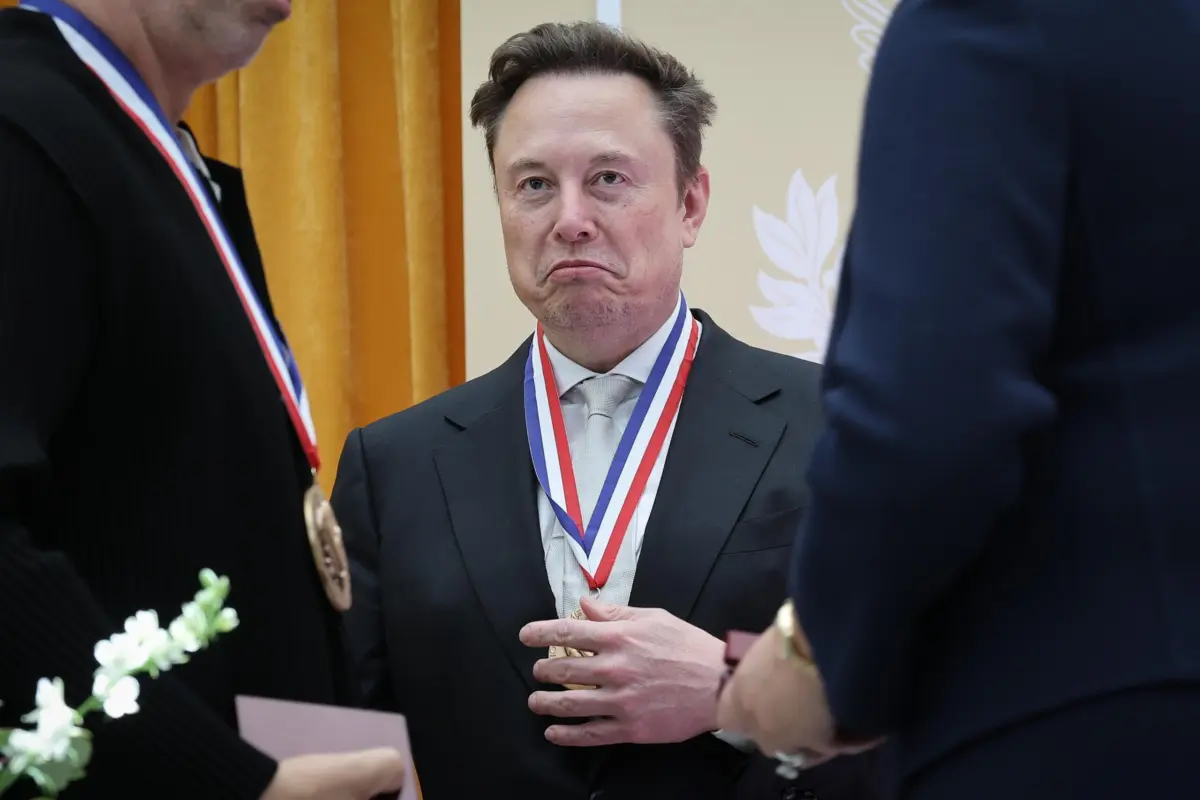
For nearly four hours, watching Academy Award-winning documentarian Alex Gibney’s latest cinematic exploration feels less like traditional viewing and more like weathering a sustained psychological blow. Titled simply Musk, the film delves deep into the mechanisms, myths, and moral compromises that have propelled the world’s richest man to unprecedented heights of global influence. According to Gibney, the jarring nature of the documentary is entirely intentional. "It is traumatizing because he is a traumatizing figure," the filmmaker explains. "And also to some extent, in certain narrative, thematic, and formal ways, I’m trying to put ourselves inside his head."
Rather than functioning as a standard biographical profile, Musk serves as an unflinching autopsy of how contemporary society—from Silicon Valley venture capitalists and mainstream journalists to federal regulators and everyday consumers—actively enabled, excused, and ultimately co-created the modern Elon Musk. Through exhaustive interviews with former business partners, estranged family members, and insiders, Gibney constructs a compelling narrative about how personal mythmaking escalates into systemic harm, raising an uncomfortable question: How did we allow one man to become so seemingly unstoppable?
Detailed Chronology: From Silicon Valley Mythmaking to Corporate Con
The Battle for Genesis: Rewriting Tesla’s Origins
One of the most revealing threads in Musk dissects the foundational myths of Tesla, contrasting the popular image of Musk as a lone-genius inventor with the more transactional reality of his early corporate maneuvers. Gibney highlights the targeted removal of Martin Eberhard, the man who conceptualized both the underlying technology and the business plan of starting at the luxury end of the market before scaling down.
When Musk ousted Eberhard, a bitter legal battle ensued over who could claim the title of "founder." The litigation was ultimately settled only when Eberhard agreed to legally acknowledge Musk as a founder—a status he did not earn through technical creation, but through capital acquisition.
"Are you the founder? And to the founder goes all the spoils," Gibney notes. "It had a double utility. One, it enriched him personally, but it also allowed him to take on this appearance of sort of a Leonardo da Vinci character. He became the inventor as opposed to the investor, which is what he was."
While figures like Jim Cantrell, an early SpaceX collaborator, acknowledge that Musk possesses a sharp pragmatic understanding of engineering principles, insiders across Tesla and Twitter (now X) frequently scoff at the notion of his technical prowess. Whether claiming to be a master coder in languages he does not speak or taking credit for video game achievements performed by others, Musk has masterfully curated an "Oz-like creation" of extraordinary competence.
The Battery-Swap Illusion and Government Subsidies
The documentary exposes a crucial financial inflection point for Tesla: the heavily publicized battery-swap technology demonstration. To capture lucrative financial incentives from the state of California aimed at solving the electric vehicle range anxiety problem, Tesla staged an elaborate stunt.
On a grand stage, a BMW was shown waiting at a gas pump while a Tesla navigated a mysterious platform, supposedly swapping out its thousand-pound battery faster than a traditional fuel tank could be filled. Yet, as investigative reporter Ed Niedermeyer discovered when visiting the physical stations later, the infrastructure existed—complete with hydraulic lifts and spare batteries—but not a single customer swap had ever been executed.
California regulators eventually updated their requirements to mandate real-world execution rather than one-off demonstrations. Musk subsequently blamed consumers, claiming there was no demand for the solution. However, the initial deception had already achieved its purpose: providing the cash influx and regulatory credits necessary to keep a struggling Tesla solvent.
Supporting Context & Metrics: Autopilot, Human Toll, and Federal Power
The Autopilot Crisis and the Benavides Case
As Musk’s ventures expanded into AI and autonomous driving, the stakes shifted from financial engineering to physical safety. Promoted as "Full Self-Driving" despite being officially classified as a Level 2 driver-assist program, the technology has been tied to dozens of fatalities.
The documentary centers heavily on the tragic case of Naibel Benavides, a pedestrian killed when a distracted driver relied entirely on Tesla’s automation. Unlike many consumers who sign away their rights to class-action lawsuits through mandatory arbitration clauses hidden in vehicle purchase agreements, Benavides’ family was able to pursue litigation. Their lawyers successfully argued that Tesla aggressively concealed safety data and knew the limitations of its software—a legal victory punctuating a grim statistic of dozens of deaths linked to Autopilot malfunctions.
The Scale of DOGE and Federal Intervention
The documentary traces Musk’s trajectory from industrial disruption to political realignment, tracking how his desire to operate without institutional constraints culminated in his alignment with populist political movements. Gibney draws a direct line from corporate risk-taking during the early days of the COVID-19 pandemic—where factory continuity took precedence over worker safety—to the aggressive downsizing initiatives proposed under the Department of Government Efficiency (DOGE).
The sudden shutdown of vital federal programs like the United States Agency for International Development (USAID) shifts the human cost from localized traffic fatalities to global humanitarian crises affecting hundreds of thousands of children.
Official Statements and Insider Perspectives
The documentary relies heavily on expert testimony to dissect Musk’s behavioral evolution. Author and philosopher Sam Harris characterizes Musk’s transition in public discourse:
"I think he’s gone from being a liar, someone who has to keep track of the truth, to being a bullshitter, where you just make stuff up and, through the force of your personality, make it so."
Gibney notes that Musk’s political pivot toward the MAGA movement was initially catalyzed by personal grievances during the pandemic and later compounded by familial estrangement—notably his public falling-out with his transgender daughter, Vivian Jenna Wilson. However, the ultimate alignment with Donald Trump’s administration was rooted in pragmatism. Facing potential regulatory headwinds and antitrust scrutiny under a hypothetical Democratic administration, Musk gravitated toward a transactional political ecosystem that promised protection for his corporate empire.
Future Outlook: Our Collective Complicity
Ultimately, Musk is less a portrait of a singular, cartoonish villain than an indictment of an enabling ecosystem. Gibney argues that society’s willingness to forgive ethical breaches was consistently bought off by the romantic appeal of noble causes—namely, space exploration and combating the climate crisis.
"Corruption has a kind of momentum to it," Gibney reflects. "You start out small, and then the layers of corruption get bigger and bigger… People got comfortable with those trade-offs without really thinking through the problem with that kind of corruption. They gave him a pass, and I think Democrats and Republicans both did, and now we’re suffering the consequences."
As Musk’s footprint expands across orbital space, global telecommunications, autonomous transport, and federal governance, the documentary serves as a stark warning. The rise of modern tech-autocracy was not imposed upon an unwilling public; it was built with our collective permission, cheered on every step of the way.