Executive Overview
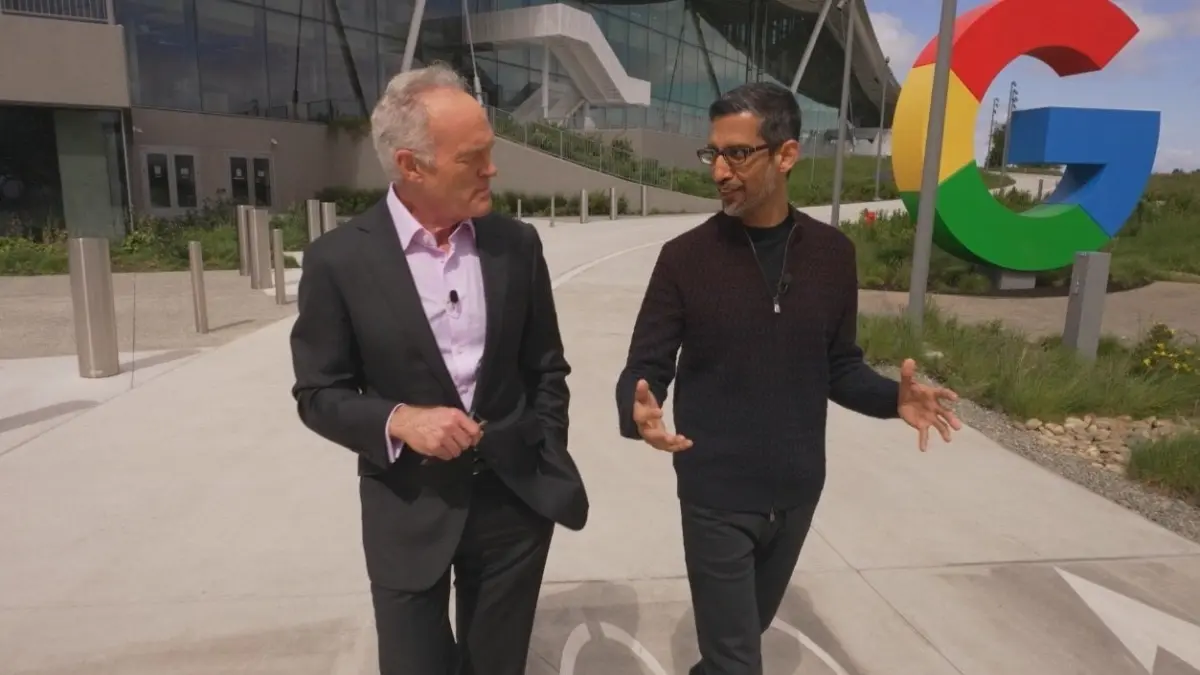
The intersection of mainstream media and the high-stakes artificial intelligence industry has long been fraught with sensationalism, but a recent segment on CBS’s 60 Minutes has sparked a ferocious backlash from the scientific community. Featuring Google CEO Sundar Pichai and Google Vice President James Manyika, the high-profile broadcast showcased claims that Google’s PaLM (Pathways Language Model) large language model had spontaneously learned Bengali—a language with over 210 million speakers—without explicit training.
Correspondent Scott Pelley framed the phenomenon as an inexplicable "emergent property" of artificial intelligence, breathlessly telling millions of viewers that the software had taught itself skills it was never expected to have. The segment presented this as evidence of a mysterious "black box" phenomenon, suggesting that even the brilliant engineers building these neural networks no longer fully understand how they operate.
However, prominent AI researchers, ethicists, and linguists quickly dismantled these assertions, labeling the broadcast a masterclass in corporate PR, overhyped journalism, and active disinformation. Far from learning a language out of thin air, PaLM’s training data explicitly included Bengali text—a fact documented in Google’s own technical papers.
This controversy shines a harsh light on the growing disconnect between how AI companies market their products and the objective reality of how machine learning models function. As the race toward Artificial General Intelligence (AGI) accelerates, critics argue that manufacturing an aura of mystical "magic" around large language models serves corporate bottom lines while misleading the public about the true capabilities, limitations, and ethical risks of generative AI.
Detailed Chronology: From Mountain View to Primetime Television
To understand how a routine feature on technological advancement morphed into a public relations debacle, it is necessary to trace the timeline of Google’s public disclosures regarding the PaLM architecture and its subsequent amplification by mainstream media.
May 2022: The Initial Reveal at Google I/O
Google first pulled back the curtain on its Pathways Language Model (PaLM) during its annual developer conference, Google I/O. During the keynote presentation, CEO Sundar Pichai showcased the model’s multilingual capabilities, highlighting its capacity to handle complex reasoning tasks, code generation, and translation across various tongues, including Bengali.
Pichai explicitly noted on stage that PaLM had not been explicitly taught parallel translation pairs between Bengali and English. Instead, Google framed the model’s ability to draw upon its foundational understanding of multiple languages as an impressive display of zero-shot and few-shot learning capabilities. While framed as advanced engineering, the disclosures at the time were grounded in the standard mechanics of large-scale transformer models trained on vast, heterogeneous internet corpuses.
April 2023: The 60 Minutes Broadcast
Nearly a year later, the narrative shifted dramatically from technical achievement to metaphysical mystery. On a Sunday evening broadcast of 60 Minutes, correspondent Scott Pelley introduced viewers to what he termed the most mysterious frontier in modern computing: "emergent properties."
During the segment, the show cut to a demonstration of an uncredited Google AI program (later confirmed to be PaLM, the underlying engine behind Google’s Bard chatbot). A user was shown inputting questions in Bengali, to which the model responded fluently in both Bengali and English.
Pelley informed the audience that the program had "adapted on its own" after being prompted in a language he claimed it was never trained to know. James Manyika reinforced this impression on air, stating: "We discovered that with very few amounts of prompting in Bengali, it can now translate all of Bengali… So now, all of a sudden, we have a research effort where we’re now trying to get to a thousand languages."
Pichai compounded the mystery by leaning heavily into the "black box" trope, asserting that AI had evolved into a domain where even its creators could no longer fully decipher its internal decision-making processes.
The Immediate Backlash: Social Media and Scientific Scrutiny
Almost immediately after the broadcast concluded, the tech and AI ethics communities erupted on Twitter and other platforms. Researchers who study the mechanics of natural language processing (NLP) pointed out a glaring contradiction between Google’s on-air narrative and the company’s own peer-reviewed literature.
Margaret Mitchell, an AI ethicist and researcher at Hugging Face who previously co-led Google’s ethical AI team, was among the first to sound the alarm. Citing PaLM’s foundational research paper published by Google scientists in April 2022, Mitchell highlighted that Bengali was indisputably part of the training dataset.
As public pressure mounted, tech journalists and independent watchdogs began pressing both CBS News and Google for clarifications, laying bare the cracks in the network’s prime-time narrative.
Supporting Context & Metrics: Unpacking the "Magic" of PaLM
The crux of the controversy hinges on technical definitions: What does it mean for an AI model to "know" a language, and what constitutes an "emergent property" versus standard probabilistic completion?
The Training Data Reality
According to Google’s official research documentation (arxiv.org/pdf/2204.02311.pdf), the PaLM model was trained on a massive 546-billion-token corpus comprising filtered web pages, Wikipedia articles, books, news articles, source code, and social media conversations.
While English dominated the dataset, multilingual corpora accounted for a substantial portion of the training tokens. Specifically, Bengali made up approximately 0.026% of PaLM’s total training data. While 0.026% might sound marginal, in the context of a dataset spanning hundreds of billions of tokens, it translates to millions of words of Bengali text ingested by the neural network during its pre-training phase.
How Transformer Models Work
Large language models do not "think," nor do they magically conjure understanding out of a vacuum. They are statistical engines designed to predict the next most likely token in a sequence based on patterns learned during training.
When a user prompts a model trained on Bengali with Bengali text, the neural network activates the weights and associations it formed when processing those exact linguistic patterns during pre-training. As Margaret Mitchell succinctly explained on social media:
"By prompting a model trained on Bengali with Bengali, it will quite easily slide into what it knows of Bengali: This is how prompting works."
To claim that an AI can spontaneously "speak" a language it has never had access to violates the fundamental laws of data science and information theory. A model cannot synthesize patterns from data points that do not exist within its operational environment.
Defining "Emergent Properties" vs. Marketing Hype
In the lexicon of machine learning research, "emergence" refers to capabilities that are not explicitly programmed into a model but appear as the model scales in size and computational power (measured in parameters and training tokens). For example, multi-step mathematical reasoning or complex coding tasks often emerge more reliably in models with hundreds of billions of parameters than in smaller models.
However, critics argue that tech companies have co-opted the academic term "emergent properties" and weaponized it for marketing purposes—transforming it into a synonym for Artificial General Intelligence (AGI) or sentient discovery.
Dr. Emily M. Bender, a prominent linguistics professor at the University of Washington, did not mince words regarding the misuse of the term. In a series of viral social media posts, Bender wrote that "emergent properties" is increasingly being used as a respectable corporate substitute for "AGI" to generate awe, secure funding, and bypass rigorous ethical scrutiny.
"It’s still bullshit," Bender bluntly stated, calling Manyika’s claim that PaLM could translate "all of Bengali" an unscoped, unsubstantiated claim that ignored the presence of Bengali training data entirely.
Official Statements and Corporate Damage Control
As the scientific community dismantled the segment’s core claims, representatives from both Google and CBS faced mounting scrutiny over the accuracy of the broadcast.
Google’s Defense: Semantic Gymnastics
Confronted by reporters, Google spokesperson Jason Post attempted to thread the needle between the company’s marketing language and empirical reality. Post clarified that Google had never officially claimed it never trained PaLM on Bengali text.
"While the model was trained on basic sentence completion in a wide variety of languages (including English and Bengali), it was not trained to know how to 1) translate between languages, 2) answer questions in Q&A format, or 3) translate information across languages while answering questions," Post stated. "It learned these emergent capabilities on its own, and that is an impressive achievement."
While true that PaLM was not explicitly fine-tuned for bidirectional translation or conversational question-answering via supervised fine-tuning (SFT) in Bengali, industry experts noted that conflating "lack of explicit fine-tuning" with "learning a language out of nowhere" is deeply misleading to a general audience. Zero-shot transfer learning is a well-documented phenomenon in natural language processing; it is an engineering characteristic of large models, not a mystical awakening.
CBS’s Silence
CBS News and correspondent Scott Pelley faced heavy criticism for failing to verify the technical claims presented by Google executives or consult independent third-party researchers who could offer objective context. Despite multiple formal requests for comment from media outlets like BuzzFeed News, a CBS spokesperson did not respond on the record, choosing instead to let the broadcast stand without correction or retraction.
Future Outlook: The Cost of Overhyping AI
The 60 Minutes controversy is not an isolated incident; it represents a dangerous and escalating trend within the technology sector. As venture capital funding shifts, tech giants battle for market dominance, and regulatory bodies circle the industry, the temptation to cast generative AI products in a shroud of mystical brilliance has never been higher.
The Dangers of Misinformation
When mainstream media outlets amplify corporate narratives that frame AI as autonomous, magical, or incomprehensible "black boxes," several negative consequences follow:
- Misinformed Policymaking: Lawmakers relying on prime-time journalism may draft legislation based on the false premise that AI models are sentient entities capable of independent, unpredictable evolution, rather than software products governed by human-curated data and corporate architectures.
- Erosion of Public Trust: When everyday users are led to believe AI possesses superhuman, miraculous qualities—only to discover later that it is prone to hallucinations, data laundering, and statistical mimicry—disillusionment quickly sets in.
- Obfuscating Corporate Accountability: Framing algorithmic behavior as an unexplainable "black box" allows companies to deflect blame when their models perpetuate bias, violate copyright law, or output harmful content. If the technology is "too mysterious to understand," developers can conveniently claim they are powerless to fix its systemic flaws.
Towards Responsible Journalism and Transparent Tech
The scientific backlash against the Google and CBS broadcast serves as a vital cautionary tale for both technical communicators and investigative journalists. Moving forward, covering artificial intelligence requires a rigorous commitment to scientific literacy. Reporters must cross-reference executive claims with peer-reviewed literature, consult independent computational linguists and ethicists, and resist the urge to trade hard technical truths for sensationalist science fiction.
Until the tech industry and the media outlets that cover it abandon the myth of the algorithmic oracle, the public will remain ill-equipped to navigate the genuine, profound transformations—and very real, mundane risks—that artificial intelligence brings to modern society.