Across the United States, an invisible infrastructure is undergoing a massive, high-stakes transformation. Propelled by the Federal Communications Commission’s (FCC) sweeping spectrum repack and a nationwide push to expand cellular and broadband coverage, thousands of communications towers are being retrofitted, upgraded, and rebuilt. Yet, beneath the promise of lightning-fast wireless speeds and expanded rural connectivity lies a grim human toll.
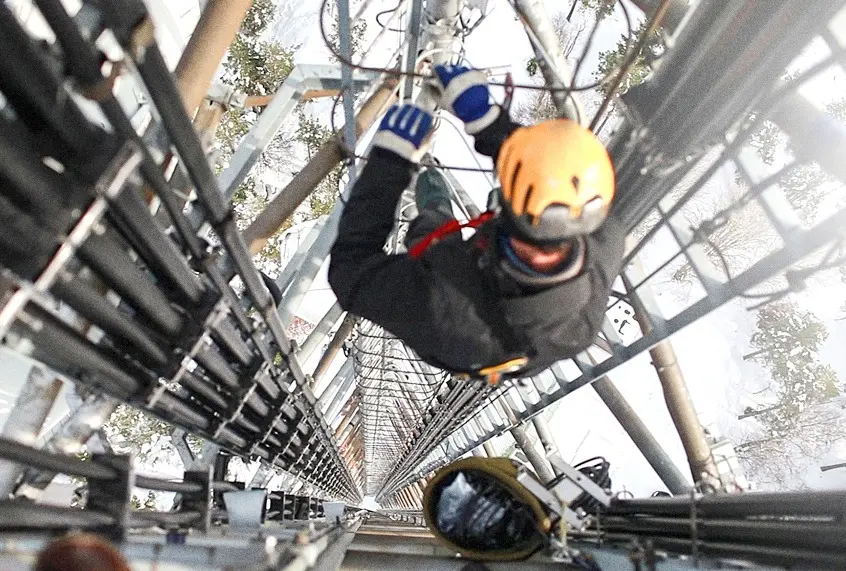
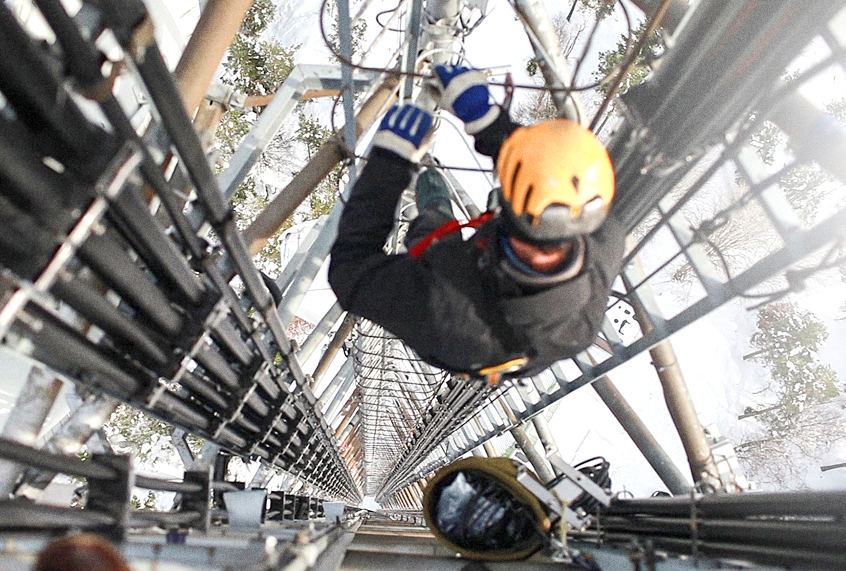
Communications tower workers—often referred to as tower climbers or "linemen of the air"—are facing a staggering surge in occupational hazards. Scaling structures that soar up to 2,000 feet into the air—dwarfing landmarks like One World Trade Center—these workers operate in a high-risk environment characterized by severe weather, electrical hazards, extreme physical strain, and the ever-present danger of structural collapse.
As the FCC enforces a rigid July 2020 deadline to transition nearly 1,000 television stations to new frequencies, industry experts, safety advocates, and engineering leaders are sounding the alarm. They warn that the government’s aggressive timeline is forcing a severe labor shortage, compelling companies to rush complex engineering projects, and ultimately gambling with human lives. Despite repeated warnings from safety organizations and congressional appeals for caution, political pressure to accelerate the digital rollout continues to outweigh comprehensive labor protections, leaving a chronically underregulated industry struggling to cope with the mounting casualties.
Detailed Chronology: A Trail of Tragedies
The physical toll of the nationwide tower repack is starkly illustrated by a series of fatal incidents that have underscored the dangers of rushed infrastructure projects.
In September 2017, a routine antenna replacement project in Miami Gardens, Florida, turned catastrophic. The project, commissioned by WSVN-Channel 7 to comply with ongoing broadcast shifts, claimed the lives of three young workers. Brachton Barber, a 23-year-old from Longwood, Florida; Benito Rodriguez, a 35-year-old from Tampa; and Marcus Goffena, a 31-year-old from Sidney, Ohio, were killed on the job when an accident occurred during the rigging and replacement of heavy broadcast equipment. The tragedy immediately thrust the hidden dangers of the broadcast industry into the national spotlight, highlighting the specialized risks involved in urban tower retrofits.
Just months later, the dangers expanded from human error and rigging failures to catastrophic structural collapse. In April 2018, a massive 1,980-foot broadcast tower in Fordland, Missouri, operated by Ozarks Public Television, experienced a catastrophic structural failure and collapsed completely. The disaster claimed the life of Stephen Lemay, a 56-year-old technician from Blaine, Washington, who was remembered by his community as a dedicated professional and family man. The Fordland collapse initiated complex local and federal investigations into tower integrity, metal fatigue, and the safety protocols governing older infrastructure undergoing rapid modification.
These high-profile disasters are part of a continuous, grim tally. Industry tracking databases, such as those maintained by Wireless Estimator, recorded multiple fatalities within the first few months of 2018 alone. Safety experts emphasize that these incidents are rarely isolated accidents; rather, they are the predictable symptom of an overburdened industry forced to cut corners to meet arbitrary government deadlines.
Supporting Context & Metrics: The Anatomy of a High-Risk Industry
To understand the crisis facing tower climbers, one must examine the physical and regulatory realities of their work environment. Tower workers routinely climb anywhere from 100 to 2,000 feet above the ground. At these elevations, they face environmental conditions that would halt most conventional construction work, including high-altitude winds, ice accumulation, and extreme thermal shifts. Furthermore, workers are frequently exposed to radio frequency (RF) radiation and high-voltage electrical systems while handling heavy rigging equipment.
The statistical risk is staggering. According to data highlighted by former Assistant Secretary of Labor David Michaels, communications tower workers face a risk of fatal injury 25 to 30 times higher than the average American worker. This puts tower climbing on par with, or exceeding, the most dangerous industrial sectors in the global economy.
The Regulatory Void
Compounding these physical dangers is a profound lack of specialized federal oversight. The Occupational Safety and Health Administration (OSHA) has historically lacked rules specifically tailored to the unique hazards of communications tower erection and maintenance. While OSHA began developing targeted safety standards following a devastating spike in fatalities in 2013—when 13 tower workers were killed, eclipsing the death toll of the previous two years combined—comprehensive and enforceable federal rules remain slow to evolve.
Thomas Fuller, a researcher at Illinois State University, testified before OSHA regarding the unregulated nature of the field. Fuller pointed out that as legacy towers age and operators stack multiple new antennas onto structures originally designed decades ago, the physical hazards multiply exponentially.
Compounding the regulatory vacuum is a culture of fear within the workforce. Because the industry relies on a tight-knit network of subcontractors and third-party climbing crews, workers and small companies are often hesitant to report structural defects, excessive swaying, or compromised guy-wires. They fear that raising safety concerns will result in lost contracts, blacklisting, or immediate termination. With no independent federal agency empowered to receive anonymous reports of structural hazards and guarantee a timely, enforceable response, workers are frequently left to navigate mortal dangers on their own.
Official Statements and Political Friction
The clash between public safety and economic modernization has created a fierce debate in Washington and across the broadcasting sector.
On one side, industry leaders and engineering professionals argue that the federal government is moving dangerously fast. Jim Tracy, chairman of the National Association of Tower Erectors (NATE), issued stark warnings to lawmakers, pointing out an inescapable economic and logistical reality: there are simply not enough qualified, certified workers in the United States to safely complete all the required tower modifications within the allotted timeframe.
Engineering experts share these deep misgivings. Bill Hayes, director of engineering for Iowa Public Television, captured the sentiment of many technical directors caught in the middle of the repack:
"You can be gambling at best with the reliability of your station’s service, and at worst you’re gambling with people’s lives."
Conversely, powerful political forces have pushed aggressively in the opposite direction. A coalition of 56 members of Congress—including prominent figures such as Representative Steve Scalise (R-La.) and Representative Darrell Issa (R-Calif.)—formally urged FCC Chairman Ajit Pai to hold firm to the July 3, 2020 deadline. Their primary justification is economic necessity: the rapid deployment of advanced wireless infrastructure and the repacking of television spectrum are deemed vital to securing the United States’ competitive edge in the global digital economy and accelerating broadband access for underserved rural populations.
In a joint congressional letter to the FCC, proponents of the rapid timeline stated: "Ultimately, it’s a matter of economic necessity in today’s globally-connected world."
This legislative push occurs against the backdrop of intense corporate lobbying. Commercial television and radio broadcasters invested nearly $29 million in federal lobbying efforts in 2017 alone, underscoring the massive financial stakes tied to spectrum allocation, broadcast footprints, and telecommunications expansion.
Future Outlook: A Race Against Time and Safety
As the telecommunications sector continues its relentless march toward nationwide 5G integration, expanded mobile broadband, and spectrum reallocation, the structural demands placed on America’s tower network will only intensify. The legacy broadcasting infrastructure, much of it built decades ago for analog television, is being forced to bear a digital weight it was never originally engineered to support.
The central question facing regulators, lawmakers, and industry executives is whether the human cost of this digital revolution can be mitigated before more lives are lost. Safety advocates maintain that lasting reform requires three critical pillars:
Strict, Enforceable OSHA Standards: The finalization and rigorous enforcement of federal safety regulations specifically written for communications tower erection, modification, and maintenance.
Flexible Timelines: A willingness by the FCC and Congress to grant realistic timeline extensions when engineering assessments or labor shortages indicate that safety protocols are being compromised.
Whistleblower Protections: Robust legal protections for tower climbers and inspection crews who report unsafe structural conditions, faulty rigging, or employer negligence without fear of professional retaliation.
Until systemic reforms are enacted to balance the nation’s insatiable appetite for data with the fundamental human right of workers to return home safely at the end of the day, the men and women climbing America’s highest towers will continue to pay the steepest price for technological progress.