By Tech & Enterprise Newsroom
Published: October 2026
Executive Overview
The landscape of modern web development has long been characterized by a friction point that developers know all too well: the separation between frontend deployment platforms and back-end cloud infrastructure. While platforms like Vercel revolutionized how developers ship user interfaces, serverless functions, and modern Next.js applications, provisioning heavy-duty cloud storage, analytics tables, and vector databases traditionally required navigating complex cloud consoles, manually generating static API credentials, and handling intricate Identity and Access Management (IAM) policies.
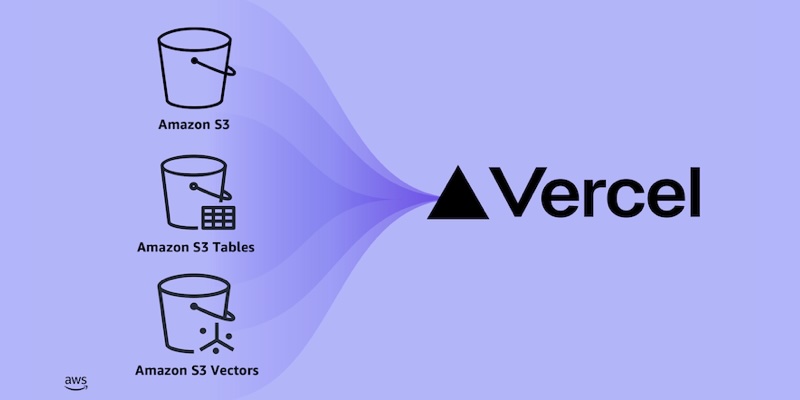
That paradigm shifted fundamentally with the announcement that Amazon Simple Storage Service (Amazon S3)—including advanced capabilities like Amazon S3 Tables and Amazon S3 Vectors—is now natively available directly within the Vercel Marketplace and v0 by Vercel.
This deep integration effectively bridges the gap between Vercel’s elite developer experience and the battle-tested, industrial-strength durability, scalability, and performance of AWS. Developers can now spin up object storage, Apache Iceberg-compliant analytics tables, and semantic vector databases with a few clicks or a natural language prompt in v0. Behind the scenes, the integration leverages short-lived OpenID Connect (OIDC) tokens via AWS Security Token Service (AWS STS), entirely eliminating the security risks associated with long-lived, static access keys.
By combining S3 with Vercel’s existing integrations for Amazon Aurora, Amazon DynamoDB, and Amazon OpenSearch Serverless, teams can now orchestrate an end-to-end application stack—database, object storage, open tables, and vector indexes—all managed within a unified workflow and billed directly to a single AWS account.
Detailed Chronology: How the Vercel-AWS S3 Integration Works
The collaboration between Vercel and Amazon Web Services has matured steadily over recent years, moving from simple database integrations to comprehensive full-stack architecture support. The rollout of native Amazon S3 provisioning follows a meticulously designed technical chronology aimed at frictionless cloud onboarding.
Phase 1: Marketplace Discovery and Resource Provisioning
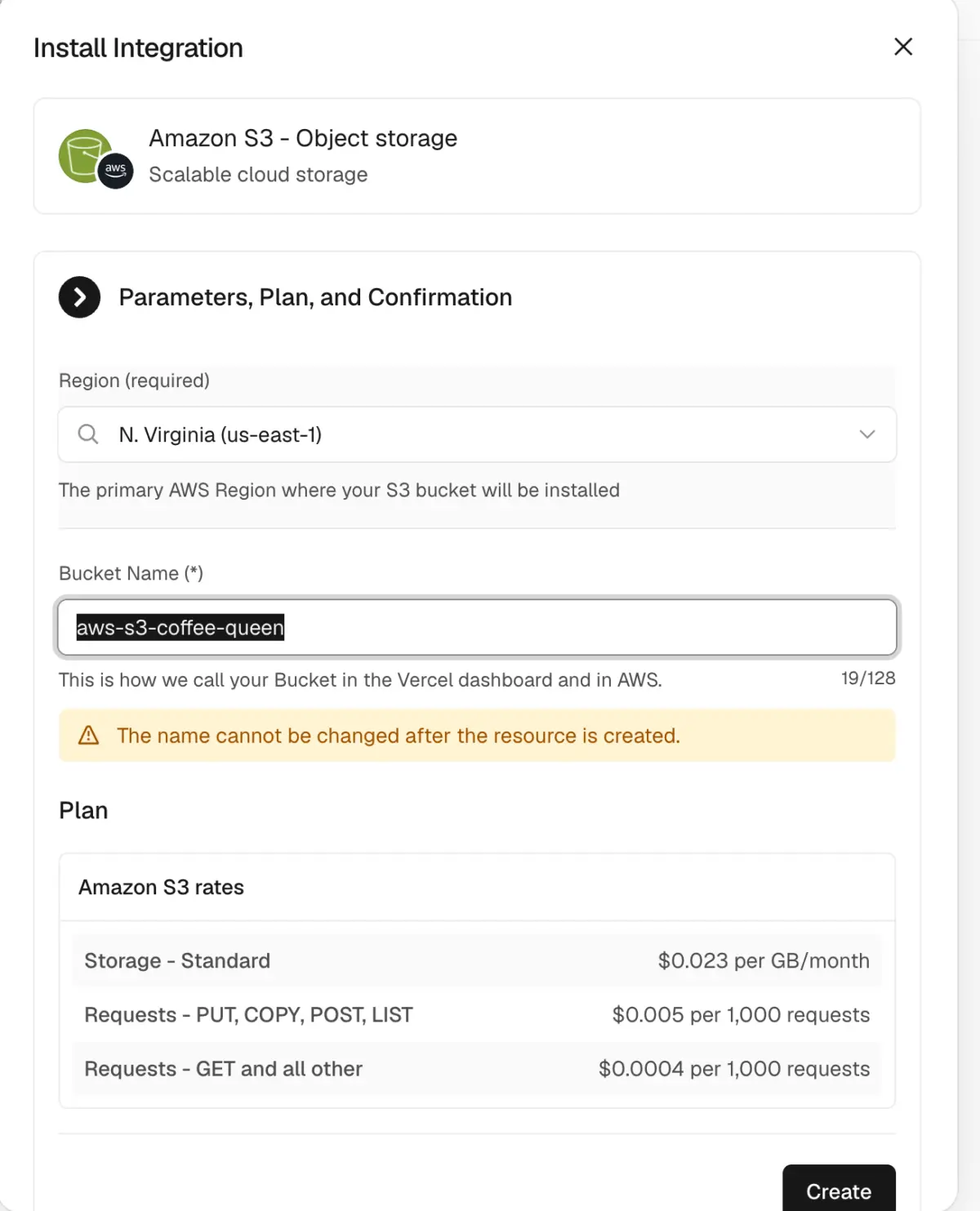
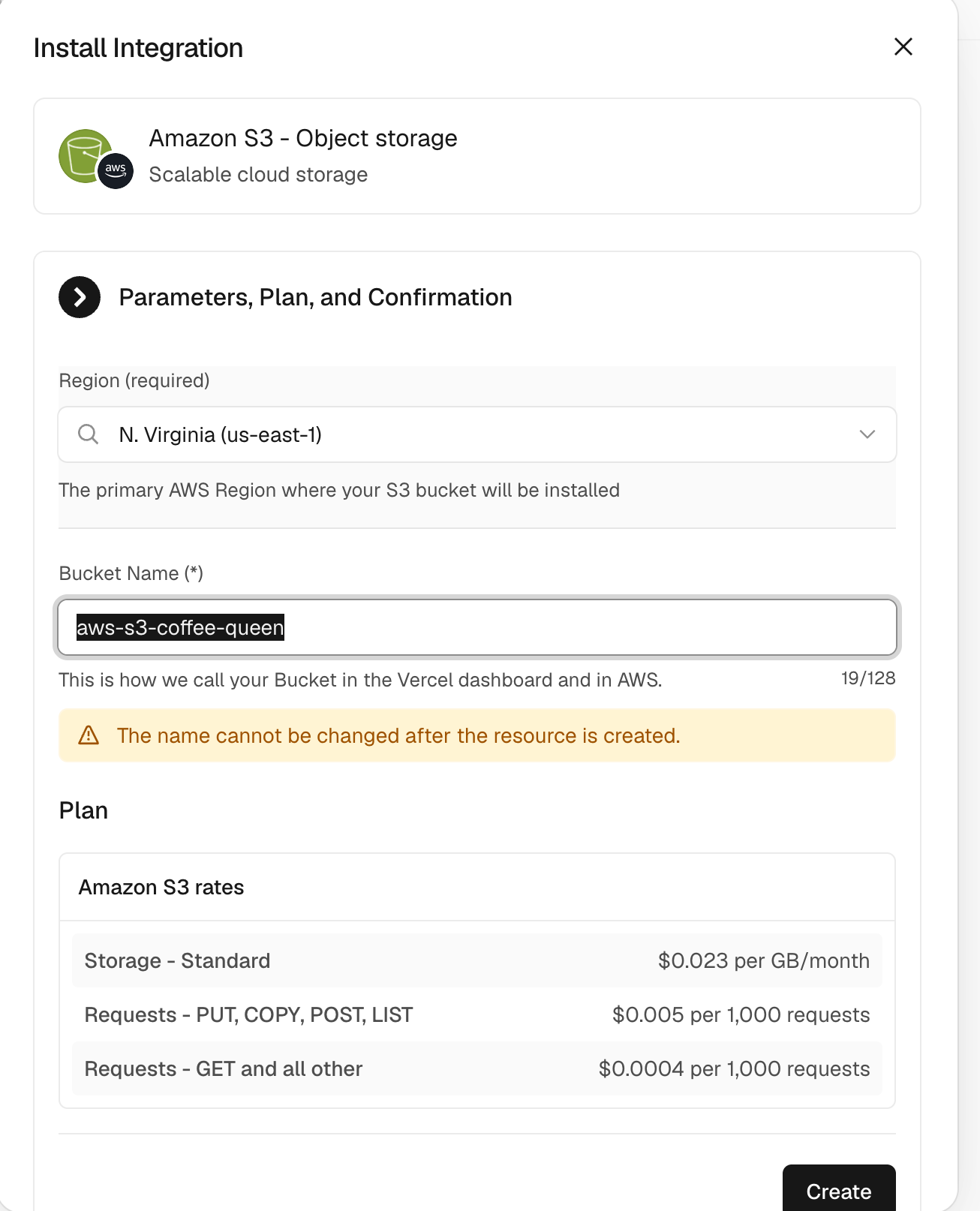
The journey begins within the Vercel dashboard. Developers navigate to the Storage tab and select "Create," choosing AWS as the provider. From there, they can specify the precise flavor of S3 storage required—whether it is a general-purpose object storage bucket, an analytics-optimized S3 Table bucket, or a high-performance S3 Vector index.
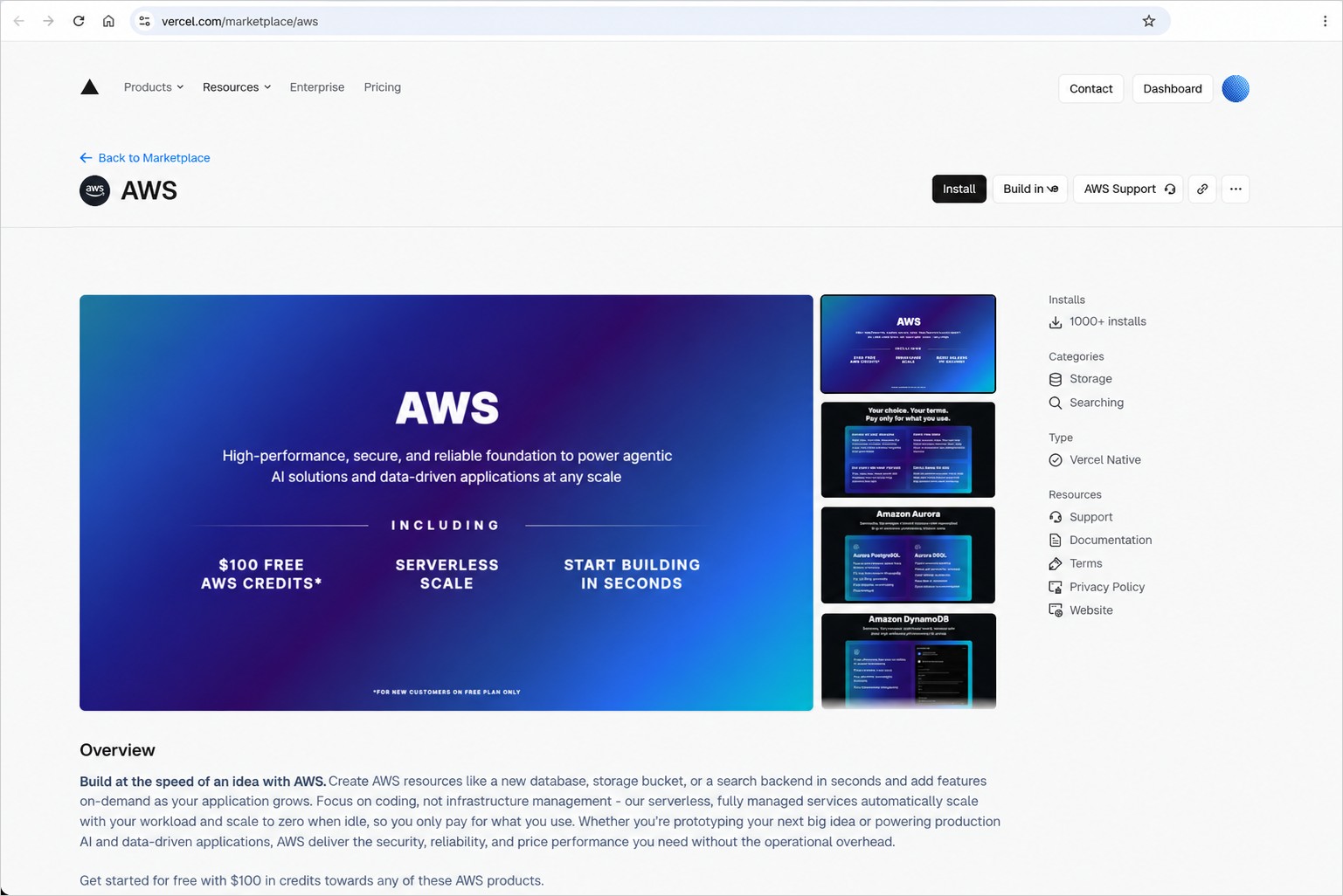
[Vercel Dashboard] ➔ [Storage Tab] ➔ [Select AWS & S3 Flavor] ➔ [Choose AWS Region] ➔ [Instant Provisioning (~Secs)]Provisioning takes mere seconds. Behind the abstraction layer, Vercel provisions the resource directly within the user’s designated AWS account. Developers have the flexibility to link an existing AWS account—retaining their enterprise billing structures and native AWS tooling—or spin up a brand-new AWS account directly through the Vercel platform, complete with a promotional $100 credit valid for six months.
Phase 2: Secure OIDC Binding and Environment Configuration
Once the S3 resource is mapped to a Vercel project, developers pull the necessary configuration parameters using the Vercel Command Line Interface (CLI):
vercel link
vercel env pull .env.local
This action securely injects critical environment variables, including AWS_REGION, AWS_ROLE_ARN, AWS_RESOURCE_ARN, and resource-specific specifiers like S3_BUCKET_NAME.

Crucially, this integration abandons the outdated practice of storing static AWS_ACCESS_KEY_ID and AWS_SECRET_ACCESS_KEY pairs in environment variables. Instead, at runtime, the @vercel/functions/oidc module utilizes an awsCredentialsProvider function. This utility exchanges a short-lived OIDC token with AWS STS for temporary, highly scoped credentials. The security posture is dramatically improved: if an environment variable is leaked, the exposure window is practically zero.
Phase 3: Writing Modern Code Across Three Core Workloads
With the secure connection established, developers can immediately build against three distinct workload pillars: everyday object storage, analytics, and AI.
1. General-Purpose Object Storage (Next.js Integration)
Handling file uploads, media assets, and document drops no longer requires custom middleware to sign AWS requests. Using the standard @aws-sdk/client-s3 coupled with Vercel’s OIDC credential provider, a Next.js API route can ingest files effortlessly:
import  S3Client, PutObjectCommand  from "@aws-sdk/client-s3";
import  awsCredentialsProvider  from "@vercel/functions/oidc";

const s3 = new S3Client(
  region: process.env.AWS_REGION,
  credentials: awsCredentialsProvider(
    roleArn: process.env.AWS_ROLE_ARN,
  ),
);

export async function POST(request)
  const formData = await request.formData();
  const file = formData.get("file");

  await s3.send(new PutObjectCommand(
    Bucket: process.env.S3_BUCKET_NAME,
    Key: file.name,
    Body: Buffer.from(await file.arrayBuffer()),
    ContentType: file.type,
  ));

  return Response.json( success: true );
2. Analytics at Scale via S3 Tables
For teams processing large volumes of data—such as clickstreams, IoT telemetry, or financial transactions—Amazon S3 Tables provide purpose-built storage featuring fully managed Apache Iceberg tables. Developers can query these tables directly from Vercel Functions using lightweight engines like DuckDB:
import  DuckDBInstance  from "@duckdb/node-api";
import  awsCredentialsProvider  from "@vercel/functions/oidc";

const creds = await awsCredentialsProvider(
  roleArn: process.env.AWS_ROLE_ARN,
)();

const db = await DuckDBInstance.create();
const conn = await db.connect();

await conn.run("INSTALL aws; LOAD aws; INSTALL httpfs; LOAD httpfs; INSTALL iceberg; LOAD iceberg;");

await conn.run(`
  CREATE SECRET s3cred (
    TYPE s3,
    KEY_ID '$creds.accessKeyId',
    SECRET '$creds.secretAccessKey',
    SESSION_TOKEN '$creds.sessionToken',
    REGION '$process.env.AWS_REGION'
  );
`);

await conn.run(`
  ATTACH '$process.env.AWS_RESOURCE_ARN' AS s3tables (
    TYPE iceberg,
    ENDPOINT_TYPE s3_tables
  );
`);

const rows = await (await conn.run(`
  SELECT town_city, AVG(median_price) AS avg_price
  FROM s3tables."$process.env.S3_TABLES_NAMESPACE".town_monthly
  GROUP BY town_city
  ORDER BY avg_price DESC
  LIMIT 10
`)).getRowObjects();
3. Semantic Search and AI Agents via S3 Vectors
Artificial intelligence applications—particularly Retrieval-Augmented Generation (RAG) agents and semantic search engines—require high-performance vector storage. S3 Vectors provide cost-optimized vector storage natively inside S3, eliminating the need to spin up and manage a dedicated, standalone vector database cluster.
import  S3VectorsClient, QueryVectorsCommand  from "@aws-sdk/client-s3vectors";
import  awsCredentialsProvider  from "@vercel/functions/oidc";

const vectors = new S3VectorsClient(
  region: process.env.AWS_REGION,
  credentials: awsCredentialsProvider(
    roleArn: process.env.AWS_ROLE_ARN,
  ),
);

export async function POST(request)
  const  embedding  = await request.json();

  const result = await vectors.send(new QueryVectorsCommand(
    vectorBucketName: process.env.S3_VECTOR_BUCKET_NAME,
    indexName: "documents",
    queryVector:  float32: embedding ,
    topK: 5,
    returnMetadata: true,
  ));

  return Response.json( matches: result.vectors );
Phase 4: Natural Language Provisioning with v0
Perhaps the most futuristic element of this release is its integration with v0 by Vercel, the company’s generative user interface and application builder. Developers no longer need to manually piece together infrastructure components.
By typing natural language prompts into the v0 interface—such as "Build a photo gallery where users upload images using AWS" or "Create a support bot that answers questions from my PDFs using vector search"—v0 automatically identifies the required AWS S3 resource, provisions it, wires up the secure connection, and generates the fully functioning frontend and backend code.
Supporting Context & Metrics
To fully understand the weight of this integration, one must examine the broader developer ecosystem trends. According to recent cloud developer surveys, infrastructure configuration and credential management account for nearly 35% of onboarding overhead for new web applications.
| Metric / Dimension | Traditional Cloud Setup | Vercel Marketplace + Amazon S3 Integration |
|---|---|---|
| Provisioning Time | 15 – 45 minutes (AWS Console) | Sub-minute (Vercel Dashboard / v0) |
| Credential Security | Long-lived IAM static keys | Short-lived OIDC tokens via AWS STS |
| Billing Management | Disjointed cloud and platform bills | Unified billing through a single AWS account |
| AI Vector Capabilities | Requires separate vector database | Native S3 Vectors integration |
| Analytics Scaling | Custom EMR / Spark pipelines | Managed Apache Iceberg via S3 Tables |
Furthermore, the architectural convergence of web frameworks (like Next.js) and cloud-native databases (such as Amazon Aurora and DynamoDB) means that developers are increasingly expected to manage full-stack topologies without expanding their DevOps teams. By housing object storage, relational databases, NoSQL tables, open data tables, and vector indexes under a single pane of glass, Vercel and AWS are slashing the operational tax of modern software engineering.
Official Statements & Industry Perspectives
Industry analysts and engineering leaders have responded enthusiastically to the launch, viewing it as a milestone in the evolution of serverless and cloud-native application development.
"Storage is the bedrock of performant, stateful applications, but the operational overhead of connecting frontend workflows to enterprise-grade cloud backends has historically been a bottleneck," noted a senior cloud infrastructure analyst. "By natively bringing Amazon S3, S3 Tables, and S3 Vectors into the Vercel Marketplace with secure OIDC token exchange, Vercel and AWS are setting a new benchmark for developer ergonomics without sacrificing enterprise security compliance."
Early enterprise adopters testing the integration during its preview phase highlighted the reduction in configuration errors. Because Vercel automates the IAM role assignment and restricts permissions strictly to the scoped bucket resources, security audit teams have reported significantly fewer vulnerabilities related to misconfigured cloud storage buckets.
Future Outlook
The launch of native Amazon S3 support on Vercel is merely a foundational step toward a more unified, intelligent cloud ecosystem. As artificial intelligence agents become ubiquitous in software engineering, the demand for seamless pipelines linking user interfaces directly to vector-optimized storage and automated data lakes will only accelerate.
Looking ahead, industry watchers anticipate deeper synergies between Vercel’s edge computing network and AWS’s global storage footprint. We can expect further automation in data ingestion, real-time analytics querying via serverless WebAssembly (Wasm) runtimes, and more sophisticated AI code-generation patterns within tools like v0.
For developers, architects, and enterprise technology leaders, the message is clear: the artificial boundary between frontend deployment and back-end cloud storage is dissolving. With tools like Vercel, v0, and Amazon S3 working in concert, building scalable, secure, and AI-powered applications has never been faster or more intuitive.