Date: November 9, 2026
Author: Saf Malik, Head of Content & Insights
Category: Infrastructure, Energy, Data Centres
Executive Overview
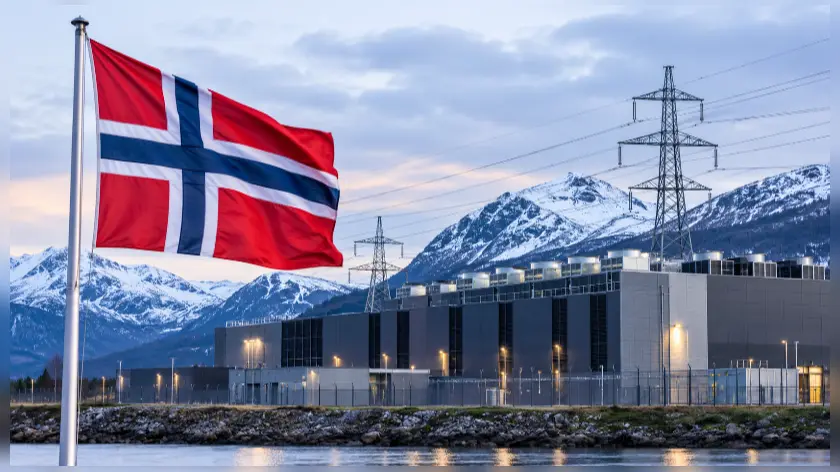
In a seismic shift for the European digital infrastructure landscape, Norway has enacted an immediate pause on new grid connection reservations for data centres. Announced on November 9, 2026, by state grid operator Statnett, the freeze is slated to remain in effect until August 1, 2027, at the latest. This dramatic regulatory intervention was followed less than an hour later by a sweeping policy announcement from Norwegian government ministers.
The state has unveiled comprehensive plans to institute a rigorous national licensing scheme, overhaul grid connection criteria, and explore potential state ownership of strategically vital facilities. According to Minister of Digitalisation and Public Governance Torgeir Micaelsen, the ultimate goal of these measures is starkly pragmatic: to "get the data centres we actually need" while slamming the door on unbridled, speculative digital growth.
For years, Norway’s abundant hydroelectric power, cool climate, and low electricity tariffs have made it a premier magnet for foreign cloud giants, artificial intelligence (AI) developers, and cryptocurrency miners. However, the exponential rise in power demand—accelerated globally by the generative AI boom—has outstripped the capacity of the nation’s transmission grids. With cumulative connection requests reaching staggering proportions that threaten domestic energy security and consumer price stability, Oslo has decided to regain absolute control over its energy future.
Detailed Chronology of the Policy Shift
The simultaneous announcements by Statnett and the Norwegian government represent the culmination of months of mounting tension between digital infrastructure expansion and national energy limits.
The November 9 Dual Announcements
On the morning of November 9, 2026, Statnett formally declared a temporary cessation of processing and approving new grid connection reservations for prospective data centre developments. Designed to buy the system operator vital breathing room, the pause is mandated to end no later than August 1, 2027.
Scarcely sixty minutes after Statnett’s announcement, a ministerial press conference convened by Minister of Digitalisation and Public Governance Torgeir Micaelsen and Energy Minister Terje Aasland outlined the legislative and structural countermeasures. The government revealed that future data centre operations will no longer enjoy an automatic right to plug into the Norwegian grid. Instead, they will be subjected to a centralized licensing framework that evaluates their social utility, energy efficiency, and alignment with national security priorities.
The Transition to the 2027 Framework
The interim period between November 2026 and August 2027 is designed to establish rigorous new technical and regulatory baselines. Statnett’s newly proposed grid requirements—covering fault-ride-through capabilities, rapid load-change parameters, and grid oscillation mitigation—will undergo a formal public consultation process before requiring final sign-off from the Norwegian energy regulator, RME.
Crucially, the freeze is not an indiscriminate blanket ban. Operational data centres remain completely unaffected, and facilities that can immediately satisfy stringent new technical mandates are still permitted to connect. Furthermore, Statnett has retained discretionary power to evaluate applications from smaller local sites or projects sitting on the cusp of commissioning. The government intends to formalize the core principles of the new licensing regime by the autumn of 2027.
Supporting Context & Metrics: When Demand Outruns the Grid
The urgency driving Oslo’s policy pivot is laid bare by a tidal wave of statistics regarding power consumption and queue congestion.
The Numbers Behind the Freeze
According to Statnett’s operational data, Norway currently hosts approximately 800MW of active, connected data centre capacity. However, this figure is dwarfed by the pipeline of prospective builds:
- Reserved Capacity: 4,200MW
- Transmission Queue: 9,100MW
- Pending New Requests: 18,000MW
Combined, this represents a staggering 32,100MW of total demand—a figure that outstrips Norway’s entire peak national consumption of just over 25,000MW. Even discounting projects that will inevitably fall by the wayside, active connections, reservations, and queue volumes alone account for roughly 56% of Norway’s total peak demand.
The Energy Squeeze
Energy Minister Terje Aasland noted that Statnett received applications for approximately 26,000MW of new consumption in 2026 alone, with data centres accounting for a commanding 75% of that volume. Data published by Menon Economics and highlighted by the government reveals that Norwegian data centres consumed 3.2TWh of electricity over the preceding year—a fourfold increase in just three years.

While Norway remains a net exporter of electricity, the Norwegian Water Resources and Energy Directorate (NVE) has issued repeated warnings. Unchecked data centre expansion threatens to tip the nation into a domestic power deficit, inevitably driving up electricity bills for residential and traditional industrial consumers. This vulnerability is compounded by the fact that foreign entities own more than 90% of Norway’s existing data centre capacity, according to the Norwegian Board of Technology. Landmark foreign-backed projects, such as Nscale’s 230MW Narvik campus designed to host over 30,000 Nvidia Rubin GPUs for Microsoft by 2027, highlight the immense scale of foreign capital targeting Norwegian electrons.
Official Statements and Strategic Intent
The Norwegian government has been careful to frame the new policies not as an eviction notice to the tech industry, but as a framework for managed, strategic growth.
Defining "Socially Beneficial" Digital Infrastructure
During the ministerial briefing, Torgeir Micaelsen emphasized that the licensing scheme will deliberately cherry-pick which workloads are welcome on Norwegian soil. Priority will be unequivocally granted to facilities supporting:
- National defense, police forces, and emergency preparedness systems.
- Critical public health services.
- Core national infrastructure, including mobile telecommunications networks and the financial settlement system.
While Norway remains open to supporting domestic and regional artificial intelligence computing capacity—aligning with broader Nordic and European digital sovereignty goals—it is actively slamming the door on low-value operations. Cryptocurrency mining will explicitly be classified as non-socially beneficial, effectively freezing out crypto operations from accessing Norwegian land and power. Furthermore, global hyperscale cloud providers will face heightened scrutiny and stricter limitations on their resource footprints.
Economic Accountability and Future Generation
The Norwegian government is also fundamentally rewriting the economic rules of engagement for incoming operators. Under the proposed framework, new data centres will be legally required to fully internalize and pay for the grid infrastructure costs they provoke.
Additionally, Oslo has initiated discussions with industry stakeholders regarding how data centre operators can actively co-finance new power generation assets. This includes exploring investments in cutting-edge energy solutions, such as gas-fired power plants equipped with carbon capture and storage (CCS) and large-scale offshore wind developments. Micaelsen reiterated that the overarching objective is the sustainable maturation of the industry, not its dismantling.
The Broader Nordic and Global Landscape
Norway’s regulatory hardening does not occur in a vacuum; it is part of a broader, tightening net across the Nordic region and the wider Western world.
The Nordic "Escape Valve" Narrows
For years, the Nordics served as the primary relief valve for overstressed power grids in Western Europe and North America. That valve is now rapidly closing:
- Denmark: Energinet paused new connection agreements in March, implementing a strict four-tier priority system on October 12 that relegates standard data centres to the back of the queue unless they provide critical societal functions.
- Sweden: Svenska kraftnät reported 6,984MW of data centre applications in its transmission queue as of September 1, prompting the operator to evaluate temporary restrictions on projects with outsized power demands.
- Finland: Helsinki has proposed a similar four-tier prioritization model that penalizes projects exceeding 10MW by moving them down the evaluation ladder.
The Global Infrastructure Backlash
This regional pushback coincides with mounting resistance globally. In the United States, traditional data centre hubs are increasingly weighing moratoria. Meta President Dina Powell McCormick recently acknowledged that new US builds are facing unprecedented friction, forcing hyperscalers to aggressively scout international jurisdictions.
However, finding alternatives in Europe is proving equally challenging. Grassroots opposition is mounting across the continent, with over 100 European civic groups recently petitioning for a blanket moratorium on large-scale data centres. Industry trackers indicate that active or proposed restrictions now span at least 22 jurisdictions across 10 European countries.
Future Outlook: What to Watch
As Norway charts a course toward August 2027, several critical questions remain hanging over the digital infrastructure sector:
- The Interim Void: Market participants will be closely monitoring how Statnett handles discretionary applications and smaller projects during the active freeze leading up to August 2027.
- Retroactive Enforcement: A major point of legal and financial anxiety for developers is whether the forthcoming licensing scheme will be applied retroactively to projects that have already secured grid reservations but have yet to break ground.
- Regulatory Approvals: With Statnett’s technical mandates set to undergo public consultation and final review by the RME regulator, the precise thresholds for grid stability compliance will dictate whether Norway remains competitive for high-performance computing (HPC) and AI factories.
Ultimately, Norway’s decisive action marks a watershed moment. The era of frictionless, unlimited power access for digital infrastructure is drawing to a close. As nations grapple with the thermodynamic realities of the AI revolution, Norway’s model of state-managed, security-vetted, and cost-attributable data centre growth may well serve as a blueprint for the rest of the developed world.