Executive Overview
In the ever-evolving ecosystem of digital communication, internet slang frequently bridges the gap between hyper-specific subcultural discourse and mainstream lexicon. The latest viral concept capturing the attention of researchers, content moderators, and digital anthropologists is known colloquially as "Bird Hands."
Emerging prominently across video-sharing platforms and social media networks—with documentation anchored by digital culture archives on October 1, 2026—the term has quickly expanded beyond a simple physical description into a charged piece of online vernacular. Associated heavily with conversations surrounding hand gestures, behavioral taxonomy, and modern interpersonal dynamics, "Bird Hands" has found a particularly vocal footing within spaces often categorized under the "manosphere."
This investigative report examines the origins, trajectory, and socio-cultural implications of the "Bird Hands" phenomenon. By dissecting its linguistic evolution, analyzing community-driven tags such as "red flag," "hand gestures," and "women," and evaluating its broader impact on digital communication, this article provides a comprehensive overview of how micro-trends weaponize mundane physical traits into ideological shorthand.
Detailed Chronology: From Niche Gesture to Viral Digital Discourse
The trajectory of "Bird Hands" follows a path typical of modern internet phenomena: moving from observation to memeification, and finally to polarized subcultural debate. While physical gestures and idiosyncratic movements are constantly cataloged online, specific labels rarely achieve critical mass without the catalyst of video content and algorithmic amplification.
Phase 1: Observation and Documentation
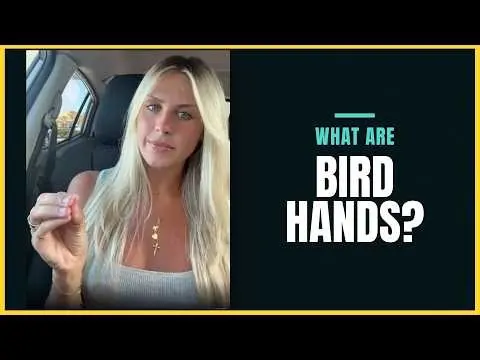
The baseline concept of "Bird Hands" centers around a specific manner of holding or positioning the hands, often likened to the claws or relaxed posture of a bird. In early digital observations, creators began filming and compiling instances of individuals—predominantly women, according to community tagging metrics—exhibiting this distinct physical posture. What began as anecdotal observations on platforms like YouTube and TikTok gradually coalesced into a recognizable trope.
Phase 2: Codification and Subcultural Adoption
As the clips circulated, subcultural groups, particularly within male-dominated digital spaces, began assigning symbolic weight to the gesture. Rather than viewing it as a neutral or accidental physical quirk, commentators reframed the posture through an analytical lens. Within certain corners of the internet, microscopic behavioral analysis has become a staple of content creation, where everyday habits are scrutinized as psychological indicators or ideological "tells."
Phase 3: Institutional and Archival Recognition
By October 1, 2026, the meme had crossed the threshold from fleeting trend to officially cataloged internet phenomenon. Researchers and platform chroniclers—such as Zach Sweat, documenting via primary sources on YouTube—began publishing metadata, tags, and categorical definitions for "Bird Hands" and "Bird Hands Meaning." This formalization elevated the slang from an ephemeral inside joke to a documented piece of contemporary digital folklore, complete with structured galleries, video links, and searchable taxonomies.
Supporting Context & Metrics: The Taxonomy of Digital Slang
To truly understand how "Bird Hands" resonates within the digital landscape, one must analyze the categorical architecture surrounding its deployment. The associated metadata paints a vivid picture of how internet users categorize and process behavioral memes.
Key Metatags and Thematic Associations
An evaluation of the search queries, video tags, and content classifications associated with the phenomenon reveals several key clusters:
- Behavioral Markers ("Hand Gestures"): At its core, the trend relies on visual confirmation. Users share clips isolating specific hand placements, turning anatomical habits into focal points of discussion.
- Interpersonal Valuation ("Red Flag"): Within the manosphere and adjacent dating-advice subcultures, minor behavioral traits are frequently elevated to the status of "red flags." This hyperbolic framing is designed to generate engagement, debate, and polarized commentary.
- Demographic Focus ("Women"): Statistical and qualitative metrics indicate that the overwhelming majority of content tagged under "Bird Hands" targets female subjects, fitting into a broader tradition of online communities dissecting women’s behavior, speech patterns, and physical movements.
- Linguistic Evolution ("Slang" / "Internet Slang"): Like terms that preceded it, "Bird Hands" demonstrates how physical descriptions are rapidly converted into abstract slang adjectives used to describe entire archetypes of people.
The Mechanics of Algorithmic Amplification
The lifecycle of "Bird Hands" highlights the role algorithms play in sustaining niche internet subcultures. Because content that provokes strong reactions—whether amusement, annoyance, or indignation—drives higher engagement metrics, videos analyzing minor physical quirks are systematically favored by recommendation engines. Consequently, a localized observation can transform into a widespread discourse topic within a matter of days.
Official Perspectives and Subcultural Analysis
The rise of behavioral scrutiny trends like "Bird Hands" invites sharp division among digital commentators, sociologists, and internet users alike.
The Manosphere Perspective and Behavioral Scrutiny
Within male-centric online forums and content channels, the cataloging of traits like "Bird Hands" is often defended as a form of hyper-awareness or pattern recognition. Proponents of these trends argue that modern dating and social interactions require heightened vigilance, using micro-analyses of body language to construct frameworks for evaluating potential partners. To these communities, labeling a gesture as a "red flag" serves as both a bonding exercise and a form of shared subcultural humor, even when detached from logical seriousness.
Sociological and Critical Counter-Perspectives
Conversely, cultural critics and digital sociologists view phenomena like "Bird Hands" as examples of excessive scrutiny and online reductionism. By hyper-focusing on arbitrary physical traits and attaching negative connotations to them, online communities can foster environments of relentless judgment. Critics argue that these trends dehumanize subjects by reducing complex individuals to isolated, memeifiable gestures, further accelerating a culture of superficial evaluation driven by short-form video algorithms.
Future Outlook: The Longevity of Micro-Slang in the Digital Age
As we look beyond the initial wave of virality surrounding "Bird Hands," several questions remain regarding its staying power and the broader trajectory of internet slang.
1. Mainstream Assimilation vs. Subcultural Isolation
Will "Bird Hands" break out of specialized manosphere forums and enter mainstream vernacular, or will it remain a niche internet artifact? Historically, slang terms that rely on hyper-specific behavioral critiques often struggle to find broader cultural adoption outside of the platforms where they originated. However, their structural impact on how younger generations talk about body language and dating remains significant.
2. The Evolution of Behavioral Memes
The phenomenon signals a broader shift in internet culture away from traditional image macros and toward video-based behavioral tracking. As high-definition video tools and short-form content platforms dominate the digital landscape, the human body itself—its posture, micro-expressions, and unconscious habits—has become the new canvas for meme culture.
3. Conclusion
"Bird Hands" is far more than a passing joke about hand positioning; it is a case study in how modern digital communities manufacture meaning, establish tribal boundaries, and weaponize observation. As platform algorithms continue to reward the hyper-analysis of everyday life, internet users can expect an endless stream of new physical quirks to be cataloged, debated, and transformed into the next wave of digital slang.