Executive Overview
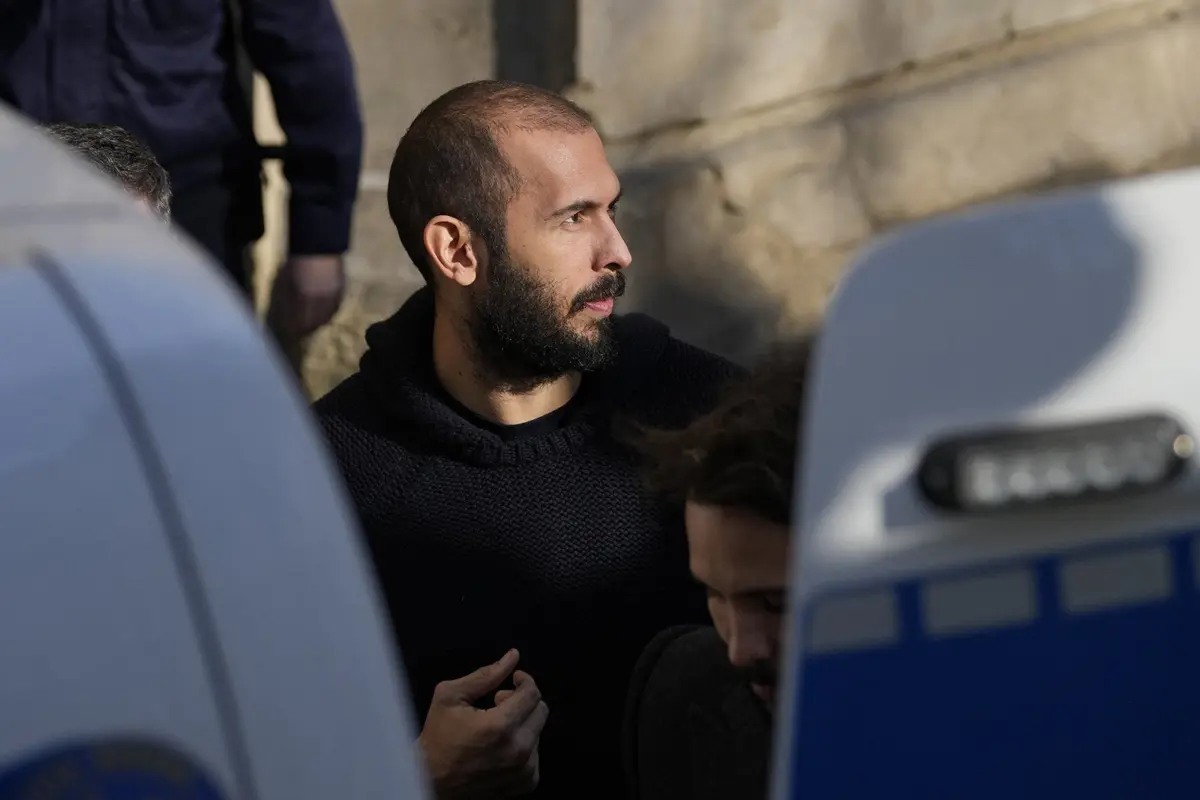
Controversial influencer Andrew Tate, alongside his brother Tristan and two alleged accomplices, transitioned from a Romanian jail cell to house arrest in late March following a high-profile detention period that began with their initial December 29 arrest. While the legal shift offered a temporary reprieve for the siblings—who face severe allegations of organized crime and human trafficking—investigative findings and court documents paint a picture of a legal strategy actively unraveling from within.
According to sources within the Romanian prosecutor’s office, freedom-of-information disclosures, and legal experts, the behavior exhibited by the defendants during their time behind bars has deeply irritated judicial authorities. Rather than bolstering their defense, the Tates and their associates are accused of orchestrating a sprawling array of extrajudicial tactics, including attempted witness tampering, coordinated pressure campaigns against alleged victims, a dubious plot to flee to Dubai under the guise of medical treatment, and potential unauthorized access to classified police databases.
Legal scholars warn that these maneuvers have severely damaged the defendants’ credibility. Romanian judges have increasingly viewed the group not merely as accused individuals preparing for trial, but as an ongoing threat to public order and the integrity of the judicial process. As the formal trial approaches, the cumulative weight of these supplementary allegations risks expanding the scope of the criminal investigation, turning a high-stakes human trafficking trial into an even broader legal reckoning.
Detailed Chronology of Events and Legal Escalations
The legal saga surrounding Andrew and Tristan Tate has unfolded through a rapid succession of dramatic developments, shifting from initial raids to international political entanglements.
December 2022: The Initial Arrests
On December 29, 2022, Romanian authorities raided properties associated with the Tate brothers in Bucharest. Andrew and Tristan Tate, along with alleged accomplices Georgiana Naghel and Luana Radu, were taken into custody on suspicion of forming an organized criminal group, human trafficking, and rape. The arrests sent shockwaves through the digital landscape, energizing both the influencers’ loyal follower base and vocal critics of the manosphere.
January – February 2023: Conspiracies Behind Bars
As the investigation deepened, prosecutors uncovered evidence suggesting the defendants were attempting to subvert the judicial process from within the central arrest building in Bucharest.
- The Dubai Flight Plot: Wiretaps of jailhouse phone calls revealed that Andrew Tate allegedly formulated a plan to flee to Dubai. To bypass extradition treaties—given that the United Arab Emirates lacks an extradition agreement with Romania—Tate reportedly intended to use a medical emergency as a pretext for travel, claiming a dark spot on his lung required foreign intervention.
- Intimidation and Cease-and-Desist Letters: In December, a US law firm representing the brothers issued a cease-and-desist letter to a key witness in Florida, urging her to retract her statements or face defamation lawsuits. Romanian authorities cataloged this action as part of a systematic campaign to intimidate victims and witnesses.
- Database Infiltration: Investigators flagged Luana Radu, a former police officer and alleged accomplice, for suspected unlawful access to classified Ministry of Internal Affairs databases between April and December 2022 to gain tactical advantages in the case.
February 21, 2023: Judicial Refusal
In an official summary of a February 21 court session, a judge firmly rejected the Tates’ appeal for release, citing "new reasons" for their continued detention. The presiding judge explicitly noted that the accused presented a clear danger to public order, actively attempted to evade justice by planning to flee Romania, and exerted coercive pressure on witnesses and victims.
March 2023: Political Outreach and Shifting Rulings
- Right-Wing Outreach: Prosecutors revealed that Andrew Tate allegedly instructed associates to approach two controversial Romanian right-wing politicians, George Simion and Diana Șoșoacă, offering future rewards in exchange for public defense and political backing. Both politicians ultimately declined to intervene.
- The Move to House Arrest: On March 31, a newly assigned panel of appeals court judges approved the transition of the Tates, Naghel, and Radu from central detention to house arrest at a heavily surveilled compound north of Bucharest. Despite this victory, the ruling intensified anxiety among prosecutors regarding potential flight risks and witness tampering.
Supporting Context & Metrics: The Mechanics of Influence and Intimidation
The investigation highlights how modern influencer culture intersects with traditional criminal enterprises. The Tates’ reliance on their digital footprint—often described as an "army of followers"—served as both their primary cultural weapon and a liability within the courtroom.
- Digital Mobilization: Court documents indicate that online supporters were allegedly mobilized to flood at least one alleged victim with threatening messages designed to force a retraction. Public figures, such as pro-Tate online personality Sulaiman Ahmed, drew scrutiny after tweeting about traveling to the hometown of a key witness under the guise of reporting a major story.
- Historical Unresolved Complaints: Prosecutors uncovered records from local police units near the Tate compound indicating that multiple women had filed prior complaints regarding violence, coercion, and abuse. These historical complaints had remained unresolved, reinforcing suspicions that internal leaks and administrative manipulation—allegedly facilitated by Radu—had stalled justice.
- The Economics of Controversy: Justice system insiders noted that Andrew Tate’s compulsion for constant media attention and confrontation routinely overrode prudent legal strategy. Experts interviewed in Bucharest emphasized that high-profile defendants who treat legal proceedings as social media spectacles inevitably alienate the magistrates tasked with deciding their liberty.
Official Statements and Legal Perspectives
The friction between the Tates’ defense team and Romanian judicial authorities underscores the polarized nature of the proceedings.
- The Prosecution Perspective: An anonymous official from the prosecutor’s office condemned the defendants’ actions, stating, "The Tates have played an extremely dangerous game. From their tweets, it appears they are encouraging it [witness intimidation]. Every aspect of the case that touches on the victims is very sensitive."
- Academic and Expert Analysis: Mihai Maravăț, a criminal defense lawyer in Bucharest and a law lecturer at Alexandru Ioan Cuza University of Iași, warned that the hostility generated by the defendants’ behavior will have lasting consequences. "Any subsequent statements they may give will be viewed with a certain amount of skepticism by the judicial bodies," Maravăț explained, adding that the cease-and-desist notifications sent to witnesses could easily widen the prosecutorial scope to include criminal charges for influencing statements.
- The Defense Response: Eugen Vidineac, an attorney representing the Tates, dismissed notions of a planned escape, emphasizing to local media that his clients maintain homes and children in Romania and have no reason to flee. Meanwhile, Tate spokesperson Mateea Petrescu defended the legality of the US-based cease-and-desist letter, asserting that wiretaps regarding travel to Dubai were taken out of context and that Andrew Tate only intended to travel if legally permitted. Tina Glandian, a US lawyer on the Romanian defense team, distanced her firm from the controversial witness letters.
Future Outlook
As the formal trial approaches in late April, the legal landscape for Andrew and Tristan Tate remains precarious. While house arrest offers a more comfortable environment than the central Bucharest detention facility, the strategic cost of their prior actions is mounting.
Legal analysts point out that the prosecution is actively evaluating whether to file supplementary charges related to witness tampering, database breaches, and obstruction of justice. If substantiated, these secondary charges could significantly lengthen potential prison sentences upon conviction. Furthermore, the evident frustration among Romanian judges guarantees heightened scrutiny throughout the trial phase, leaving little room for error as the defense attempts to dismantle the core human trafficking and organized crime allegations.
Ultimately, the case against the Tate brothers serves as a watershed moment for how modern legal systems handle defendants who leverage digital ecosystems to sway public perception. As the proceedings transition from investigative hearings to courtroom arguments, the limits of online bravery in the face of rigorous statutory enforcement will be decisively tested.