Executive Overview
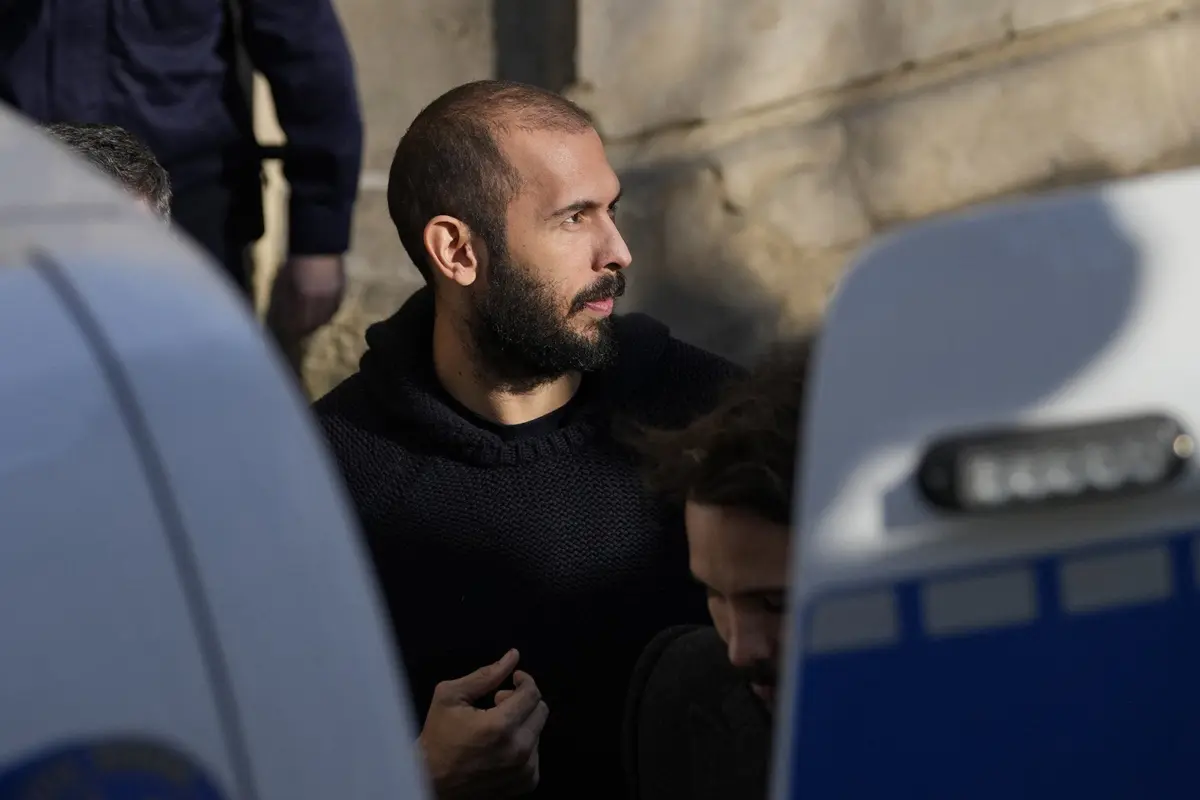
Controversial influencer Andrew Tate and his brother, Tristan Tate, alongside two alleged co-conspirators, achieved a temporary legal milestone when a Romanian appeals court ordered their release from central detention and transferred them to house arrest. Arrested initially on December 29, the brothers face grave allegations of organized crime, human trafficking, and sexual exploitation. While the transition from a high-security holding facility to a guarded suburban compound north of Bucharest was hailed as a legal victory by the siblings and their supporters, investigative reporting and leaked court documents reveal a darker reality.
Behind the scenes, prosecutors, judges, and legal experts maintain that the Tates’ behavior while in custody has severely jeopardized their legal standing. Rather than focusing solely on mounting a traditional defense against the impending trial—slated to begin in late April—the defendants and their associates allegedly orchestrated an intricate web of secondary schemes. Wiretapped communications, unauthorized database access, witness intimidation campaigns, and calculated attempts to leverage high-profile political figures have triggered intense judicial irritation.
According to Romanian legal authorities, these maneuvers do not merely reflect desperation; they constitute independent criminal infractions. By attempting to manipulate witnesses, suppress testimonies, and plot an illegal escape to Dubai under the guise of medical treatment, the Tates have invited comprehensive new investigations. This exhaustive report examines the multifaceted legal fallout of the Tates’ detention conduct, detailing how their persistent compulsion for controversy and control may ultimately dismantle their legal strategy from within.
Detailed Chronology: From Late December Arrests to the House Arrest Ruling
The Initial Crackdown and Pre-Trial Detention
The legal saga began in earnest on December 29, when heavily armed Romanian law enforcement units raided the Bucharest compound of Andrew and Tristan Tate. The brothers were detained alongside their alleged accomplices, Georgiana Naghel and Luana Radu. Romanian authorities, acting under the Directorate for Investigating Organized Crime and Terrorism (DIICOT), placed the four individuals under strict pre-trial detention on suspicion of human trafficking, rape, and forming an organized criminal group.
For nearly three months, the Tates languished in a central arrest facility in Bucharest. Throughout this period, their legal teams fought vigorously for their release, filing multiple appeals that were systematically rejected by judges. In an official summary of a February 21 court session, a presiding judge outlined explicit justifications for maintaining the detention. The court emphasized that the accused posed a clear danger to public order, actively prepared to evade criminal prosecution by fleeing Romania, and exerted psychological pressure on witnesses and victims.
The Shift to House Arrest and Heightened Surveillance
Despite repeated judicial blocks throughout January and February, a pivotal shift occurred on March 31. Two appeals court judges—reportedly newly assigned to the case—approved the Tates’ transition from the central arrest facility to house arrest. The ruling sent shockwaves through official and legal circles in Bucharest.
While the brothers celebrated the decision as proof of their eroding culpability, Romanian law enforcement treated the development with heightened vigilance. The Tates’ current location—a heavily fortified compound in an affluent suburb north of Bucharest—is subject to constant electronic and physical surveillance. Legal analysts note that while house arrest offers physical comfort compared to a jail cell, it does nothing to mitigate the mounting hostility of the prosecutors handling the core human trafficking indictment.
Supporting Context & Metrics: The Anatomy of Alleged Secondary Offenses
The Dubai Escape Plot and Medical Ruse
Among the most damaging revelations contained in court documents and jailhouse wiretaps are details regarding an alleged conspiracy to flee Romania. Wiretaps cited by judges indicate that Andrew Tate plotted to escape to Dubai under the pretext of seeking urgent medical treatment. Because the United Arab Emirates lacks an extradition treaty with Romania, a successful flight to Dubai would have effectively shielded the influencer from prosecution.
The plot hinged on medical diagnostics. In early March, a Tate representative informed the Daily Mail that a dark spot discovered on Andrew’s lung during detention was "most likely a tumor." However, the narrative shifted abruptly when Andrew took to social media, clarifying that the spot was merely scarring "from an old battle." Romanian authorities ultimately denied the travel request, viewing the medical narrative as a fabricated pretext for flight.
Witness Intimidation and the Florida Cease-and-Desist
Prosecutors allege that the Tates utilized their vast digital ecosystem to intimidate accusers, encouraging online followers to target at least one alleged victim demanding she retract her statements. In February, online pro-Tate commentator Sulaiman Ahmed tweeted that he had traveled to Palm Beach, Florida—the hometown of a key witness in the case—for a "major story," prompting further fears of real-world harassment.
Simultaneously, a US law firm previously retained by the Tates issued a formal cease-and-desist letter to the same witness in Florida, urging her to retract her allegations or face defamation litigation. While separate US counsel Tina Glandian publicly distanced her current team from the letter, Romanian prosecutors view the document as an integral component of an international intimidation campaign. Mihai Maravăț, a prominent Bucharest criminal defense lawyer and university lecturer, warned that framing such notices to influence criminal complaints constitutes a distinct criminal offense under Romanian law: the crime of influencing statements.
Cyber-Infiltration and Unresolved Complaints
Adding to the complex web of allegations, Luana Radu—a former police officer and alleged Tate accomplice—is suspected of unlawfully accessing classified police databases. Court files indicate that between April and December 2022, Radu exploited her former law enforcement connections to breach the Ministry of Internal Affairs database to gain an unfair tactical advantage in the ongoing investigation. A presiding judge noted that such a breach would have been impossible without external collusion.
Furthermore, local police units uncovered historical complaints filed by women alleging violence, coercion, and abuse by the Tates predating the current indictment. These historical files had languished unresolved, fueling suspicions that Radu utilized her insider access and influence to suppress past investigations.
Political Outreach Attempts
In another striking bid to control the narrative, court wiretaps reveal that Andrew Tate allegedly instructed his associates to approach two prominent right-wing Romanian politicians: George Simion and Diana Șoșoacă. Known for provocative stances on gender, public health policies, and anti-Western rhetoric, both politicians were targeted with promises of future rewards.
"If you take the side of the guys, when they get out of prison they will make sure you are rewarded for telling the truth," Tate reportedly instructed his assistant to tell the politicians. However, both Simion and Șoșoacă publicly declined to associate themselves with the embattled influencer, leaving the outreach effort a strategic failure.
Official Statements and Legal Perspectives
The divergence between the public declarations of the Tates’ representatives and the assessments of independent legal experts highlights the severity of their current predicament.
- Defense and Spokesperson Positions: Eugen Vidineac, lead defense counsel for the Tates, has consistently downplayed flight risks, asserting, "They have a home and children in Romania, they are under criminal investigation, there is no reason to run away." Meanwhile, spokesperson Mateea Petrescu argued that wiretaps regarding Dubai were taken out of context, stating that Andrew only discussed leaving for medical inquiries if legally permitted. Regarding the US cease-and-desist letter, Petrescu maintained it was a standard legal action rendered obsolete by the appeals court’s house arrest ruling.
- Prosecutorial and Judicial Warnings: Sources within the prosecutor’s office remain steadfast. "The Tates have played an extremely dangerous game," an anonymous official stated, noting that the defendants appeared to actively encourage online harassment campaigns against sensitive victims.
- Independent Legal Analysis: Mihai Maravăț emphasized that the cumulative "irritation" among judges is palpable in court transcripts. Maravăț cautioned that any subsequent statements delivered by the Tates during their impending trial will be met with profound skepticism by the judiciary. An experienced Romanian justice system insider summarized the situation bluntly, suggesting that Andrew Tate’s compounding legal missteps stem from an uncontrollable compulsion for public controversy: "I think Andrew Tate is not the most intelligent guy, but he probably can’t help himself."
Future Outlook: What Lies Ahead as the Trial Approaches
As the legal landscape shifts toward the official commencement of the trial in late April, the Tates face a precarious balancing act. While house arrest provides a veneer of restored autonomy, the accumulated weight of secondary investigations threatens to overwhelm their primary defense strategy.
- Expansion of Criminal Charges: Legal experts anticipate that prosecutors may formally expand the indictment to include charges of witness tampering, obstruction of justice, and cyber-trespass stemming from Radu’s alleged database infiltration and the international intimidation campaign.
- Judicial Credibility Deficit: The tangible frustration expressed by Romanian judges ensures that the bench will scrutinize every motion, testimony, and procedural request submitted by the defense with extreme prejudice. Rebuilding judicial trust will prove exceptionally difficult.
- Public Persona vs. Legal Prudence: Andrew Tate’s reliance on digital shock value and online bravado—historically the cornerstone of his brand—has proven catastrophic within the austere framework of the European criminal justice system. Unless the defense successfully pivots to conventional legal advocacy, the very tactics designed to project strength may ultimately seal their legal fate.