Executive Overview
For decades, the cultural conversation surrounding female body hair has undergone a gradual, if often fractured, evolution. From the early waves of feminist defiance to the chaotic, hyper-visible landscape of modern social media, society has grown somewhat accustomed to the rehabilitation of body hair in specific, easily curated zones. Internet aesthetics like the “full bush in a bikini” trend or the playful styling of dyed and bedazzled armpit hair regularly sweep through TikTok and Instagram, framed as acts of radical self-expression. Yet, one stubborn frontier resists easy assimilation: leg hair.
While underarm and pubic hair can be easily concealed, shaped, or revealed for dramatic effect, legs are relentlessly exposed to the public gaze. When singer-songwriter Phoebe Bridgers stepped onto the red carpet at the Venice Film Festival with visible leg hair beneath her tailored Gucci skirt suit, it sparked a flurry of media coverage and public discourse. To many, it was a watershed moment—the rare sighting of a mainstream celebrity openly rejecting traditional grooming standards on a global stage. To others, it highlighted a profound cultural irony: that in the mid-2020s, a woman simply existing with natural hair on her shins is still considered headline-worthy.
This investigative feature explores why leg hair remains the ultimate litmus test for patriarchal beauty standards. Through interviews with body hair activists, stylists, and everyday women navigating the complexities of personal grooming, we examine why leg hair feels uniquely confrontational, the lingering grip of the male gaze, and whether society is finally ready to let go of the razor.
Detailed Chronology: From Schoolyard Shaming to the Venice Red Carpet
To understand the weight of a hairy leg on a red carpet, one must trace the long, deeply internalized history of how women learn to police their own bodies. For most, the journey begins in early childhood, long before any conscious political awakening takes place.
Take musician and body hair activist Carolena V, who was just ten years old when she first picked up a razor. The catalyst was not personal preference, but public humiliation: a classmate pointed at her legs and shrieked, “Ew! Your legs are so hairy!” That singular moment of playground cruelty planted a seed of insecurity that dictated her grooming habits for nearly two decades. Like countless women, Carolena reluctantly shaved her legs out of a conditioned fear of standing out, until she finally paused in her late twenties to interrogate the root of her discomfort. Today, she utilizes platforms like TikTok to share what she terms “leg hair art”—using eyebrow gel and vibrant cosmetics to paint swirling heart patterns across her shins, transforming a site of historical shame into a canvas of joy.
For Joanie O’Mara, a 28-year-old navigating the contemporary social landscape, the process of unlearning has been similarly uneven. While Joanie has successfully embraced body hair in other areas—finding it to feel deliberate, “punk, and feminist”—her leg hair remains a psychological battleground.
"Legs are just legs," Joanie reflects, "so it’s perceived as unkempt."
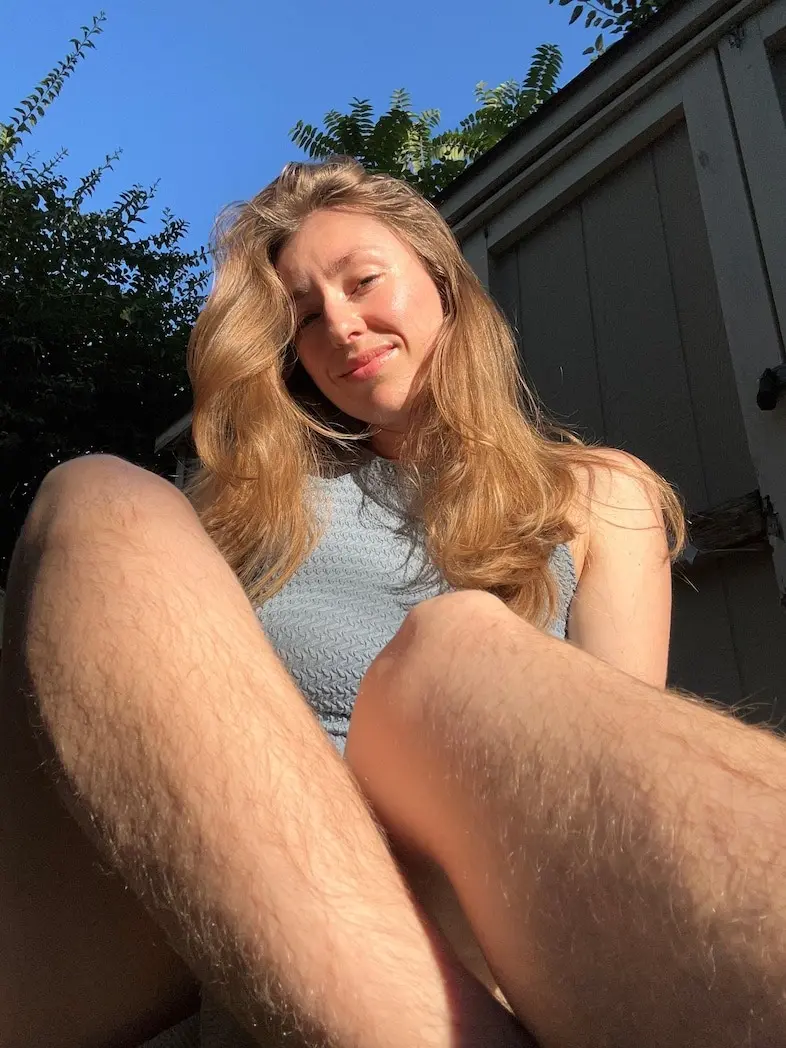
When Joanie stopped shaving her legs, her initial reaction was not empowerment, but acute self-consciousness. Unlike armpit hair, which can be kept secret until strategically revealed, leg hair offers no such plausible deniability in everyday life. If a woman has hairy legs at a summer gathering, it is rarely interpreted as a deliberate artistic or political statement; instead, it is almost universally perceived as an accident—a missed appointment, a forgotten razor, or a sign of laziness.
This dynamic shifted temporarily in September 2026, when Phoebe Bridgers walked the Venice Film Festival red carpet. For Silvia Almeida, a 26-year-old fan, seeing the musician’s natural legs beneath high fashion was a revelation.
"I felt so seen and so much better after seeing a cool artist that I like showing how natural and normal leg hair is," Silvia notes.
Yet, that validation was immediately tempered by a familiar bittersweet realization: "I do find it sad and weird that we need to praise someone for that." Silvia admits that despite her admiration for Bridgers, she still occasionally looks at her own leg hair and feels a visceral sense of disgust—a contradiction that highlights just how deeply ingrained these aesthetic standards truly are.
Supporting Context & Metrics: The Mathematics of the Male Gaze
The reluctance to accept leg hair is not merely a matter of personal taste; it is anchored in rigid societal expectations regarding femininity, desirability, and power.
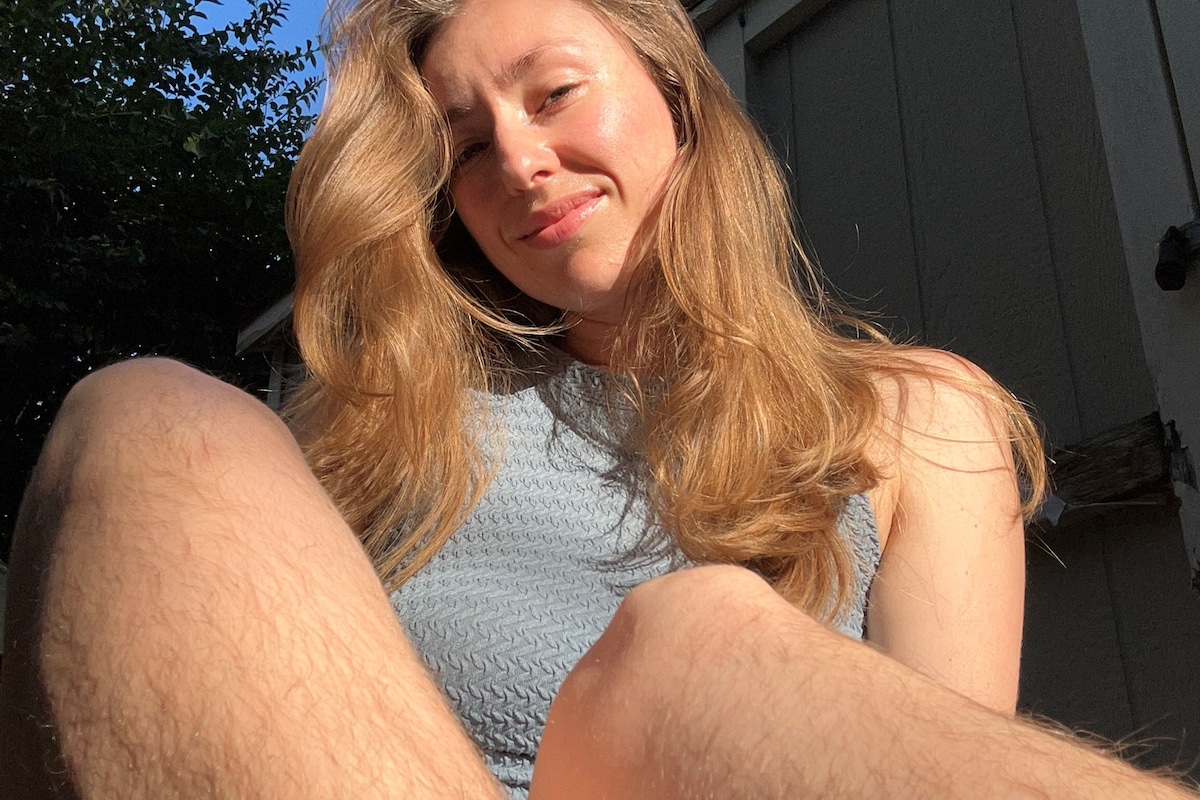
According to red carpet stylist Madeleine Bowden, the difficulty of mainstreaming leg hair largely comes down to logistics and visual framing. "I feel like leg hair got left behind because it’s harder to style," Bowden explains. "Pubic hair and armpit hair can be shaped, dyed, and turned into a statement. Legs are on show all the time, so there’s no reveal moment like there is with pits or a bikini line. That’s where the charge comes from with those trends, and leg hair never had it."
Furthermore, leg hair is uniquely confrontational because it flagrantly disregards the male gaze. Body hair activist Esther Calixte-Béâ, widely known as Queen Esie, points out that society often conflates a woman’s decision to grow out her leg hair with a total abandonment of aesthetic self-care.
"For the public, it seems like [women with visible leg hair] have given up trying to be pretty," Calixte-Béâ observes. "It’s not very sexual. It’s seen as more masculine."
The empirical data tragically supports this assessment. A comprehensive 2021 YouGov study conducted in the United Kingdom revealed that an overwhelming 66 per cent of men and 62 per cent of women still believe it is “unattractive” for women to have hairy legs. These statistics underscore the immense social pressure placed upon women to maintain hair-free limbs, transforming a biological reality into a moral and aesthetic failing.
Moreover, Calixte-Béâ emphasizes that the conversations we have about body hair online are often sanitized by privilege. As a woman with very thick, dark, and highly apparent body hair, Calixte-Béâ notes that viral discussions surrounding body hair frequently center on fine, blonde arm hair or subtle stubble.
"That’s not to say that what they’re talking about is not valid," she clarifies, "but it doesn’t feel as threatening. It’s not as disturbing to the status quo."
Because leg hair is expansive, highly visible, and difficult to ignore, stepping out into the world with un-shaved shins requires an entirely different level of psychological armor than participating in internet trends that remain hidden beneath clothing. As Queen Esie succinctly puts it: "If you say, ‘I don’t shave my bush’, it’s not going to have the same impact as not shaving your legs. We’re not really going to see that. We’re not going to have to reflect on that subject in the same way."
Official Statements & Expert Perspectives
Industry insiders and activists alike agree that if leg hair is to move beyond the occasional headline-grabbing red carpet moment, the fashion and beauty industries must intentionally change how they present the female body.
- Madeleine Bowden (Red Carpet Stylist): Analyzing Phoebe Bridgers’ Venice Film Festival appearance, Bowden notes that the look succeeded precisely because it was not over-engineered. "Bridgers worked because it read as unbothered confidence, not as a look in itself." Bowden believes that stylists hold the key to normalizing leg hair, provided they are willing to integrate natural limbs into high-fashion narratives rather than treating them as counter-cultural novelties.
- Carolena V (Musician & Body Hair Activist): Reflecting on the political implications of visible leg hair, Carolena argues that rejecting the razor is a direct rejection of commercialized desirability. "Hairy legs say that a woman’s body will not conform to be desirable for the male gaze," she states. "She will not offer herself up as a tasty visual treat. Hairy legs say: ‘I don’t care if a man finds me attractive’—and that’s a big statement in our society."
- Esther Calixte-Béâ (Queen Esie): Highlighting the disparity in how different types of body hair are received, Calixte-Béâ challenges both media outlets and digital creators to confront the reality of thick, dark, unmanaged hair. She argues that true body positivity must move past palatable, low-stakes disclosure and embrace the features that society finds most disruptive.
- Joanie O’Mara (Campaign Participant): Summarizing the daily calculus of deciding whether to pick up the razor, Joanie emphasizes the emotional toll of visibility. "It’s not a subtle, incognito comfort or fashion choice," she says. "It’s a big deal. If you are feeling less powerful, more subtle, more like hiding, leg hair is not the one."
Future Outlook: Beyond the Razor
As we look toward the future of personal grooming, the conversation around leg hair is reaching a critical crossroads. While celebrity appearances by figures like Phoebe Bridgers open the door to mainstream dialogue, and digital creators like Carolena V infuse the space with whimsical creativity through leg hair art, the ultimate goal is not to turn leg hair into the next mandatory trend.
Body hair is, fundamentally, not a trend at all; it is a natural, biological state. The exhaustion that many women feel toward shaving is not always born from a desire to make a sweeping political statement. Often, it stems from the simple, pragmatic realization that grooming is an unpaid, time-consuming labor tax levied exclusively against one half of the population.
For leg hair to truly have its “full bush in a bikini” moment, society must move past the phase of superficial shock and mandatory praise. Women should not have to be brave to wear shorts in July, nor should they require the endorsement of a Gucci-clad musician to feel comfortable in their own skin. Until the cultural knee-jerk reaction shifts from unkemptness to indifference, leg hair will remain the ultimate defiant act—a visible, undeniable reminder that a woman’s body belongs to herself, and herself alone.