Executive Overview
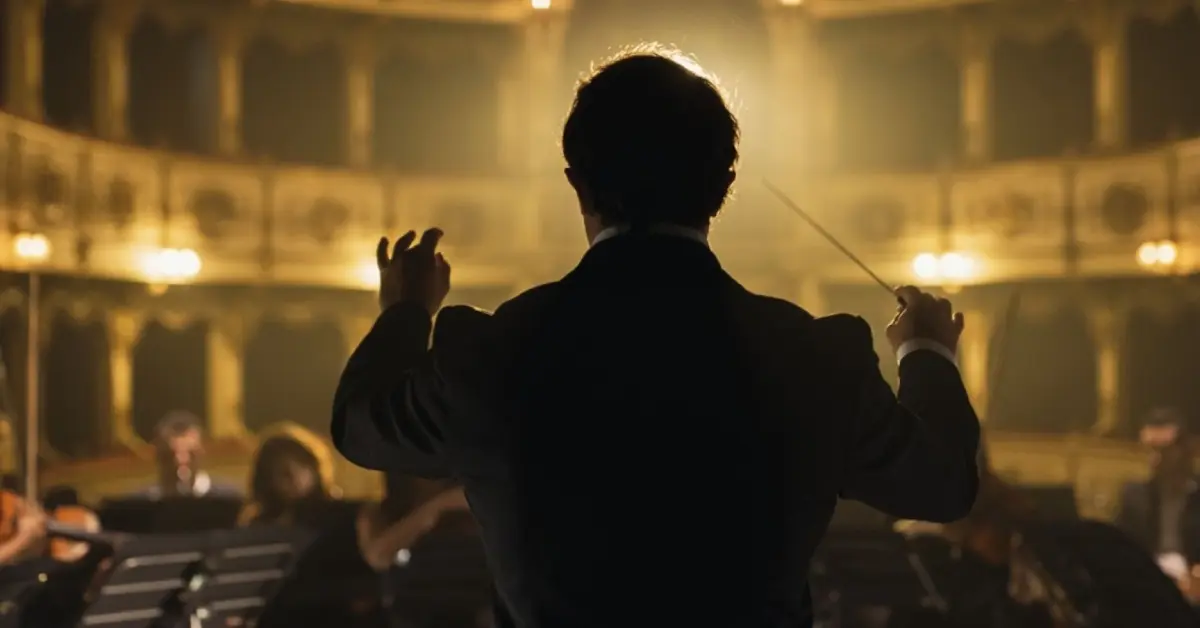
In the storied annals of classical music, few moments match the high-stakes drama of April 6, 1962, at Carnegie Hall. As legendary conductor Leonard Bernstein stepped before a packed, expectant audience, the palpable tension in the hall signaled that something was fundamentally amiss. Set to lead the New York Philharmonic through Johannes Brahms’s monumental D Minor Piano Concerto, Bernstein faced an unprecedented creative schism with his soloist, the eccentric and brilliant Canadian pianist Glenn Gould. Rather than quietly suppressing their artistic differences or canceling the performance, Bernstein took a calculated risk that would forever alter our understanding of professional collaboration.
Stepping to the edge of the stage, Bernstein delivered a rare, unscripted pre-concert disclaimer. He publicly distanced himself from Gould’s radical interpretation of the score—which was markedly slower, highly idiosyncratic, and entirely unorthodox—while simultaneously championing the pianist’s artistic integrity. In doing so, Bernstein provided a masterclass in leadership, demonstrating how to harness divergent perspectives rather than crushing them under the weight of conformity.
This dramatic episode transcends the world of high art. It serves as a compelling case study for modern workplaces, illuminating the friction that inevitably occurs when visionary thinkers collaborate. By examining this legendary confrontation through the lens of organizational psychology and economic theory—specifically Thomas Sowell’s concept of the "unconstrained vision"—we uncover vital lessons for contemporary leaders. Whether in software development, corporate boardrooms, architectural design, or scientific research, the ability to navigate creative conflict and embrace opposing viewpoints remains the ultimate differentiator between stagnant mediocrity and groundbreaking innovation.
Detailed Chronology: The Anatomy of a Musical Collision
The Setup and Early Rehearsals
To fully grasp the magnitude of the 1962 Carnegie Hall confrontation, one must understand the distinct creative trajectories of the two protagonists. Leonard Bernstein was a towering colossus of mid-century American culture. Renowned for his charismatic podium presence and boundary-pushing compositions—such as the groundbreaking West Side Story, which seamlessly fused serious theatrical themes with complex orchestrations—Bernstein was a champion of emotional resonance and dynamic expression.
Glenn Gould, conversely, was an enigmatic iconoclast. Already famous for his revolutionary 1955 recording of J.S. Bach’s Goldberg Variations, Gould approached music with analytical precision, a disdain for traditional romantic interpretations, and a penchant for exceptionally slow tempos. When Bernstein invited Gould to tackle the deeply romantic, fiery Brahms D Minor Concerto, a collision of worldviews was practically guaranteed.
The friction began almost immediately during early rehearsals. True to form, Gould approached the podium with a glint in his eye, announcing, "Oh boy, have I got some surprises for you; I have made such discoveries about this piece." While Bernstein historically welcomed bold, innovative ideas, Gould’s radical tempo reductions and structural re-imaginings pushed the conductor to his absolute limits.
For Bernstein, the challenge was multifaceted. As the musical director and leader of the New York Philharmonic, he carried a heavy burden of responsibility:
- He had to protect the structural integrity of a beloved masterwork by Brahms.
- He needed to support and respect his soloist, honoring the collaborative contract of the performance.
- He had to manage the expectations of an elite audience that had paid top dollar for a world-class classical experience.
The Boiling Point: April 6, 1962
As the week of rehearsals progressed, the creative chasm widened. Gould’s tempos were so drastically slower than traditional conventions that the orchestral musicians struggled to maintain phrasing and breath support. The artistic disagreement grew so profound that Bernstein felt he could not simply steer the ship in silence; the audience deserved an explanation for the sonic anomaly they were about to experience.
When the house lights flickered and Bernstein walked onto the Carnegie Hall stage alone—with Gould conspicuously absent—a hush fell over the auditorium. In an era when conductors maintained an aura of infallible authority, Bernstein’s public address was nothing short of revolutionary.
"You are about to hear an ‘unorthodox performance’. A performance distinctly different from any I’ve ever heard, or even dreamt of, for that matter."
Bernstein did not merely announce the deviation; he contextualized it, posing a profound question on collaborative leadership that still resonates today: "What am I doing conducting it? I’m conducting it because Mr. Gould is so valid and serious an artist that I must take seriously anything he conceives in good faith, and his conception is interesting enough so that I feel you should hear it, too."
Rather than canceling the show, staging a minor scandal, or replacing Gould with a compliant substitute soloist, Bernstein chose curiosity over control. He recognized that Gould’s interpretation, though deeply unsettling to his own musical sensibilities, offered a genuine, thoroughly considered alternative vision. Gould walked onto the stage moments later, and together they delivered a performance that critics and classical music enthusiasts continue to analyze, debate, and marvel at decades later.
Supporting Context & Metrics: The Psychology of Collaborative Friction
Understanding the "Unconstrained Vision"
To contextualize Bernstein’s triumph in organizational terms, we look to economist Thomas Sowell’s seminal work, A Conflict of Visions. Sowell posits that human conflict—whether in politics, economics, or creative collaboration—often stems from fundamental differences in how we view human nature and institutional problem-solving.
Among these frameworks, the "unconstrained vision" champions radical possibilities, systemic transformation, and the belief that human potential and ideals should not be arbitrarily limited by past practices or conventional boundaries. Gould’s approach to the Brahms concerto was the epitome of the unconstrained vision: he discarded historical performance practices, traditional tempos, and audience expectations in pursuit of a pure, cerebral ideal.
In contrast, the "constrained vision" relies heavily on tradition, accumulated wisdom, institutional precedent, and acknowledged human limitations. Bernstein initially occupied this space, viewing the Brahms concerto through the lens of historical performance standards and orchestral cohesion.
When these two visions collide in the modern workplace, teams frequently freeze. Organizational psychologists note that professional conflicts typically follow a predictable arc:
- Divergence: Team members propose radically different paths forward.
- Polarization: Individuals retreat into defensive silos, dismissing opposing viewpoints as flawed or incompetent.
- Paralysis (or Conformity): Projects stall completely, or leadership exerts authoritarian control, forcing compliance and stifling innovation.
Bernstein’s genius lay in short-circuiting this destructive cycle. By publicly acknowledging Gould’s perspective without compromising his own professional standing, Bernstein transformed a destructive polarization into a constructive dialogue.
Modern Workplace Parallels
This dynamic is not confined to the symphony hall. Cross-functional friction occurs daily across modern enterprises:
- Software Development vs. User Experience: Engineers often prioritize algorithmic efficiency and technical perfection (a constrained, systematic vision), while designers and product managers push for intuitive, emotionally engaging interfaces that may stretch technical limits (an unconstrained vision).
- Corporate Strategy vs. Creative Marketing: Financial controllers focus on risk mitigation, predictable budgets, and proven metrics, while marketing innovators push for disruptive, unconventional campaigns that carry higher risks of failure.
- Architecture and Urban Planning: Structural engineers focus on load-bearing safety and material costs, whereas visionary architects prioritize aesthetic statements and spatial philosophy.
When leaders react to these tensions with authoritarian crackdowns, morale plummets and innovation dies. Conversely, when leaders adopt Bernstein’s posture of radical openness, disparate elements fuse into revolutionary products.
Official Statements and Leadership Insights
Reflecting on the nature of collaborative leadership, modern management theorists frequently point to the Carnegie Hall incident as a textbook example of ego management. In traditional hierarchies, leaders view dissent as a threat to their authority. Bernstein reframed dissent as an intellectual gift—an opportunity to re-examine deeply ingrained assumptions.
Prominent figures in business history have successfully mirrored this philosophy. Consider the transformation of Intuit under co-founder Scott Cook. Early in the company’s history, development teams were dangerously obsessed with technical features and complex coding specifications—a classic internal silo. Cook recognized that the team’s unyielding focus was blinding them to the actual needs of everyday consumers who found financial software intimidating.
By stepping back, listening to dissenting user-experience advocates, and fostering a culture where technical purism could peacefully clash with radical simplicity, Cook’s team revolutionized personal finance management. Products like Quicken, QuickBooks, and TurboTax were born not from uniform agreement, but from the fertile friction between opposing organizational priorities.
As leadership expert and author Warren Bennis noted regarding collaborative enterprises:
"The stunning symmetry of artistic collaboration requires a delicate balance of ego, trust, and shared vision. True leadership is not about eliminating friction; it is about conducting the friction so that it generates heat and light, rather than smoke and ash."
Bernstein’s pre-concert speech was a masterclass in this exact principle. He owned the stage, validated his collaborator, protected the audience’s right to judge for themselves, and refused to let institutional pride obstruct artistic discovery.
Future Outlook: Navigating Dissent in the Modern Era
As we look toward the future of work—characterized by remote teams, cross-disciplinary projects, artificial intelligence integration, and hyper-specialized workforces—the lessons of Bernstein and Gould are more urgent than ever.
1. Shifting from Tolerance to Intellectual Curiosity
Many modern organizations champion "diversity and inclusion" as a procedural box-checking exercise, yet they struggle to embrace cognitive diversity. True collaboration requires moving past mere tolerance of different working styles toward active, aggressive intellectual curiosity. When a colleague presents an idea that directly contradicts your professional worldview, the default reaction should mirror Bernstein’s: "That is radically different from anything I envisioned—help me understand why you see it this way."
2. Redefining Leadership Authority
The 21st-century leader is no longer a traditional maestro standing before an obedient orchestra of passive executors. Modern workforces consist of autonomous experts, creative specialists, and independent thinkers. Consequently, effective leadership has shifted from command-and-control to orchestration. Leaders must learn to curate tension, facilitate constructive debate, and guide disparate talents toward a unified, high-performing output without stifling individual brilliance.
3. Embracing Productive Discomfort
Innovation lives outside the comfort zone of consensus. When corporate cultures optimize exclusively for harmony and risk-aversion, they breed groupthink and mediocrity. Organizations that wish to pioneer new industries must build psychological safety nets that allow for vigorous debate, unconventional experimentation, and, crucially, the courage to execute ideas that leaders themselves might initially doubt.
Conclusion
Leonard Bernstein and Glenn Gould’s legendary collaboration reminds us that magic rarely happens in an echo chamber. By leaning into discomfort, honoring the seriousness of dissenting viewpoints, and possessing the humility to question one’s own orthodoxies, professionals across all industries can transform creative conflict into lasting masterworks. The next time a colleague brings a radical, unexpected proposal to your desk, remember the Carnegie Hall stage in 1962: take a breath, step forward, and let the music play.