Executive Overview: A Strategic Pivot Toward the Open Web
In an ambitious bid to cultivate the next generation of web developers, designers, and digital entrepreneurs, Automattic, the parent company of WordPress.com, has officially launched WordPress.com Education. Announced at the annual WordCamp U.S. conference, this new initiative introduces a fully featured, free "Student plan" tailored specifically for educators and their classrooms. By providing students with unrestricted access to professional-grade web-building tools—without requiring a credit card or locking them into restrictive trial periods—Automattic is positioning itself to address a critical educational gap while defending its dominant market share against a changing digital landscape.
While WordPress currently powers approximately 43% of all websites on the internet, the platform faces a generational headwind. Younger demographics, including Gen Z and Gen Alpha, increasingly establish their digital identities within the walled gardens of social media platforms rather than on the open web. By integrating WordPress directly into school curricula, Automattic is executing a long-term defensive and offensive play. The goal is clear: lower the barrier to entry for digital literacy, support underfunded educational institutions, and ensure that the future workforce is trained on WordPress infrastructure.
Detailed Chronology: From Global Pilot to WordCamp U.S. Unveiling
The public launch of WordPress.com Education is the culmination of a rigorous, multi-country pilot program designed to test the platform’s viability in diverse educational environments.
The Global Pilot Program
Before rolling out the service globally, Automattic quietly conducted a pilot program involving 5,000 students across 27 countries. This international trial spanned a wide array of educational settings, from high school computer science classes to university-level journalism and marketing courses. The pilot sought to evaluate not only the technical stability of hosting thousands of new student sites but also the pedagogical impact of teaching with a professional Content Management System (CMS).
The feedback from educators during this pilot phase was overwhelmingly positive:
- Employability: 88.9% of participating educators reported that access to the WordPress.com Student plan directly improved their students’ long-term employability.
- Entrepreneurial Capacity: 81.5% of educators noted a marked improvement in their students’ entrepreneurial capabilities, as the platform allowed them to conceptualize, build, and launch functional business prototypes.
The WordCamp U.S. Announcement
With robust pilot data in hand, Automattic chose its premier annual event, WordCamp U.S., to officially unveil the program. The announcement represents a formal expansion of Automattic’s product ecosystem, transitioning from a purely commercial web host and software provider to an active participant in the global educational technology (EdTech) sector.
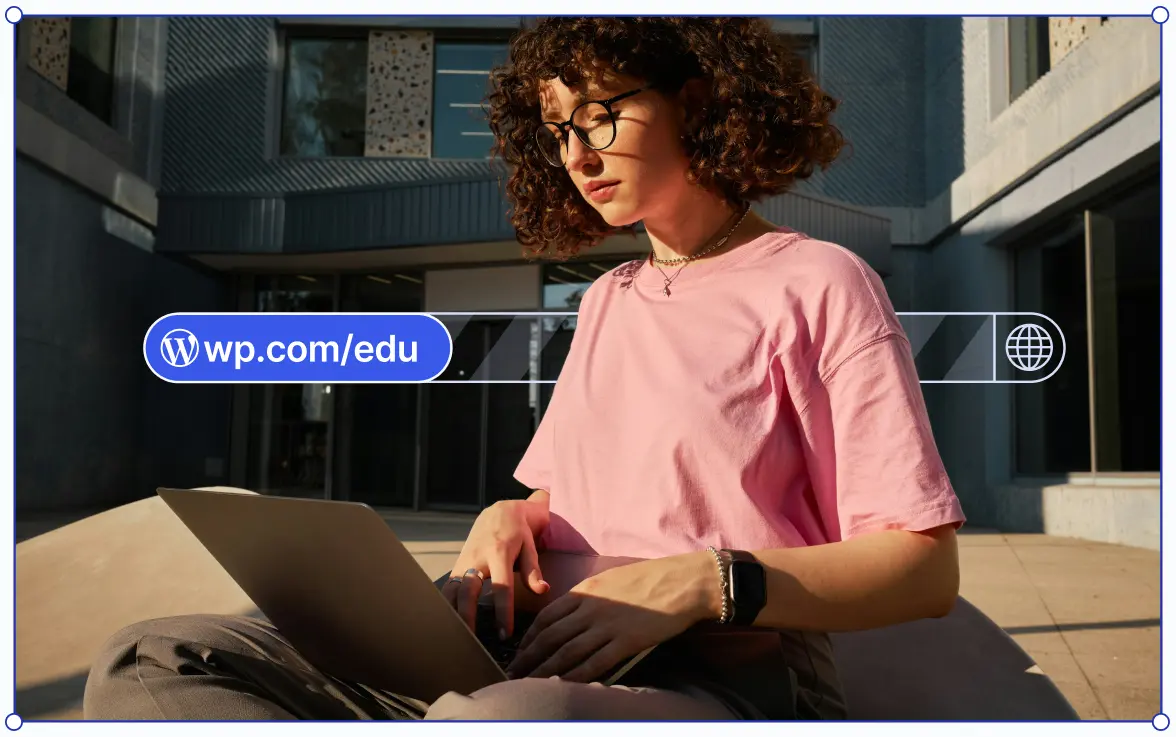
By offering the program free to teachers and classes for the first year, Automattic eliminates the bureaucratic hurdles often associated with purchasing school software. Teachers can register their classes immediately at wp.com/edu without navigating complex procurement departments or requiring student credit cards.
Supporting Context & Technical Metrics: What the Student Plan Delivers
A common criticism of educational software tiers is that they are often "stripped-down" or over-simplified versions of commercial products, offering little more than basic drag-and-drop sandboxes. Automattic has consciously rejected this approach, offering a highly robust, developer-friendly suite of tools that mirrors its premium commercial tiers.
+-------------------------------------------------------------------+
|               WORDPRESS.COM STUDENT PLAN: KEY FEATURES            |
+-------------------------------------------------------------------+
|  Storage Capacity     |  6 GB of high-speed cloud storage         |
+-----------------------+-------------------------------------------+
|  Custom Domains       |  Free .blog or .art domain names          |
+-----------------------+-------------------------------------------+
|  Developer Access     |  SFTP, SSH, and phpMyAdmin support        |
+-----------------------+-------------------------------------------+
|  Plugin Support       |  Full installation of third-party plugins |
+-----------------------+-------------------------------------------+
|  Testing & Deployment |  Staging sites and Studio Sync integration|
+-----------------------+-------------------------------------------+
|  Security             |  Automated backups and restore points     |
+-------------------------------------------------------------------+
Not a Stripped-Down Sandbox: Enterprise-Grade Tools for Classrooms
The Student plan is built to teach real-world web development. Key technical features included in the free tier are:
- Full Plugin Support: Students are not limited to default blocks or themes. They can install, configure, and troubleshoot third-party plugins, which is an essential skill for modern WordPress developers.
- Database & Server Access (SFTP/SSH/phpMyAdmin): This allows computer science and web development teachers to instruct students on backend database management, file structures, and server-side operations.
- Staging Environments & Studio Sync: Students can safely test code changes, theme modifications, and plugin updates in a staging environment before pushing them to their live site, teaching them standard industry deployment workflows.
- 6 GB of Storage & Automated Backups: Generous storage limits ensure that students can build media-rich sites, portfolio projects, and e-commerce simulations without running into artificial caps.
The Battle for the Next Generation: WordPress vs. Social Media Monopolies
Automattic’s aggressive push into classrooms is a response to a broader cultural shift in how young people interact with the internet. Historically, a personal website or blog was the default starting point for an online presence. Today, platforms like Instagram, TikTok, YouTube, and Linktree dominate.

While these proprietary platforms offer ease of use, they do not teach foundational digital skills such as HTML, CSS, search engine optimization (SEO), database management, or content ownership. By introducing WordPress in middle schools, high schools, and universities, Automattic aims to redirect young creators back to the open web, ensuring they understand how to build and control their own digital real estate rather than remaining passive users within closed ecosystems.
Strategic Analysis: Lowering Barriers in Global Education
To understand the potential impact of WordPress.com Education, one must examine the economic and operational barriers that have historically kept advanced web development tools out of classrooms.
Traditional Classroom Obstacles          WordPress.com Education Solution
───────────────────────────────          ────────────────────────────────
1. Credit Card Requirements    ───────>  No payment method required for sign-up
2. High Licensing Fees         ───────>  100% free for the first year
3. Limited IT Infrastructure   ───────>  Fully hosted cloud environment by Automattic
4. Complex Local Server Setups ───────>  Instant deployment with staging & SFTP
Bridging the Digital Divide in Underfunded Schools
For many public schools and underfunded educational institutions worldwide, licensing commercial web design software or paying for monthly hosting packages is financially impossible. Furthermore, IT departments are often stretched thin, making the maintenance of local web servers (such as local XAMPP or MAMP installations) a logistical nightmare.
The WordPress.com Student plan resolves these issues simultaneously:
- Zero Financial Friction: Because teachers do not need to provide a credit card to initiate the program, they can bypass school board financial approval processes that frequently stall the adoption of new technology.
- Zero IT Overhead: Automattic handles all hosting, security, and server maintenance on its global infrastructure. Teachers do not need to configure local servers or manage school network permissions; students simply log in via a web browser.
- Equitable Access: Students from lower-income backgrounds receive the exact same high-performance development environment as those attending elite private academies, democratizing access to high-income technical skills.
The Freemium Conversion Engine and Graceful Degradation
A critical aspect of Automattic’s strategy is what happens when the first-year academic program concludes. Rather than locking students out of their work or demanding immediate payment, Automattic has designed a highly ethical, low-friction conversion path:
- The Low-Cost Upgrade: Students who wish to maintain their premium features (such as plugin support, SFTP access, and custom domains) can transition to a deeply discounted subscription of $2 per month ($24 per year).
- Graceful Degradation: If a student cannot afford or chooses not to pay the subscription fee, their website does not disappear. Instead, the site automatically downgrades to a standard free WordPress.com plan on a subdomain. Crucially, all of their content—including pages, blog posts, comments, media uploads, and custom layouts—remains completely intact and publicly accessible.
This policy prevents students from losing their digital portfolios, allowing them to showcase their academic work to future employers or college admissions boards indefinitely.
Future Outlook: Securing the Open Web’s Long-Term Infrastructure
As Automattic rolls out WordPress.com Education globally, the company is laying the groundwork for the next decade of web development. By training students on the WordPress block editor, site editing tools, and development workflows today, Automattic is securing a pipeline of future developers, agency owners, content creators, and enterprise decision-makers.
Competitor Implications
This move puts direct pressure on closed-source website builders like Wix, Squarespace, and Shopify, which have historically targeted the education sector with varying degrees of success. Unlike these competitors, WordPress has the unique advantage of its open-source heritage. Skills learned on WordPress.com are directly transferable to self-hosted WordPress.org setups, giving students a broader professional path.
The Macro Impact on the Tech Talent Pool
By lowering the barrier to web publishing, Automattic is not just marketing a product; it is actively shaping the labor supply for the digital economy. As businesses continue to prioritize digital transformation, the demand for individuals who understand web architecture, content strategy, and search engine visibility remains high.
If Automattic can successfully scale this educational initiative from 5,000 pilot students to millions of active classroom users globally, it will establish WordPress as the undisputed educational standard for web development. In doing so, Automattic is not only defending its current 43% market share but is actively constructing the infrastructure that will power the open web for generations to come.