Executive Overview
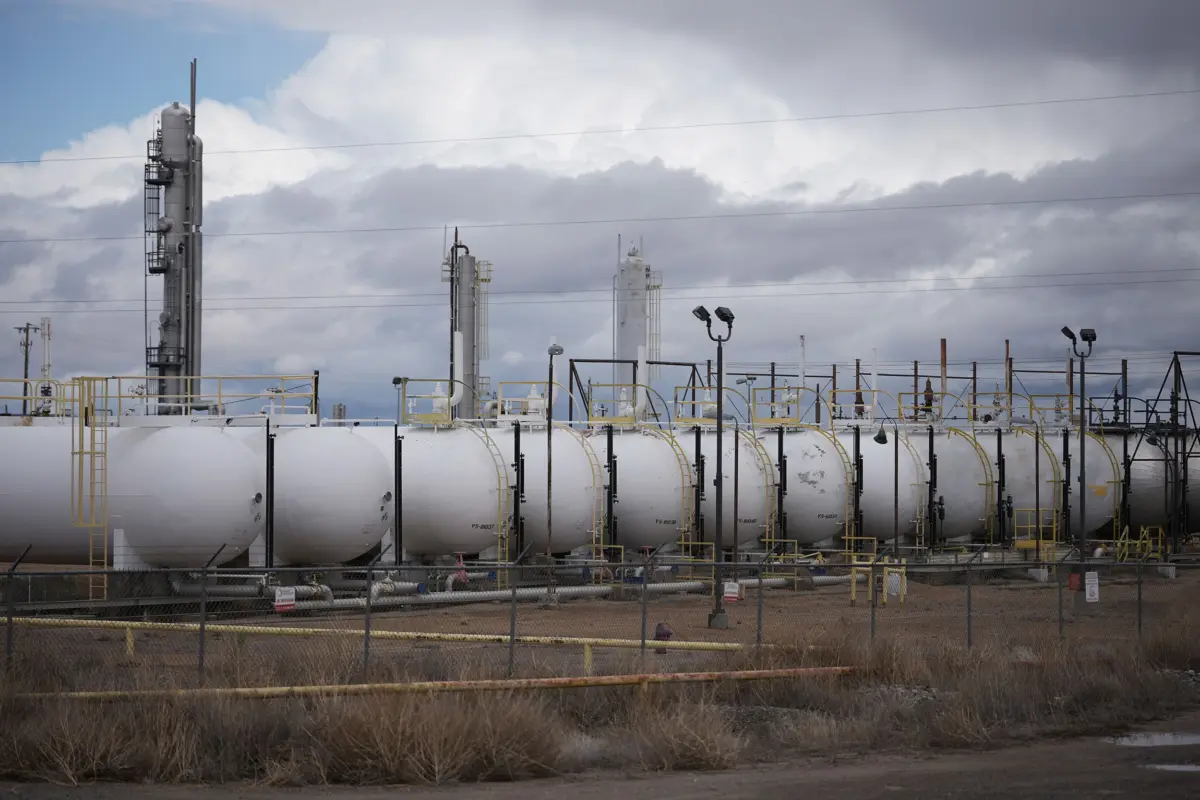
The explosive global ascent of generative artificial intelligence has unlocked a massive, insatiable appetite for electricity, fundamentally altering the trajectory of American energy infrastructure. According to landmark research released on Tuesday by the energy tracking firm Global Energy Monitor (GEM), the capacity of gas-fired power plants in development exclusively to feed data centers across the United States has nearly doubled in less than a year.
This staggering escalation lays bare the profound reliance major technology conglomerates are placing on private fossil fuel infrastructure to keep their server farms online. It also underscores the alarming speed at which artificial intelligence’s energy demands are outstripping the modernization capacity of the traditional electrical grid.
The figures compiled by GEM paint a striking picture of an industrial pivot toward fossil fuels. At the end of 2025, the research group identified roughly 97 gigawatts of gas-powered generation projects slated explicitly for data center integration. By mid-2026, that colossal pipeline nearly doubled to cross the 189-gigawatt threshold. To contextualize this scale, a single gigawatt of electrical generation is typically capable of powering approximately one million typical American homes.
"Increasingly, the US gas power buildout is getting tied directly to the data center buildout—you can’t talk about one without the other," says Jenny Martos, a research analyst at GEM who spearheaded the report.
This headlong rush toward natural gas has effectively reclaimed the United States’ position as the world leader in fossil-fuel project pipelines, a title it previously traded with nations like China. Yet, while US tech firms and policy architects lean heavily into fossil fuels for speed and reliability, international competitors—most notably China—are pursuing a vastly different electrification strategy centered heavily on rural renewable energy grids. As the US locks in decades of potential carbon emissions to satisfy immediate computational hungers, energy experts warn of long-term economic and environmental consequences.
Detailed Chronology of the Data Center Energy Crisis
To understand how the United States arrived at this inflection point, it is necessary to examine the compressed timeline of the generative AI boom and its systemic impact on power infrastructure.
Early 2024: The Incipient Shockwave
When the commercial deployment of large language models began accelerating across enterprise software and consumer tech in 2023, the baseline energy requirements of hyperscale data centers shifted overnight. Traditional data hubs focused on web hosting and cloud storage required steady, predictable power loads. Generative AI training and inference, however, demanded dense clusters of power-hungry graphics processing units (GPUs) operating continuously at peak capacity.
In early 2024, initial industry audits by organizations like Global Energy Monitor detected just 4 gigawatts of dedicated gas-fired power generation under development for data center sites. At the time, major technology firms were primarily attempting to plug into existing utility distribution networks or relying on standard corporate power purchase agreements (PPAs) for wind and solar energy.
Late 2024 to Late 2025: The Bottleneck and the "Behind-the-Meter" Pivot
As the AI arms race intensified among hyperscalers—including Microsoft, Meta, Google, Amazon, and OpenAI—regional power grids quickly bogged down. The interconnection queue for new generation facilities stretched across years, threatening to stall the rollout of multi-billion-dollar computing clusters.
Faced with these crippling bureaucratic and physical grid delays, data center developers engineered a dramatic workaround: the "behind-the-meter" power plant. By constructing dedicated, private natural gas power facilities directly adjacent to or integrated within data center campuses, tech companies could bypass the public transmission grid entirely. This move allowed them to secure immediate, uninterrupted power.
By the close of 2025, this strategy had catalyzed a massive surge in private infrastructure commitments, driving the tracked pipeline of dedicated gas projects from 4 gigawatts up to 97 gigawatts.
Mid-2026: The Doubling Phenomenon
The latest data released by GEM in July 2026 demonstrates that the trend has not only sustained its momentum but expanded exponentially. In less than eight months, the active pipeline of gas-fired projects dedicated to data centers swelled from 97 gigawatts to over 189 gigawatts.
Simultaneously, the political landscape adapted to accommodate this industrial shift. The federal government, under the Trump administration, actively encouraged major tech companies to secure their own private power supplies. A high-profile voluntary pledge was introduced, garnering signatures from tech titans like Microsoft, Meta, Google, and OpenAI, alongside several influential Republican governors and major American utility providers. While framed as a pragmatic approach to grid preservation, the policy effectively institutionalized a heavy reliance on fossil fuels to fuel the computational revolution.
Supporting Context & Metrics
The intersection of artificial intelligence and natural gas expansion brings with it a complex matrix of environmental, regulatory, and geopolitical dynamics.
The Climate and Emissions Toll
Building nearly 190 gigawatts of new natural gas capacity carries a severe climate price tag. Many of the private combustion turbines being rushed into service are characterized by high operational emissions profiles and lower thermodynamic efficiencies compared to modern combined-cycle utility plants.
According to investigative findings by Wired, a subset of these proposed gas-fired data center plants are legally permitted to emit more greenhouse gases annually than many entire small- and medium-sized developing nations. If all currently planned projects transition from the drawing board to operational reality, analysts warn they will lock in carbon-heavy infrastructure for decades, directly undermining national and international climate reduction targets.
The Geopolitical Contrast: The US vs. China
Global Energy Monitor tracks energy projects across international borders, offering a compelling comparative baseline with nations like China, which remains the world’s largest importer of natural gas. Much of China’s imported gas is historically directed toward industrial applications, such as the manufacturing of agricultural fertilizers and plastics.
While China experienced a significant surge in gas-fired plant construction during the early 2020s—temporarily outpacing the US—the current dynamics of its data center boom look fundamentally different.
"Overall, the data center boom in China is really oriented around renewables," explains Kyle Chan, a fellow at the Brookings Institution.
Rather than deploying private gas turbines in densely populated or industrial eastern tech hubs, Chinese tech giants such as Huawei and Tencent are increasingly shifting massive AI computing complexes to remote western and rural provinces—such as Guizhou. This strategy, often referred to as the "Eastern Data, Western Computing" initiative, allows developers to plug directly into regions blessed with an overabundance of surplus renewable energy, specifically hydroelectric and solar generation.
Chan notes that while a few isolated attempts to develop private power for Chinese data centers have occurred, they remain minor initiatives. Instead, China’s aggressive buildout of renewable energy grids is a calculated state-led maneuver designed to secure long-term energy independence.
"The US building gas power for data centers in the near term might make sense economically, and especially if you want to power these data centers fast, and you don’t have access to the same kind of cheap renewable energy that you might be able to have in China," Chan observes. "Pero over the long term, you pay a price for that—obviously, in terms of emissions, but also, I think in terms of not investing in your own clean energy sector."
Official Statements and Industry Perspectives
The rapid pivot toward private fossil fuel infrastructure has triggered intense debate among energy analysts, policymakers, and corporate stakeholders.
Jenny Martos of Global Energy Monitor emphasizes that the numbers in the tracker represent a pipeline of intent rather than a guaranteed physical reality. Not every announced megawatt will ultimately cross the finish line.
"There’s a lot of uncertainty: financing, your local opposition, data [moratoriums], the turbine constraints to supply equipment—there’s so many factors," Martos explains. Local communities across the US have increasingly pushed back against the noise, pollution, and resource consumption associated with data centers, transforming zoning boards and public utility commission hearings into high-stakes political battlegrounds.
Despite these headwinds, Martos issues a sobering warning: "If all of these get built, you’re locking in emissions for decades."
Proponents of the behind-the-meter gas strategy, however, argue that private generation acts as a vital pressure-release valve. By generating their own electricity off-grid, data center operators avoid placing additional strain on local distribution networks, theoretically shielding everyday utility ratepayers from shouldering the capital costs of grid upgrades and soaring electricity bills. Furthermore, executives within the tech sector maintain that maintaining global technological leadership in artificial intelligence requires absolute continuity of operations—a standard that intermittent renewable energy sources, absent massive battery storage deployment, cannot yet reliably guarantee on short development timelines.
Future Outlook: Navigating the Energy Crossroads
As the United States hurtles toward the latter half of the decade, the nation stands at a critical energy crossroads. The collision between the digital revolution and physical thermodynamic limits has forced a reckoning over how electricity is generated, distributed, and consumed.
The near-term trajectory points unmistakably toward continued fossil fuel utilization. The economic incentives for tech companies to capture market share in artificial intelligence outweigh immediate carbon constraints, particularly when private gas turbines offer a fast track to operational readiness. The backing of federal officials and state governors ensures that regulatory hurdles for behind-the-meter plants will remain manageable in many jurisdictions.
However, long-term risks loom large. By heavily subsidizing and constructing short-term fossil fuel infrastructure to satisfy a transient phase of rapid AI model training, the United States risks lagging behind global competitors in the large-scale deployment of next-generation clean energy networks, advanced grid storage, and smart transmission systems.
Ultimately, the decisions made by technology executives and energy regulators over the next several years will determine whether the artificial intelligence boom acts as a permanent detour away from global climate goals, or merely a disruptive catalyst that eventually forces a more resilient, sustainable modernization of the American grid.