Executive Overview
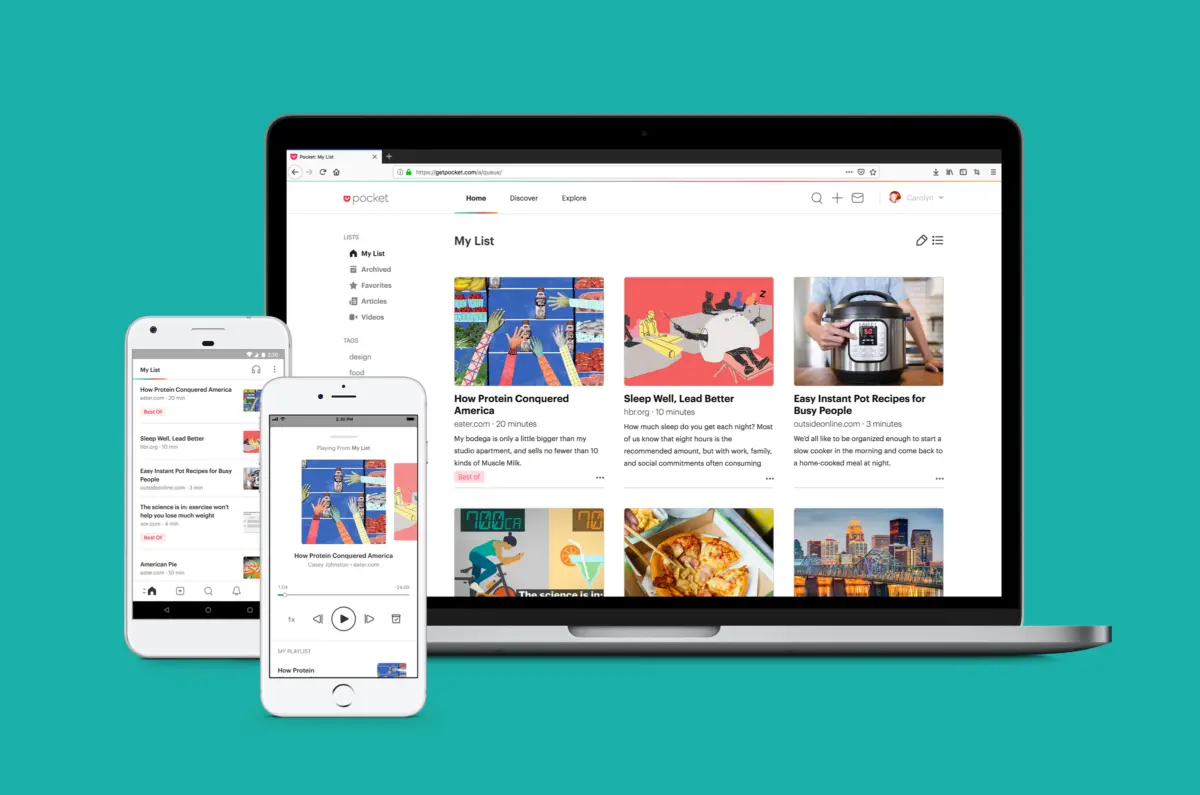
In the spring of 2025, the digital curation ecosystem experienced a seismic disruption. Mozilla announced the wind-down and eventual shutdown of Pocket, the pioneering read-it-later application it acquired in 2017. For nearly two decades, Pocket (originally launched as Read It Later in 2007) served as the default repository for web users seeking to rescue long-form articles, videos, and essays from the ephemeral flow of social media feeds and browser tabs. Mozilla’s exit from this space signaling that "the way people browse the web is changing" marked the end of an era for passive digital archiving.
This strategic retreat did not, however, signify the death of the read-it-later concept. Instead, it catalyzed a massive migration of power users and triggered a renaissance among independent developers and venture-backed competitors. The hard deadline of October 8, 2025, for users to export their legacy archives, notes, and highlights sparked an intense customer acquisition race.
Today’s landscape is no longer defined by a single dominant utility. Instead, it has fragmented into a highly competitive market of specialized tools. These range from AI-powered cognitive assistants and open-source, self-hosted databases to minimalist, anti-hoarding utilities designed to curb the psychological habit of digital clutter.

Detailed Chronology: The Fall of Pocket and the Great Migration
To understand the current state of the read-it-later market, one must trace the timeline of Pocket’s integration and eventual obsolescence under Mozilla’s stewardship.
[2007] Read It Later launched by Nate Weiner
   │
[2012] Rebranded as Pocket
   │
[2017] Acquired by Mozilla (First-ever acquisition)
   │
[May 2025] Mozilla announces complete shutdown of Pocket
   │
[Mid-2025] Competitors launch migration campaigns (Instapaper, Readwise Reader)
   │
[Oct 8, 2025] Hard deadline for users to export all Pocket data
The Acquisition and Integration Era (2017–2024)
When Mozilla acquired Pocket in February 2017 for an undisclosed sum, the move was heralded as a masterstroke for the open-source browser ecosystem. By embedding Pocket directly into the Firefox toolbar, Mozilla sought to provide users with native content-discovery and offline-reading capabilities, while diversifying its own revenue streams beyond search engine royalty agreements.
Over the years, however, the strategic alignment began to fray. While Firefox integrated Pocket recommendations into its default new-tab page, some users criticized the integration as bloatware. Meanwhile, the underlying consumer behavior that made Pocket a success—namely, the deliberate consumption of long-form, text-based RSS feeds and web articles—began to be eclipsed by algorithmically curated social feeds, video platforms, and closed chat ecosystems.

The Shutdown Announcement (May 2025)
In May 2025, Mozilla officially announced it was shutting down Pocket. The parent company cited a fundamental shift in web consumption habits, noting that modern web users were increasingly relying on real-time, AI-summarized feeds, social platforms (such as TikTok, Threads, and Bluesky), and integrated workspaces rather than dedicated offline reading queues.
The Transition and Export Window (May–October 2025)
Following the announcement, a strict transition window was established. Pocket users were given until October 8, 2025, to secure and export their data. This data went far beyond simple URLs; it included extensive personal metadata compiled over years, such as custom tags, reading lists, favorites, highlights, and annotations.
During this five-month window, rival platforms mobilized. Instapaper, Readwise, and other indie alternatives launched targeted API-driven import tools, allowing refugees to seamlessly upload their exported Pocket files. To sweeten the transition, several platforms offered promotional incentives, such as Instapaper’s three-month free trial of its premium tier, effectively capturing a highly valuable cohort of active readers.

Supporting Context & Metrics: The Modern Read-it-Later Landscape
The vacancy left by Pocket has been filled by a diverse array of applications. These platforms can be categorized into four distinct product philosophies: premium power-user environments, lightweight bookmark managers, open-source/self-hosted archives, and AI-centric cognitive engines.
| Application | Primary Platform Focus | Pricing Model | Key Differentiating Feature |
|---|---|---|---|
| Matter | iOS, Web | Free / $79.99/year | Audio narration, podcast transcription, AI co-reader |
| Instapaper | iOS, Android, Web | Free / $59.99/year | Traditional reader mode, permanent archive, Kindle sync |
| Raindrop.io | Cross-platform, Web | Free / $33.00/year | Visual bookmarking, broken link finder, API integrations |
| Plinky | Apple Ecosystem | Free / $39.99/year (or $159.99 Lifetime) | Link categorization, custom reminders, folder/tag systems |
| Readwise Reader | Cross-platform, Web | $9.99/month (after 30-day trial) | Deep integration with PKM tools, PDF/ePub parsing, AI assistant |
| Wallabag | Cross-platform, Web | Free (Self-hosted) / €11/year (Hosted) | Open-source, comprehensive data sovereignty, multi-format export |
| Obsidian Web Clipper | Web, Desktop | Free (Open-source) | Direct integration into local Markdown vault, custom templates |
| Burn 451 | iOS, Web | Free / AI integrations | Anti-hoarding mechanic (24-hour auto-delete if unread) |
| Omphalis | iOS, Web | Free / $9.00/month | Automated AI-generated digests, chapter structures, audio read-alongs |
Detailed Directory of Pocket Alternatives
Premium Power-User Environments
Matter
Backed by Google Ventures (GV), Matter has positioned itself as the premium, design-forward choice for intellectual consumption. It features browser extensions for Chrome, Safari, and Firefox, alongside a highly polished iOS app.
- Core Capabilities: Matter focuses on multi-modal consumption. It allows users to read text in a distraction-free interface or convert articles into natural-sounding audio. It also features a robust podcast integration that can transcribe audio episodes in real time.
- The AI Edge: In March 2025, Matter introduced an "AI Co-Reader." This tool acts as an inline conversational partner, allowing readers to highlight complex passages and ask contextual questions directly within the article.
- Monetization: While basic saving is free, the premium tier ($79.99/year) unlocks advanced features, including YouTube video transcriptions, speed-reading tools, and integrations with external note-taking tools, Gmail, and Kindle.
[Web Article / Podcast / YouTube Video]
                 │
                 ▼ (Matter Parser)
 ┌──────────────────────────────────────────┐
 │ - Distraction-Free Text Mode             │
 │ - Natural Audio Synthesis (TTS)          │
 │ - Real-Time Podcast Transcripts          │
 └──────────────────────────────────────────┘
                 │
                 ▼ (Interactive Layer)
      [AI Co-Reader Conversation]
Instapaper
As one of the oldest players in the space—founded by developer Marco Arment in 2008 and acquired by Pinterest in 2016—Instapaper is the closest spiritual successor to Pocket’s original minimalist ethos.

- Core Capabilities: Instapaper focuses on speed, simplicity, and readability. It offers simple iOS and Android apps alongside a web interface that strips away ads, tracking scripts, and formatting.
- Data Migration Strategy: Instapaper capitalized on Pocket’s shutdown by creating a one-click import tool. To convert migrating users, they offered a three-month free trial of Instapaper Premium.
- Monetization: For $59.99/year, premium users gain access to full-text search, unlimited notes, a permanent archive of saved pages (even if the original website goes offline), text-to-speech playlists, and Kindle synchronization.
Readwise Reader
Readwise, originally a utility designed to aggregate highlights from Kindle and Apple Books, launched its dedicated "Reader" app in late 2021. It has since grown into a powerhouse for academic, professional, and power-user research.
- Core Capabilities: Reader is designed to aggregate everything: RSS feeds, newsletter emails, PDF documents, ePub files, YouTube video transcripts, and long-form web articles.
- Integration Ecosystem: Because it is built on top of the Readwise highlight engine, Reader integrates directly with Personal Knowledge Management (PKM) platforms like Obsidian, Notion, Roam Research, Logseq, and Evernote.
- The Power-User Advantage: Unlike legacy read-it-later tools, Reader offers rich keyboard shortcuts, offline full-text search, complex query filtering, and an AI-assisted summarizer. It is available for $9.99/month following a 30-day trial.
Visual Bookmark Managers and Link Depositories
Raindrop.io
For users who used Pocket more as an interactive bookmarking tool than an offline reader, Raindrop.io has emerged as a leading alternative.
- Core Capabilities: Raindrop operates as a highly visual, cross-platform bookmark manager. It allows users to view their links as lists, cards, headlines, or mood boards. It supports PDFs, images, and web pages, making it ideal for visual researchers, designers, and developers.
- Monetization: At $33.00/year, the premium tier is highly competitive. It offers full-text search, automatic detection of broken links and duplicates, AI-suggested tags, bookmark reminders, and a generous 10GB monthly file upload limit.
Plinky
Created by former Twitter engineer Joe Fabisevich, Plinky is an elegant, indie-developed bookmarking utility built specifically for the Apple ecosystem.
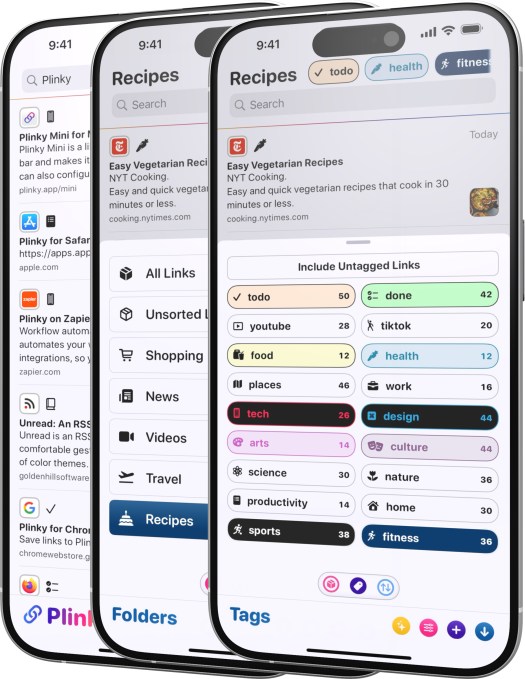
- Core Capabilities: Plinky focuses on rapid saving and strict categorization. It treats saved items not just as articles, but as "links"—accommodating recipes, memes, videos, and social media posts. It supports folders, custom tags, and automated push reminders to prompt users to revisit their saved content.
- Monetization: Plinky offers a limited free tier (50 links, 3 folders, 5 tags). Users can unlock unlimited capabilities via a flexible pricing model: $3.99/month, $39.99/year, or a $159.99 lifetime purchase.
Dewey
Dewey is designed to capture content from highly fragmented social environments, with a particular focus on saving threads and posts from platforms like X (formerly Twitter), Bluesky, Threads, Reddit, Instagram, LinkedIn, and TikTok.
- Core Capabilities: Beyond simple bookmarking, Dewey features automated syncing to Notion, custom RSS feed generation, and an AI-powered bulk tagging engine that organizes chaotic social media bookmarks into coherent databases. Pricing starts at $7.50/month.
Open-Source and Self-Hosted Alternatives
Wallabag
For users concerned about privacy, data harvesting, or the financial stability of independent app startups, Wallabag offers a reliable, self-hosted solution.
- Core Capabilities: Wallabag is a fully open-source read-it-later application. It allows users to self-host their database on private servers, ensuring absolute data ownership. It features robust native apps for iOS and Android, and natively supports e-readers like Kobo and Kindle.
- Export and Migration: Wallabag excels in data portability. It allows users to import databases from Pocket and Instapaper and export content into PDF, ePUB, JSON, CSV, TXT, or HTML formats.
- Monetization: For users who want the benefits of open-source software without the technical hassle of self-hosting, Wallabag offers a hosted service for €11/year, with all proceeds directly funding the open-source development team.
Readeck
Readeck is another privacy-focused, open-source web application designed to help users extract and preserve web content.

- Core Capabilities: Operating as a self-hosted instance, Readeck strips away trackers and presents saved articles, video transcripts, and images in a clean, unified interface. It offers browser extensions for quick saving and is currently developing a companion mobile app alongside a hosted cloud version.
Obsidian Web Clipper
For users embedded in the markdown-based PKM movement, Obsidian’s native Web Clipper offers a highly customizable, free alternative.
- Core Capabilities: This official browser extension allows users to clip entire web articles, highlights, or custom sections directly into their local Obsidian vault as raw Markdown files.
- Custom Templates: The Clipper supports highly customizable templates. For example, users can configure it to automatically extract ingredients and steps from recipe sites, or capture academic citations and footnotes from research papers, storing them locally with zero reliance on external cloud servers.
Karakeep
Karakeep is a lightweight, open-source bookmarking and organization app available on iOS, Android, Chrome, and Firefox. It uses local-first storage and simple AI tagging models to organize links, notes, and images. It remains completely free, supported entirely by voluntary developer donations.
Niche Innovators: Cognitive Synthesizers and Anti-Hoarding Tools
Burn 451
One of the most persistent issues with read-it-later apps is "digital hoarding"—the habit of saving hundreds of articles with the intention of reading them, only to let them sit unread in an endless queue. Burn 451 addresses this psychological habit through artificial scarcity.

- The Burning Mechanism: When a user saves an article to Burn 451, a 24-hour countdown timer begins. If the user does not read, tag, or actively archive the article within that 24-hour window, the article is permanently deleted.
- Integrations: Available on iOS and Web, Burn 451 also features a Model Context Protocol (MCP) server, allowing advanced users to run AI queries over their reading habits and analyze what content they chose to save versus what they let burn.
[Save Web Article to Burn 451]
               │
               ▼
   [24-Hour Countdown Initiated]
               │
       ┌───────┴───────┐
       ▼               ▼
 [Read / Tagged]  [No Action Taken]
       │               │
       ▼               ▼
  [Archived]    [Permanently Deleted]
Recall
Recall is designed for users who want to synthesize and retain the information they consume, rather than just bookmarking it.
- Core Capabilities: Working as a browser extension and mobile app, Recall uses AI to automatically summarize web pages, YouTube videos, PDFs, and podcasts.
- Spaced Repetition Integration: Rather than leaving summaries to collect digital dust, Recall integrates a spaced repetition algorithm. It periodically resurfaces summaries and key concepts to help users commit the information to long-term memory.
- Monetization: The app is free for up to 10 AI-generated summaries, with a premium plan at $7/month unlocking unlimited summaries and deep knowledge-graph connections.
Omphalis
Omphalis is an AI-driven "consume-it-later" platform built for modern multi-format media.
- Core Capabilities: Omphalis processes long articles, research papers, YouTube videos, and podcasts, converting them into structured, easily digestible formats. It generates summaries, key takeaways, and chapter-by-chapter breakdowns.
- Subscription Options: The free tier offers basic summaries. The Pro plan ($9/month) unlocks advanced features, including custom transcription limits, key moment recaps, and synchronized read-along audio.
Official Statements and Industry Perspectives
The Developer’s Viewpoint
The closure of Pocket has been met with mixed reactions from industry veterans. Developers of competing applications view the moment as both a massive opportunity and a validation of their independent business models.

Nick Chapman, creator of Folio and former Head of Product at Pocket, designed his new platform to capture the simplicity of early-stage Pocket. Chapman noted:
"Many of us who built the foundation of this category felt that Pocket’s integration into a larger corporate browser structure ultimately diluted its focus. With Folio, we wanted to return to a clean, fast experience that prioritizes reading over content-recommendation algorithms. The sudden surge of users migrating from Pocket shows there is still a massive appetite for dedicated, independent reading spaces."
The Open-Source Movement
Advocates for open-source software have used the Pocket shutdown to warn against relying on closed, proprietary cloud systems for personal archives. A spokesperson from the Wallabag development team shared:

"The lesson of Pocket is a recurring one in the tech industry: when you rely on a proprietary cloud service, your personal library is ultimately subject to corporate restructuring and shifting priorities. Open-source, self-hosted tools like Wallabag and Readeck ensure that your collection of human knowledge remains yours forever, free from corporate sunset clauses, tracking scripts, and unexpected subscription hikes."
Future Outlook: The Evolution from "Read-it-Later" to "Consume-and-Synthesize-it-Later"
The read-it-later landscape is undergoing a profound transformation. As text-based articles are increasingly joined by video essays, podcasts, and social media threads, the traditional model of a simple, text-only reader mode is no longer sufficient.
Traditional Model (Pocket)       Modern Model (Matter, Reader, Recall)
┌─────────────────────────┐      ┌─────────────────────────────────────┐
│  Web Article (Text)     │      │  Multi-Format Input (Text, Video,   │
│            │            │      │  Audio, PDF, Social Threads)        │
│            ▼            │      │                  │                  │
│  Distraction-Free Text  │      │                  ▼                  │
│            │            │      │  AI Processing (Summarization,      │
│            ▼            │      │  Transcription, Translation)        │
│    Passive Archiving    │      │                  │                  │
└─────────────────────────┘      │                  ▼                  │
                                 │  Active Synthesis (Spaced           │
                                 │  Repetition, PKM Integration)       │
                                 └─────────────────────────────────────┘
Several key trends are shaping the future of this space:

1. Multi-Format Versatility
Modern platforms must serve as unified "consume-it-later" hubs. A user saving a YouTube video expects to be able to read the transcript, listen to the audio track, or watch the video in a distraction-free player. Similarly, the integration of PDFs, ePubs, and newsletters has become a standard requirement for power-user environments.
2. AI as a Synthesis Partner
The integration of Large Language Models (LLMs) has transformed read-it-later apps from passive digital drawers into active cognitive partners. Features like Matter’s AI Co-Reader, Recall’s spaced repetition summaries, and Omphalis’s structured digests show that users no longer just want to save information—they want help understanding and retaining it.
3. Deep Integration with Knowledge Graphs
The modern reader is often also a writer, researcher, or creator. The value of a saved highlight or note is multiplied when it can be easily exported to personal knowledge bases like Obsidian, Notion, or Roam Research. Platforms that offer seamless, automated sync pipelines to these PKM tools are increasingly winning over academic and professional users.

4. The Rise of "Anti-Hoarding" Mechanics
As the volume of digital content continues to grow, cognitive overload has become a widespread challenge. Utilities like Burn 451, which enforce reading decisions through auto-deletion, represent an interesting shift in product design. By prioritizing focus over accumulation, these platforms help users build healthier digital consumption habits.
While Mozilla’s decision to shut down Pocket marks the end of a foundational chapter in web curation, it has also sparked an exciting wave of innovation. Whether users choose the polished, AI-driven features of Matter, the reliable simplicity of Instapaper, the absolute data ownership of Wallabag, or the intentional constraints of Burn 451, the tools for saving and digesting the web have never been more powerful.