Long before Grand Theft Auto V became an unstoppable, decade-spanning financial juggernaut and a cultural touchstone through GTA Online, Rockstar Games was experimenting with the foundational mechanics of online sandbox chaos. As the industry currently turns its collective gaze toward the horizon—wondering what GTA 6 and its eventual PC port or online infrastructure will entail—it is worth looking back at a pivotal moment in the franchise’s history.
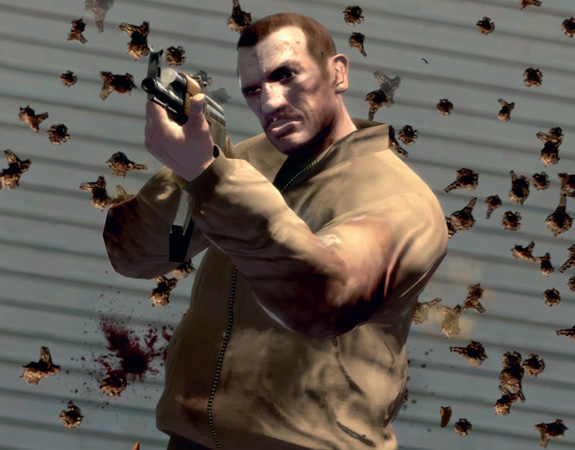
In February 2009, PC Gamer published issue #197, featuring a deep-dive preview of the newly minted PC port of Grand Theft Auto IV. Written by Kieron Gillen, the feature captured a singular milestone in gaming history: the introduction of 32-player multiplayer to Liberty City. While GTA IV’s single-player campaign offered a gritty, morally gray, and famously grounded narrative featuring Niko Bellic, its online counterpart threw conventional design out of the window. It birthed a chaotic, emergent playground of fire engines, rocket launchers, and impromptu Mad Max-style survival scenarios that proved human unpredictability was the greatest feature Rockstar could ever code.
Though official server support for GTA IV’s multiplayer was shut down by Rockstar in 2020, fan-driven preservation projects like GTA Connected continue to keep the embers burning. Examining this classic piece of gaming journalism provides a fascinating historical lens through which to view how the series evolved from rudimentary, physics-driven sandbox brawls into the sophisticated, highly monetized ecosystem we know today.
Detailed Chronology: The Evolution of GTA Multiplayer
To understand the magnitude of GTA IV’s PC multiplayer launch, one must contextualize the technological and design landscape of the late 2000s.
The Modding Pioneers (Pre-GTA IV)
Before Rockstar officially integrated robust multiplayer suites into the core game, online Grand Theft Auto was the exclusive domain of dedicated modding communities. Projects like Multi Theft Auto (MTA) and SA-MP (San Andreas Multiplayer) pushed engine architectures far beyond what developers originally intended. These grassroots efforts demonstrated an insatiable consumer appetite for experiencing the criminal underworld alongside dozens of real people, laying the philosophical groundwork that Rockstar would eventually have to adopt.
Console Limitations and the PC Leap (December 2008 – February 2009)
When Grand Theft Auto IV launched on the Xbox 360 and PlayStation 3 in April 2008, it included a modest 16-player online mode. While revolutionary for home consoles at the time, it was clear the hardware was straining under the weight of Liberty City’s physics engine.
When the game arrived on PC in December 2008, it brought critical technical upgrades. Chief among them was the doubling of the player count from 16 to 32 players. As Gillen noted in his 2009 preview, PC gaming hardware allowed developers to future-proof settings, offering high-end graphical options that contemporary machines struggled to run smoothly, alongside the sheer computational overhead required to synchronize 32 concurrent players navigating a highly reactive physics simulation.
The Shift from Narrative Grittiness to Pure Sandbox Slapstick
GTA IV’s single-player campaign leaned heavily into a somber, cinematic tone—a stark contrast to the colorful satire of San Andreas. However, the moment players logged into a multiplayer lobby, that solemn atmosphere dissolved entirely.
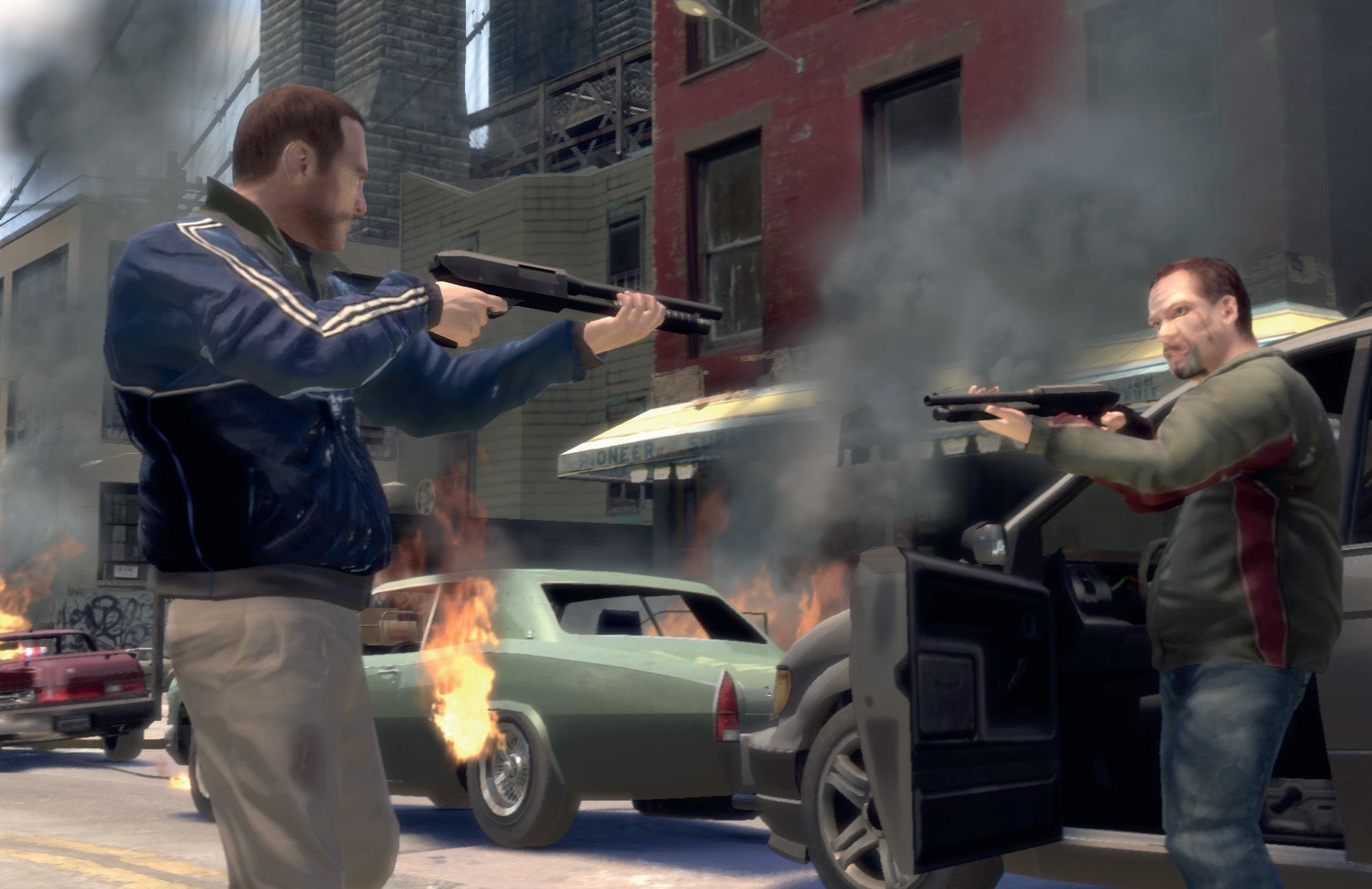
The inclusion of other human players transformed Liberty City into a living, breathing cartoon of ultra-violence and comedic timing. Whether it was coordinating a chaotic race involving dozens of fire engines or turning standard team deathmatches into frantic scavenger hunts for dropped cash, the multiplayer suite catalyzed unscripted, emergent comedy.
Supporting Context & Metrics: The Anatomy of Liberty City Chaos
The engineering feat of GTA IV’s multiplayer lay not just in player counts, but in how Rockstar’s proprietary RAGE (Rockstar Advanced Game Engine) and Euphoria physics engine interacted under network pressure.
Physics Meets Networking
The Euphoria physics engine meant that character animations, vehicle collisions, and pedestrian reactions were procedurally calculated rather than pre-baked. In a single-player environment, this created breathtaking realism. In a 32-player PC lobby, however, it created glorious, unpredictable catastrophe.
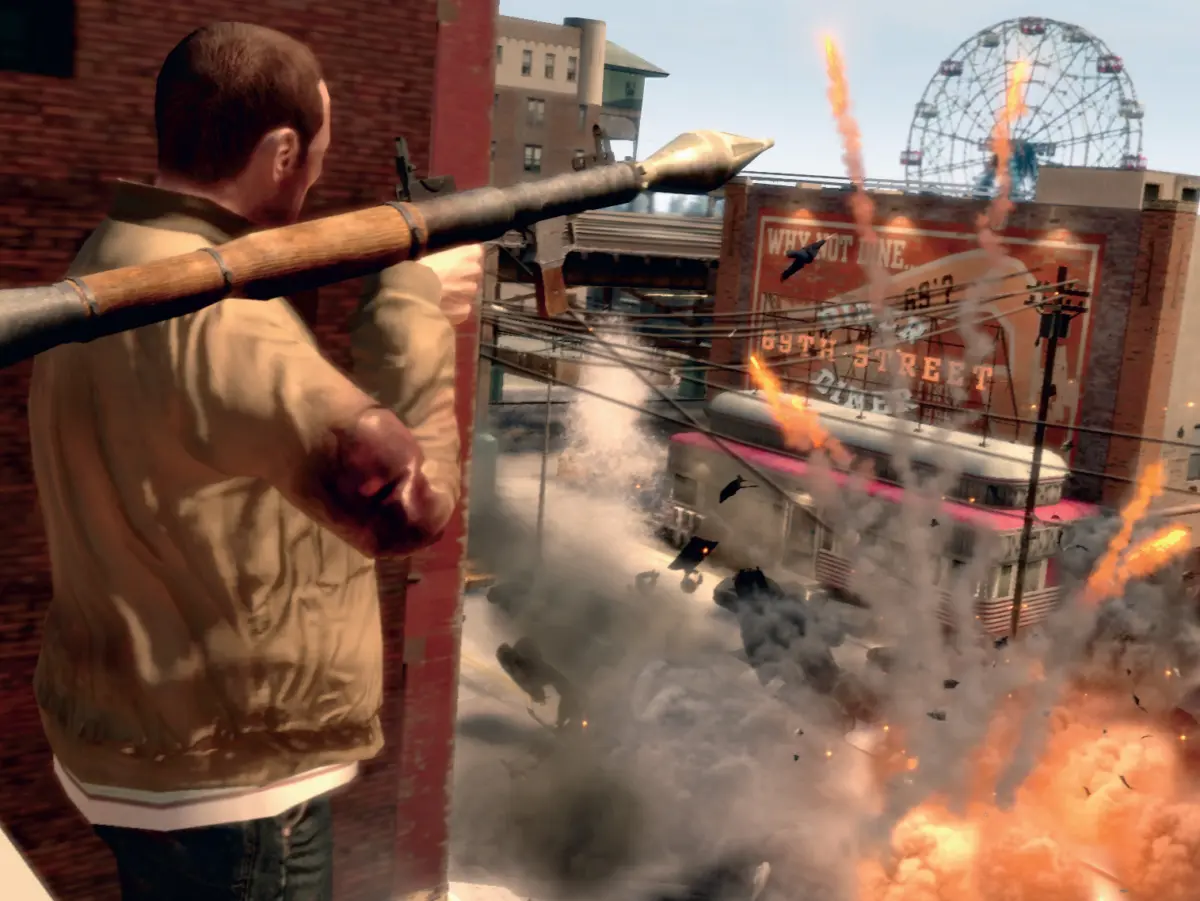
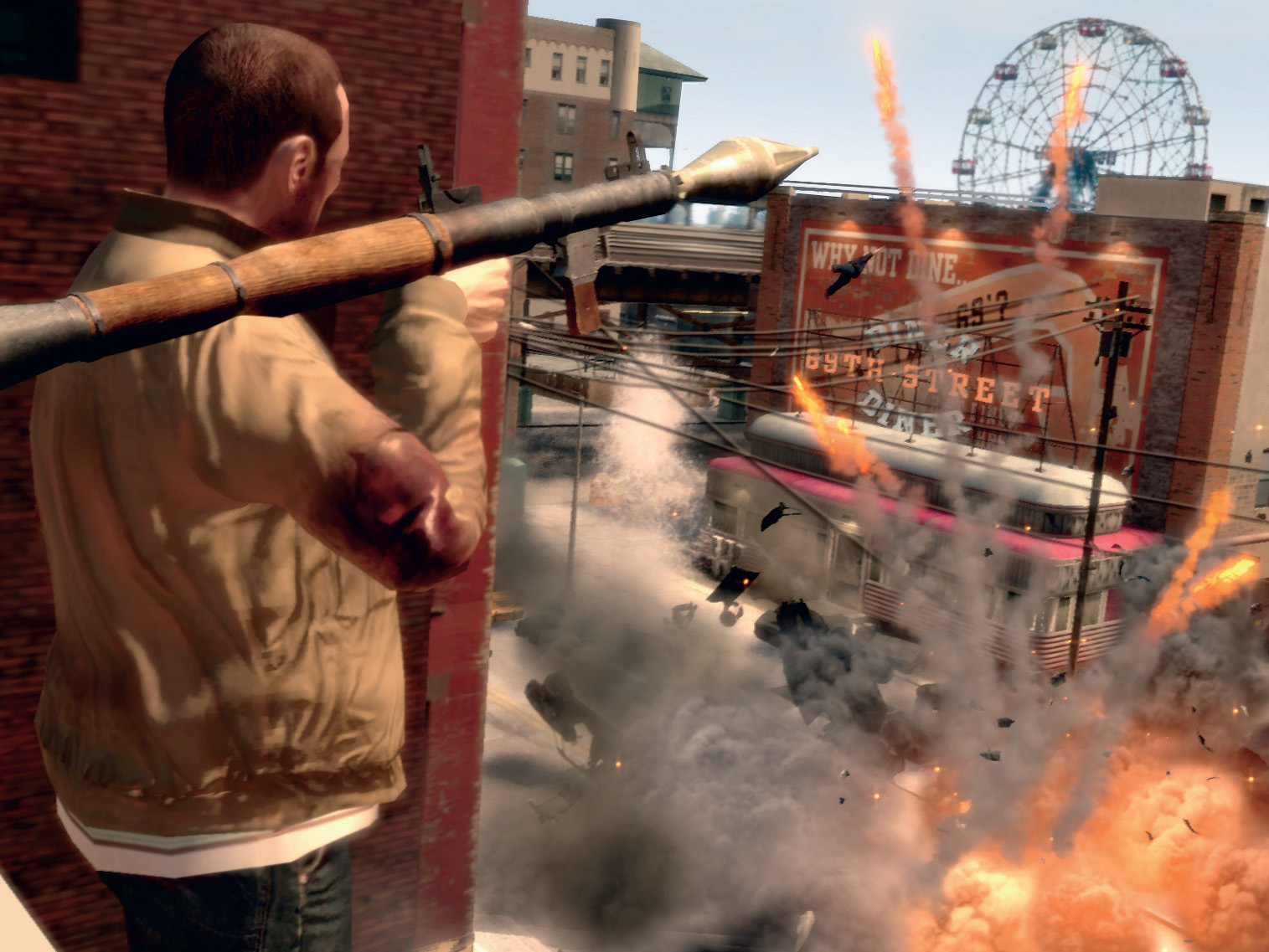
When players customized sessions—such as restricting the weapon pool in Turf War modes exclusively to rocket launchers (RPGs)—the physics engine was pushed to its absolute limits. The contrast between the slow-moving, deliberate trajectory of a rocket projectile and the frantic, split-second panic of dodging it in a crowded street highlighted the depth of the game’s underlying systems.
Customization and Control
Unlike the rigid protagonist models of the single-player campaign, multiplayer allowed users to tailor their avatar’s clothes, head sculpts, and gender. This removed the uniformity of playing exclusively as Niko Bellic. Furthermore, match parameters could be fine-tuned granularly:
World Options: Toggling pedestrian and traffic density could make or break a server’s performance. As Gillen observed during a 32-fire-truck pileup, maximum player counts paired with high traffic densities caused framerates to wince, illustrating the bleeding edge of PC hardware capabilities at the time.
Closed-Off Zones: Rather than always utilizing the entirety of Liberty City’s three islands, matches could be restricted to concentrated micro-environments—such as a single peninsula—forcing claustrophobic, high-intensity engagements.
Mode Tuning: Standard modes like Mafiya Work required players to balance executing organized crime contracts against scavenging cash directly from fallen rivals, injecting strategic economic loops into straight deathmatches.
Official Statements & Archival Perspectives
Reflecting on the era, archive spelunkers and industry analysts note the vast evolutionary gulf between GTA IV’s humble lobby-based multiplayer and the massive, persistent online worlds of today.
Wes Fenlon, reflecting on the historical significance of the era, notes:
"There’s so much we still don’t know about the next Grand Theft Auto… We do know that the console release won’t include an online mode out of the gate, perhaps because Take Two was scared that GTA Online would stop printing money if a combined singleplayer & multiplayer launch didn’t work out. After the juggernaut that mode has become as a GTA 5 add-on, it’s fun to look back on the seeds Rockstar planted with GTA 4’s far humbler online mode."
At the time of publication in 2009, Kieron Gillen famously encapsulated the unique flavor of the PC community’s emergent gameplay, writing about a routine race mode descending into absolute anarchy:
"Inevitably, as the lower placed racers decide they can’t win and turn to fighting among themselves or making road blocks of debris, you turn a race game into a desperate Mad Max survival simulator. It is hilarious."
These perspectives highlight how Rockstar’s early multiplayer design philosophy was built around giving players a sandbox of systemic tools and stepping back to watch the ensuing comedy, rather than funneling them into heavily structured, narrative-driven online progression loops.
Future Outlook: From Liberty City Roots to the Horizon of GTA 6
As the gaming community looks forward to the eventual release of Grand Theft Auto VI and its anticipated online ecosystem (GTA Online 2.0), the lessons of GTA IV remain surprisingly relevant.
The Phased Launch Strategy: Take-Two Interactive’s cautious approach to launching modern multiplayer ecosystems underscores how vital online monetization has become to the publisher’s bottom line. Unlike GTA IV, which treated multiplayer as an exciting companion piece, modern iterations demand careful, staggered rollouts to safeguard multi-billion-dollar revenue streams.
Preservation and Community Longevity: With official server infrastructure for classic titles frequently sunsetting—as seen with GTA IV in 2020—the burden of history increasingly falls on fan-run preservation efforts like GTA Connected. These projects ensure that the foundational playgrounds built by Rockstar continue to be explored by new generations of players.
The Core Appeal of Chaos: No matter how sophisticated live-service economies, custom heists, or persistent corporate empires become, the fundamental appeal of Grand Theft Auto multiplayer has always traced back to what Gillen described in 2009: human unpredictability, physics-driven slapstick, and the shared joy of turning a structured race into a fiery, unforgettable disaster.