Executive Overview
The competitive landscape of the premium home entertainment market is undergoing a structural shift. For years, Roku has been synonymous with accessibility, ubiquity, and budget-friendly streaming solutions. Its affordable QLED televisions and streaming sticks have successfully permeated living rooms across the globe, establishing the brand as a household name in casual media consumption. However, the company has long faced a ceiling in the high-end, enthusiast-driven home theater sector—a domain traditionally dominated by industry titans like LG, Sony, and Samsung.
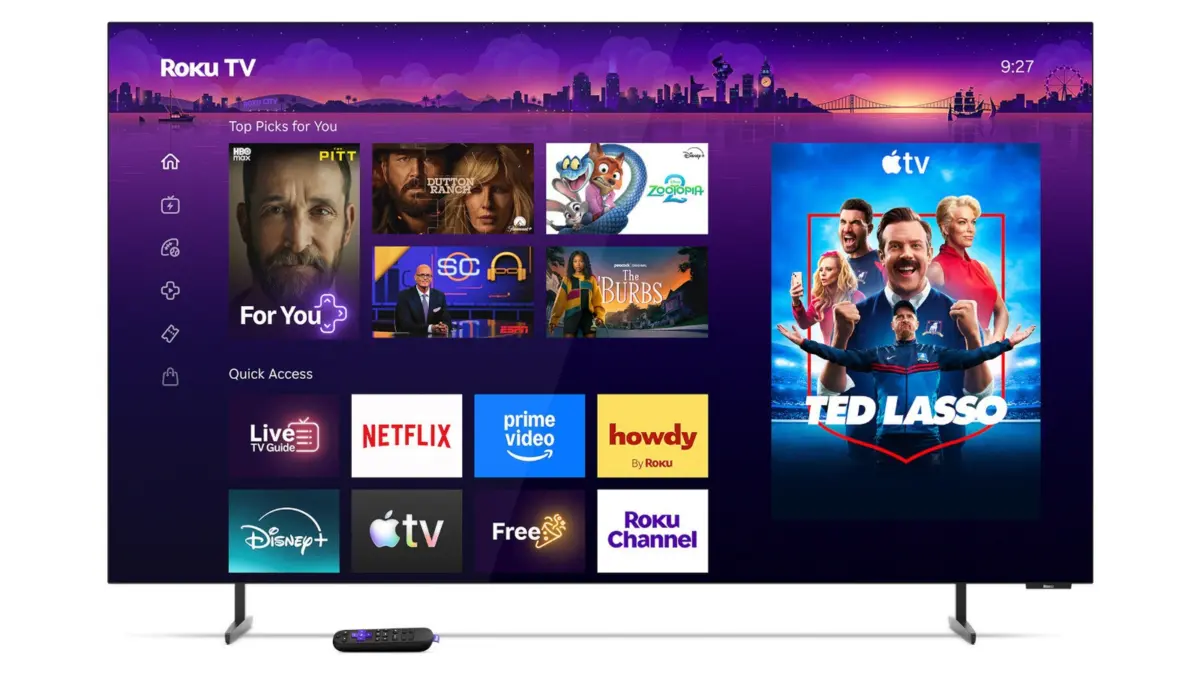
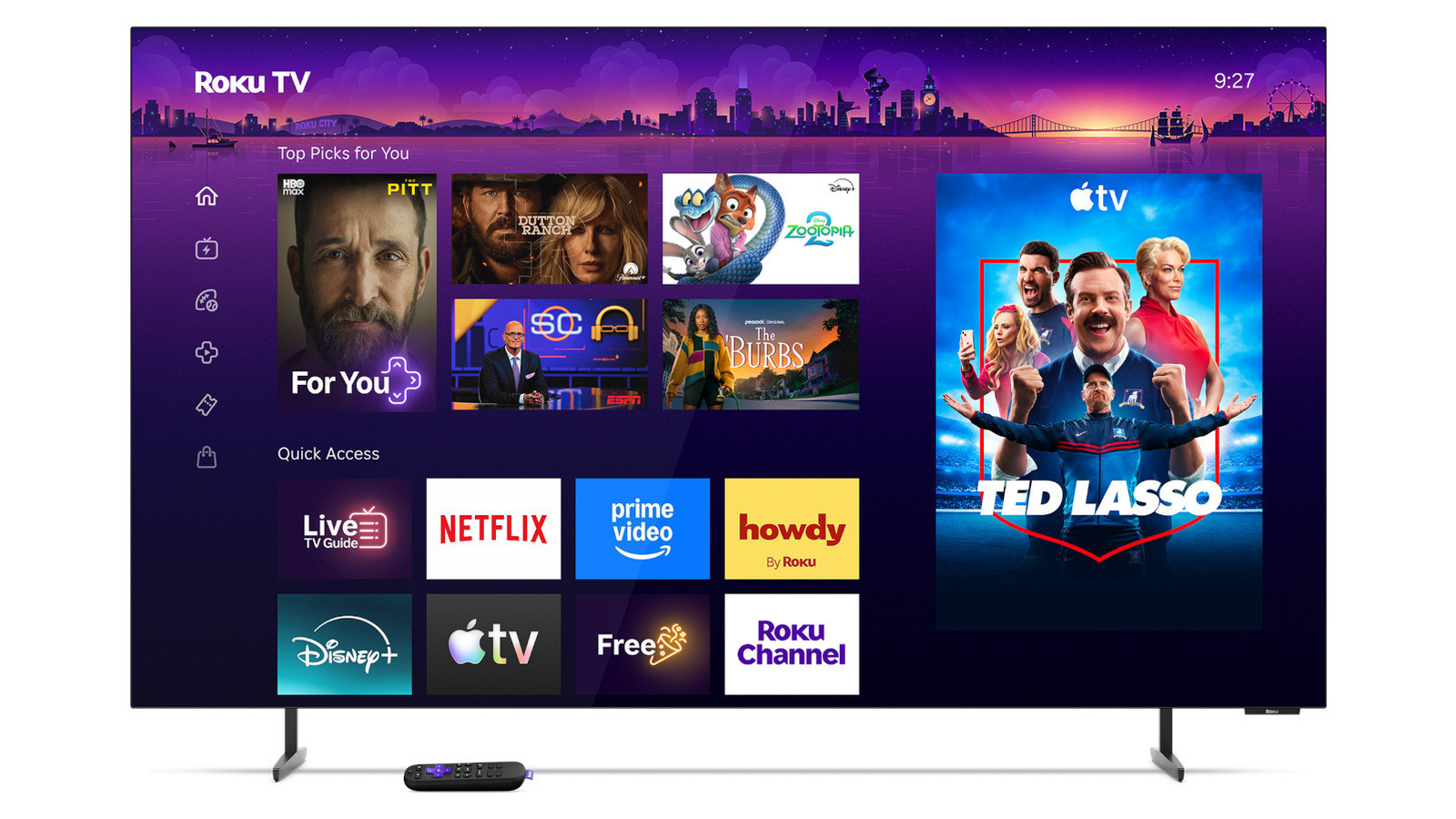
That narrative is now being aggressively rewritten. Following an initial foray into the OLED space, Roku has officially rolled out its most advanced television lineup to date: the Roku Pro Series LX OLED TVs, now available exclusively via Amazon. Offered in 55-inch ($1,300) and 65-inch ($1,600) configurations, these new displays represent a calculated, decisive push into the upper echelon of consumer electronics.
Positioned above Roku’s standard Pro Series OLEDs—which launched in September with a starting price point of $999—the LX iteration introduces a suite of hardware enhancements tailored directly to demanding cinephiles and competitive gamers. By integrating a smoother 144Hz variable refresh rate (VRR), enhanced peak brightness levels, a specialized anti-reflective polarizer, and a redesigned rechargeable voice remote, Roku is signaling that it is no longer content merely dominating the budget tier.
This in-depth analysis will explore the strategic evolution of Roku’s hardware ambitions, dissect the technical specifications of the Pro Series LX OLED lineup, examine their positioning within the broader consumer electronics ecosystem, and evaluate what this aggressive expansion means for the future of the premium smart TV market.
Detailed Chronology: From Budget Streaming Sticks to High-End OLED Displays
To understand the strategic significance of the Roku Pro Series LX OLED launch, one must trace the company’s trajectory over the past decade. Roku’s origin story is rooted in software and affordable hardware dongles designed to transform "dumb" televisions into smart hubs. For a long time, the company avoided the capital-intensive and fiercely competitive business of manufacturing its own physical displays, preferring instead to license its Roku OS to third-party television manufacturers like TCL, RCA, and Hisense.
The Hardware Pivot
The turning point in Roku’s corporate strategy occurred when management decided to vertically integrate by designing and selling branded Roku-branded televisions. This move was intended to exert greater quality control over the user experience, capture higher profit margins, and secure prominent retail placement.
- The QLED Era: Roku’s initial hardware catalog focused heavily on value-driven QLED (Quantum Dot LED) TVs. These models struck a chord with mainstream consumers looking for respectable color accuracy and brightness without breaking the bank. Yet, despite their commercial success, QLED technology—even with full-array local dimming—inherently lacks the pixel-level contrast, infinite black levels, and instantaneous response times offered by Organic Light Emitting Diode (OLED) panels.
- The September 2024 Breakthrough: The foundational shift toward premium displays occurred in September, when Roku officially announced its first-ever OLED lineup under the Pro Series banner. Starting at $999, these televisions proved that Roku could engineer a sophisticated panel capable of delivering true blacks and wide viewing angles, all while keeping the price competitive relative to established OLED veterans.
- The LX Expansion: Building immediately upon that momentum, Roku has now introduced the Pro Series LX variants. Available exclusively through Amazon in 55-inch and 65-inch footprints, the LX series bridges the gap between mainstream premium and high-end enthusiast gear, pushing the pricing envelope to $1,300 and $1,600, respectively.
This rapid succession of hardware announcements underscores an aggressive internal roadmap. Roku is deliberately compressing its product life cycles to capture market share during crucial retail windows, betting that consumers are increasingly willing to invest in premium display technologies if paired with an intuitive operating system.
Supporting Context & Metrics: Technical Specifications and Engineering Upgrades
The jump from the standard Roku Pro Series OLEDs to the LX tier is not merely nominal; it is defined by a series of tangible engineering upgrades designed to address the specific pain points of high-end users—specifically next-generation gamers and home theater enthusiasts.
Display Performance and Panel Technology
At the heart of the Pro Series LX OLED is a self-emissive organic light-emitting diode panel. Unlike traditional LED-LCD panels that rely on a backlight shining through liquid crystals, OLED pixels produce their own light and can be turned completely off. This yields a theoretically infinite contrast ratio, eliminating the "blooming" or halo artifacts often seen around bright objects on dark backgrounds.
However, standard OLED panels have historically faced challenges regarding peak luminance and ambient light reflection. Roku’s LX engineering team has directly targeted these limitations:
- Enhanced Peak Brightness: The LX displays are notably brighter than Roku’s non-LX OLED counterparts. This increase in luminance allows HDR (High Dynamic Range) highlights—such as explosions, sunlight glints, and neon lights—to pop with greater intensity and realism.
- Advanced Anti-Reflective Polarizer: To combat washed-out blacks in brightly lit living rooms, Roku has integrated an advanced optical polarizer. This layer diffuses and absorbs ambient external light, preserving deep black levels even during daytime viewing conditions.
- Color Fidelity and Gamut: Powered by sophisticated color-mapping algorithms, the LX models cover a significantly wider color space, ensuring that content creator intent is honored across diverse cinematic palettes.
Gaming Prowess: The 144Hz Advantage
For the modern gamer, display latency, motion handling, and refresh rates are paramount. While the standard Roku Pro Series OLED features a commendable 120Hz refresh rate—already sufficient for standard console gaming on the PlayStation 5 and Xbox Series X—the LX variant elevates performance by introducing a 144Hz variable refresh rate (VRR).
| Feature | Standard Roku Pro Series OLED | Roku Pro Series LX OLED |
|---|---|---|
| Panel Type | OLED | OLED (Enhanced Brightness) |
| Sizes Available | Varies | 55-inch ($1,300) & 65-inch ($1,600) |
| Refresh Rate | 120Hz VRR | 144Hz VRR |
| Anti-Reflective Technology | Standard | Advanced Polarizer |
| Included Remote | Standard Voice Remote | Rechargeable Voice Remote (Hands-Free) |
| HDR Support | Dolby Vision, HDR10+ | Dolby Vision, HDR10+ |
| Audio | Dolby Atmos | Dolby Atmos |
A 144Hz refresh rate is particularly advantageous for PC gamers connecting high-end rigs to their living room displays. It dramatically reduces motion blur, minimizes input lag, and ensures butter-smooth tracking during fast-paced first-person shooters, racing simulators, and action-heavy titles characterized by complex physics engines.
Audio and Ecosystem Integration
Visual fidelity is only half the home theater equation. The Pro Series LX OLED line supports Dolby Atmos, enabling spatial audio immersion that tracks sound objects around the room when paired with compatible soundbars or surround sound systems.
Furthermore, both lines feature a refined industrial design characterized by an ultra-thin metal bezel and a razor-thin upper profile. This minimalist aesthetic ensures the television functions as a piece of modern interior architecture when mounted on a wall. At the core of the user experience is the Roku OS, pre-loaded with every major streaming application—from Netflix and Disney+ to Max and Prime Video—ensuring a unified, ad-free interface that consumers already know and trust.
A notable quality-of-life inclusion exclusive to the LX range is the upgraded remote control. Abandoning standard disposable alkaline batteries, the LX remote features an integrated rechargeable battery and hands-free voice capability, allowing users to issue voice commands without needing to physically pick up and press a button on the handset.
Official Statements and Industry Reception
The launch of the Roku Pro Series LX OLED TVs has generated substantial commentary within the consumer electronics and financial sectors. Industry analysts view the move as a calculated play to diversify Roku’s revenue streams amidst a maturing hardware and advertising market.
While direct quotes from executive leadership during the rollout emphasize the brand’s commitment to accessibility and performance, corporate messaging has consistently underscored that the Pro Series LX represents the zenith of what Roku engineers can achieve.
"Our goal has always been to deliver a seamless, delightful entertainment experience to as many households as possible," noted a company spokesperson during the initial Pro Series hardware rollout. "With the Pro Series LX OLED, we are demonstrating that our software-first philosophy can seamlessly merge with top-tier, enthusiast-grade hardware to rival the best displays on the market."
Industry critics and early reviewers have responded favorably to the pricing and feature set, noting that while brands like LG (with its acclaimed C-series and G-series OLEDs) and Sony (with its Bravia XR lineup) hold strong brand loyalty among audiophiles, Roku’s aggressive pricing—$1,300 for a 55-inch and $1,600 for a 65-inch LX model—coupled with the ubiquitous simplicity of the Roku OS, presents a compelling alternative for consumers who want elite picture quality without navigating complex, bloated smart TV interfaces.
Future Outlook: What the LX Series Means for the Premium TV Market
As the consumer electronics market looks toward the remainder of the decade, the introduction of the Roku Pro Series LX OLED TVs signals several profound industry trends:
- The Democratization of Premium Tech: Features once sequestered exclusively in $3,000+ flagship displays—such as 144Hz VRR, high-end OLED panels, and advanced anti-reflective coatings—are steadily filtering down into more accessible price brackets. Roku’s aggressive positioning forces legacy hardware manufacturers to continually innovate and justify their higher price points.
- Ecosystem Lock-In via Hardware: For Roku, expanding upward into luxury televisions is an exercise in customer lifetime value. A consumer who purchases a $1,600 LX OLED TV is deeply embedded in the Roku ecosystem, continuously consuming ad-supported content through The Roku Channel and utilizing the platform as their primary digital media gateway. Thishardware-software synergy creates a robust, recurring revenue model that cushions the company against hardware margin fluctuations.
- Amazon Partnership Dynamics: The exclusive launch of the Pro Series LX on Amazon highlights a strategic retail alignment. By leveraging Amazon’s massive logistics network and targeted search advertising, Roku can bypass traditional brick-and-mortar shelf-space constraints and target digital-first shoppers actively searching for high-end home theater upgrades.
Conclusion
The Roku Pro Series LX OLED TVs—available now on Amazon in 55-inch and 65-inch configurations—are much more than an incremental product refresh. They represent Roku’s graduation to the big leagues of display technology. By combining state-of-the-art OLED panels, superior brightness, 144Hz gaming capabilities, and the unmatched simplicity of Roku OS, the company has delivered a serious contender in the premium home theater space. Whether these displays can successfully draw die-hard loyalists away from established premium brands remains to be seen, but one thing is certain: Roku is no longer playing in the margins of the television market. It has firmly planted its flag at the summit.