Executive Overview
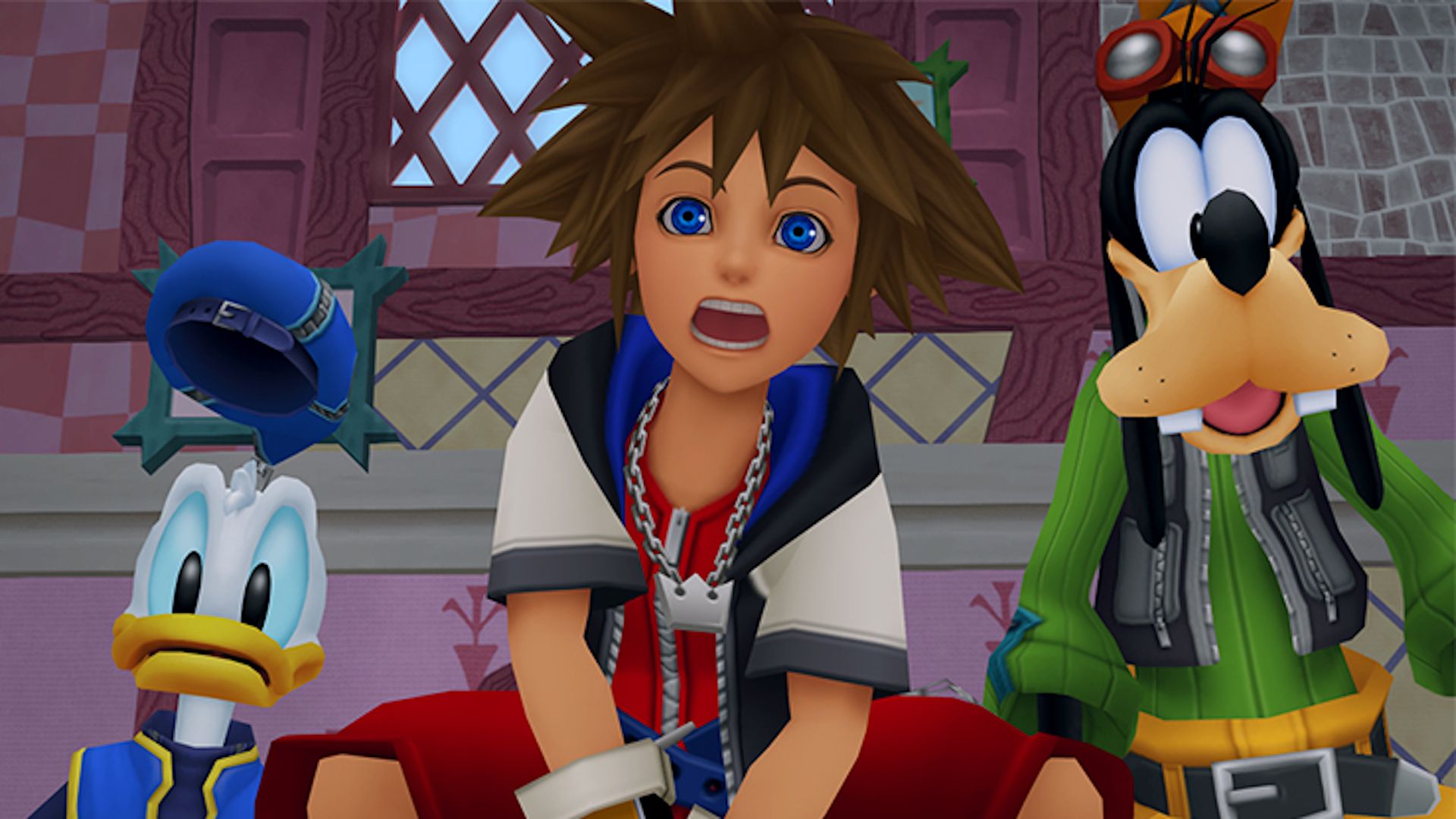
For over two decades, the sprawling, mathematically labyrinthine universe of Kingdom Hearts has occupied a singular, somewhat surreal niche in the global consciousness. It is a franchise where Donald Duck commands arcane elemental magic, Goofy wields a medieval shield with tactical precision, and a spiky-haired adolescent named Sora travels across distinct Disney dimensions wielding a magical, sword-like key known as a Keyblade, fighting supernatural entities known as the Heartless alongside iconic Final Fantasy protagonists.
To the uninitiated, the premise sounds like the fever dream of a corporate marketing executive operating under extreme duress. Yet, recent corporate disclosures from the highest echelons of the Walt Disney Company confirm that this bizarre marriage of Squaresoft (now Square Enix) role-playing pedigree and Disney’s immortal animated pantheon is far more than a cultural curio.
In a comprehensive corporate feature titled "How Games Are Helping Shape Disney’s Next Chapter," published on the official Walt Disney Company investor relations portal, the entertainment conglomerate revealed a staggering commercial milestone: Kingdom Hearts officially stands among the company’s elite roster of "billion-dollar franchises."
According to Sean Shoptaw, Disney’s Executive Vice President of Games and Digital Entertainment, the company now boasts a portfolio of nine distinct gaming properties that have individually grossed over $1 billion at retail. Alongside juggernauts like the mobile sensation Marvel Strike Force, Kingdom Hearts has crossed the hallowed billion-dollar threshold. This revelation offers a fascinating lens through which to examine modern cross-media IP management, long-tail game development, and the enduring commercial power of nostalgia across generations.
Detailed Chronology: A Quarter Century of Keyblades and Confusion
To understand how Kingdom Hearts reached this financial pinnacle, one must navigate a release history as convoluted as its infamous narrative lore. The journey began in 2002 with the release of the original Kingdom Hearts for the Sony PlayStation 2—a platform whose hardware dominance in that era provided the ideal canvas for early-2000s action-RPG ambitions.
The collaboration famously began in a shared Tokyo elevator ride when executives from Square and Disney discussed the possibility of creating a game that could rival Super Mario 64, realizing they both wanted a 3D environment where Disney characters could interact with interactive gameplay mechanics. Spearheaded by director Tetsuya Nomura, the original title was an unprecedented gamble. It combined the melancholic, philosophical undertones typical of Japanese role-playing games (JRPGs) with the sunny, universally recognized iconography of Disney worlds like Aladdin, The Little Mermaid, and The Nightmare Before Christmas.
The gamble paid off spectacularly. Critical acclaim and explosive consumer demand paved the way for a direct sequel, Kingdom Hearts II (2005), which refined the combat mechanics, expanded the narrative scope, and cemented the franchise in the cultural memory of late-millennial gamers.
However, rather than proceeding linearly to a traditional number three, the franchise embarked on an odyssey of spin-offs, prequels, and side-stories spread across an alphabet soup of hardware platforms. Titles like Kingdom Hearts: Chain of Memories (Game Boy Advance), Kingdom Hearts 358/2 Days (Nintendo DS), Kingdom Hearts Birth by Sleep (PlayStation Portable), and Kingdom Heartscoded (mobile devices) were released over the next decade. Far from being throwaway cash-grabs, these entries were engineered to be mandatory reading for anyone attempting to comprehend the overarching lore—a narrative strategy that alienated casual observers while intensely cultivating a hardcore, deeply dedicated fandom.
It took until 2019—nearly fifteen years after the release of the second mainline entry—for Kingdom Hearts III to finally arrive on modern consoles. Promoted by years of relentless anticipation, the title shattered sales records, moving millions of copies in its opening week and proving that the appetite for Sora’s adventures had not diminished with time. Across roughly 15 distinct releases, collections, and remastered editions spanning 25 years, the franchise steadily accumulated the revenue required to earn its place in Disney’s billion-dollar hall of fame.
Supporting Context & Metrics: Decoding the Billion-Dollar Milestone
While reaching $1 billion in lifetime retail sales is an extraordinary achievement for any single intellectual property, contextualizing this figure within the broader modern entertainment landscape provides essential economic perspective.
Within the financial architecture of the Walt Disney Company, $1 billion is a familiar benchmark. High-profile cinematic releases under the Marvel Cinematic Universe or Star Wars banners routinely clear this milestone in a matter of weeks during their theatrical windows alone. For instance, recent blockbusters routinely dwarf the lifetime retail earnings of a multi-game, quarter-century-old interactive franchise in mere months.
Yet, comparing interactive media directly to linear cinema ignores the unique cost structures, retention metrics, and long-tail monetization inherent to video games. Game development, particularly for ambitious action-RPGs featuring complex licensing agreements between two massive multinational corporations (Disney and Square Enix), requires monumental upfront investments and years of iterative technical labor.
Furthermore, the Kingdom Hearts financial footprint is built on a unique release strategy: the repackaging and remastering of legacy content. Collections such as Kingdom Hearts HD 1.5 Remix, 2.5 Remix, and 2.8 Final Chapter Prologue have been systematically deployed across successive generations of hardware—from the PlayStation 3 and PlayStation 4 to Xbox One, PC, and Nintendo Switch (via cloud streaming). These compilations have allowed Square Enix to continually monetize its back catalog with minimal development expenditure, steadily padding the franchise’s lifetime retail revenue over decades.
From a demographic standpoint, the billion-dollar milestone also highlights a rare cross-generational phenomenon. While its foundational fans are firmly entrenched within the millennial cohort—those who unboxed a PlayStation 2 on Christmas morning in the early 2000s—the series retains a magnetic pull on Generation Z. This enduring appeal is frequently on display in online communities and social media spaces, where the mere mention of Sora’s oversized shoes, iconic Keyblade variants, or the melancholy strains of Hikaru Utada’s theme songs ("Simple and Clean" and "Sanctuary") triggers instant, highly vocal enthusiasm.
Official Statements and the Corporate Pivot Toward Gaming
The revelation of Kingdom Hearts’ financial status was not buried in an obscure financial audit; it formed a central pillar of Disney’s aggressive public relations and investor relations narrative regarding the interactive entertainment sector.
In the corporate feature "How Games Are Helping Shape Disney’s Next Chapter," the Walt Disney Company explicitly signaled a strategic evolution in how it leverages its colossal treasure trove of intellectual properties. No longer content to simply license out characters for quick, one-off film tie-ins, Disney is actively positioning itself as an interactive powerhouse through long-term partnerships and platform integration.
Sean Shoptaw’s commentary emphasized the company’s expanding footprint in the modern gaming ecosystem. Beyond highlighting traditional retail triumphs like Kingdom Hearts and mobile hits like Marvel Strike Force, the executive pointed to major collaborative plays. These include Disney’s landmark multi-billion-dollar equity investment and ongoing partnership with Epic Games—manifested most vividly through persistent, deep integrations within Fortnite and the expansive creative tools of Fortnite Creative—as well as the viral, Gen Z-focused success of NetEase’s hero shooter Marvel Rivals.
By spotlighting Kingdom Hearts alongside these modern live-service and platform-based giants, Disney is communicating a clear message to Wall Street: traditional, narrative-driven single-player JRPGs developed in tandem with Japanese studios remain a vital, highly lucrative component of the company’s diversified digital portfolio. It validates Square Enix’s methodical approach to co-developing properties that bridge Eastern game design sensibilities with universally beloved Western characters.
Future Outlook: Kingdom Hearts 4 and the Next Billion
As the dust settles on these financial disclosures, the collective gaze of the gaming world—and Disney’s fiscal planners—turns toward the horizon. The future of the franchise rests squarely on the shoulders of its next major installment: Kingdom Hearts 4.
First unveiled during the series’ 20th-anniversary event in April 2022, Kingdom Hearts 4 plunged fans into a period of prolonged silence that tested the patience of even the most devoted Keyblade wielders. For over four years, updates were virtually non-existent, breeding rampant speculation across community forums regarding the game’s development status, engine transitions (moving to Unreal Engine 5), and narrative direction.
However, the drought broke in June with the release of a fresh promotional trailer that offered the first substantive signs of life for the project since its initial announcement. The footage showcased Sora navigating a remarkably realistic, hyper-detailed urban environment known as Quadratum—a stark, stylistic departure from the traditionally stylized, whimsical Disney worlds of past entries—while hinting at encounters with new and returning characters alike.
While an official release date for Kingdom Hearts 4 remains elusive, the timing of Disney’s investor disclosure could not be more auspicious. As development charges forward under Square Enix, the franchise stands on the precipice of its next major commercial cycle.
Whether Kingdom Hearts 4 will accelerate the journey toward the franchise’s next billion dollars in retail revenue remains to be seen. What is certain, however, is that the improbable alliance between a magical floating duck, a goofy dog, and a boy with a giant key has graduated from corporate experiment to permanent fixture of the global entertainment canon. For shareholders, gamers, and pop culture historians alike, the door to the light has officially been unlocked for good.