

Executive Overview
In an era dominated by relentless hustle culture, extreme fitness metrics, and the pursuit of agonizing athletic perfection, a quieter, more sustainable paradigm is taking root on the asphalt and park trails of Berlin. Meet Hong, a multifaceted Berlin-based graphic designer, international flight attendant, and veteran endurance athlete currently preparing for her seventh full marathon. Hong’s journey challenges the orthodox, punishing archetypes of modern distance running. She is living proof that high-level endurance performance does not require an ascetic lifestyle, predawn suffering, or the abandonment of personal comfort.
This comprehensive report examines Hong’s meticulously balanced weekly training architecture, exploring how she successfully harmonizes a demanding international career, a vibrant social life, and rigorous physical preparation. By intentionally discarding the myth that suffering is a prerequisite for success, Hong represents a burgeoning movement of modern runners who prioritize mental well-being, community connection, and holistic self-care. Through an in-depth chronological breakdown of her week, this article investigates the physiological, psychological, and lifestyle mechanisms that allow everyday individuals to transition from reluctant beginners to confident, resilient marathoners without losing their love for the sport.
Detailed Chronology: A Week in the Life of a Balanced Marathoner
Monday: Rhythm, Play, and the Power of the Playlist
The psychological friction of a packed weekly schedule often derails aspiring runners before they lace up their shoes. For Hong, whose professional life oscillates between digital design canvases and transcontinental flights, Mondays demand immediate structural and mental alignment.
"I’m definitely someone who likes to hit the snooze button multiple times, and I am entirely useless before my morning coffee," Hong admits, shattering the illusion of the effortlessly motivated elite athlete. To counteract the initial inertia of a Monday morning, her secret weapon is auditory curation. Her custom running playlists—spanning the hypnotic grooves of disco, house, and underground techno—serve as an external pacemaker when internal motivation flags.
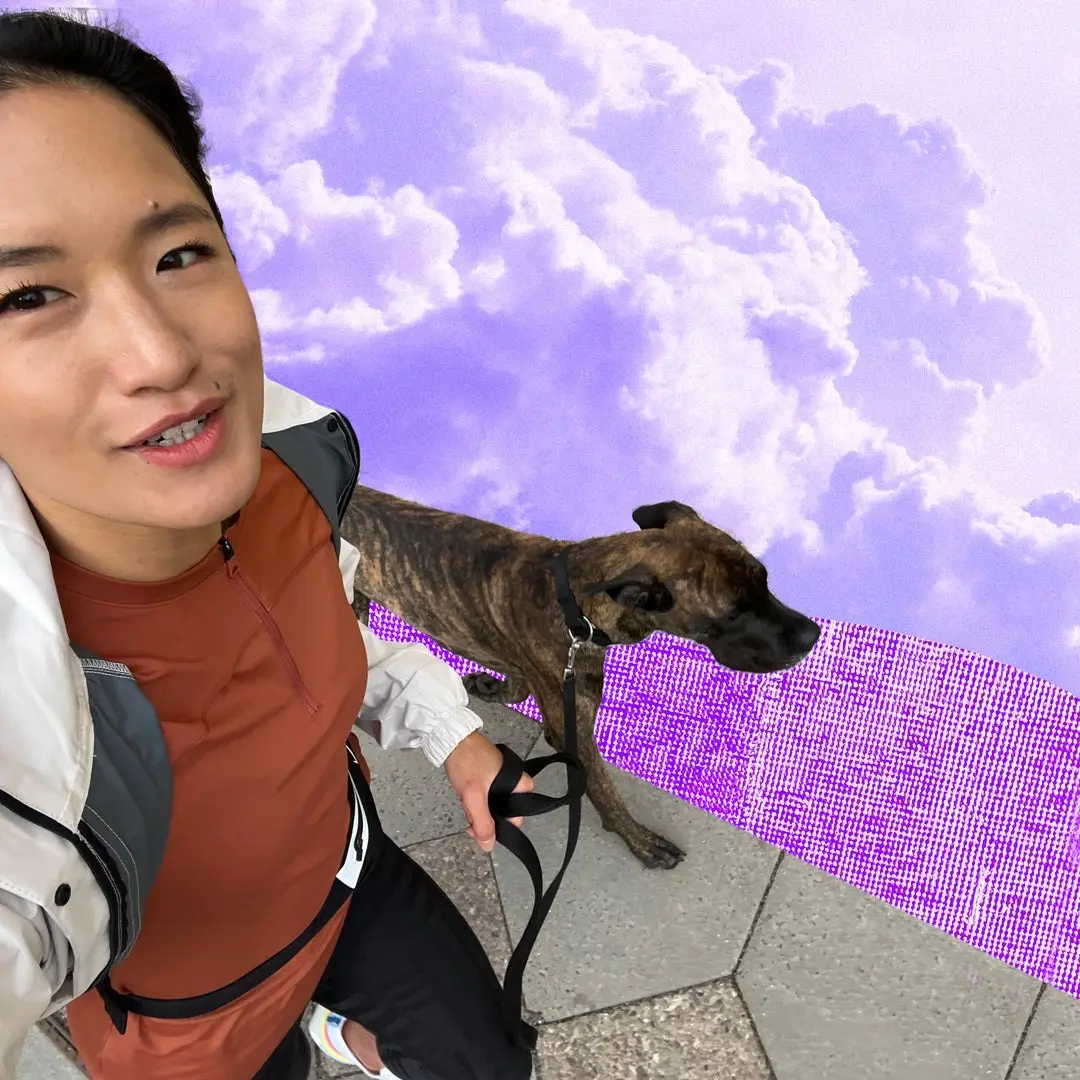
Monday’s run is rarely executed in grim silence. When fatigue threatens to compromise her form, Hong employs a delightfully unorthodox psychological trick: she sings. By vocalizing melodies mid-stride, she is physically forced to regulate her breath, automatically dialing back an unsustainable pace to regain cardiovascular control. This simple act transforms a grueling endurance chore into an exercise of play. Furthermore, companionship often dictates the rhythm of the day. On this particular Monday, Hong borrows a friend’s energetic dog, Mia. The dynamic shifts naturally over the miles: Mia pulls her through the opening kilometers with youthful exuberance, while Hong’s steady, deep-seated endurance carries them through the latter half of the route. It is a symbiotic display of pacing, proving that speed is transient, but stamina is a shared endeavor.
Tuesday: The Foundation of Longevity — Yoga, Strength, and Recovery
A common pitfall among amateur runners is the obsession with single-discipline volume: running more to get better at running. Hong’s training philosophy rejects this myopic approach in favor of a robust, cross-training matrix. Tuesday is designated as a non-running day, pivoting instead toward dynamic yoga flows and targeted strength training.
Why is this essential? High-mileage marathon training places immense repetitive stress on joints, tendons, and stabilizing muscles. By incorporating strength conditioning and proactive physiotherapy into her weekly cycle, Hong builds an orthopedic armor that shields her body from overuse injuries. This holistic conditioning ensures that when she steps out of her comfort zone during intense weekend track sessions, her musculoskeletal system possesses a solid, shock-absorbing foundation. Crucially, Tuesday reinforces the principle that rest and physical maintenance are not passive interruptions to training—they are active components of it.
Wednesday: Navigating the Intersection of Social Life and Professional Travel
Juggling international flight schedules with localized athletic goals requires logistical precision. As a flight attendant, Hong’s circadian rhythm is perpetually challenged by jet lag, time zones, and changing climates. Consequently, Wednesday acts as a strategic decompression point. Rather than forcing a high-intensity workout on a fatigued body, Hong honors her social and cultural needs.
When she touches down in Berlin, her priority is immediate reconnection with her support network. Wednesday evening is deliberately reserved for art exhibitions and cultural exploration with friends. This deliberate choice highlights a core tenet of modern wellness: mental health is physical health. By nurturing her intellectual curiosity and social bonds, Hong replenishes the emotional reservoirs necessary to sustain months of solitary training blocks.
Thursday: Pushing Limits with Intelligent Comfort
Many casual observers labor under the misconception that marathon runners effortlessly leap out of bed at 5:00 AM and casually knock out 20 kilometers without breaking a sweat. Thursday dispels this myth. It is a high-intensity day, featuring a demanding track workout designed to test lactate thresholds, speed endurance, and mental toughness.
To execute a punishing track session safely, gear selection becomes paramount. Hong relies on performance footwear—specifically the Nike Invincible 3—not merely for aesthetic appeal, but for its functional engineering. The high-energy, bouncy foam cushioning provides a secure, impact-absorbing platform across varying synthetic surfaces, instilling the psychological reassurance needed when legs begin to burn.
"I love competitions and challenging myself," Hong notes. Yet, this ambition is tempered by wisdom. She understands that pushing boundaries requires the psychological safety net of comfortable gear. By mitigating micro-traumas through high-performance footwear, she ensures that Thursday’s intensity does not spill over into debilitating Friday injuries.
Friday: Active Recovery and Cultural Reintegration
The physiological toll of Thursday’s track workout demands respect. Friday is treated as a sanctuary of active recovery. Aside from a gentle, restorative yoga session, the day is intentionally free of structured cardio.
Living a nomadic professional life means Hong treasures every moment spent on home soil. Friday afternoon sees her wandering through Berlin’s vibrant neighborhoods, visiting local galleries, and engaging with the city’s creative pulse. This lifestyle integration proves that running should enhance one’s life, not consume it. An exhausted athlete who misses out on life experiences invariably burns out; Hong’s approach ensures longevity in both her career and her athletic pursuits.
Saturday: The Meditative Standard Route and Culinary Rewards
Saturdays belong to the ritualistic long-ish run. Hong’s preferred stomping ground is the scenic, multi-terrain path winding along Berlin’s historic Landwehrkanal. Here, the ground beneath her feet shifts dynamically—transitions from smooth asphalt to damp grass, and occasionally uneven mud, force micro-adjustments in her stabilizing muscles.
For Hong, this weekend route is as much a psychological reset as it is a cardiovascular stimulus. With an engaging podcast playing in one ear or simply tuning into the ambient, chaotic symphony of Berlin waking up, she enters a flow state. She observes the city’s inhabitants with quiet amusement before completing her loop in Kreuzberg.
The physical journey invariably culminates in a deeply anticipated sensory reward: a steaming cup of artisan coffee and a savory snack from a local market stall. This post-run ritual acts as positive psychological reinforcement, anchoring the hard work of the miles to an immediate, joyful sensory payoff.
Sunday: Community Synergy and the Long Run
The culmination of Hong’s training week occurs on Sunday, anchored by her involvement with the Joy Run Collective, a vibrant local running community. Moving away from solitary pacing, Sunday is dedicated to a collective long-distance run through the sprawling, frost-kissed expanses of the Tiergarten.
Enduring prolonged aerobic efforts in colder weather demands meticulous preparation. Layers are adjusted, hydration is planned, and collective morale is leveraged. Running in a pack transforms an individual endurance test into a shared cultural experience.
The grand finale of the week occurs post-run, where the collective gathers for a communal brunch. For this specific session, the host has prepared homemade dumplings—a culinary reward that Hong admits has been on her mind all week. This blending of strenuous physical output with deep communal warmth encapsulates the modern running ethos: community, nourishment, and shared joy are the ultimate antidotes to athletic fatigue.
Supporting Context & Metrics: The Science of Sustainable Endurance
To contextualize Hong’s journey from a self-proclaimed "non-runner" at age 26 to a resilient sub-elite marathoner approaching her seventh 42.2-kilometer race at age 30, it is vital to examine the physiological and sociological data underpinning modern endurance sports.
The Biological Pivot at Age 30
Sports science literature frequently highlights that peak aerobic capacity (VO2 max) can be maintained or even optimized well into one’s thirties and early forties with structured, consistent training. Hong’s transition underscores a fascinating biological reality: her biomarkers at age 30 reflect superior cardiovascular efficiency and muscular resilience compared to her sedentary twenties. This transformation is driven by sustained, low-intensity aerobic base-building (Zone 2 training), which increases mitochondrial density, capillary bed formation, and fat oxidation efficiency.
The Psychology of Comfort in Endurance
Traditional coaching methodologies historically championed a "no pain, no gain" philosophy, often leading to high rates of physiological burnout and psychological aversion. Contemporary sports psychology, however, highlights the concept of perceived autonomy and hedonic running. When runners integrate pleasurable elements—such as curated music, dog companionship, aesthetic routes, and high-performance footwear that reduces perceived impact—the brain releases dopamine in anticipation of the workout. This neurochemical reward loop drastically reduces the cognitive load of decision-making, transforming reluctant compliance into intrinsic motivation.
The Economic and Social Impact of Running Collectives
Urban running crews like the Joy Run Collective are reshaping the metropolitan landscape. No longer viewed merely as fitness clubs, these collectives function as modern social salons where socio-economic backgrounds dissolve in favor of shared sweat and pacing. Sociological studies on urban wellness indicate that community-embedded runners exhibit a 40% higher 12-month training adherence rate compared to solo practitioners. For individuals navigating high-stress, nomadic professions like aviation, these communities provide an invaluable anchor of stability and belonging.
Official Statements and Expert Perspectives
To further validate the philosophies embedded in Hong’s weekly routine, leading voices in sports medicine, physiological coaching, and athletic design offer critical insights into the modern running movement.
Dr. Aris Thorne, Senior Sports Physiologist at the Berlin Institute of Human Performance:
"What we observe in Hong’s training regimen is an exemplary model of longevity-focused endurance conditioning. Traditional marathon training often fails because athletes treat their bodies like combustion engines, running them at high RPMs until failure. By integrating structured cross-training, yoga, and non-negotiable rest blocks, Hong preserves her connective tissue integrity. Comfort and consistency are not antithetical to high performance; they are the exact structural pillars that allow athletes to accumulate high weekly mileage without catastrophic breakdown."
Elena Vance, Sociologist of Urban Fitness Movements:
"The emergence of crews like the Joy Run Collective signifies a profound shift in how younger generations consume sports. Running has been democratized. It is no longer an elitist time-trial executed in grim isolation. It is an artistic, social, and sensory experience where fashion, music, post-run gastronomy (like weekend dumplings and market coffee), and mental wellness converge. Hong embodies this cultural shift perfectly."
Marcus Sterling, Lead Footwear Innovation Engineer:
"Modern running footwear has evolved far beyond basic shock absorption. When athletes are logging high miles across unpredictable urban topographies—shifting from asphalt to park gravel—the shoe must act as an intelligent intermediary. Products like the Nike Invincible 3 are engineered to maximize energy return while minimizing the cumulative micro-shocks that lead to repetitive strain injuries. Comfort is a performance metric; when your feet feel secure and cushioned, your biomechanics remain efficient even in the final, grueling miles of a long run."
Future Outlook: The Next Horizon for Urban Endurance
As Hong prepares to toe the starting line of her seventh marathon, her journey offers a compelling blueprint for the future of endurance sports. The archaic dichotomy separating elite suffering from casual fitness is rapidly dissolving. The modern runner demands a holistic lifestyle integration where professional ambition, creative expression, social connection, and rigorous athletic goals coexist in harmonious equilibrium.
The lessons from Berlin’s urban running scene resonate globally:
- Consistency Outranks Intensity: Showing up consistently, even at a conversational "comfortable" pace, yields superior long-term physiological adaptations than sporadic bursts of agonizing overexertion.
- Environment is Equipment: Mental resilience is heavily supported by environmental factors—curated playlists, aesthetically pleasing routes, high-performance gear, and supportive community networks.
- Recovery is Training: Rest days, physiotherapy, and social leisure are not distractions from athletic progress; they are the biological prerequisites that make peak performance possible.
For Hong, the finish line of her upcoming marathon is merely another milestone in an ongoing evolution. Armed with her playlist, a supportive community, comfortable shoes, and an unwavering commitment to both her physical limits and her personal joy, she proves an inspiring truth to anyone who has ever hit the snooze button: you do not need to suffer to run far. You simply need to find your rhythm, embrace the journey, and enjoy the post-run dumplings.




