Executive Overview
The modern endurance sports landscape is frequently dominated by an uncompromising narrative: early mornings, brutal intensity, strict self-denial, and the relentless pursuit of personal records at all costs. For decades, the cultural blueprint of a marathon runner has conjured images of stoic athletes pushing through pain long before the sun rises, treating training as a punishment rather than a pleasure. However, a quiet revolution is taking place on the pavements and park trails of major European metropolises, spearheaded by everyday athletes who refuse to sacrifice comfort, mental well-being, or a vibrant social life for the sake of a medal.
Enter Hong, a Berlin-based designer, international flight attendant, and unlikely endurance athlete currently preparing for her seventh marathon. Hong’s journey challenges the orthodoxies of distance running. Once firmly convinced she was "not a runner," she has built a sustainable, joyous, and holistic training model that proves consistency does not require suffering. Balancing an unpredictable aviation career, creative design work, a rich social calendar, and a rigorous multi-disciplinary training schedule, Hong embodies a new paradigm in modern fitness. Her philosophy is simple yet radical: comfort, community, and performance are not mutually exclusive.
This report examines Hong’s meticulously structured weekly training blueprint, exploring how she integrates physical conditioning, mental health strategies, professional commitments, and social engagement. By analyzing her routine—from high-intensity track workouts along the Landwehrkanal to community-driven long runs through the Tiergarten—we uncover the physiological and psychological mechanics that allow an amateur athlete to thrive while chasing elite-level distances. Furthermore, this feature investigates the broader cultural shift within urban running communities, where the post-run coffee, the shared playlist, and the mental reset have become just as vital as the mileage itself.
Detailed Chronology: A Week in the Life of an Urban Marathoner
To understand how an amateur athlete successfully prepares for a grueling 42.195-kilometer race while maintaining a demanding professional and social life, one must examine the granularity of their schedule. Hong’s weekly routine is a masterclass in time management, energetic pacing, and intentional recovery. Below is the comprehensive day-by-day breakdown of her training ecosystem.
Monday: Combating Fatigue with Rhythm and Companionship
The beginning of the workweek presents a dual challenge for Hong: transitioning back to her routine after a weekend of social activities and managing the cognitive fatigue of her demanding schedule as a flight attendant and designer.
- The Mindset: Monday mornings often require an extra push. Like millions of others, Hong admits to wrestling with the snooze button and requiring her morning coffee before feeling functional.
- The Strategy: To combat sluggishness, Hong relies heavily on auditory motivation. Her carefully curated running playlist—spanning disco, house, and techno—serves as an immediate psychological catalyst. When physical fatigue sets in mid-run, she employs an unconventional yet highly effective technique: she begins to sing.
- The Mechanics of Singing: By forcing herself to regulate her breathing to match vocalization, Hong naturally slows down her pace, bringing her heart rate back under control while transforming a grueling effort into an enjoyable, lighthearted experience. This often draws amused smiles from passersby, adding a layer of human connection to her solitary miles.
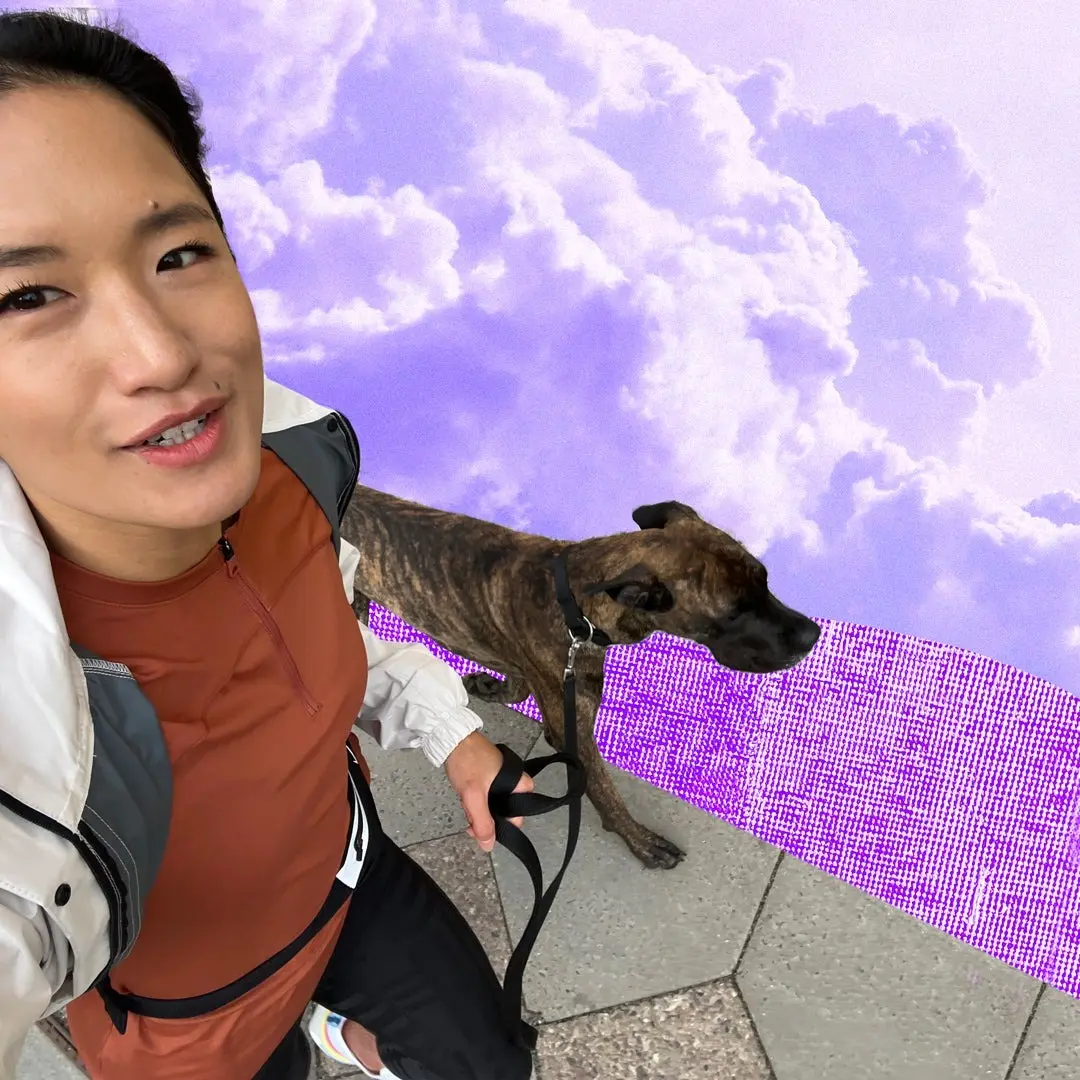
- The Canine Companion: To elevate Monday’s session further, Hong frequently borrows a friend’s dog, Mia. An energetic canine companion provides dynamic pacing: Mia pulls her forward during the opening miles, while Hong’s enduring stamina carries them through the final stretches. It is a symbiotic relationship that highlights the importance of shared energy in endurance training.
Tuesday: Cross-Training and Injury Prevention
Running a marathon places immense repetitive stress on the joints, tendons, and muscular skeletal system. Recognizing that longevity in the sport requires more than just logging miles, Hong dedicates Tuesdays to structural resilience rather than forward motion.
- The Holistic Approach: Tuesday features zero running. Instead, Hong engages in structured yoga, targeted strength training, and specialized physical therapy sessions.
- The Physiological Benefit: Strength training fortifies the stabilizing muscles surrounding the knees, hips, and ankles, drastically reducing the incidence of overuse injuries. Meanwhile, yoga enhances joint mobility and fascial elasticity. This robust cross-training foundation ensures that when Hong does push her limits during high-intensity runs, her body absorbs the impact without breaking down, allowing for a swift and complete return to form.
Wednesday: Professional Realities and Intentional Rest
As a long-haul flight attendant, Hong’s professional life is defined by changing time zones, irregular sleep schedules, and constant travel. Consequently, Wednesdays are designated as a psychological and physical buffer.
- Social Integration: When she is grounded in Berlin, Hong makes it a priority to reconnect with her local network of friends. Wednesday often involves stepping away from athletic gear entirely to visit a local art gallery or exhibition.
- The Science of Rest: Far from being wasted days, these passive recovery windows allow the central nervous system to reset. Overtraining syndrome is a frequent pitfall for marathon aspirants; Hong’s willingness to embrace rest as an active component of her program safeguards her mental health and prevents burnout.
Thursday: Pushing Boundaries on the Track
With her body fully rested and structurally supported, Thursday represents the zenith of physical intensity for the week.
- The Track Workout: Training for a marathon requires more than just slow, steady aerobic miles; it demands targeted speed work to improve running economy and lactate threshold. Hong heads to the running track to test her velocity and pacing limits.
- Gear and Comfort: To execute high-speed intervals safely, equipment matters. Hong opts for footwear that offers responsive cushioning and stability across varied synthetic surfaces—specifically utilizing shoes with energetic, bouncy midsoles that reduce foot fatigue during explosive efforts.
- The Psychological Thrill: Despite the physical discomfort of threshold training, Hong approaches competition and self-inflicted challenges with genuine enthusiasm. The Thursday track session is where she confronts her mental boundaries, learning how to maintain composure under high cardiovascular stress.
Friday: Active Decompression and Cultural Immersion
Following the brutal exertions of Thursday’s track session, Friday acts as a bridge toward the weekend.
- Active Recovery: Aside from a gentle, restorative yoga flow, Friday is marked by deliberate physical downtime.
- Urban Exploration: True to her creative background as a designer, Hong uses her time in Berlin to immerse herself in the city’s cultural offerings, attending additional art exhibitions and socializing with peers. This routine reinforces the philosophy that a runner’s identity should never entirely eclipse their broader human identity.
Saturday: The Meditative Long-ish Run and Local Rewards
Weekend running in Berlin has a distinct character, and Saturday serves as Hong’s signature routine along the city’s urban waterways.
- The Route: The Landwehrkanal serves as her primary training artery. The terrain is wonderfully varied, transitioning seamlessly from hard asphalt to soft grass and muddy patches, which naturally engages stabilizing muscles in the feet and lower legs.
- Sensory Engagement: Depending on her mental state, Saturday runs are either an auditory escape—accompanied by an immersive, long-form podcast—or a silent meditation where she absorbs the ambient soundtrack of the city.
- The Ritualistic Finish: No Saturday run is complete without a reward. Hong concludes her route by stopping at a local market stand in Kreuzberg, indulging in a specialized coffee and a well-earned post-run snack. This reinforces positive psychological reinforcement loops associated with finishing a workout.
Sunday: Community Synergy and Long-Distance Endurance
Sunday is reserved for the cornerstone of distance training: the weekly long run, executed collectively.
- The Joy Run Collective: Hong is an active member of the Joy Run Collective, an urban running community that transforms solitary suffering into a shared social celebration.
- The Tiergarten Route: The group tackles an extended endurance route through Berlin’s historic Tiergarten. Because winter temperatures and extended mileage present harsh conditions, preparation is paramount. Hong bundles up in technical, weather-appropriate layers to maintain core body temperature.
- The Post-Run Feast: The psychological highlight of the week occurs immediately after the final mile. The collective gathers for a communal brunch. This week features handcrafted dumplings—a culinary reward that Hong consciously anticipates throughout her rigorous training week.
Supporting Context & Metrics: The Science of Sustainable Running
Hong’s trajectory from a self-proclaimed non-runner to a seasoned marathoner preparing for her seventh 42K race offers valuable insights into modern sports science and consumer psychology within the athletic apparel market.
The Physiology of "Comfort-First" Endurance
Traditional coaching methodologies have historically championed the "no pain, no gain" dogma. However, contemporary exercise physiology increasingly recognizes the critical role of psychological comfort and perceived exertion in athletic longevity.
- Cortisol and Stress Management: High-stress training environments elevate baseline cortisol levels, which can impair immune function and slow muscular recovery. By integrating singing, dog-walking, and social running, Hong actively down-regulates her sympathetic nervous system, promoting a parasympathetic state conducive to tissue repair.
- Biomechanics and Injury Mitigation: The inclusion of yoga, physiotherapy, and cross-training directly addresses muscle imbalances inherent in unidirectional running. Studies in sports medicine indicate that runners who incorporate multidisciplinary strength work experience up to a 50% reduction in running-related injuries compared to those who exclusively log mileage.
The Evolution of Urban Running Culture
Hong’s experiences mirror a macro-level transformation in global running culture. Running is no longer viewed merely as an elite test of cardiovascular endurance or a utilitarian method for weight loss. Instead, it has evolved into a lifestyle ecosystem defined by three core pillars:
- Inclusivity: Breaking down the archetype of the hyper-lean, ultra-serious competitor.
- Community Integration: Merging physical exertion with social connection (e.g., running crews, post-run coffee culture, and communal brunches).
- Sensory Expression: Utilizing music, podcasts, apparel aesthetics, and urban exploration to make training an enjoyable daily ritual rather than an obligation.
Official Statements and Personal Philosophy
To encapsulate the mindset driving Hong’s athletic journey, we reflect on her core reflections regarding age, capability, and identity:
"I started running four years ago. At 30, I am healthier and fitter than I ever was in my twenties. But running is so much more than physical training. As a runner, I’ve gained immense self-confidence because I now know how hard I can push myself, even when I’m feeling a bit low. I’ve learned that consistency and comfort do not have to be mutually exclusive. I can set new boundaries for myself while staying entirely comfortable in my own skin."
Furthermore, Hong distills her operational philosophy into three actionable tenets for athletes seeking to reignite their passion for movement:
- Prioritize Ergonomic Comfort: Invest in reliable, supportive footwear that transforms every stride into a secure, cushioned experience, eliminating unnecessary physical friction.
- Curate an Auditory Landscape: Utilize dynamic, high-energy playlists (blending disco, house, and techno) to bypass psychological resistance and regulate pacing.
- Establish Intentional Rewards: Pair scenic, engaging urban routes with immediate post-run culinary and social celebrations to cement positive neural associations with physical activity.
Future Outlook: The Road to the 7th Marathon and Beyond
As Hong sets her sights on her seventh marathon, her journey serves as a powerful blueprint for the future of amateur endurance sports. The old guard of grueling, joyless training regimens is rapidly giving way to a more holistic, compassionate, and community-driven approach.
For urban professionals navigating chaotic work schedules, international travel, and creative careers, Hong proves that monumental athletic achievements do not require abandoning one’s social life, mental peace, or personal comfort. By harmonizing rigorous structural preparation with spontaneous joy—whether through singing mid-run, borrowing a friend’s energetic dog, or sharing a weekend plate of dumplings with her running collective—she redefines what it means to be an endurance athlete.
Next stop: the starting line of her seventh marathon. And if history is any indication, she will cross that finish line smiling, energized, and ready for her post-run coffee.