Executive Overview
For years, the conventional wisdom surrounding Instagram growth has been absolute: adapt to video or become invisible. Creators and business owners have been told that building an audience, establishing authority, and driving revenue require stepping in front of a camera daily, wrestling with complex video editors, and chasing fleeting trends.
However, a quiet counter-revolution is reshaping digital marketing. Strategic content creators are building massive, highly engaged followings and six-figure revenue streams entirely without filming Reels.
The mechanism behind this shift is the Instagram carousel.
Far from a nostalgic relic of early Instagram, modern carousels are sophisticated, multi-slide educational and narrative tools designed to exploit the mechanics of the Instagram algorithm. By capitalizing on dwell time, swipe depth, saves, and algorithmic shares, carousels command a level of psychological and behavioral engagement that video content frequently fails to secure.

According to marketing strategist and agency founder Katelyn Rhoades—who leveraged a carousel-first approach to build a following of over 217,000 users, secure a partnership with Meta, and earn recognition in Forbes—carousels offer a distinct advantage. They allow writers, designers, and camera-shy professionals to lean into their core strengths.
This in-depth investigative report examines the exact blueprint for building an Instagram presence through carousels alone. It covers narrative planning, scroll-stopping hooks, high-converting calls to action, and visual asset assembly.
Detailed Chronology: The Evolution of Carousel Marketing and Algorithmic Realities
To understand why carousels are currently experiencing a renaissance, one must examine how Instagram’s distribution mechanics have evolved.
Phase One: The Monopolization of Video
When Instagram first introduced Reels to compete with TikTok, the platform heavily weighted its recommendation engine in favor of short-form video. Marketers pivoted en masse, resulting in widespread creator burnout. Millions of professionals who excelled at written communication, structural storytelling, or graphic design found themselves forced into an unfamiliar medium: talking-head video.

Phase Two: The Engagement Shift
As user feeds became saturated with interchangeable talking-head videos, audience fatigue set in. While Reels excel at top-of-funnel reach—often pushing content to non-followers via the Reels tab—they suffer from low user retention past the initial seconds. Users rapidly flick their thumbs upward, keeping average watch times low and shallow.
Conversely, carousels demand active, conscious participation. When a user encounters a well-crafted carousel, the behavioral pattern changes entirely:
- The Interruption: The user stops scrolling to parse the first slide.
- The Progression: The user actively swipes through subsequent slides, signaling sustained attention to the algorithm.
- The Regression: Users frequently swipe backward to review earlier slides containing complex data or actionable frameworks.
- The Curation: Users save the post for future reference or share it directly with peers via direct messages.
Instagram’s algorithm heavily rewards these granular behavioral signals. Dwell time—how long a user lingers on a single post—is a primary indicator of content quality. Carousels naturally accumulate massive dwell times compared to standard static images or brief videos.
Supporting Context & Metrics: Why Carousels Drive Revenue, Not Just Vanity Metrics
A high follower count means little if it fails to convert into qualified leads, client acquisitions, or direct sales. While Reels are effective for broad brand awareness, carousels function as top-, middle-, and bottom-of-funnel assets simultaneously.
The Metrics That Matter
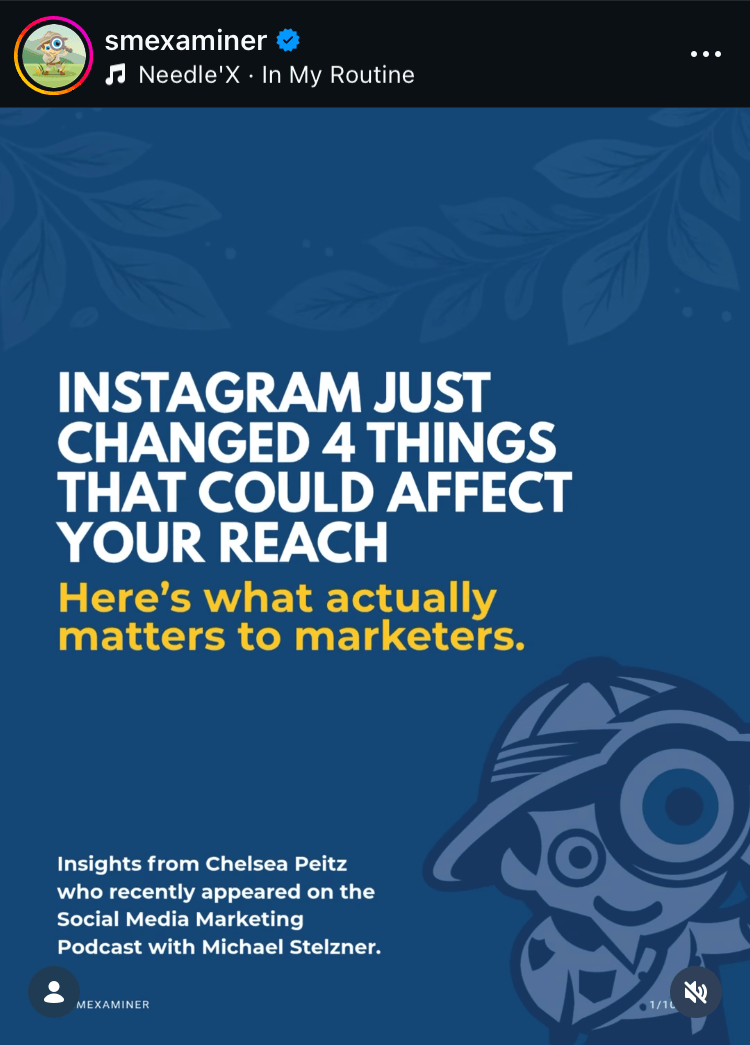
According to agency data compiled across multiple niches, engagement metrics on Instagram have hierarchy. Understanding this hierarchy dictates how content should be structured:
- Shares Over Saves: While saves were previously considered the ultimate benchmark of educational content, platform data indicates that shares now carry the highest algorithmic weight. When a user shares a carousel to their story or sends it to a colleague, it signals high-value content to Instagram’s distribution system.
- Comment-Driven Distribution: Comments act as community multipliers. Prompting users to respond to specific questions creates threaded conversations that keep posts active in the feed for days after publication.
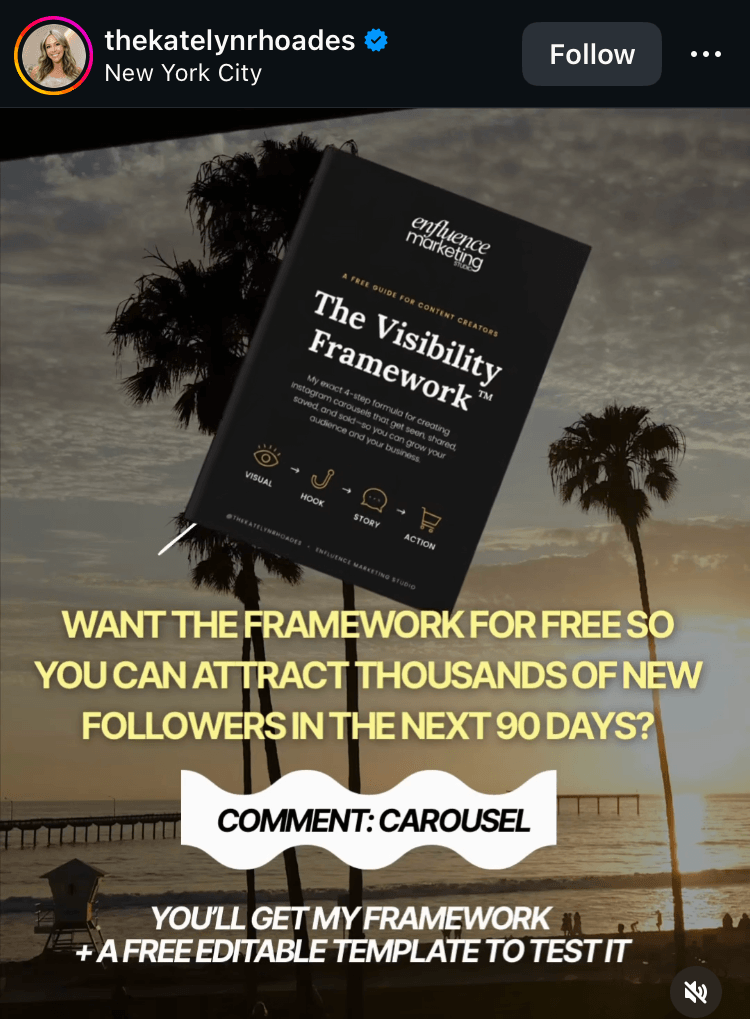
- The DM Automation Pipeline: Perhaps the most lucrative shift in carousel marketing is the integration of direct message (DM) automation tools like ManyChat or Stan Store. By instructing users to comment a specific keyword to receive a free resource, creators convert public engagement into private, high-intent sales conversations.
Solving the Practical Bottleneck
Beyond metrics, carousels solve the operational bottleneck of content creation. Filming requires lighting, audio equipment, wardrobe selection, and repeated takes. Writing and designing a carousel can be executed from a laptop or smartphone anywhere, removing the friction that leads to inconsistent publishing schedules.
Step-by-Step Blueprint: Building High-Performing Carousels
Transitioning to a carousel-first model requires a structured framework. Experts break the process down into four distinct phases: storytelling, hooking, call-to-action design, and visual assembly.
Step 1: Plan the Story Before Designing Anything
The most common mistake creators make is opening a design tool like Canva and attempting to invent a narrative on the fly. Visuals should always serve the narrative, never dictate it.

- Target a Single Persona: Avoid writing for a generalized demographic. Picture a single, specific "dream client." What are they struggling with? What misconceptions are holding them back? When content speaks directly to one individual’s lived experience, a broader audience will recognize themselves in the narrative.
- Establish a Narrative Arc: Every carousel must have a beginning, middle, and end. The opening slide highlights a specific pain point; the middle slides deliver actionable, high-value insights; the final slide instructs the user on what to do next.
- The "Useful But Incomplete" Rule: Effective educational content must deliver real value while leaving the reader wanting more. This mirrors the structure of a high-converting webinar. If a carousel gives away the entire solution without context, the reader has no reason to engage further or buy an offering.
- Length Optimization: Although Instagram allows up to 20 slides per carousel, data shows that 8 to 10 slides is the optimal sweet spot. Every single slide must earn the right to the next swipe; extraneous slides dilute the message and increase drop-off rates.
Step 2: Write a Text Hook for the First Slide
If the first slide fails to stop the scroll, the remaining content is invisible. Crafting an effective hook requires specific psychological levers:
- Embrace Negative Hooks: Positive phrasing like "5 ways to grow your Instagram" is easily ignored. Negative framing—such as "You are destroying your organic reach by making this one mistake"—taps into loss aversion and curiosity. Readers immediately pause to check whether they are guilty of the error.
- Maintain Visual Contrast: Use clean, high-contrast typography. While black and white provide maximum legibility, testing indicates that unexpected accent colors, such as high-visibility yellow, can effectively interrupt the visual monotony of a standard user feed.
- Preserve the Curiosity Gap: The hook’s sole objective is to create an unanswered question in the reader’s mind. If the first slide resolves the core premise, the incentive to swipe disappears.
Step 3: Write a Strategic Call to Action (CTA)
Leaving a carousel without a clear CTA wastes the momentum built across the preceding slides. Different CTAs serve distinct business goals:
- For Reach: Ask viewers to answer a simple prompt in the comments to boost algorithmic distribution.
- For Virality: Explicitly instruct users to share the post with a peer who needs the information.
- For Revenue: Implement keyword-triggered DM automation. Instruct users to comment a word like "GUIDE" or "STARTER," and use automation software to instantly deliver your lead magnet, webinar registration, or sales page directly to their Instagram inbox.
Step 4: Design and Assemble the Visuals
Once the copy and narrative arc are complete, the visual presentation brings the asset together.
- Format Selection: Utilize the rectangular carousel format rather than a square. Rectangular dimensions occupy significantly more vertical screen real estate in the user’s feed, increasing stop rates.
- Authenticity Over Polish: High-gloss, overly produced brand photography often underperforms compared to authentic imagery. Camera-roll assets—such as candid snapshots, lifestyle moments, travel photos, or behind-the-scenes images—frequently drive better engagement. The opening slide should ideally feature a human face to establish instant connection, while subsequent slides support the textual framework.
- Strategic Animation: Static carousels can be elevated by animating the first slide only. This creates a subtle pattern interrupt in the feed. Animating every slide is unnecessary and complicates production pipelines. Simple motion effects—such as layering text over a subtle background video loop or applying a gentle kinetic text effect—can increase initial engagement significantly.
Future Outlook: The Sustainable Future of Content Creation
As social media algorithms continue to mature, platform saturation makes it increasingly difficult for ordinary creators to stand out purely through high production values or trendy video formats. Audiences are shifting toward substance, actionable frameworks, and substantive education.
The resurgence of the Instagram carousel signals a broader maturation of the creator economy. It proves that digital influence does not require performing for a camera or chasing every ephemeral algorithmic shift. By mastering the fundamentals of written narrative, psychological hooks, and structured visual design, marketers, business owners, and writers can build sustainable, highly profitable audiences on their own terms.
For those willing to step off the video treadmill, the carousel-first approach represents not just an alternative strategy, but a more durable, authentic, and revenue-focused path forward.