Executive Overview
For centuries, the prevailing narrative across Western societies has cast arranged marriage through a monolithic, skeptical lens—often characterizing it as a transactional, loveless, and oppressive practice that robs individuals of autonomy. However, a landmark international study published in the Archives of Sexual Behavior (Sorokowski et al., 2025) challenges these deeply ingrained cultural biases. By examining the emotional and psychological dynamics of marriages across five distinct non-Western societies, researchers have uncovered a striking reality: arranged marriages are often just as rich in intimacy, passion, and commitment as their free-choice counterparts.
This comprehensive investigation explores the historical shift from pragmatic alliances to romantic unions, analyzes the methodology and surprising findings of the recent global study, dismantles long-standing Western prejudices, and evaluates what these insights mean for an increasingly interconnected, multicultural world.
Detailed Chronology: The Evolution of Human Matrimony
To understand the modern debate surrounding arranged versus love marriages, one must examine how human societies have structured partnership throughout history.
Pre-17th Century: The Era of Strategic Alliances
Throughout recorded history and across hundreds of distinct global cultures, male-female marriage has been nearly ubiquitous, yet its underlying purpose has shifted dramatically. From ancient civilizations until roughly the 17th century, the vast majority of marriages worldwide were arranged by the future spouses’ families.
During this extended epoch, romantic love between a bride and groom was largely irrelevant to the union’s success. Instead, marriages were treated as critical geopolitical and economic instruments. What mattered most was how a union impacted the two families’ social alliances, labor distribution, property rights, and financial security. Personal desire took a back seat to collective survival and advancement.
The 1600s: The Western Shift Toward Free Choice
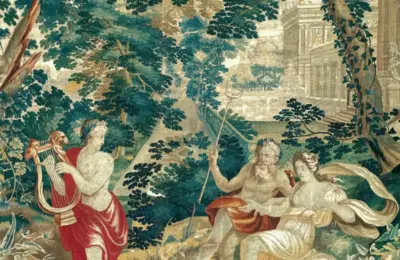
In Western Europe, arranged marriages remained the unquestioned norm until around 1600. During this period, free-choice marriages—popularly known as "love marriages"—began gaining cultural traction, eventually supplanting the arranged variety across much of the continent.
Literature from the era reflects this profound societal pivot. In William Shakespeare’s 1591 play The Taming of the Shrew, the character Baptista Minola actively seeks to arrange marriages for his two daughters. While Katherine’s match is traditionally arranged, Baptista auditions prospective suitors for his younger daughter, Bianca. Bianca, however, rebels against this paternal oversight and elopes with a suitor of her own free choosing.
Shakespeare’s works frequently grapple with this tension between duty and desire. While many unions in his plays are arranged for political expediency, he routinely elevates free-choice love unions to dramatic center stage—most notably in iconic tragedies and romances such as Romeo and Juliet, Antony and Cleopatra, and Olehlo and Desdemona.
Post-1600 to Present: Colonization and Persistence
As Western European powers colonized the territories that would become the United States, they brought these evolving romantic ideals with them. Consequently, love marriage has long been established as the cultural norm in the United States.
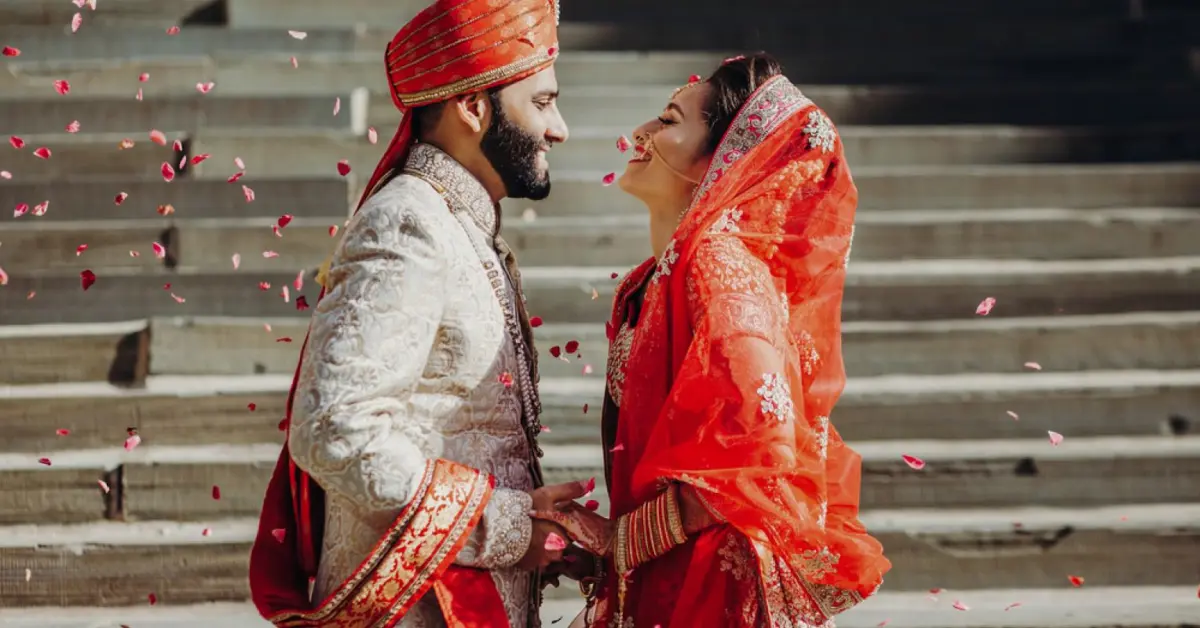
Yet, even within modern, pluralistic Western societies, cultural traditions persist. Throughout American history, various immigrant and ethnic groups have continued to practice arranged marriages for their children. Today, the practice remains vibrant among many Indian-Americans, Arab-Americans, ultra-Orthodox Jewish communities, and other distinct cultural enclaves, bridging ancient traditions with modern lives.
Supporting Context & Methodology: Inside the 2025 Global Study
Given the persistence of arranged marriages globally and the persistence of Western skepticism, an international team of researchers—representing Poland, Bolivia, India, Nigeria, and Russia—set out to investigate a fundamental question: Are arranged marriages genuinely loveless, or do they simply cultivate affection through a different developmental trajectory?
Study Design and Demographics
The researchers interviewed 598 spouses (260 women and 238 men) living across five non-Western societies that actively practice both arranged and free-choice marriage. Studying populations that engage in both models ensured that all participants had firsthand experience or deep cultural familiarity with both frameworks.
The five populations studied included:
- The Igbo of Nigeria (an ethnic group numbering approximately 34 million).
- The Meru of Tanzania (approximately 2 million).
- The Kimeru of Kenya (approximately 1.3 million).
- The Bhotiya of the Tibetan Himalayas (approximately 120,000).
- The Tsimane of Bolivia (an indigenous population of roughly 8,000).
To ensure methodological rigor, researchers obtained formal permission from local community leaders before entering the field. Multidisciplinary teams, including at least one local researcher fluent in the native language and intimately familiar with local customs, conducted the interviews. Participants were fairly compensated with financial stipends ($10 USD) or practical trade items such as fish hooks and flour.
Defining and Measuring "Love"
To evaluate the emotional core of these relationships, the researchers utilized psychological frameworks defining romantic love as a triad composed of intimacy, passion, and commitment:
- Intimacy: Characterized by psychological trust, mutual self-revelation, and deep friendship.
- Passion: Characterized by intense feelings of physical and emotional desire.
- Commitment: Characterized by clear, conscious, and deliberate decisions to maintain the relationship throughout a lifetime.
Participants were asked detailed questions regarding their type of marriage, how long they had been together, and how intensely they felt their relationship embodied these three core components.
Research Findings and Metrics
The study yielded a nuanced, complex portrait of human relationships that defied simplistic cultural stereotypes.
Balanced Preferences and Cultural Context
When interviewers asked open-ended questions about the pros and cons of each marriage model, responses were coded into 42 distinct categories. In slightly more than half of these categories (23), participants favored free-choice marriage; in the remaining categories (19), participants favored arranged marriage.
Preference for one model over the other was heavily dictated by local culture:
- The Tibetan Bhotiyas demonstrated a clear cultural preference for free-choice marriage.
- The Nigerian Igbos and Bolivian Tsimane showed an equally clear preference for arranged marriages.
- The Kenyan Kimeru honored both models but tilted slightly toward free choice, while the Tanzanian Meru leaned modestly toward arranged unions.
The Verdict on Love Components
When evaluating the actual presence of intimacy, passion, and commitment, the findings shattered monolithic assumptions:
- No Significant Difference: Among the Igbo and Kimeru groups, researchers found no significant differences in the levels of reported love between arranged and free-choice marriages.
- The Free-Choice Advantage in Specific Metrics: Among the Bhotiya and Tsimane, spouses in free-choice marriages reported greater intimacy. Furthermore, Bhotiya free-choice partners reported higher passion, while Tsimane free-choice partners declared greater long-term commitment.
- The Arranged Marriage Advantage: Counter to Western expectations, spouses in arranged marriages among the Meru enjoyed greater intimacy and passion than their free-choice counterparts.
Debunking the "Hot-to-Cold" Adage
A long-standing folk adage regarding arranged marriages suggests: "Love matches start hot then grow cold. Arranged matches start cold and then grow hot." The underlying theory posits that free-choice marriages begin with high passion that inevitably fades, whereas arranged marriages start with detachment and slowly warm into deep affection over time.
However, this study found little empirical support for this adage. In four of the five studied cultures, marriage duration had zero impact on reported levels of love. The single exception was found among the Tibetan Bhotiya, where minor differences in love emerged only after ten years of marriage, with free-choice couples scoring slightly higher.
The study’s authors summarized their overarching conclusion with clarity:
"Although those in free-choice and arranged marriages might experience love differently, the differences are rather small. Our findings challenge the Western perception that arranged marriages lack love. Arranged marriages appear to be as rich in love as free-choice marriages."
Expert Perspectives & Cultural Critique: Overcoming Western Bias
Living in multicultural hubs—such as the San Francisco Bay Area, which hosts large populations of Indian, Afghan, and Middle Eastern immigrant families—local media coverage frequently highlights arranged marriages. Too often, however, these reports reflect a heavy Western bias. They routinely frame arranged marriages as inherently "loveless," "empty," or abusive environments where vulnerable young people are forced to wed strangers.
This recent psychological research reveals that such prejudices are fundamentally ill-informed. Cultural practices that prioritize familial wisdom, shared social values, and structured matchmaking do not preclude emotional depth. On the contrary, arranged marriages are frequently characterized by profound intimacy, enduring passion, sustainable commitment, and genuine love.
Experts in cross-cultural psychology emphasize that Western society’s insistence on individual autonomy as the sole prerequisite for a successful relationship blinds observers to the strengths of collective or family-supported relationship models. In many arranged marriage contexts, families invest heavily in ensuring long-term compatibility, socioeconomic alignment, and mutual respect—foundations that can foster robust, lasting affection just as effectively as romantic infatuation.
Future Outlook: Matrimony in a Globalized Era
As human societies continue to globalize, the strict dichotomy between arranged and free-choice marriage is increasingly giving way to hybrid models. In many urban centers across India, the Middle East, and East Asia, "assisted marriage" or "semi-arranged marriage" has become common. In these modern frameworks, families introduce prospective partners, but the ultimate veto and choice rest entirely with the individuals involved.
The findings from Sorokowski et al. (2025) signal a necessary evolution in how researchers, sociologists, and the media discuss global relationship structures. Moving forward, academic inquiry must step outside Eurocentric paradigms to appreciate the diverse pathways humans use to build loving, resilient partnerships.
Ultimately, the human capacity for love is not bound by how a couple meets at the altar. Whether forged through the spark of instantaneous romantic attraction or cultivated through the deliberate stewardship of family and community, love remains a universal human experience capable of thriving across vastly different cultural landscapes.
References
- Allendorf, K., & Ghimire, D. J. (2013). Determinants of Marital Quality in an Arranged Marriage Society. Social Science Research, 42, 59-73.
- Madathil, J., & Benshoff, J. M. (2008). Importance of Marital Characteristics and Marital Satisfaction: A Comparison of Asian Indians in Arranged Marriages and Americans in Marriages of Choice. The Family Journal, 16(3), 222–230.
- Mir, M. S., et al. (2016). Marital Adjustment Among Love Marriage and Arranged Marriage Couples. International Journal of Indian Psychology, 3(3), 51–58.
- Sorokowski, P., et al. (2025). Love Components in Free-Choice and Arranged Marriages Among Five Non-Western Populations in Africa, Amazonia, and the Himalayas. Archives of Sexual Behavior, 54, 85–98. DOI: 10.1007/s10508-024-03040-y