By the Editorial Desk
Published: Autumn 2026
Executive Overview
Two years ago, artificial intelligence was viewed as a shiny, speculative plaything for the tech-forward, a novelty item discussed in keynote addresses but treated with healthy skepticism in the daily trenches of commerce. Back then, roughly one-third of marketing professionals admitted to utilizing generative AI on a daily basis.
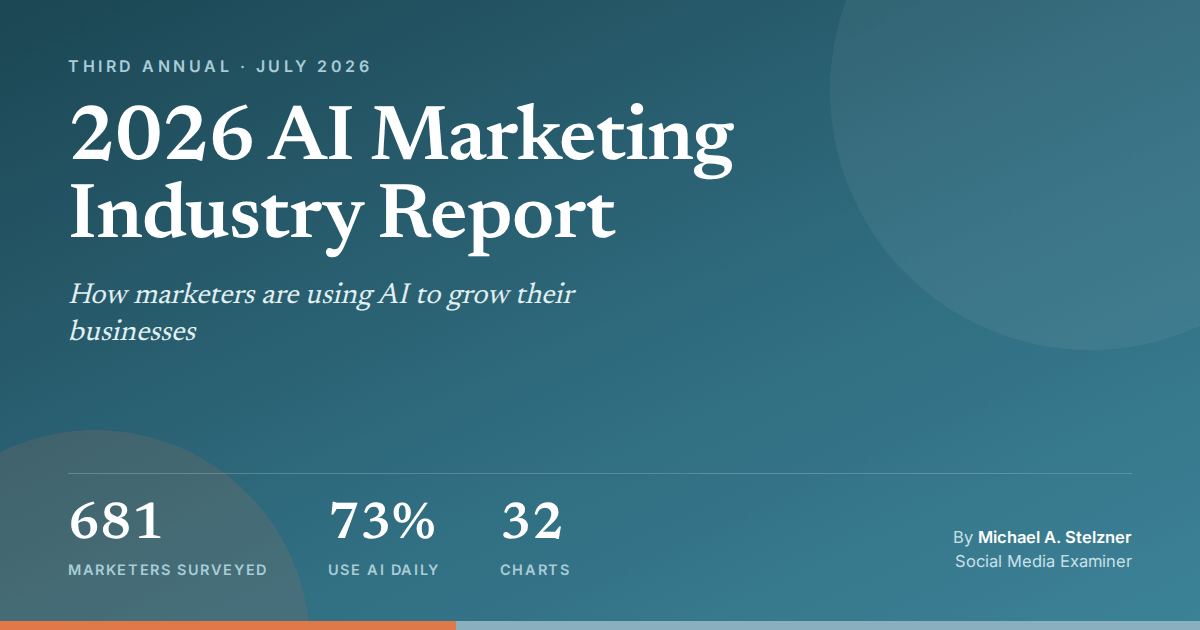
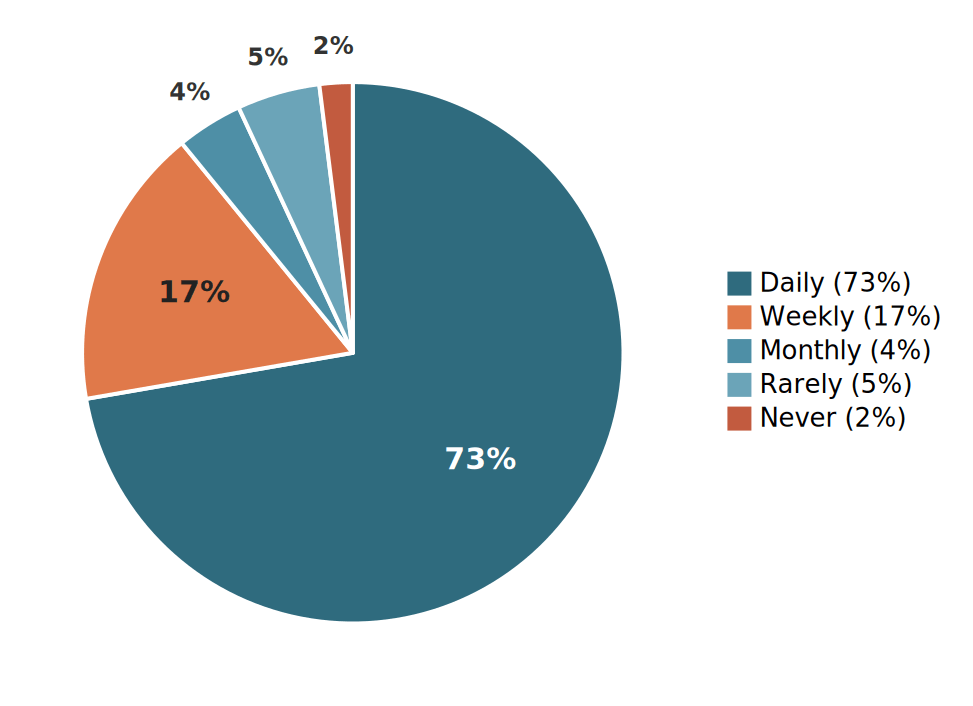
Today, that number stands at a staggering 73%.
This is no longer a trend, a fleeting fad, or a corporate buzzword cycle. It is a structural transformation. According to the newly released 2026 AI Marketing Industry Report—compiled from data provided heavily by lean enterprises—AI has officially graduated from a "nice-to-have" utility to the core operational backbone of modern business. Crucially, this research cuts through the enterprise-level fog. With 60% of survey respondents operating in organizations consisting of ten or fewer people, this data does not reflect the bloated budgets of Fortune 500 corporations. It reflects Main Street. It reflects solo founders, boutique agencies, and lean local businesses.
What the comprehensive data reveals is both surprising and deeply empowering: small business owners do not need sprawling departments, millions in venture backing, or formal corporate training to win with AI. They just need curiosity, pragmatism, and a willingness to experiment.
Below is an investigative breakdown of the five eye-opening findings from the 2026 report that are redefining how small businesses compete, survive, and scale.
Detailed Chronology: The Rapid Ascent of Daily AI Integration
To understand where small business marketing stands today, one must chart the velocity of its adoption over the past 24 months. The shift from hesitant exploration to mandatory utility represents one of the fastest technology curves in modern commercial history.
The 2024 Baseline: Curiosity and Skepticism
In the early post-ChatGPT landscape, AI was largely treated as an assistant for drafting rough copy or brainstorming blog titles. In 2024 industry tracking, only 37% of marketers integrated AI into their daily workflows. A significant minority—23%—rarely or never touched the technology, viewing it as unreliable, legally perilous, or simply irrelevant to their specific niche. Training was virtually nonexistent, and corporate governance policies were sluggish, leaving employees to sneakily test tools on personal devices.
The 2025 Inflection Point: Mainstream Normalization
By the following year, the friction began to melt away. As user interfaces improved, multimodal capabilities expanded, and specialized vertical tools hit the market, daily usage crossed the 50% threshold. The conversation shifted from "Is AI a passing trend?" to "How do we keep our team from falling behind competitors who use it?" The free-tier era began its decline, as professionals realized that professional-grade output required paid subscriptions to frontier models.
The 2026 Reality: The Ubiquitous Standard
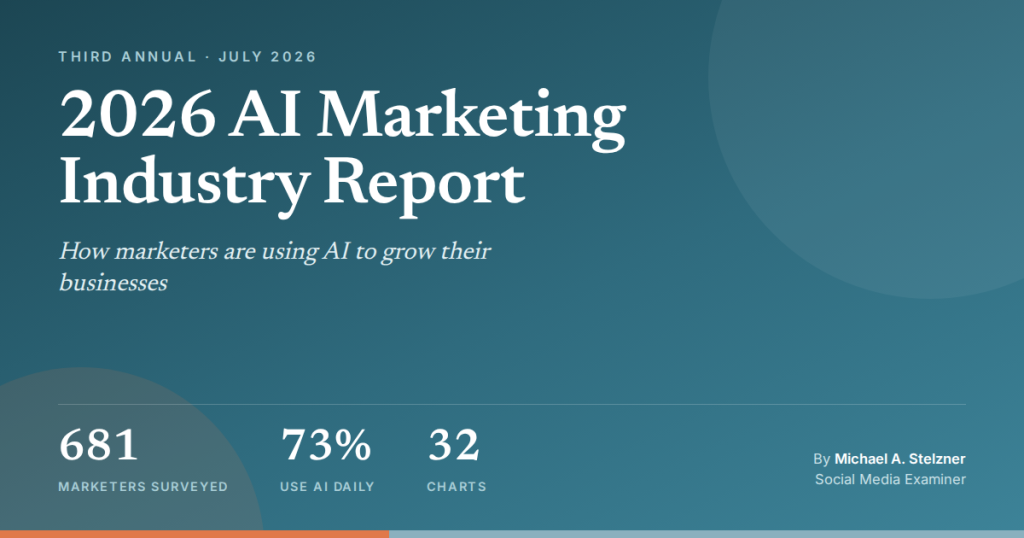
Today, the numbers speak for themselves. The 2026 report reveals that 73% of marketers now use AI every single day, while a massive 90% utilize it at least on a weekly basis. Meanwhile, the group of holdouts—those who rarely or never touch AI—has cratered to a mere 7%.
Furthermore, the momentum shows no signs of plateauing. 84% of respondents report that their AI usage increased over the past year, and 78% expect their reliance on the technology to grow further in the months ahead. The train has left the station, and for small businesses operating on tight margins, keeping pace is no longer optional.
Supporting Context & Metrics: Breaking Down the Five Core Findings
The 2026 report is packed with 32 distinct charts detailing platform preferences, shifting software loyalties (such as the migration from ChatGPT to models like Claude), and psychological barriers to adoption. However, five overarching findings demand the immediate attention of every business owner.
1. AI Is the New Normal (And the Window to Lead Is Narrowing)
The transition of AI from a peripheral tool to a foundational layer of business infrastructure is complete. With 90% weekly utilization, the market has segmented into those who wield AI natively and those who are struggling to catch up.
- The Opportunity: Despite high adoption rates, 84% of practitioners say their usage grew over the past year, proving that mastery is a sliding scale. Even if you feel behind, the depth of utilization across the industry is still shallow enough that early-to-intermediate adoption can yield immediate competitive advantages.
2. The DIY Revolution: No Budget, No Training, No Problem
One of the most persistent myths of the tech industry is that advanced tools require massive enterprise budgets and certified corporate training departments. The 2026 data shatters this misconception entirely.
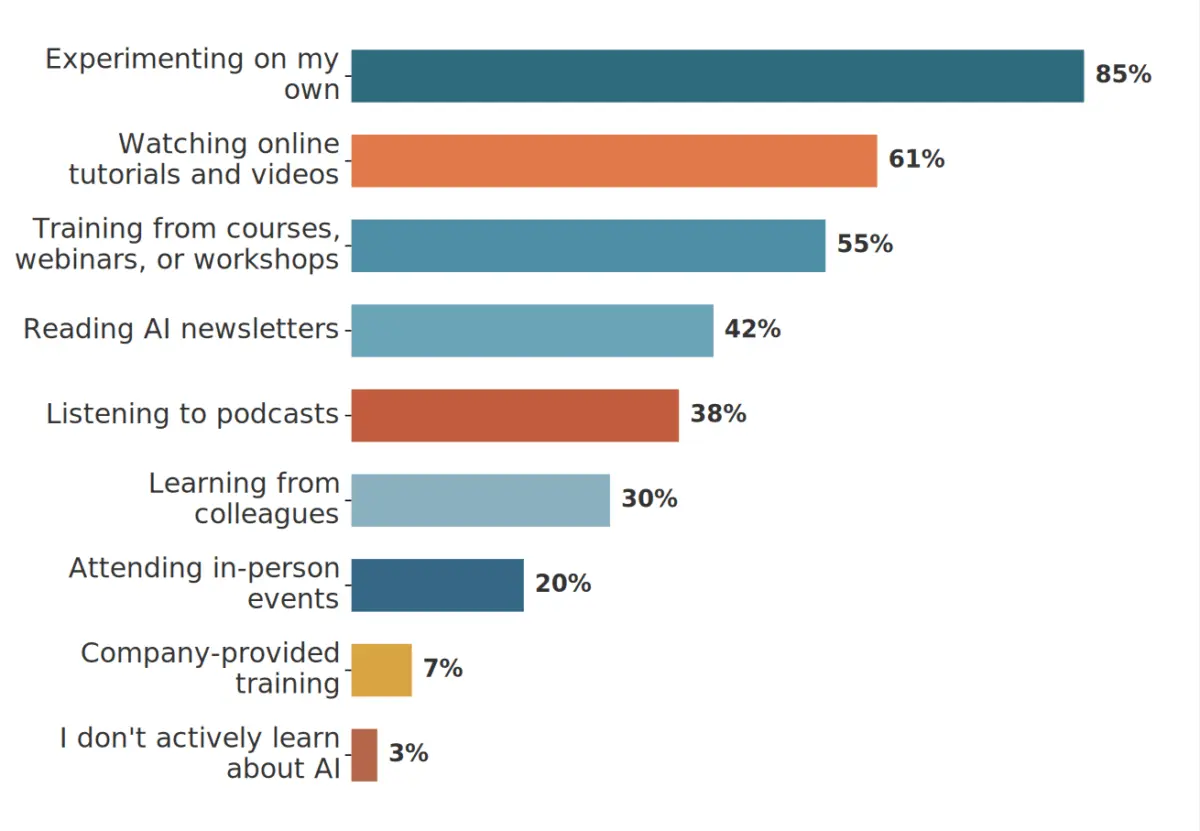
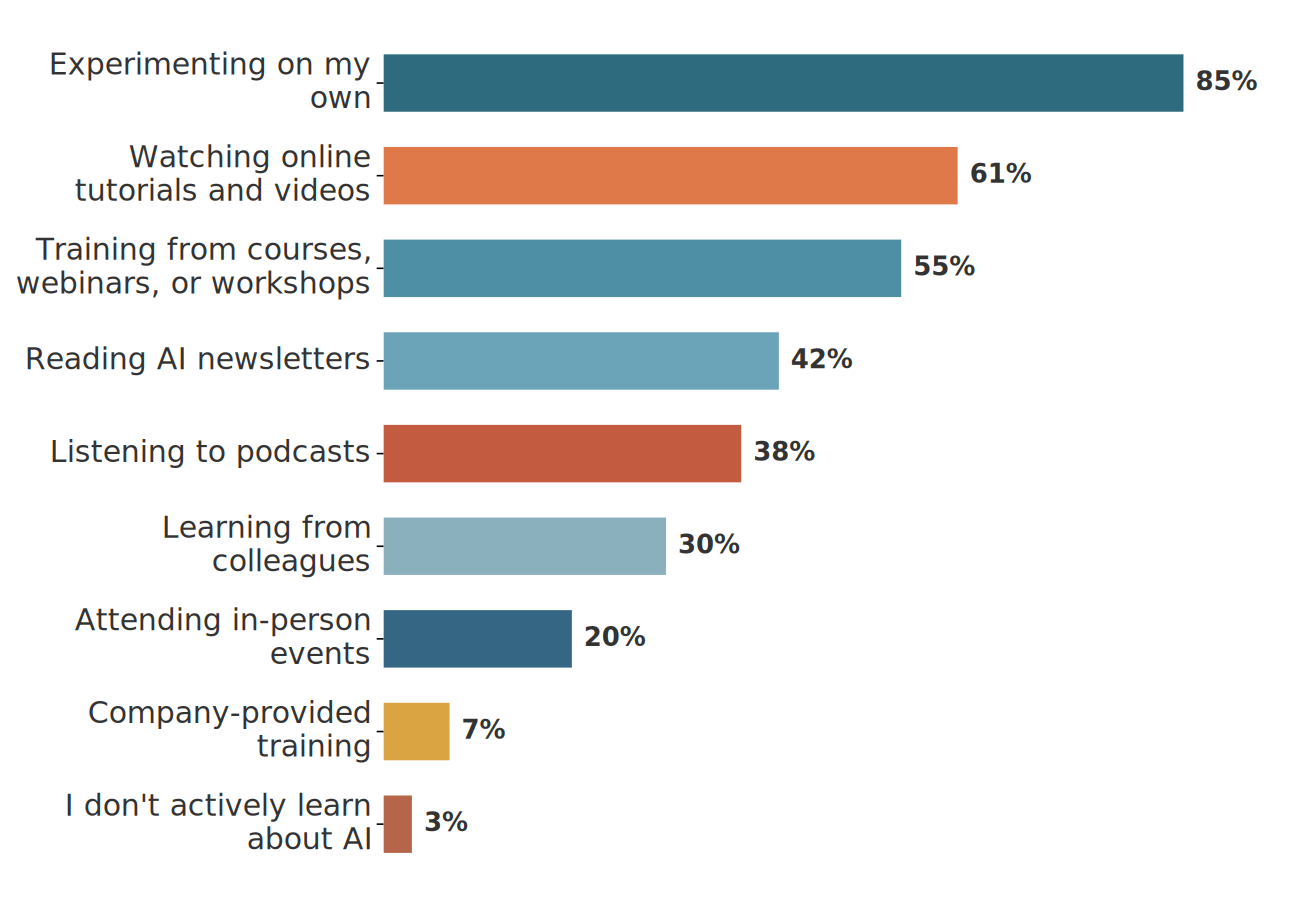
- The Learning Curve: When asked how they learned to master AI, 85% of respondents pointed to independent experimentation. By contrast, a paltry 7% received formal, company-provided training.
- The Financial Reality: 53% of marketers are spending their own personal money to secure advanced AI capabilities, with 85% paying for tools in some capacity.
- The Ownership Model: When asked who spearheads AI adoption within their organizations, 55% of respondents answered simply: "Me." For small business owners, this is business as usual. You have always been your own research-and-development department. In the AI era, corporate America is finally operating like a bootstrapped startup.
3. The Value Paradox: High Productivity, Zero Measurement
Perhaps the most fascinating psychological tension in the report lies in the disconnect between perceived utility and quantifiable metrics.
- The Sentiment: 86% of marketers strongly agree that AI saves them time, and an identical 86% state that it directly boosts their overall productivity.
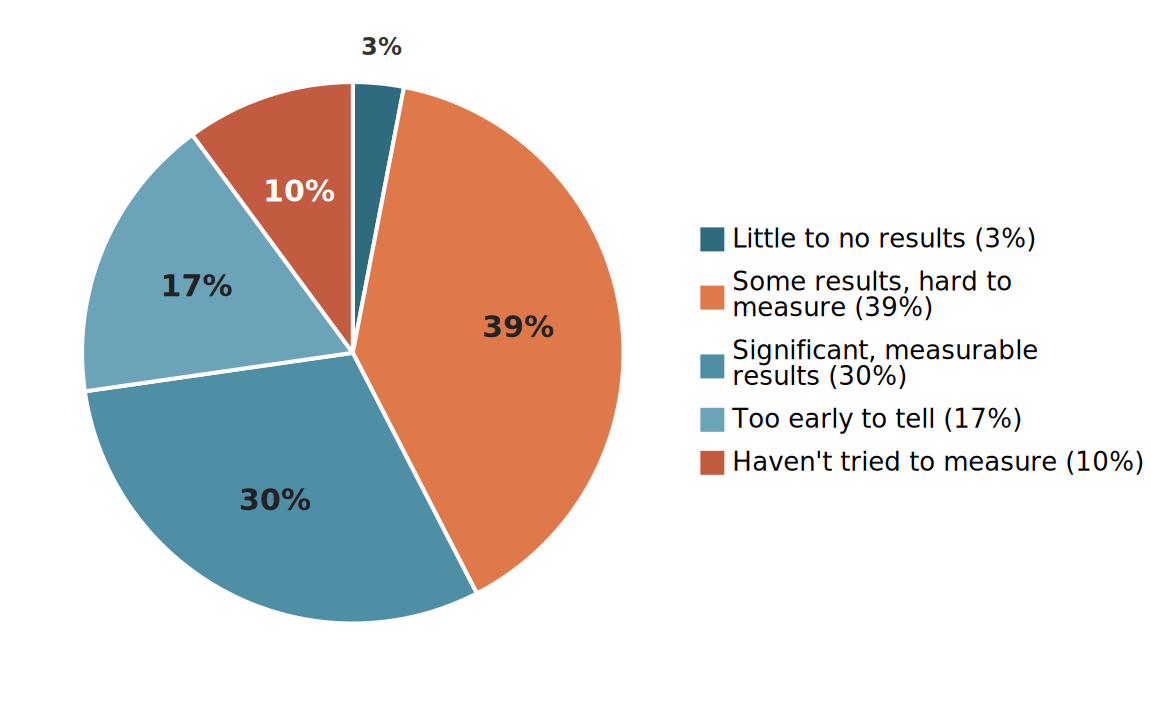
- The Metric Gap: When asked to prove these gains with hard data, the confidence evaporates. Only 30% can point to significant, measurable results. Another 39% admit they see qualitative improvements but cannot quantify them, while 10% have never even tried to measure the impact.
- The Strategic Advantage: This measurement gap is a goldmine for savvy entrepreneurs. By simply tracking tangible metrics—such as hours saved per week, content velocity, or customer acquisition cost—you instantly place yourself in the top 30% of operators who treat AI as an accountable business investment rather than a magic trick.
4. The Video Frontier: The Ultimate Untapped Opportunity
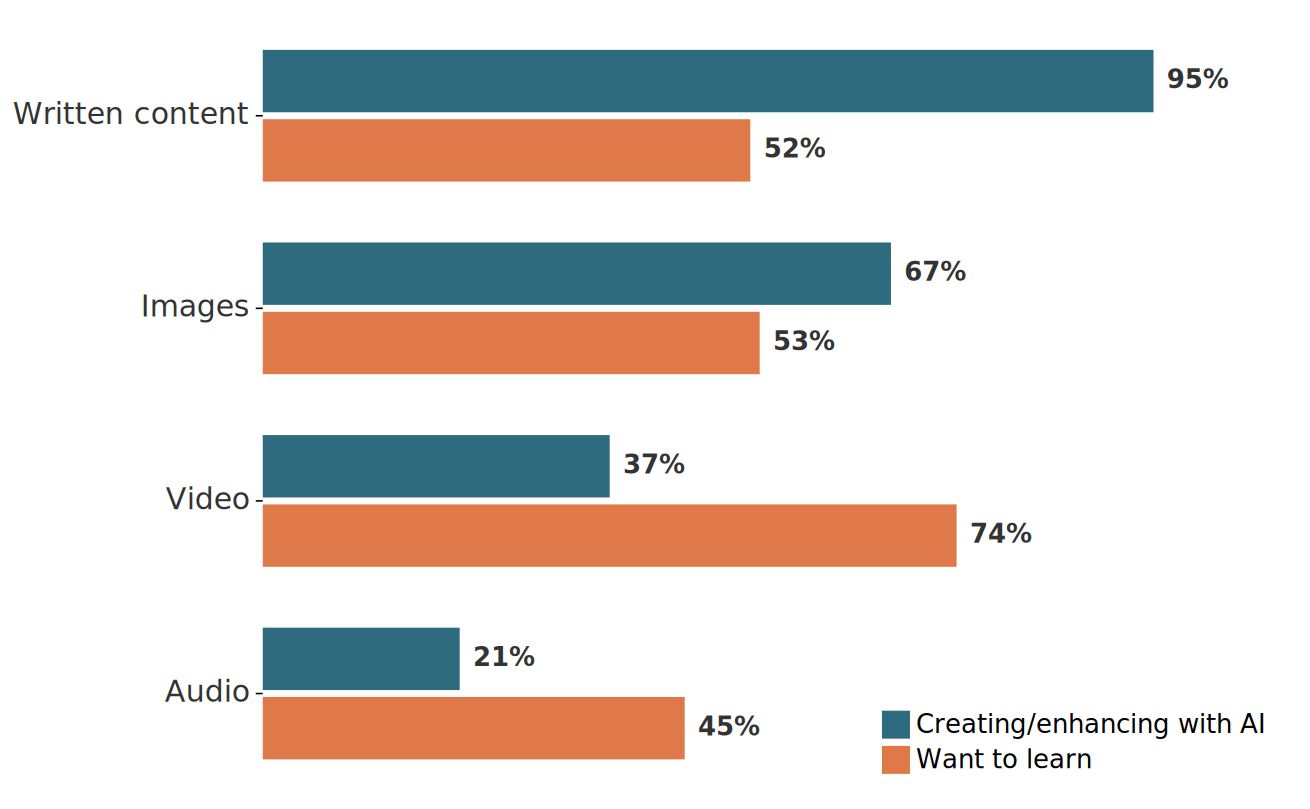
While text-based generation has reached near-saturation (95% of marketers use AI for written content), visual media tells a completely different story.
- The Adoption Gap: Only 37% of marketers currently use AI for video production. Yet, video is the #1 content type marketers want to learn to create (74% demand). This represents a staggering 37-point gap between desire and execution—the largest disconnect measured in the entire study.
- The Edge: While image creation has surged from 39% to 67% since 2024, video remains the final frontier. Businesses that conquer basic AI-assisted video workflows today will capture audience attention in markets saturated with static text and basic imagery.
5. Autonomous Agents: The Ultimate Small Team Leverage
Introduced as a tracking metric for the first time in the 2026 report, AI agents—systems designed to execute complex, multi-step workflows autonomously without constant human prompting—are poised to disrupt business operations.
- Current Standing: Only 11% of marketers use agents regularly, with 24% actively experimenting.
- Future Intent: However, 44% plan to adopt agents soon, bringing total current and prospective usage to 79%. Furthermore, learning how to leverage AI agents is the single most desired educational topic for 74% of professionals.
- The Small Business Impact: For lean teams, agents represent the ultimate force multiplier. Imagine an autonomous system that monitors inbound leads, drafts contextual email sequences, audits your analytics dashboard, and triages customer service inquiries while you sleep. This is the operational leverage that previously required hiring a dedicated administrative staff.
Official Statements and Industry Insights
Reflecting on the implications of the 2026 findings, report architect and Social Media Examiner founder Michael Stelzner emphasized the grounded, practical nature of the research.
"We surveyed marketers to find out how they’re actually using AI. Not the hype. Not the headlines. The real story," Stelzner noted. "Since 60% of our respondents come from businesses with 10 or fewer people, this isn’t enterprise research. This is your world."
Stelzner stresses that the overarching message for small business owners is one of validation rather than intimidation.
"Everyone feels the value, but almost nobody can prove it yet. That’s not a failure of the technology; it’s a wide-open opportunity for you," he added. "If you start tracking how AI impacts your output—even something as simple as hours saved per week—you’ll be ahead of 70% of marketers who can’t do that yet. Small business marketers deserve data they can act on, free from the corporate noise."
Industry analysts reviewing the report have echoed these sentiments, noting that the democratization of intelligence is shifting the competitive landscape. Micro-businesses can now project the professional polish, output volume, and operational efficiency of mid-market enterprises without scaling their headcount.
Future Outlook: What Main Street Must Do Next
As we look toward the remainder of 2026 and into 2027, the trajectory of artificial intelligence in small business is clear. The era of casual experimentation is giving way to systematic integration.
To capitalize on the insights provided in the latest industry report, small business owners and lean marketing teams should focus on three actionable directives:
- Formalize Your Tracking: Move past the "feeling" of productivity. Establish baseline metrics for content output, customer response times, and overhead cost reductions. By quantifying your AI ROI, you can make disciplined decisions about which paid subscriptions to maintain and which workflows to expand.
- Step Into Video and Agents: Do not get trapped in the comfort zone of text-based prompts. Allocate a small fraction of your weekly schedule to testing AI video creation tools and exploring early-stage autonomous agent frameworks. The early movers in these two categories will capture outsized market share.
- Embrace the DIY Ethos: Stop waiting for a comprehensive corporate rollout or expensive consultants. The industry leaders of today learned by doing, breaking things, and refining their prompts through trial and error. The tools are more intuitive than ever, and your competitive survival depends on your willingness to roll up your sleeves.
The tools that once belonged exclusively to tech giants are now available to anyone with an internet connection and an inquisitive mind. The data proves that Main Street is already adapting. The only remaining question is how you will deploy these findings in your own enterprise.
To explore all 32 charts, platform preference shifts, and deep-dive analytics, the complete 2026 AI Marketing Industry Report is available to read for free.