Executive Overview
The intersection of cloud computing and open-source infrastructure reached a vibrant crescendo in Seoul as Amazon Web Services (AWS) contributors converged with global developer ecosystems at the Open Source Summit Korea 2026 and the co-located MCP DevSummit Seoul 2026. Over four high-impact days, the event served as a major touchpoint for the Linux Foundation’s most prominent data-centric communities, most notably OpenSearch and Valkey.
This gathering was far more than a routine developer meetup; it represented a strategic convergence of enterprise-grade reliability and community-led innovation. Against the backdrop of rapid technological shifts in Asia’s tech hubs, AWS leveraged the platform to showcase deep integrations and recent milestone releases for both OpenSearch 3.7 and Valkey 9.1. By anchoring these announcements in real-world use cases and fostering direct engagement through localized user groups, AWS underscored its ongoing commitment to open-source governance, transparent collaboration, and high-performance computing at scale.
This report provides a comprehensive examination of the events in Seoul, detailing the architectural breakthroughs of OpenSearch 3.7 and Valkey 9.1, analyzing their deployment on managed AWS infrastructure, and exploring the strategic trajectory of open-source communities in the region.
Detailed Chronology: The Seoul Summit Experience
The four-day convergence in Seoul brought together thousands of developers, system architects, and project maintainers from across the globe, with a heavy emphasis on contributions from the robust Korean open-source community.
Days 1 and 2: Foundations and Community Engagement
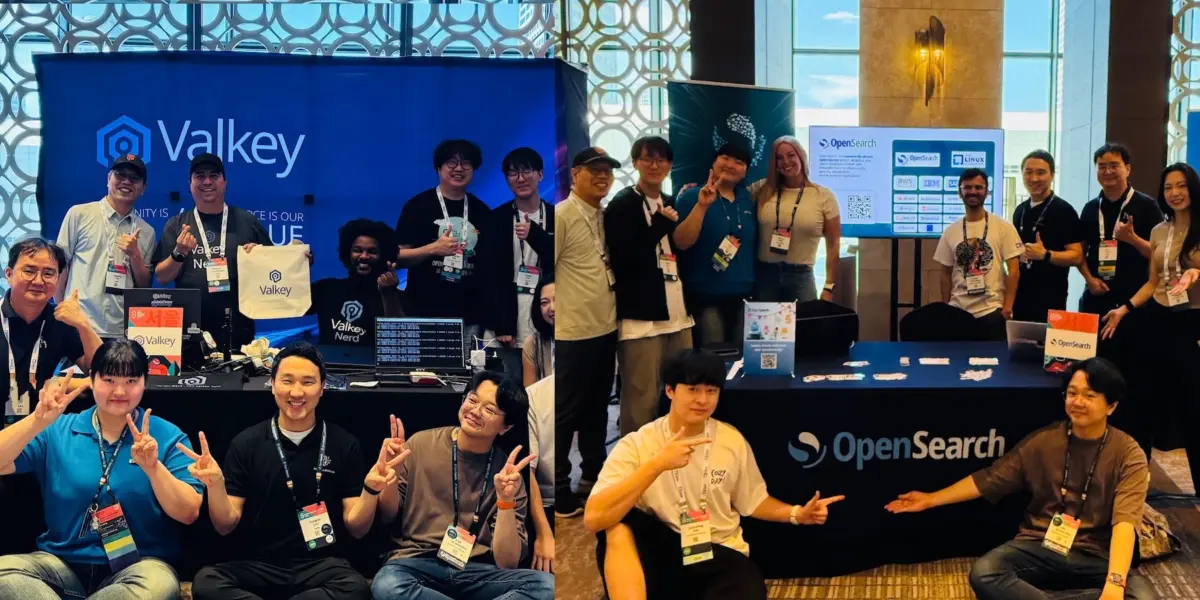
The summit kicked off with keynote presentations emphasizing the critical role of collaborative development models in shaping modern enterprise architecture. AWS contributors, working side-by-side with local open-source champions and community leaders, manned dedicated project booths for OpenSearch and Valkey.
A central highlight of the early schedule was the active participation of Korean OpenSearch community leaders. Rather than acting merely as observers, local volunteers drove technical discussions, shared migration stories, and facilitated hands-on troubleshooting sessions for developers grappling with petabyte-scale observability challenges. These grassroots efforts culminated in a vibrant local user group meetup, where developers exchanged best practices on query optimization, cluster scaling, and multi-tenant isolation strategies.
Days 3 and 4: Deep Technical Dives and Future Roadmaps
The latter half of the summit shifted toward granular engineering challenges. Sessions at the MCP DevSummit Seoul 2026 tackled emerging paradigms in machine learning operations (MLOps), model context protocols, and high-throughput caching architectures.
AWS engineers led workshops demonstrating how unified telemetry—combining logs, metrics, and traces into a single interface—fundamentally alters how site reliability engineering (SRE) teams manage complex microservices. Simultaneously, database specialists deep-dived into Valkey’s newly optimized I/O threading model, illustrating how fine-grained memory optimizations can translate into massive cost savings for enterprise workloads running high-frequency read/write operations.
Supporting Context & Metrics: OpenSearch 3.7 and Valkey 9.1
To fully appreciate the excitement surrounding the Seoul summit, one must examine the technical leaps embodied in the recent software releases highlighted during the event. Both OpenSearch and Valkey have achieved critical performance milestones in their 2026 iterations, directly addressing the scaling bottlenecks faced by modern cloud-native enterprises.
+-----------------------------------------------------------------------------------+
|                        2026 OPEN SOURCE PERFORMANCE MILESTONES                    |
+-----------------------------------------------------------------------------------+
|                                                                                   |
|  OPENSEARCH 3.7 (Released June 9, 2026)                                           |
|  ├── Unified Interface: Logs, traces, and metrics under a single pane of glass    |
|  └── Vector Retrieval: Up to 5.5x faster search performance                       |
|                                                                                   |
|  VALKEY 9.1 (Released May 19, 2026)                                               |
|  ├── Throughput Boost: Up to 17% increase via redesigned I/O threading model      |
|  └── Memory Efficiency: Up to 20% reduction for strings under 128 bytes           |
|                                                                                   |
+-----------------------------------------------------------------------------------+
OpenSearch 3.7: Redefining Enterprise Search and Observability
Released on June 9, 2026, OpenSearch 3.7 introduced a suite of powerful capabilities designed to eliminate data silos. Enterprise observability has historically suffered from fragmentation, requiring separate tools for log ingestion, trace analysis, and metric monitoring. OpenSearch 3.7 bridges this gap by introducing unified tools that allow engineers to query, set up automated alerts, and track Service Level Objectives (SLOs) across all three telemetry pillars within a single, cohesive interface.
Crucially for artificial intelligence and machine learning applications, OpenSearch 3.7 dramatically accelerated vector search operations. The platform now delivers vector retrieval speeds up to 5.5x faster than previous iterations. This performance leap is paramount for organizations deploying semantic search, Retrieval-Augmented Generation (RAG) pipelines, and recommendation engines that rely on high-dimensional vector embeddings.
Building upon these open-source advancements, AWS announced on July 30, 2026, the general availability of OpenSearch 3.7 on Amazon OpenSearch Service. Fully managed deployments now benefit natively from these enhanced vector search capabilities, alongside refined search relevance algorithms and advanced Query Insights tools designed to diagnose and optimize slow-running queries in real time.
Valkey 9.1: Unleashing High-Performance Key-Value Storage
As an open-source, high-performance key-value datastore capable of powering caching layers, messaging queues, and primary databases, Valkey has rapidly solidified its position as a bedrock technology for high-speed workloads. The release of Valkey 9.1 on May 19, 2026, represented a major architectural refinement.
Valkey 9.1 introduced a redesigned I/O threading model that optimizes network handling and request parsing, resulting in a throughput increase of up to 17% under heavy concurrent loads. Furthermore, the development team implemented aggressive memory footprint reductions, slashing memory consumption by up to 20% for string allocations under 128 bytes. For large-scale distributed caches containing billions of small keys, this translates to tangible hardware cost reductions and denser cluster packings.
Reflecting its enterprise readiness, AWS rolled out Valkey 9.1 on Amazon ElastiCache on June 23, 2026. Available for node-based clusters, this managed integration brings Valkey’s superior throughput and memory efficiency to AWS customers, while layering on robust security controls, automated failover, and strict access management tailored for complex multi-tenant cloud environments.
Official Statements and Community Perspectives
The collaborative ethos of the Linux Foundation projects was a recurring theme throughout the Seoul event. Industry leaders and community advocates emphasized that the longevity and robustness of modern open-source projects depend heavily on active, bidirectional dialogue between core maintainers, enterprise backers, and everyday developers.
"The velocity of innovation we are seeing in both the OpenSearch and Valkey ecosystems is a direct result of open, community-driven governance," noted a prominent Linux Foundation open-source project leader during the summit. "Events like Open Source Summit Korea and MCP DevSummit Seoul provide the irreplaceable human connection needed to align disparate use cases into a unified technical roadmap. Having major cloud providers like AWS actively participating not just as sponsors, but as active code contributors and community facilitators, ensures these projects remain resilient, secure, and globally scalable."
Local community organizers in Seoul echoed these sentiments, highlighting the empowering nature of user group meetups. By providing a localized forum for Korean developers to discuss architectural patterns, share performance tuning benchmarks, and voice feature requests directly to core contributors, the summit bridged the gap between global project development and regional engineering needs.

AWS engineering representatives reiterated their dedication to the open-source model, emphasizing that upstream contributions remain a core tenet of their product strategy. By ensuring that upstream improvements flow rapidly into managed services like Amazon OpenSearch Service and Amazon ElastiCache, AWS aims to provide developers with the absolute best of both worlds: the freedom and innovation velocity of pure-play open source, combined with the operational peace of mind of fully managed cloud infrastructure.
Future Outlook: The Road Ahead for Open-Source Infrastructure
As the technology landscape moves deeper into an era defined by artificial intelligence workloads, real-time data streaming, and hyperscale microservices, the role of foundational data infrastructure has never been more vital. The developments showcased at Open Source Summit Korea 2026 point toward several clear trends for the future of enterprise software.
1. The Convergence of Search, Analytics, and AI
With vector search speeds increasing exponentially and observability tools consolidating into single-pane interfaces, tools like OpenSearch are transitioning from traditional log-management utilities into cognitive infrastructure hubs. As enterprises increasingly build generative AI applications that require real-time grounding against internal documentation and operational data, the integration of advanced vector capabilities into core search engines will accelerate.
2. Extreme Optimization for Distributed Caches
The memory efficiency and threading breakthroughs pioneered in Valkey 9.1 signal a broader industry focus on hardware sustainability and cost optimization. As cloud budgets face increased scrutiny, datastores that can squeeze higher throughput out of smaller footprints will dominate modern application architectures. We can expect future iterations of Valkey to focus heavily on advanced multi-threading topologies, zero-copy memory management, and even tighter integration with cloud-native orchestration frameworks.
3. Deepening Global Collaboration
The success of the Seoul summits demonstrates the maturation of regional open-source ecosystems in Asia. Rather than merely consuming Western-led projects, Asian developer communities are increasingly taking on leadership roles, contributing core code, driving architectural discussions, and hosting major global developer forums. This decentralization of project governance strengthens the entire open-source ecosystem, making it more robust against regional disruptions and more reflective of diverse global use cases.
Looking Forward
For developers and enterprise architects looking to stay ahead of the curve, engagement opportunities remain abundant. AWS has encouraged community members to participate in upcoming global and regional events hosted by the OpenSearch Events Calendar and the Valkey Events Portal.
As the weekly rhythms of cloud innovation continue to accelerate, builders can track the latest service launches, feature updates, and technical deep dives via the What’s New with AWS page and the official AWS Blogs. Furthermore, developers seeking to connect with peers, share architectural patterns, and access localized technical content are encouraged to explore upcoming AWS Summits, AWS Community Days, and join the vibrant AWS Builder Center.
The open-source revolution is no longer confined to digital repositories; it lives and breathes in the collaborative energy of community summits worldwide—paving the way for a faster, smarter, and more open digital future.