Executive Overview
In a decisive move targeting the financial arteries of the Russian wartime economy and global illicit commerce, the United Kingdom has issued sweeping economic sanctions against Cryptomus, a chameleonic cryptocurrency platform. According to international cybersecurity experts and blockchain intelligence firms, Cryptomus has long served as a primary transit conduit for laundering funds derived from ransomware attacks, narcotics trafficking, darknet markets, and financial fraud.
Announced on October 8, the U.K. Treasury’s sanctions target Cryptomus—alongside its various corporate aliases and parallel entities including Heleket, VexPay, TokenSpot, and the Tsunami Payments service—freezing any assets held within British financial institutions and legally barring UK-based entities from conducting any business interactions with them.
The punitive measures represent a monumental escalation in the international crackdown on illicit crypto-infrastructure. While Canada previously levied a record-breaking CAD $176 million fine against Cryptomus for blatant anti-money laundering (AML) violations, that monetary penalty ultimately proved uncollectible and ineffective. Legal and financial analysts emphasize that freezing corporate assets and issuing binding sanctions cuts directly to the operational viability of the platform, shifting the regulatory paradigm from punitive slaps on the wrist to targeted commercial eradication.
Furthermore, this enforcement action carries rare geopolitical significance: security analysts point out that it marks the first known instance of a "Five Eyes" intelligence-sharing nation (Australia, Canada, New Zealand, the United Kingdom, and the United States) officially sanctioning a cryptocurrency enterprise originally incorporated within the borders of another Five Eyes jurisdiction.
Detailed Chronology: Evolution of an Elusive Payment Processor
1. The Genesis and Metamorphosis (2022–2024)
Emerging on the digital landscape in 2022, Cryptomus—initially operating under corporate umbrellas such as Certa Payments and Xeltox Enterprises—quickly positioned itself as an indispensable utility for Russian illicit enterprise.
By bypassing rigorous identity verification protocols, Cryptomus established itself as a preferred checkout and payment-routing engine for dozens of darknet Russian cryptocurrency exchanges and underground marketplaces. These illicit vendors openly hawked everything from advanced cybercrime-as-a-service packages to narcotics and stolen credentials.
2. The Canadian Investigation and the Birth of "Heleket"
In October 2025, Canadian regulatory authorities cracked down on Cryptomus, issuing a staggering CAD $176 million fine for severe and systemic anti-money laundering non-compliance. Investigators discovered that Cryptomus shared a physical address in Vancouver with dozens of other phantom foreign currency dealers and money-transfer operations—none of which maintained a genuine operational footprint at the location.
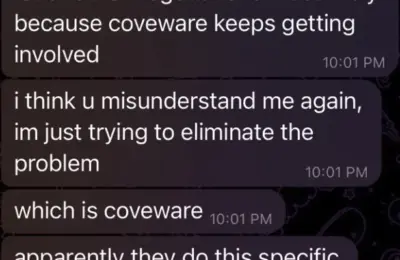
Rather than folding under regulatory pressure or instituting robust Know-Your-Customer (KYC) standards, the platform’s operators adopted a multi-pronged evasion strategy. Cryptomus formally appealed the Canadian penalty while concurrently launching a parallel, no-KYC payment-processing service branded as Heleket. While some legitimate volume dipped when Cryptomus briefly experimented with baseline KYC rules, Heleket seamlessly absorbed the overflow of illicit transactions, ensuring that darknet merchants, ransomware actors, and sanctions-evading Russian institutions suffered virtually no operational downtime.
3. The U.K. Sanctions and Immediate Operational Fallout (October 2026)
The tipping point arrived on October 8, when the U.K. government published formal economic sanctions targeting the entire cluster of companies orbiting Cryptomus and Heleket.
The impact on the platform’s infrastructure was swift and dramatic. Within hours of the announcement, user-support channels and automated administration bots operated by Cryptomus and Heleket on Telegram began throwing errors. Support agents scrambled to deflect mounting panic from users, publicly claiming—despite overwhelming blockchain attribution evidence—that Heleket maintained no operational or corporate affiliation with Cryptomus. Concurrently, automated transaction processing grids ground to a halt, leaving merchants and cybercriminals stranded with frozen funds and crippled APIs.

Supporting Context & Metrics: Tracing the Trillions
To understand the sheer magnitude of the threat posed by Cryptomus, industry analysts have mapped its transactional history through granular blockchain forensics.
Financial Scale and Illicit Volume
In April 2026, leading blockchain analysis firm TRM Labs released an intelligence dossier revealing that Cryptomus had processed upwards of $7 billion in cumulative transaction volume since its inception in 2022. This staggering figure encompassed not only standard commercial crypto flows, but also direct transactions tied to:
- Child Sexual Abuse Material (CSAM) vendors operating on localized underground forums.
- International terrorist financing networks seeking to obfuscate cross-border donations.
- Global human trafficking operations utilizing stablecoins for rapid, untraceable settlements.
Chainalysis Insights on the Russian Wartime Economy
Simultaneously, blockchain intelligence giant Chainalysis published metrics underscoring how Cryptomus mutated into a vital financial life raft for the Russian state, helping domestic entities sidestep Western banking restrictions imposed in the wake of the invasion of Ukraine.
"Cryptomus and Heleket have emerged as major payment hubs for illicit activity," Chainalysis noted in an official advisory. "Together, these services received more illicit funds across tracked categories than the mixers in our dataset, and the number of illicit counterparties surged to more than 900 in a single month in late 2025."
The data illustrates a structural shift in cybercrime finance: rather than relying strictly on decentralized, high-risk privacy mixers (such as Tornado Cash), threat actors increasingly weaponized pseudo-legal, centralized payment gateways that masked illicit utility behind sleek web interfaces and merchant-facing APIs.
Official Statements and Expert Analysis
The U.K. sanctions have drawn widespread acclaim from the global cybersecurity and financial investigation communities, who have long argued that standard administrative fines are fundamentally unequipped to handle digital asset entities operating across borderless cloud networks.
The Superiority of Sanctions Over Fines
Prominent blockchain analyst and investigator Richard Sanders, who spent months painstakingly mapping out the opaque payment infrastructure of Cryptomus and transacting undercover with its merchant base, highlighted the distinct legal advantage of economic sanctions over civil monetary penalties.
Writing on professional networks following the U.K. Treasury’s announcement, Sanders noted:
"A fine doesn’t stop a cryptocurrency payment processor from processing payments. Sanctions kill the operation. The distinction matters."
Sanders emphasized that because Canada’s CAD $176 million fine was ultimately uncollectible against shell entities incorporated through paper proxies, the platform simply shrugged off the penalty and continued business as usual under the Heleket brand. Conversely, U.K. asset freezes and prohibitions against British financial infrastructure strike at the root of global liquidity access.

Breaking New Ground in International Enforcement
Furthermore, Sanders pointed out the historic nature of this multilateral coordination. For the first time, a "Five Eyes" intelligence-sharing nation has taken direct regulatory action against a cryptocurrency enterprise nested inside another member’s jurisdictional boundaries—highlighting an unprecedented willingness among Western allies to pierce corporate veils regardless of where paper registrations originate.
The Phantom Regulators: Unraveling the Corporate Shell Game
One of the most compelling aspects of the Cryptomus investigation is the labyrinthine corporate architecture that granted the platform its illusory aura of legitimacy. How did a shell operation processing billions in illicit funds manage to secure corporate registrations and banking credentials across Western jurisdictions?
The Western Sahara Connection
Deep-dive investigations into the ownership lineage of Certa Payments (the original parent company of Cryptomus) revealed a bizarre intersection of geopolitical obscurity and corporate fraud.
The sole shareholder of Certa Payments was identified as a 25-year-old Ukrainian national. Alongside her role at Cryptomus, she simultaneously helmed several other front companies, including the WS Management and Advisory Corporation.
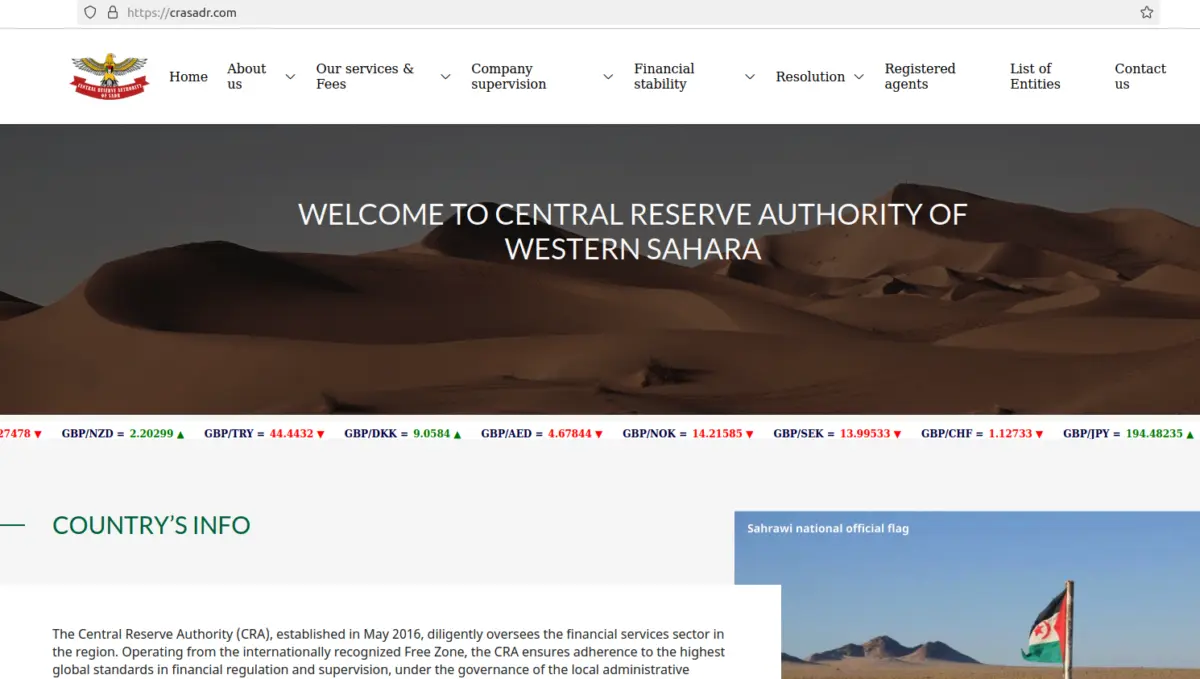
According to its promotional materials, WS Management and Advisory Corporation billed itself as an official regulatory body possessing exclusive authority to issue operational licenses for cryptocurrency exchanges, foreign exchange (Forex) brokers, and online gaming operations. However, this purported regulatory authority was positioned within the Western Sahara—a disputed territory in northwest Africa that lacks widespread international recognition as a sovereign nation.
Fabricated Oversight Bodies
The regulatory front operated out of domains such as crasadr.com, which purported to represent the Central Reserve Authority of the Western Sahara. This fake authority publicly listed the shell entities—including various high-risk crypto platforms—that it had supposedly vetted and approved.
Forensic web mapping further exposed that Certa Payments’ historical digital footprint (certa.website) shared a physical hosting server with 12 distinct domains, including rasd-state.ws. This network acted as a self-contained, synthetic regulatory ecosystem, generating fake certificates of compliance that allowed shady crypto processors to pass rudimentary compliance checks with traditional banking partners and payment aggregators.
Future Outlook: The Road Ahead for Cross-Border Crypto Enforcement
The coordinated U.K. sanctions against Cryptomus, Heleket, VexPay, TokenSpot, and the Tsunami Payments service mark a critical turning point in the global policing of decentralized finance (DeFi) and centralized crypto-intermediaries.
What Comes Next?
- Proliferation of Asset Freezes: As global financial intelligence units adopt the playbook demonstrated by the U.K. Treasury, other high-risk payment processors operating in legal gray zones can expect immediate asset lockouts and SWIFT-level blacklisting.
- Whac-A-Mole Realities: While sanctions successfully disrupt infrastructure, threat actors will undoubtedly attempt to rebrand yet again. Intelligence agencies and blockchain analytics firms must maintain real-time attribution capabilities to track future iterations of these laundering networks the moment they spin up new API endpoints.
- Heightened Pressure on Shell Jurisdictions: The exposure of synthetic regulators operating out of disputed territories like Western Sahara will prompt tighter vetting requirements by international corporate registries, making it significantly harder for bad actors to weaponize fake oversight bodies for legitimacy.
Ultimately, the Cryptomus saga demonstrates that while cryptocurrency provides immense flexibility for criminal enterprises and state-sponsored sanctions evasion, advanced blockchain forensics combined with aggressive, multi-jurisdictional sanctions can effectively dismantle even the most chameleonic financial undergrounds.