Executive Overview
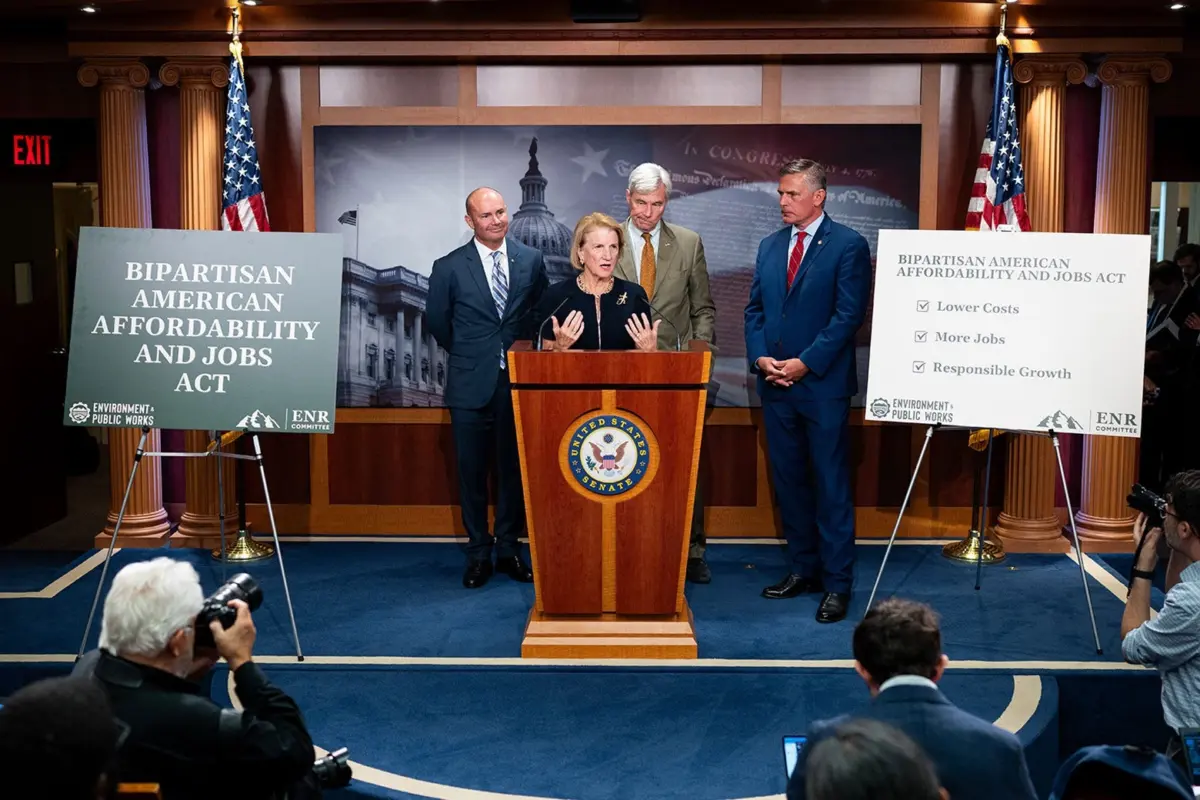
As the 119th Congress barrels through a high-stakes, behind-closed-doors legislative sprint, a sweeping energy package known as the Bipartisan American Affordability and Jobs Act of 2026 (BAAJA) has emerged as one of the most controversial measures of the decade. Touted by its architects as a desperately needed "permitting reform" framework designed to accelerate both renewable energy installations and essential power transmission grids, the bill has paradoxically secured the enthusiastic backing of the fossil fuel lobby, MAGA loyalists, and President Donald Trump himself.
While self-identified progressive senators like Sheldon Whitehouse and Martin Heinrich argue that streamlining federal approvals is a necessary, unavoidable compromise to jump-start America’s clean energy revolution, a massive coalition of legal experts, Indigenous tribes, the NAACP, and environmental organizations are sounding the alarm. Critics argue that BAAJA is a Trojan horse. They contend that the legislation will systematically dismantle bedrock environmental laws, shield major oil and gas developments from financial and legal accountability, and trample tribal sovereignty—all while delivering marginal relief to consumer energy costs.
This deep-dive investigation examines the anatomy of BAAJA, the fractures it has caused within the Democratic Party, the voices of experts fighting its passage, and what this sweeping legislative gamble means for the future of American environmental policy.
Detailed Chronology: How BAAJA Moved from Backrooms to the Senate Floor
The trajectory of BAAJA reflects the frantic pace and unusual alliances characteristic of late-stage congressional lame-duck sessions.
- Late October 2026: Initial drafts of the permitting reform package begin circulating among select Senate offices. Legal scholars and environmental lawyers, including former Niskanen Center counsel David Bookbinder, immediately flag provisions that would severely restrict judicial review of federal energy permits.
- Early November 2026: Public opposition begins to mount as coalition groups, including the NAACP and various Indigenous tribal nations, review the text. Despite these warnings, momentum builds behind the scenes among a strange-bedfellows coalition of centrist and progressive Democrats and pro-energy Republicans.
- November 11, 2026 (Veterans Day): In an extraordinary break with tradition, the United States Senate convenes on a federal holiday. Lawmakers bicker over whether to fast-track BAAJA or pause to allow for extensive amendments addressing glaring environmental and legal oversights.
- Mid-November 2026: The American Petroleum Institute (API) ramps up its aggressive lobbying campaign on Capitol Hill, notoriously handing out free tacos to promote the legislation. Concurrently, President Trump uses his premium Truth Social platform to champion the bill, while Stephen Miller designates it an urgent legislative priority for the administration.
- November 18, 2026: As the bill prepares to clear the Senate and head to the House of Representatives, growing friction emerges. Democratic Senator Catherine Cortez Masto formally withdraws her initial support following vehement objections from tribes in Nevada, while climate hawks like Whitehouse and Heinrich push forward, wagering that the concessions are worth the price of securing bipartisan buy-in.
Supporting Context & Metrics: The Promise vs. The Reality of "Permitting Reform"
The intellectual foundation of BAAJA rests on a real, widely acknowledged bottleneck in American infrastructure: the clean energy gridlock. According to energy analysts, thousands of gigawatts of solar, wind, and storage projects are currently languishing in federal compliance queues. Because the United States lacks enough interstate high-voltage power lines, green energy cannot be transported efficiently from remote generation sites to urban demand centers.
Permitting reform—a buzzword that gained considerable traction during the Biden administration—sought to address this by expediting bureaucratic reviews. However, critics argue that BAAJA takes a surgical policy tool and turns it into a sledgehammer.
What BAAJA Proposes to Change
- Undermining Bedrock Environmental Statutes: The bill guts key provisions of historic legislation, including the National Environmental Policy Act (NEPA), the Clean Water Act, the Endangered Species Act, the National Historic Preservation Act, and the Clean Air Act.
- Limiting Judicial Recourse: Legal experts point out that BAAJA severely restricts the ability of citizens, local communities, and environmental groups to sue federal agencies over flawed or rushed project approvals.
- Prioritizing Fossil Fuels Under the Guise of Green Energy: While proponents argue the bill is vital for wind and solar, independent modeling by energy think tanks like Rhodium Group suggests the legislation will not significantly lower consumer energy costs, nor will it spur the uniform transmission buildout promised. Instead, a second Trump administration is positioned to use its executive leverage to prioritize pipeline expansions and mining projects while continuing its broader hostility toward renewable energy.
Official Statements and Expert Perspectives
The schism created by BAAJA has pitted influential climate advocates and legal practitioners against one another, revealing deep anxieties about the erosion of institutional checks and balances.
Sarah Lowry, director of geophysics at New South Associates—a Georgia-based firm specializing in identifying cultural and historic sites via Section 106 of the National Historic Preservation Act—expressed profound dismay over how the bill was drafted.
"I don’t disagree that permitting reform is needed, but this bill was developed behind closed doors, and no one asked us what was going wrong with the NHPA and what didn’t work," Lowry explained.
She warned that bypassing Section 106 reviews will have disastrous real-world consequences: "If you don’t identify those cemeteries before groundbreaking, you can’t protect them, and if a cemetery is discovered by a bulldozer, they have to stop their work. Ironically, it would actually be more costly and add more delays than just going through the process where you identify it and then attempt to avoid it. It would decimate cultural resource management in this country."
Prominent environmental voices have been equally vocal. Bill McKibben, a longtime champion of large-scale solar infrastructure, noted that while clean energy buildouts are necessary, BAAJA rolls back decades of environmental protections and threatens tribal sovereignty without guaranteeing substantive, long-term carbon emissions reductions.
Similarly, legal scholar David Bookbinder issued a stark warning in a formal letter to lawmakers, writing that the bill presents "a serious threat to American democracy" by effectively limiting the enforcement of federal laws against any project holding a federal permit.
Future Outlook: A Mandate for Destruction or a Pragmatic Compromise?
The push to pass BAAJA arrives at a paradoxical political moment. Just weeks prior, the 2026 midterm elections demonstrated that American voters harbor a strong appetite for environmental stewardship and sustainability. From Colorado voters decisively rejecting a ballot measure that would have enshrined natural gas production as a constitutional right, to a clean-air advocate winning a congressional seat in the heart of Texas oil country, the electorate signaled resistance to unchecked fossil fuel expansion. Furthermore, the election of Montana’s first Democratic House representative in three decades—a former smokejumper running on a platform of protecting public lands—underscores a disconnect between Washington lawmakers and their constituents.
Yet, despite this electoral feedback, pro-BAAJA Democrats appear determined to rush the bill across the finish line. They operate under the assumption that legislative cooperation with Republicans, however flawed, is a rare commodity worth seizing, even if it hands a departing Trump administration expansive new powers to bulldoze public monuments, bypass historic preservation laws, and lock in decades of greenhouse gas emissions.
As BAAJA prepares to transition from the Senate to the House, the debate exposes a permanent fracture within American liberalism. On one side are "abundance" advocates and pragmatists who believe that bypassing bureaucratic gridlock via market-based deregulation is the only way to build green infrastructure at scale. On the other side are environmental justice advocates, legal scholars, and frontline communities who argue that sacrificing bedrock protections to appease fossil-fuel champions is a Faustian bargain—one that trades the health of the planet and the integrity of American democracy for the illusion of bipartisan progress.