Executive Overview
The cloud computing landscape is undergoing a profound structural evolution, driven by the rapid maturation of generative artificial intelligence and the enterprise demand for unified governance. In a major strategic announcement last week, Amazon Web Services (Web Services, Inc., commonly known as AWS) unveiled the public preview of Amazon Bedrock Managed Agents powered by OpenAI. This development marks a significant bridge between two of the industry’s most dominant forces—AWS’s enterprise-grade cloud infrastructure and OpenAI’s cutting-edge artificial intelligence capabilities.
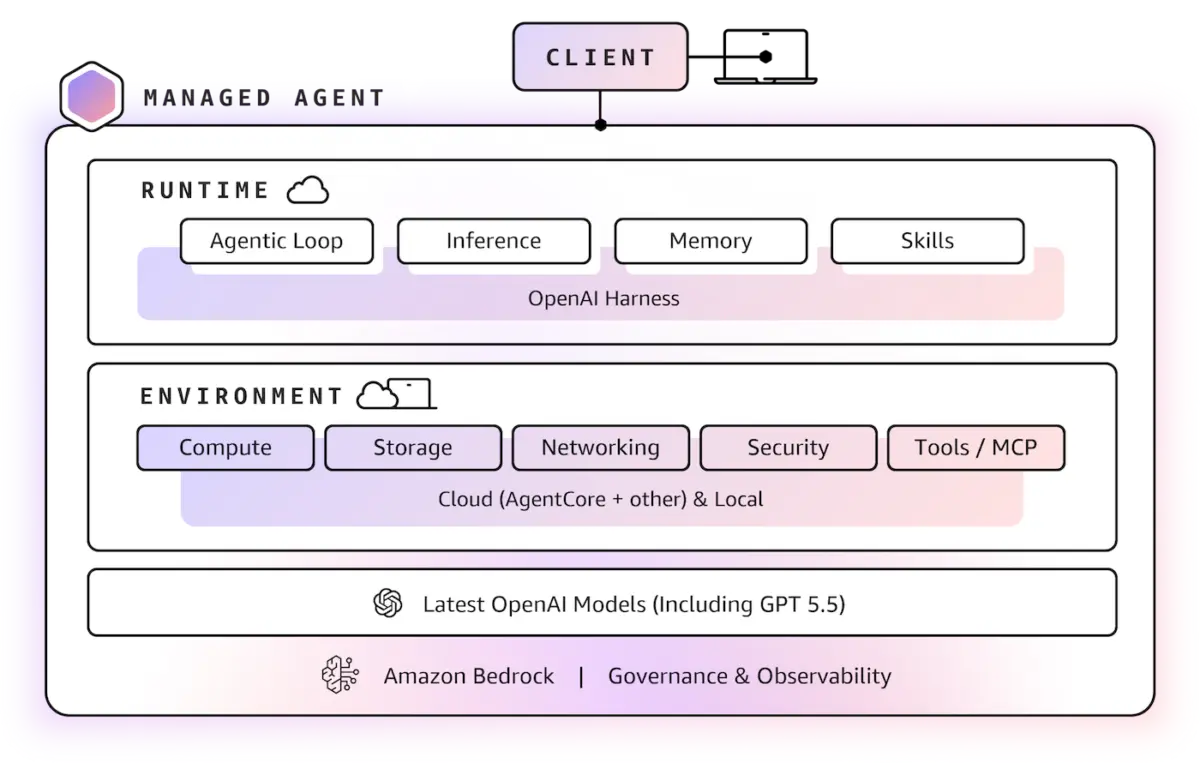
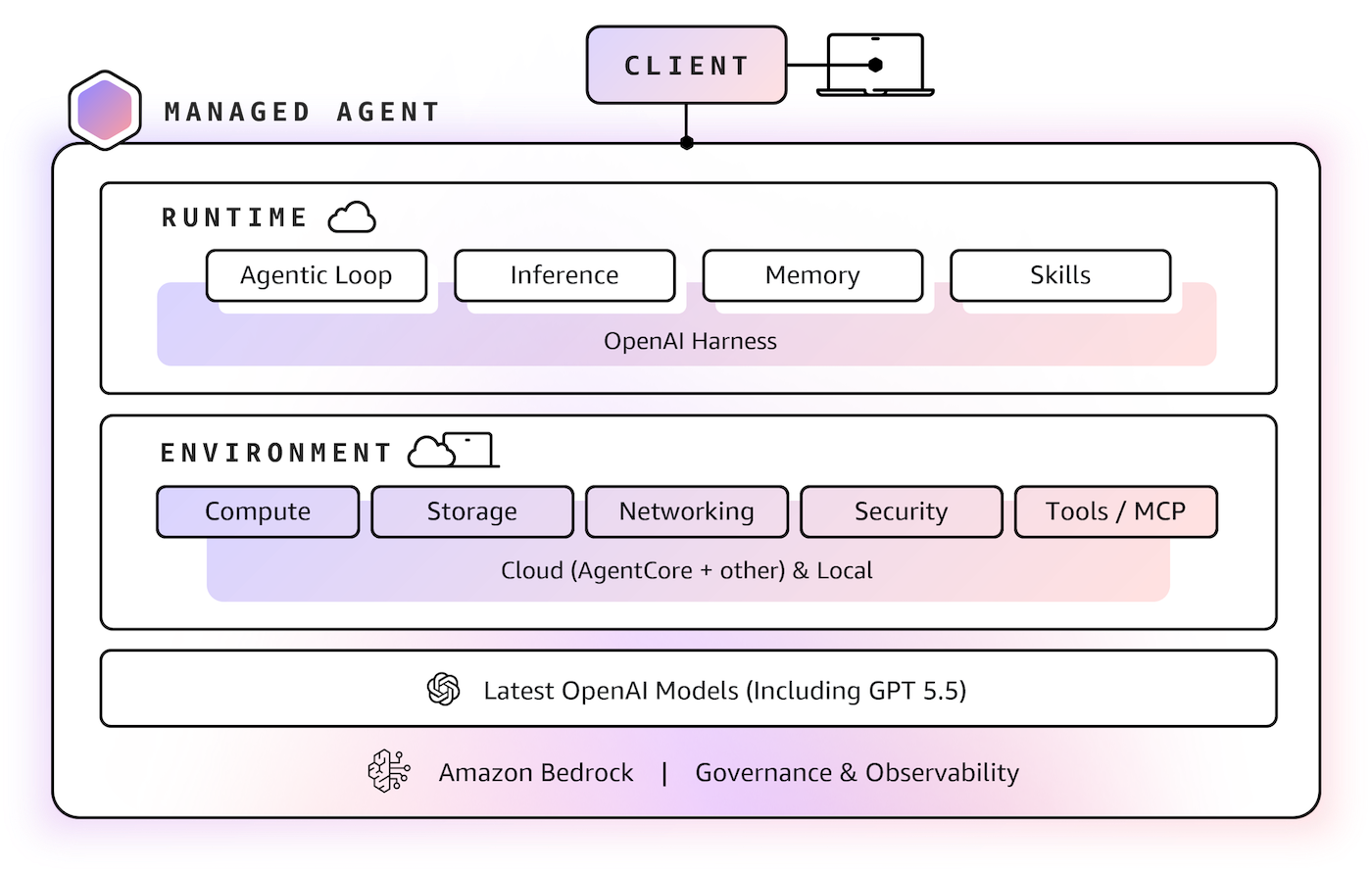
Built upon a customized version of OpenAI’s Agents API, this AWS-native integration allows organizations to construct, deploy, and scale advanced AI agents that operate entirely within the secure boundaries of their existing AWS environments. By leveraging established AWS identity frameworks, granular permissions, and robust governance controls, enterprises can now harness the power of OpenAI models without compromising corporate security mandates or compliance postures.
Simultaneously, AWS continues to refine its overarching product lifecycle, introducing scheduled maintenance, sunset phases, and end-of-support milestones for legacy services. These lifecycle updates reflect a broader, deliberate industry transition toward modernized serverless and managed container architectures. As engineering teams navigate these shifts, AWS has reinforced its commitment to transparent communication, offering dedicated migration pathways and extensive documentation to minimize operational disruption.
This comprehensive report examines the architectural mechanics of Amazon Bedrock Managed Agents, explores the deployment flexibility provided by dual execution environments, analyzes the broader ecosystem implications of recent AWS product lifecycle changes, and outlines the road ahead for developers preparing for upcoming major events such as AWS re:Invent.
Detailed Chronology & Technical Architecture: Amazon Bedrock Managed Agents Powered by OpenAI
The announcement of Amazon Bedrock Managed Agents represents a milestone in cross-ecosystem collaboration. Historically, deploying specialized AI agents required complex middleware, custom API integrations, and fragmented security policies that spanned multiple third-party platforms. With this public preview, AWS has streamlined this workflow by engineering an OpenAI Agents API variant that is natively optimized for the AWS cloud.
Bridging OpenAI Models with AWS-Native Security
Enterprise adoption of generative AI has long been throttled by concerns regarding data residency, access control, and auditability. The new Bedrock integration directly addresses these challenges by embedding OpenAI-driven agents into the native AWS Identity and Access Management (IAM) framework.
- Unified Identity and Access Management: Developers can assign explicit IAM roles and policies to agents, ensuring that an AI agent possesses access only to the specific AWS resources—such as Amazon S3 buckets, Amazon DynamoDB tables, or AWS Lambda functions—required for its designated task.
- Granular Governance and Compliance: Because the agents run within the customer’s AWS perimeter, logging and monitoring mechanisms like AWS CloudTrail and Amazon CloudWatch automatically capture agent activities. This enables complete traceability, satisfying rigorous compliance requirements in regulated sectors such as finance, healthcare, and public administration.
Flexible Execution Environments
To accommodate diverse architectural requirements and development workflows, AWS provides developers with two distinct execution environments for managing their Bedrock Managed Agents:
- Self-Hosted Compute: For development teams seeking maximum control during the prototyping and testing phases, AWS allows the execution environment to be hosted on existing local development machines, customized containers, or alternative compute instances. This flexibility lets engineers debug agent logic locally before promoting workloads to production-grade cloud environments.
- Amazon Bedrock AgentCore Runtime: For production deployments requiring high availability, scalability, and zero infrastructure management, engineers can leverage the Bedrock AgentCore Runtime. This managed runtime environment handles session orchestration, automatic scaling, and configurable, secure storage directly within the customer’s AWS account.
Detailed implementation guides, API references, and architectural blueprints are now available through the official Amazon Bedrock Documentation Portal.
Expanding the Frontier: Model Choice and Ecosystem Growth
Beyond the introduction of managed agents, AWS continues to expand the breadth of foundation models available on Amazon Bedrock. The platform’s philosophy has consistently centered on providing builders with an open, flexible choice of frontier models, enabling organizations to select the precise neural architecture that aligns with their performance, latency, and cost parameters.
The Multi-Model Strategy
The modern generative AI paradigm has decisively shifted away from a one-size-fits-all approach. Different business applications—ranging from real-time customer support chatbots and automated code generation to complex data synthesis and multilingual translation—demand specialized model capabilities. By continuously onboarding new frontier models into Amazon Bedrock, AWS ensures that developers are never locked into a single technological trajectory.
- Optimized Price-to-Performance Ratios: Organizations can dynamically route simpler classification and extraction tasks to smaller, highly efficient models while reserving massive frontier models for intricate reasoning and strategic planning tasks.
- Seamless API Abstraction: Because Amazon Bedrock exposes these diverse models through a unified, consistent API surface, switching between model providers or upgrading to newer model iterations requires minimal code refactoring. This abstraction layer insulates enterprise software development lifecycles from the rapid cadence of upstream AI model releases.
Supporting Context & Lifecycle Metrics: Managing Cloud Evolution
Innovation in cloud computing requires a delicate balance between introducing bleeding-edge capabilities and maintaining the stability of legacy infrastructure. AWS achieves this through its structured Product Lifecycle Changes framework, which provides early visibility into service deprecations, maintenance windows, and end-of-support dates.
Navigating the AWS Product Lifecycle
On September 29, 2026, AWS published updated lifecycle changes designed to help system administrators and cloud architects plan their infrastructure migrations proactively. Understanding these phases is crucial for maintaining operational continuity:

- Maintenance Phase: Services entering this classification remain fully operational for existing users, but become inaccessible to new customers starting October 29, 2026. This grace period allows current users to audit their dependencies and begin planning architectural migrations.
- Sunset Phase: Services entering the sunset stage are actively winding down. AWS provides comprehensive migration guides and recommendations for modern, serverless, or containerized alternatives that offer superior performance and lower total cost of ownership (TCO).
- End of Support: Reached as of September 29, 2026, for designated older versions and legacy features. Beyond this date, technical assistance, security patches, and automated updates are no longer guaranteed for the affected endpoints.
Minimizing Operational Disruption
AWS emphasizes that service availability changes are implemented with a customer-first mindset. Engineering teams are advised to review the AWS Product Lifecycle Changes documentation immediately to cross-reference their active resource inventories against the deprecated feature lists. When in doubt, cloud architects can engage directly with AWS Support or consult service-specific documentation to execute seamless, risk-mitigated migrations.
Official Statements and Industry Perspective
The convergence of managed agent frameworks and enterprise-grade cloud security represents a watershed moment for enterprise software architecture. Industry analysts have long noted that while generative AI models possess unprecedented cognitive capabilities, their enterprise utility has been severely limited by integration friction and security vulnerabilities.
According to commentary published across AWS engineering blogs and community forums, the strategy behind Amazon Bedrock Managed Agents is clear: to abstract away the undifferentiated heavy lifting of AI orchestration while preserving uncompromising security standards.
"Enterprises do not just want smarter AI models; they want AI models that respect their security perimeters, integrate seamlessly with their existing identity providers, and operate transparently within governed environments. By bringing OpenAI’s sophisticated agent APIs into the AWS-native framework of Amazon Bedrock, we are giving builders the best of both worlds—world-class intelligence backed by enterprise-grade trust."
— Channy Yun, Principal Developer Advocate, AWS
This sentiment echoes throughout the broader developer community. By offering dual execution paths—ranging from localized development containers to the fully managed Bedrock AgentCore Runtime—AWS is accommodating the nuanced workflows of startups and Fortune 500 enterprises alike.
Future Outlook: Preparing for re:Invent and the Developer Horizon
As the final quarter of 2026 unfolds, the momentum within the AWS ecosystem shows no signs of slowing. The rapid rollout of generative AI features, combined with ongoing optimizations to core cloud infrastructure, sets the stage for a transformative conference season.
Engaging the Builder Community
AWS continues to foster deep engagement through its expansive network of global events, startup showcases, and developer-focused gatherings. Builders looking to deepen their technical expertise, share innovative architectural patterns, and connect with peers should actively explore:
- Upcoming AWS-Led Events: A diverse array of in-person and virtual workshops, seminars, and technical deep dives designed to upskill engineers on the latest cloud services.
- The AWS Builder Center: An interactive digital hub where developers collaborate, publish open-source solutions, and access curated learning pathways.
- AWS Community Days: Grassroots, technical knowledge-sharing events organized by local user groups around the globe.
- AWS re:Invent: The premier annual cloud computing conference, where thousands of IT leaders, architects, and developers gather to witness the unveiling of AWS’s most significant upcoming innovations, service launches, and strategic roadmaps.
Conclusion
The release of Amazon Bedrock Managed Agents powered by OpenAI, coupled with continuous model expansion and disciplined lifecycle management, underscores AWS’s dedication to empowering developers. By uniting cutting-edge artificial intelligence with robust, enterprise-ready governance, AWS continues to redefine what is possible in the cloud.
Stay tuned to the What’s New with AWS page and the official AWS Blogs for ongoing announcements, technical deep dives, and early access opportunities as we march toward re:Invent and beyond.
Report compiled and written by enterprise technology editorial staff. For continuous updates, check back next Monday for the next installment of the Weekly Roundup.