By Staff Investigative Report
Published November 24, 2026
Executive Overview
The landscape of American capitalism underwent a dark, transformative shift following an unprecedented intervention by the executive branch. President Donald Trump’s direct orchestration of the reinstatement of Jensen Huang as the Chief Executive Officer of Nvidia has sparked a multi-layered crisis, laying bare the vulnerabilities of corporate governance, national security, and regulatory oversight in the artificial intelligence sector.
What began as a corporate implosion involving severe ethical breaches—including reported relationships with a corporate subordinate and an alleged foreign intelligence operative linked to chip-smuggling schemes—has rapidly mutated into a profound systemic shock. By forcing Huang back into the C-suite against the initial judgment of Nvidia’s board of directors, the federal government has effectively signaled a departure from free-market principles toward a de facto command economy.
This development does more than upend traditional corporate hierarchies; it dismantles the fragile guardrails surrounding the most powerful and consequential technology of our era. With the executive branch actively prioritizing short-term stock market gains and geopolitical tech dominance over ethical boundaries, the message to Silicon Valley is clear: as long as you drive the market’s trajectory upward, accountability is entirely optional.
Detailed Chronology: The Fall and Rise of Jensen Huang
The sequence of events leading to Nvidia’s leadership crisis illustrates a stunning collision between national security interests, corporate ethics, and raw political muscle.
- The Scandals Break: Nvidia, the crown jewel of the global artificial intelligence infrastructure, found itself rocked by dual scandals. Investigations revealed that CEO Jensen Huang had engaged in at least two high-risk personal relationships—one with a direct subordinate within the company, and another with an individual suspected of spying for a foreign government actively seeking to bypass U.S. export controls and acquire restricted high-end Nvidia semiconductors.
- The Board’s Initial Stand: Facing potential catastrophic fallout regarding insider trust, intellectual property protection, and compliance with federal export laws, Nvidia’s board of directors took the rare, traditional step of demanding and accepting Huang’s resignation. For a brief moment, the corporate board operated as intended: holding a chief executive accountable for gross ethical lapses and conflicts of interest.
- The National Security Pivot: During Huang’s brief exile, the embattled board scrambled to stabilize the company and address vulnerabilities. They formally established a National Security and Export Control Committee designed to work on safeguarding sensitive chip distribution and mitigating geopolitical threats.
- The Presidential Override: The board’s reprieve was short-lived. Recognizing the critical importance of Nvidia to the broader stock market indexes and framing the global A.I. race as a high-stakes geopolitical conflict akin to a nuclear arms race, President Donald Trump intervened. Eschewing the findings of intelligence agencies and ignoring corporate governance norms, Trump utilized his political leverage to force Huang’s return.
- The Reinstatement: Announcing his triumphant return to the C-suite with presidential backing, Huang was not only restored to his position as President and CEO but also reclaimed his seat on the board of directors—effectively stripping the company of any internal oversight mechanism capable of checking his authority.
Supporting Context & Metrics: The Intersection of Politics, Profits, and A.I.
To fully understand the gravity of the Nvidia situation, analysts must examine the financial and political incentives guiding the current administration’s approach to big tech.
The Financial Stakes
President Trump’s personal financial interests have added another layer of controversy to the intervention. Financial disclosures reveal that Trump personally held tens of thousands of shares in Nvidia as of the close of the previous year. Critics point out that the administration’s aggressive defense and promotion of technology monopolies directly benefits the personal wealth of executive officials, creating a glaring conflict of interest when regulating trillion-dollar market entities.
The "Vibes-Based" Market
American corporate governance has steadily drifted away from sober, Harvard Business School-style institutional oversight toward cult-of-personality management. The erosion of independent boards—exemplified previously by Elon Musk’s consolidated dominance over SpaceX—has now reached a dangerous zenith at Nvidia.
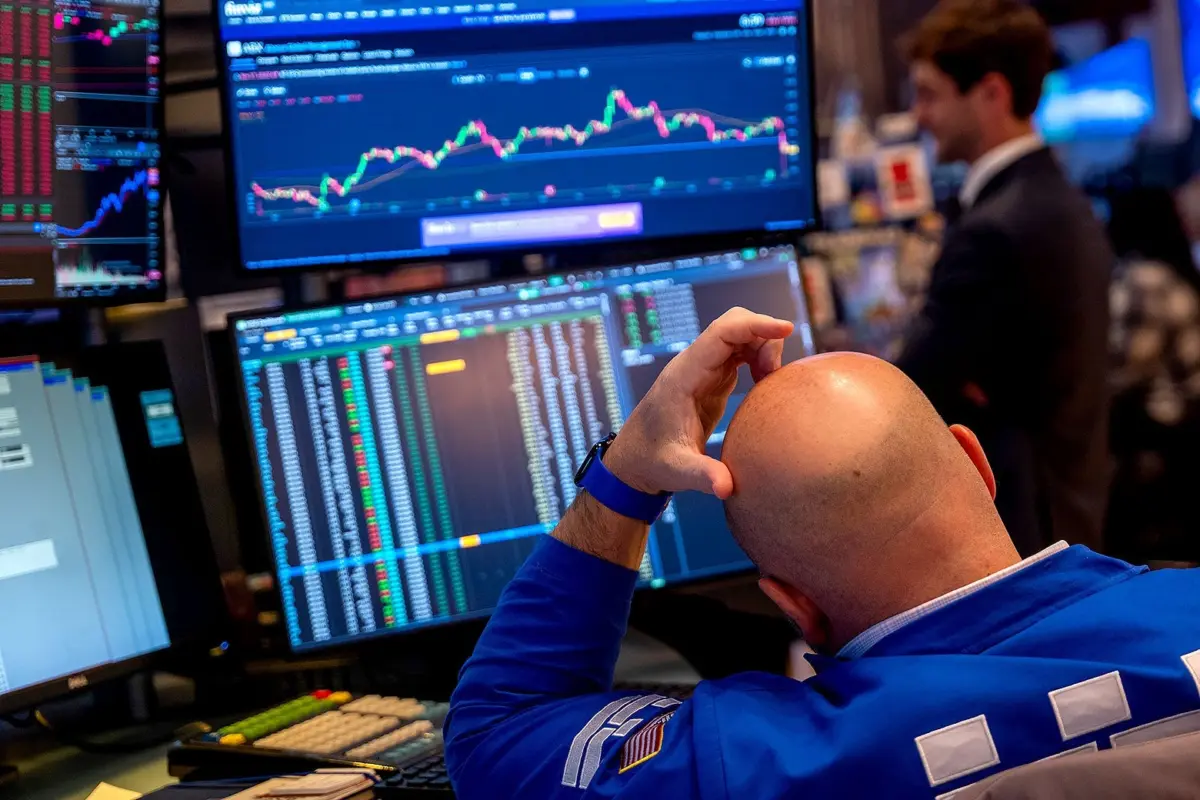
Under the new paradigm, the market is driven entirely by momentum and "vibes." Trump’s primary metric for economic health is the direction of stock market line graphs. Because a temporary absence or ouster of Huang threatened to pull down the S&P 500, institutional stability was sacrificed.
TRADITIONAL CORPORATE GOVERNANCE           CRONYISM & CULPABILITY PARADIGM
[Shareholders] -> [Board of Directors]     [Political Executive] -> [Chosen CEO]
       |                      |                         |                   |
       v                      v                         v                   v
[Ethical Oversight]    [Risk Mitigation]        [Stock Market Gains] [Unchecked Power]
The Demise of the Frontier A.I. Accords
In September, leading technology executives—including Huang—signed onto the White House’s frontier A.I. accord, agreeing in principle to mutual cooperation, independent board oversight committees, and paced, responsible development of artificial intelligence models.
That fragile consensus has now been obliterated. By actively penalizing a board for attempting to enforce accountability, the federal government has signaled that internal compliance committees are nothing more than decorative window dressing.
Official Statements and Reactions
The fallout from the Nvidia reinstatement has drawn sharp condemnation from legal scholars, institutional investors, and political analysts alike, contrasted sharply by the triumphalist rhetoric emanating from the administration and corporate allies.
- The White House Defense: Administration officials have defended the intervention through the lens of national security and economic nationalism. Framing the artificial intelligence race against China as an existential conflict, supporters argue that burdening key innovators with traditional corporate bureaucracy or ethical distractions is a luxury the United States cannot afford.
- Nvidia’s Boardroom Surrender: In its official statement announcing Huang’s return, the Nvidia board offered little resistance to the pivot, emphasizing continuity, market leadership, and the urgent need to maintain technological supremacy over international rivals. The dissolution of meaningful internal dissent highlights the reality that modern mega-corporations can no longer function independently of political pressure.
- Market and Industry Critics: Independent governance watchdogs have voiced alarm. Commentators note that the precedent transforms corporate executives into untouchable political agents. If a CEO can survive severe national security breaches and interpersonal scandals simply by virtue of being "too big to fail" on Wall Street, the foundational trust underpinning American capital markets is fundamentally compromised.
Future Outlook: Navigating an Unchecked Frontier
As the technology sector looks toward a critical window of artificial intelligence development over the next one to two years, the implications of the Nvidia precedent are profound and unsettling.
Industry leaders and researchers have frequently warned about the dangers of uncurbed hyper-acceleration in machine intelligence. Prominent voices within the tech community, including Meta’s Alexandr Wang and various safety researchers, have cautioned that the race toward artificial general intelligence (AGI) requires rigorous external and internal guardrails to prevent catastrophic misuse—ranging from automated cyber warfare to the generation of dangerous synthetic content.
With the federal government actively dismantling the infrastructure of corporate accountability, those guardrails no longer exist.
Key Questions for the Road Ahead:
- Regulatory Paralysis: Will other regulatory bodies (such as the FTC or SEC) be able to police corporate misconduct when executive branch figures actively shield favored executives?
- The Incentive Trap: If major tech companies learn that ethical violations, conflicts of interest, and security lapses are rewarded rather than punished as long as share prices rise, what incentives remain to prioritize public safety?
- The Erosion of Capitalist Trust: Can international and domestic investors maintain long-term confidence in American equities when corporate governance is subjected to the whims of political cronyism?
Ultimately, the reinstatement of Jensen Huang under presidential fiat is not merely an isolated corporate drama; it is a symptom of a broader decay within American capitalism. By trading institutional integrity and ethical baseline standards for short-term stock market adrenaline, the system has let loose a powerful genie—one that will prove exceedingly difficult to put back into the bottle.