Date: 19 November 2026 Estimated Reading Time: 5–7 minutes Author: Global Infrastructure & Technology Desk
Executive Overview
In a decisive move to accelerate the deployment of sovereign artificial intelligence (AI) across Japan, industrial titan Mitsubishi Heavy Industries (MHI) and prominent cloud provider SAKURA internet have officially signed a memorandum of understanding (MoU). Announced on 18 November 2026, the strategic alliance aims to pioneer modular AI data centre infrastructure designed to bypass critical construction bottlenecks, drastically improve energy efficiency, and alleviate soaring pressures on the nation’s digital grid.
As generative AI workloads scale exponentially, Japan’s domestic digital infrastructure faces an unprecedented bottleneck: a severe constraint on available power and lengthy grid connection timelines. By combining MHI’s world-class engineering mastery in power systems, advanced thermal cooling, and robust security architecture with SAKURA internet’s agile cloud and data centre operating acumen, the partnership introduces a standardised, modular blueprint.
While specific timelines and construction sites remain under wraps, this collaboration represents a watershed moment for Japan’s digital economy. It directly addresses the dual mandate of accelerating time-to-market for high-density AI clusters while complying with increasingly stringent government regulations on energy conservation and regional decentralisation.
Detailed Chronology of the Partnership
The genesis of the MHI and SAKURA internet alliance builds upon a foundation of aggressive national digital transformation and strategic economic security initiatives that have shaped Japan’s technology sector over recent years.
2024 (The Foundation of Sovereign Subsidies): SAKURA internet achieved a major milestone when Japan’s Ministry of Economy, Trade and Industry (METI) approved substantial subsidies under the Economic Security Promotion Act. SAKURA internet secured up to ¥50.1 billion ($315.1 million) as part of a broader ¥72.5 billion ($456 million) package designed to boost domestic cloud and AI computational infrastructure.
March 2026 (Government Cloud Certification): Cementing its role as a cornerstone of Japan’s public sector tech stack, SAKURA internet achieved formal approval as a domestic cloud provider for Japan’s prestigious Government Cloud programme, setting the stage for expanded enterprise and governmental AI workloads.
February 2026 (Market Realities Laid Bare): Real estate services firm JLL published its landmark Japan Data Centre Market Opportunities report, revealing that the Japanese data centre market was valued at US$23.4 billion in 2024 and projected to reach $33.4 billion by 2030. However, the report sounded the alarm on severe power-acquisition timelines—noting that securing power in Tokyo could take upwards of eight to ten years.
18 November 2026 (The MoU Announcement): MHI and SAKURA internet officially executed their memorandum of understanding. The partnership formally marries MHI’s heavy industrial capabilities in cooling, power generation, and integrated system controls with SAKURA internet’s cloud expertise to tackle the engineering hurdles of modern AI infrastructure.
Supporting Context & Market Metrics: Power, PUE, and Regional Realities
The Energy Crisis in Digital Infrastructure
Japan’s digital economy is expanding at a remarkable compound annual growth rate (CAGR) of 6.7% (projected from 2025 onwards). Yet, the physical infrastructure required to sustain this trajectory is running out of headroom. According to market analysts and statements provided directly by MHI, the primary scaling constraint for next-generation AI data centres is no longer compute availability or chip procurement—it is pure energy (power generation and advanced cooling capacity).
Unlike traditional enterprise workloads, high-density AI graphics processing unit (GPU) clusters generate immense thermal loads. Consequently, infrastructure supply is severely trailing workload demand. In major metropolitan hubs like Greater Tokyo and Greater Osaka—which currently account for roughly 90% of Japan’s total data centre footprint—securing adequate power distribution lines can take nearly a decade.
Modular Engineering as an Antidote
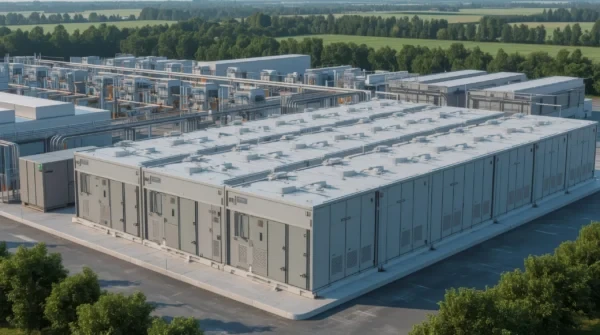
To counter these delays, MHI and SAKURA internet are turning to pre-fabricated, modular architecture. Traditional data centre construction is plagued by on-site labor shortages, sequential construction dependencies, and extended commissioning phases.
Under the proposed modular methodology:
Power distribution units, cooling loops, and control systems are integrated from the initial design phase rather than retrofitted or sourced separately.
Power and cooling modules are manufactured and rigorously tested off-site in controlled factory environments.
On-site assembly is reduced to a rapid "plug-and-play" deployment model, ensuring predictable build quality, significantly compressed construction timelines, and incremental capacity scaling as local power becomes available.
However, industry experts caution that while modularisation drastically cuts structural delivery times, it does not bypass the legal and engineering realities of securing a grid connection. Availability of local electricity remains the definitive gatekeeper for deployment speed.
Regulatory Pressures: The Looming PUE Mandate
Compounding the race for capacity are strict new federal energy mandates. Under regulatory frameworks introduced by METI via the Energy Conservation and Non-Fossil Energy Conversion Act, qualifying data centres must achieve a Power Usage Effectiveness (PUE) of 1.3 or better after two years of commercial operation, beginning in fiscal year 2029.
PUE—the ratio of total facility energy to the energy delivered strictly to IT equipment—demands hyper-efficient thermal management systems. MHI’s deep engineering heritage in advanced thermodynamics positions the partnership to meet and exceed these stringent environmental criteria.
Official Statements and Industry Insights
The collaborative nature of the MHI-SAKURA internet venture highlights a broader shift in how heavy industry and technology providers are converging to solve national infrastructure challenges.
In conversations with industry publication Capacity, representatives from both firms elaborated on the strategic necessity of the agreement:
"For AI data centres, the current scaling constraint is energy—both power and cooling. Infrastructure supply is trailing workload demand, and conventional construction models are simply too slow to keep pace with the AI revolution."
— Representative, Mitsubishi Heavy Industries (MHI)
MHI noted that modular construction is critical to delivering predictable quality and slashing deployment timelines. By manufacturing power and cooling modules off-site, developers can simplify the eventual on-site commissioning process.
Furthermore, SAKURA internet clarified the scope of the partnership within the broader competitive landscape:
"This partnership is not designed to compete directly with or displace global hyperscalers. Instead, it is about fortifying Japan’s domestic cloud and AI ecosystem, ensuring that public and private entities retain absolute sovereignty over their data and critical AI workloads."
— Representative, SAKURA internet
SAKURA internet also confirmed that while strategic planning is moving forward at pace, final determinations regarding specific geographic deployment locations and concrete operational timelines remain under evaluation, heavily dependent on regional grid alignment.
Future Outlook: Sovereign AI and Regional Diversification
Looking toward the horizon, the MHI and SAKURA internet partnership aligns tightly with the Japanese government’s national strategy for digital resilience.
Decentralising Beyond Tokyo and Osaka
Because 90% of Japan’s data assets are heavily concentrated in the Tokyo and Osaka metropolitan zones, the country faces systemic vulnerabilities ranging from grid congestion to natural disaster risks. The Japanese government’s Digital Infrastructure Development Plan 2030 and the innovative Watt-Bit Collaboration programme actively encourage regional diversification. These initiatives aim to co-locate digital infrastructure in regional prefectures boasting surplus electricity generation and lower environmental risk profiles.
The inherent flexibility of MHI and SAKURA internet’s modular framework makes it uniquely suited for regional deployment. By allowing operators to scale infrastructure in smaller, modular increments closer to regional power sources, the initiative can help de-congest major urban grids while supporting local economic development.
A Blueprint for the Asia-Pacific (APAC) Region
Beyond domestic boundaries, the challenges facing Japan—soaring AI demand, grid capacity caps, and the urgent push for digital sovereignty—are shared across numerous emerging and mature markets within the broader Asia-Pacific region.
MHI has indicated that international interest in modular, secure, and energy-efficient data centre architecture is skyrocketing. If the MHI-SAKURA internet model proves successful in overcoming Japan’s notoriously rigid power constraints, the standardized modular framework could easily serve as an exportable blueprint for APAC nations grappling with their own AI infrastructure gold rushes.
As fiscal year 2029 approaches and METI’s strict PUE thresholds draw near, the success of this industrial-tech marriage will likely determine whether Japan can successfully cement its status as an autonomous, AI-driven superpower.