Executive Overview
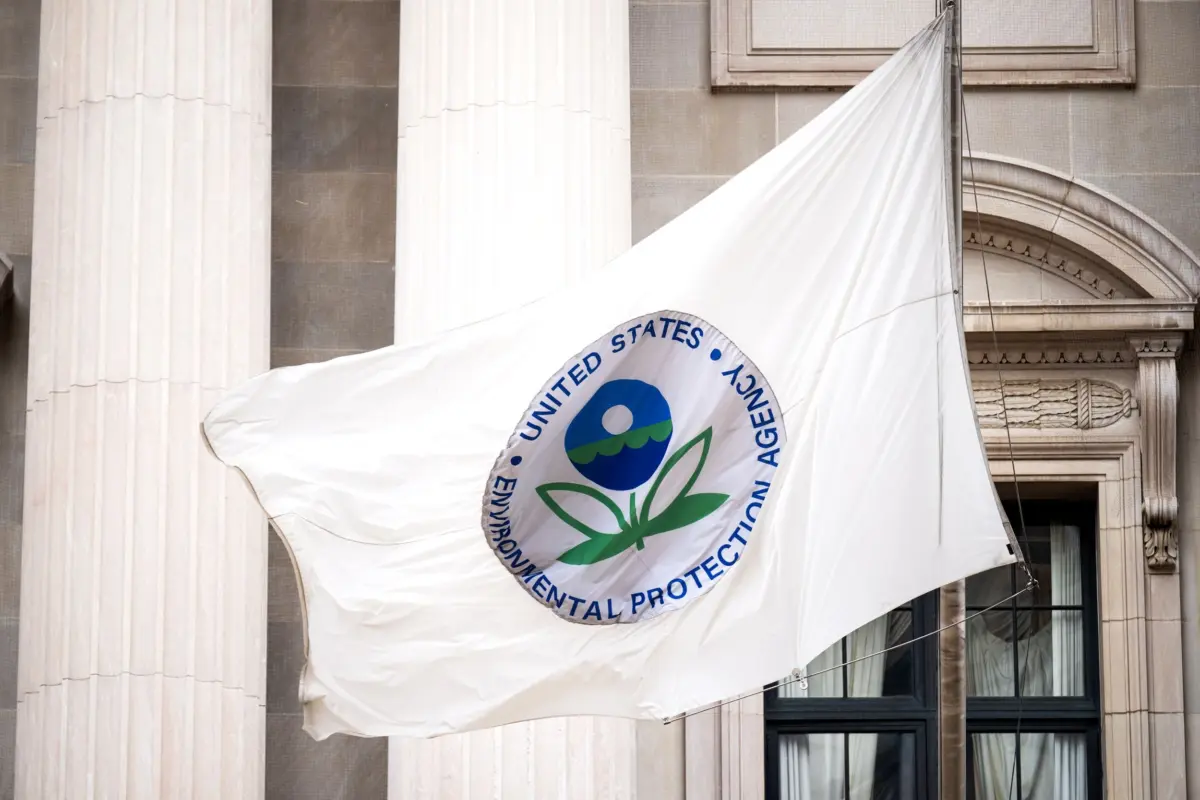
The intersection of the artificial intelligence boom and environmental regulation has reached a critical flashpoint. Newly uncovered documents obtained by WIRED reveal that major energy infrastructure provider Williams held confidential, high-level meetings with the Environmental Protection Agency (EPA) leading up to a pivotal regulatory decision. The agency ultimately recommended waiving decades-old acid rain regulations for dedicated data-center power plants.
These private dialogues occurred amid a broader push by the Trump administration to roll back a swath of environmental mandates governing data centers and the massive natural gas facilities being constructed to feed their insatiable energy demands. Critics argue that these exemptions strip away vital environmental protections and reporting safeguards just as tech giants embark on an unprecedented wave of fossil-fuel infrastructure development.
While legal scholars note that the EPA’s interpretation strictly adheres to the literal wording of the 1990 Clean Air Act amendments—which were designed for grid-connected power generators—the explosive growth of "behind-the-meter" or "islanded" power stations has created an unforeseen loophole. With massive projects slated across the United States to fuel the computational engines of companies like Meta, Amazon, and SoftBank, the omission of these private power plants from federal oversight threatens to obscure critical emissions data for carbon dioxide, sulfur dioxide, and nitrogen oxides.
Detailed Chronology: How the Policy Shift Unfolded
The path toward exempting private data-center power plants from federal oversight is a story of strategic lobbying, private consultations, and swift regulatory alignment under the current administration.
September 2025: Public Lobbying Begins
The push to overhaul federal oversight for behind-the-meter generation first entered the public sphere in September 2025. Mark Gebbia, then Williams’ vice president of environmental, permitting, and regulatory affairs, delivered pointed testimony before the House of Representatives. Gebbia laid out a series of proposals urging the EPA to alter or clarify its implementation of the Clean Air Act. Specifically, he argued that facilities built exclusively to power data centers should be exempted from the Acid Rain Program. Gebbia emphasized that long-standing federal permitting timelines were entirely "not feasible given the urgent need to install and operate gas-fired generation for AI data centers."
February 2026: Direct State-Level Petitions
The pressure campaign shifted to regional and state regulators early the following year. In a February letter sent to the Utah Department of Environmental Quality—subsequently obtained by WIRED—Williams director of permitting Steve Hall warned that "current regulatory uncertainty" surrounding power plants built exclusively for data centers had generated severe "obstacles for data center development in the United States."
Hall argued that Williams’ facilities fell outside the scope of the Acid Rain Permit program because they did not supply electricity to the public grid. Securing federal guidance, he maintained, would accelerate critical infrastructure deployment and support national objectives in the global artificial intelligence race. The EPA later confirmed that Williams had formally submitted this perspective directly to the federal agency.
Spring 2026: Urgent Closed-Door Meetings
Calendar invites and external meeting request forms secured from the EPA show that Williams executives, including Hall, secured at least two high-level meetings with federal regulators earlier this year. This included a direct audience with Aaron Szabo, then chief of the EPA’s Air office.
In an external meeting request filed in April, Williams flagged its push to discuss projects in Ohio and Utah—sites where the company is actively constructing power plants to service Meta infrastructure—as "urgent." The EPA confirmed that Williams requested formal regulatory guidance for both state projects, with discussions broadly touching upon air regulations.
July 2026: Federal Guidance Issued
Following months of pressure from industry stakeholders, the EPA officially announced new federal guidance in July 2026 regarding participation in the Acid Rain Program. The agency explicitly recommended that "islanded" power plants—those disconnected from the public grid and dedicated solely to powering adjacent, third-party data centers—should be entirely exempt from the program.
Supporting Context & Metrics: The Scale of the AI Energy Crisis
To understand why energy providers and tech giants pushed so aggressively for regulatory relief, one must examine the staggering scale of power required to sustain modern AI architecture.
The Rise of "Islanded" Power
Traditionally, power plants generated electricity to feed into the shared public utility grid, subjecting them to rigorous federal oversight, emissions caps, and mandatory reporting structures established by the 1990 Clean Air Act amendments. However, the staggering power demands of AI data centers—often consuming hundreds of megawatts or even gigawatts continuously—have overwhelmed local grid capacities.
To bypass interconnection queues that can take years to clear, tech companies and energy providers are increasingly turning to behind-the-meter generation. These private power plants sit adjacent to data centers, providing a direct and uninterrupted stream of electricity.
Industry estimates reveal that there is currently more than 110 gigawatts of planned behind-the-meter natural gas projects across the United States. Among the most striking developments are:
- Amazon’s 7-gigawatt facility in Texas.
- SoftBank’s 9.2-gigawatt project in Ohio.
- Williams’ portfolio, which includes at least six major data-center power plant projects, featuring a 500-megawatt facility in Utah and multiple similar sites in Ohio built to serve Meta.
Emissions Profiles: Gas Versus Coal
Natural gas plants emit significantly lower levels of sulfur dioxide and nitrogen oxides than traditional coal-fired power facilities, a point frequently emphasized by the oil and gas sector to highlight their cleaner profile.
For instance, permit applications for Williams’ Eagle Mountain facility in Utah—designed to power a Meta data center—indicate a maximum potential output of roughly 100 tons of nitrogen oxide and 11 tons of sulfur dioxide annually. By comparison, a conventional 500-megawatt coal-fired power plant routinely emits thousands of tons of those exact pollutants each year.
Nevertheless, while gas may burn cleaner than coal, the sheer volume of new combustion engines operating continuously to fuel AI infrastructure means cumulative emissions remain substantial. Furthermore, the absence of acid rain compliance structures strips away the vital emissions monitoring and reporting mandates that historically accompanied such facilities.
Official Statements and Industry Reactions
The regulatory waiver has drawn sharp contrasts between industry stakeholders, federal defenders, and environmental watchdogs.
The Corporate Perspective
Defending the company’s actions, Williams spokesperson Alex Schott emphasized a dual commitment to technological leadership and environmental stewardship:
"Williams is committed to developing energy solutions to enhance America’s position in the global competition for AI, while prioritizing environmental protection—including addressing legislation and regulations to modernize construction and implementation timelines."
Meta, the primary beneficiary of several disputed Williams projects in Ohio and Utah, declined to comment on the lobbying efforts or the resulting EPA guidance.
Environmental Defenders and Legal Scholars
Former and current environmental experts have sounded the alarm over the loss of transparency. Joseph Goffman, former assistant administrator at the EPA’s Office of Air and Radiation, pulled no punches regarding the administration’s broader regulatory retreat:
"The administration is trying to relax, if not suspend for all intents and purposes, a range of regulatory requirements for these data centers. What this administration is trying to do, either explicitly or de facto, is take layers [of regulatory protections] away."
Goffman also noted that exempting these massive gas plants from the Acid Rain Program severely compromises the government’s ability to track critical greenhouse gas emissions, such as carbon dioxide. Under normal circumstances, he argued, the EPA would interpret existing mandates or establish new rules to ensure these plants report their climate-warming outputs.
Legal analysts, however, point out a fundamental mismatch in statutory design. Carrie Jenks, executive director of the Environmental and Energy Law Program at Harvard Law School, acknowledges that the EPA’s guidance likely aligns with the strict letter of the 1990 law:
"When the program was created in 1990, no one expected it to be economical to develop a bunch of power plants that wouldn’t sell the product they were creating. No one envisioned this. The program was never designed to address behind-the-meter generation."
Despite this technical reading, environmental groups have pushed back aggressively. In September, organizations including Earthjustice and the Natural Resources Defense Council (NRDC) submitted formal letters to the EPA challenging the agency’s narrow interpretation of the statute.
Future Outlook: Legislative Reform or Regulatory Blind Spot?
The current impasse highlights a profound structural lag: laws written in the analog era of the early 1990s are now being strained to govern the high-tech, energy-intensive demands of artificial intelligence in the mid-2020s.
As gigawatt-scale data centers and their dedicated natural gas facilities proliferate across Texas, Ohio, Utah, and beyond, the federal government faces a mounting policy dilemma. If executive agencies like the EPA continue to grant narrow exemptions based on whether electricity crosses a public grid, vast swathes of industrial carbon and pollutant emissions may effectively vanish from federal oversight.
Legal scholars and policy analysts argue that the onus ultimately rests with the legislative branch. As Jenks notes:
"Congress should have the ability and the authority to say, we have this situation, it wasn’t anticipated, here is the law. If the world were working, that’s what should happen."
Until lawmakers step in to rewrite or update the Clean Air Act for the AI age, the rapid expansion of private fossil-fuel infrastructure will continue to operate in a regulatory gray zone—raising urgent questions about how the United States can balance its ambitions in the global AI race with its long-term climate and environmental commitments.