Executive Overview
The curtain is set to fall on one of modern animation’s most visually breathtaking and intellectually challenging sagas. Kenji Nakamura’s dazzling, avant-garde Mononoke film trilogy is officially drawing to a close, with its sweeping finale, Mononoke The Movie: Chapter III — The Curse of the Serpent, scheduled for a global premiere on Netflix on September 29.
For fans of dark, atmospheric supernatural thrillers—particularly those eagerly awaiting the next installments of major action franchises like Demon Slayer: Infinity Castle—Mononoke offers an elevated alternative. It blends hyper-stylized visual flair, unforgettable character designs, and visceral battles against malevolent entities with deep socio-political commentary.
Since its inception as a cult-classic television series in the late 2000s, Mononoke has captured the imagination of global audiences through its distinctive ukiyo-e woodblock print aesthetic and its enigmatic protagonist, the Medicine Seller. Now, after nearly two decades of expanding the lore, Nakamura and his animation teams are poised to deliver a definitive, high-stakes conclusion to a trilogy that has redefined what television-to-film transitions can achieve in the medium.
Detailed Chronology: From Cult TV Phenomenon to Cinematic Trilogy
To understand the weight of The Curse of the Serpent, one must trace the evolution of the Mononoke franchise across its various eras.
The Origins: The Edo-Period Poirot (2007)
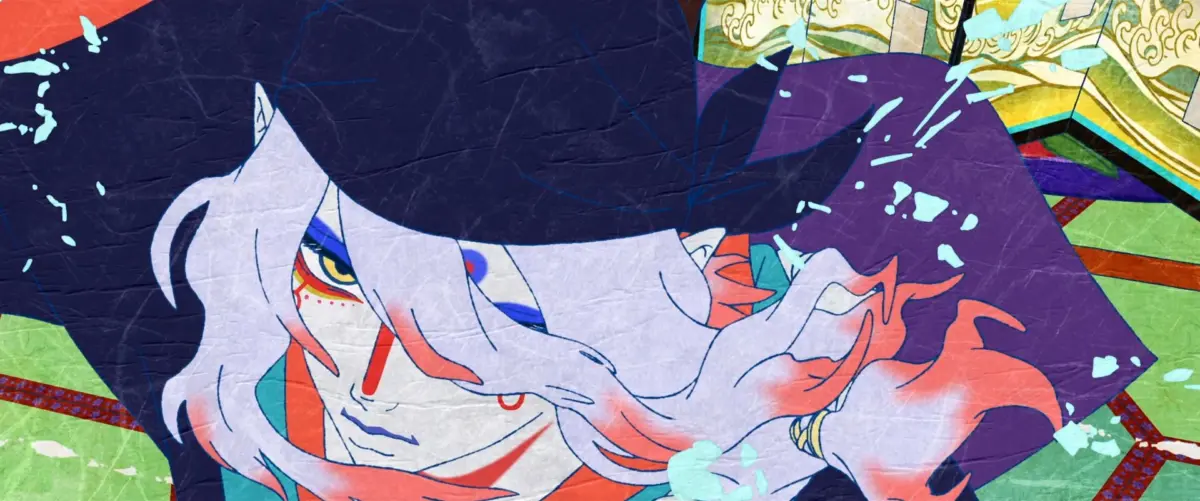
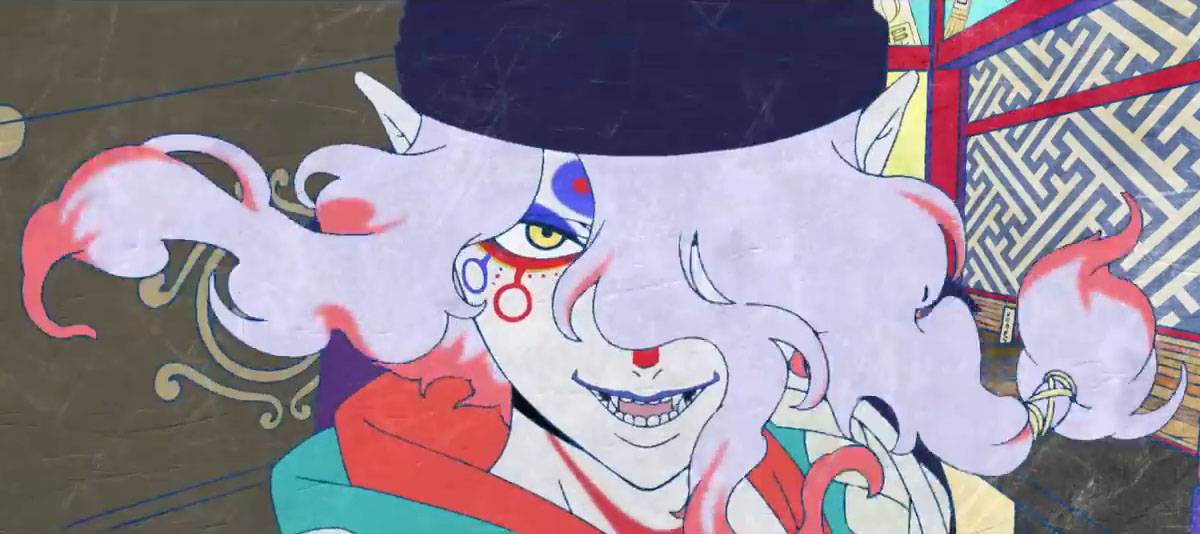
The roots of the franchise trace back to Ayakashi: Samurai Horror Tales (2006), specifically its final story arc, "Bakeneko," which introduced the nameless protagonist known only as the Medicine Seller. The character’s striking appearance—complete with intricate facial markings, pointed ears, and an eerie, hypnotic demeanor—instantly resonated with viewers.
This success prompted Toei Animation to spin the character off into his own self-titled 2007 series, Mononoke. Directed by Kenji Nakamura, the show functioned as a supernatural detective story set across various historical eras of feudal Japan. The Medicine Seller operated much like a supernatural-era Hercule Poirot, arriving in locations unannounced, investigating uncanny phenomena, and refusing to slay the titular mononoke until he uncovered their Form (Katachi), Truth (Makoto), and Reason (Kotowari).
The series became a milestone in anime history, celebrated not for traditional cel-shaded action, but for its pioneering use of digital compositing that mimicked traditional Japanese paintings, silk screens, and woodblock prints.
The Shift to the Cinematic Scale (2024–2025)
Following a long hiatus, Nakamura returned to the universe with a massive cinematic undertaking: a trilogy designed to explore the claustrophobic, politically cutthroat confines of the Ōoku—the women’s quarters of Edo Castle.
- Chapter I: Mononoke The Movie: The Phantom in the Rain (2024): The trilogy kicked off by shifting the perspective inward. Rather than wandering across different provinces of Japan as he did in the 2007 series, the Medicine Seller found himself embedded in the vast, rigid hierarchy of the Ōoku. The first film zeroed in on a new handmaiden named Asa, exploring her desperate bids for social mobility and survival amidst a system built to crush individuality.
- Chapter II: Mononoke The Movie: Chapter II — The Ashes of Rage (2025): The second installment deepened the narrative complexity, exploring the ruthless politics surrounding imperial succession. It exposed the depravity and psychological degradation concubines were forced to endure in their quest to bear the Emperor a male heir, linking human emotional suffering directly to the violent birth of new specters.
The Finale: The Curse of the Serpent (2026)
Now, the narrative funnel narrows to its absolute point. Mononoke The Movie: Chapter III — The Curse of the Serpent focuses its lens directly on the Midaidokoro—the shogun’s official wife and the highest-ranking woman within the Ōoku. Wielding immense political and social power, the Midaidokoro sits at the epicenter of the palace’s web of ambition, envy, and suppressed rage. Given that Mononoke lore dictates that these malevolent spirits are born directly from human passions and accumulated grudges, the final chapter promises a volatile, high-stakes collision between institutional tyranny and supernatural retribution.
Supporting Context & Metrics: Deconstructing the Ōoku and Avant-Garde Animation
The enduring brilliance of the Mononoke trilogy lies in its dual nature: it operates simultaneously as an engrossing supernatural mystery and a trenchant feminist critique of Japan’s feudal history.
The Historical Backdrop of the Ōoku
By setting the entire film trilogy within the Ōoku, Nakamura and his writers utilized a fascinating historical pressure cooker. Translating literally to "the great interior," the Ōoku was the section of Edo Castle where the women connected to the ruling Tokugawa shogunate lived. Thousands of women—from high-ranking consorts to low-level maids—coexisted in a gilded cage governed by draconian rules, cut off from the outside world.
The trilogy capitalizes on this setting to explore systemic misogyny and institutional abuse. Each film in the trilogy focuses on women occupying different rungs of this unforgiving ladder:
- Lower Rungs (The Phantom in the Rain): Examined the struggle for basic survival and upward mobility.
- Middle Rungs (The Ashes of Rage): Focused on reproductive politics, forced concubinage, and the psychological toll of the succession race.
- Apex (The Curse of the Serpent): Confronts the absolute pinnacle of this hierarchy, asking whether power corrupts, shields, or ultimately destroys those who wield it within a patriarchal fortress.
The Visual Revolution of Kenji Nakamura
Technically, the Mononoke trilogy represents a masterclass in modern digital artistry. In an industry increasingly dominated by standardized 3D CGI and clean, uniform character models, Nakamura’s work stands apart.
The films utilize a kaleidoscopic color palette that shifts dynamically to reflect the psychological states of the characters. Backgrounds frequently distort, dissolving into swirling brushstrokes, patterns reminiscent of vintage textiles, and violent splatters of crimson and gold. This approach transforms every frame into a moving painting, ensuring that the visual experience matches the chaotic, fever-dream logic of a world overrun by supernatural manifestations of human trauma.

Official Statements and Industry Reception
Critical reception for the trilogy’s first two installments has established Mononoke as one of the premier prestige animation properties on Netflix. Reviewers have consistently praised the franchise for maintaining the artistic integrity of the 2007 original while elevating the mature storytelling to feature film standards.
Industry analysts have noted that the global distribution model provided by Netflix has been instrumental in keeping avant-garde anime viable on a cinematic scale. By skipping traditional theatrical windows in many international territories and releasing day-and-date or close to Japanese theatrical runs, Twin Engine and its production partners have cultivated an international fandom that values artistic risk-taking over generic shonen tropes.
While formal press releases from Twin Engine regarding The Curse of the Serpent have remained tight-lipped to preserve the mystery of the plot’s twists, promotional materials emphasize the terrifying scale of the final entity the Medicine Seller must face. Prominent animation critics have already begun labeling the trilogy as a landmark achievement in psychological horror animation, drawing favorable comparisons to literary works dealing with collective guilt and repression.
Future Outlook: The Legacy of the Medicine Seller
As fans prepare for the September 29 global release of Mononoke The Movie: Chapter III — The Curse of the Serpent, questions inevitably arise regarding the future of the franchise.
Will this truly be the final time audiences see the nameless Medicine Seller, or will the commercial success of the Netflix trilogy encourage Kenji Nakamura to return to the character in future eras? The modular nature of the protagonist—who is capable of traveling through time and space to wherever human malice festers—leaves the door theoretically wide open for future adventures.
However, artistically speaking, a clean trilogy conclusion centered on the micro-cosm of the Ōoku provides a satisfying, self-contained narrative arc that honors the psychological depth missing from many contemporary action-driven anime properties.
For now, the immediate focus rests on the impending clash between the Medicine Seller and the ultimate manifestation of Ōoku resentment. With the first two films currently streaming on Netflix, viewers have a narrow window to catch up on the psychological turmoil, breathtaking artistry, and intricate lore before The Curse of the Serpent seals the fate of Edo Castle’s ghosts once and for all.