Executive Overview
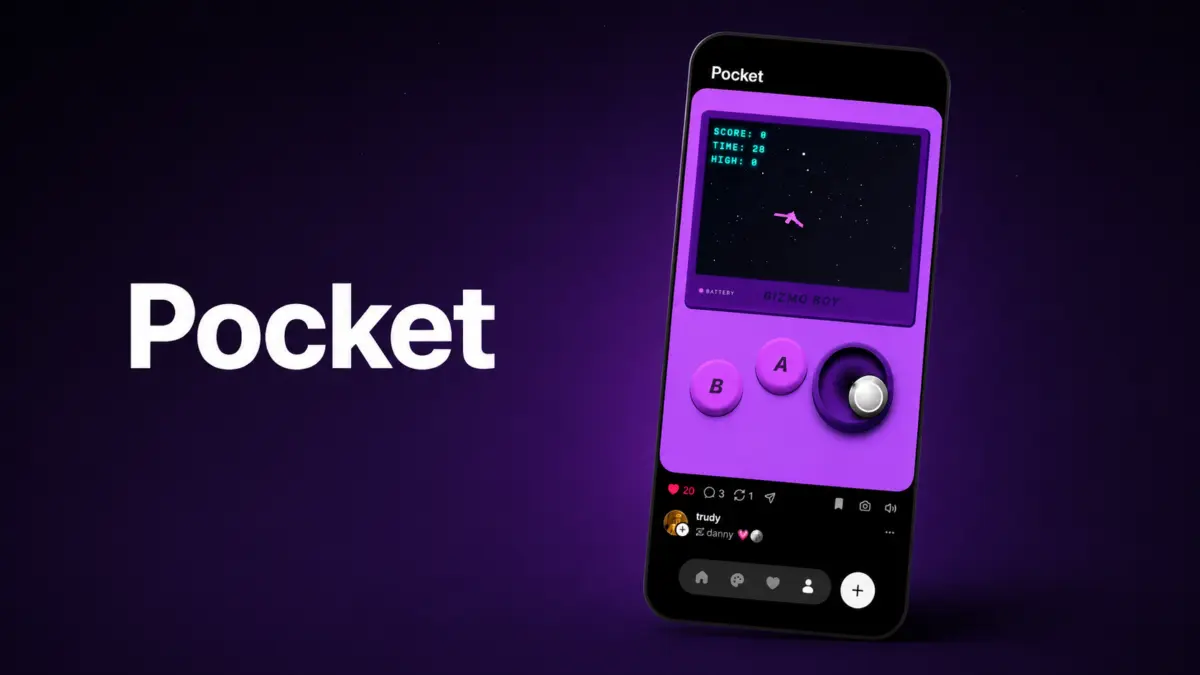
In a move that signals a profound shift in how consumer software is created, distributed, and consumed, Meta has officially launched its experimental, "vibe-coded" gaming application, Pocket, to the general public in the United States. Initially introduced during a quiet, localized test phase in Brazil in July 2026, the application represents Meta’s latest attempt to merge generative artificial intelligence with interactive social media.
Pocket allows users with zero programming background to construct fully functional, interactive mini-games—dubbed "gizmos"—using conversational natural language prompts. These creations are then published to a TikTok-style scrollable feed where other users can play, share, and dynamically "remix" them.
The underlying technology and the product team behind Pocket are the direct results of Meta’s early 2026 acqui-hire of Gizmo, an independent startup founded by former Snapchat engineers. By absorbing this team into its newly minted Superintelligence Labs, Meta has accelerated its pursuit of a world where software creation is as frictionless as taking a photo.
Beyond its immediate entertainment value, Pocket serves as a critical proof-of-concept for Meta’s broader corporate strategy. Empowered by internal AI-assisted development tools, Meta is undergoing an aggressive operational pivot, rapidly shipping standalone micro-applications to test consumer appetites without cluttering its flagship platforms.
Detailed Chronology
The path to Pocket’s nationwide U.S. launch reveals a highly calculated corporate capture of emerging consumer AI trends. The timeline highlights how quickly Meta can identify, acquire, and scale competitive threats in the generative AI space.
[February 2026] Gizmo Launches -> [March 2026] Meta Acqui-hires Team -> [July 2026] Pocket Soft-Launches (Brazil) -> [August 20, 2026] Pocket Launches in U.S. & Gizmo Shuts DownFebruary 2026: The Debut of Gizmo
The story began in early February 2026 when Atma Sciences, a boutique development house led by former Snapchat engineering talent, launched an iOS application called Gizmo. Described by early tech adopters as a "TikTok for interactive mini-apps," Gizmo gained rapid traction by allowing users to construct simple games and interactive widgets via natural language prompting. It proved that "vibe-coding"—the practice of using AI to generate code based purely on a user’s aesthetic and functional "vibe"—could be packaged into a consumer-facing social network.
March 2026: The Corporate Capture
Recognizing the disruptive potential of democratization in software development, Meta moved swiftly. In March 2026, Meta executed an acqui-hire of the Gizmo team. The engineers, including founder Josh Siegel, were integrated into Meta’s Superintelligence Labs—a division focused on pioneering consumer-facing applications of advanced AI models.
July 2026: The Brazilian Sandbox
Rather than immediately launching the product globally, Meta rebranded the application as Pocket and quietly deployed it to the Brazilian market on July 2, 2026. Brazil has historically served as a preferred testing ground for Meta’s experimental features due to its highly active, mobile-first social media population. This soft-launch allowed Meta to monitor server loads, refine the AI’s prompt-to-game latency, and observe user retention patterns.
August 20, 2026: The U.S. Rollout and the End of an Era
On August 20, 2026, Meta officially opened Pocket to all users in the United States, launching on the iOS App Store. Coinciding with this release, Meta announced the permanent shutdown of the original Gizmo application, completing the transition of the acquired IP into Meta’s ecosystem.
Product Deep-Dive: What is ‘Vibe-Coding’?
To understand Pocket is to understand "vibe-coding"—a term that has rapidly transitioned from developer slang into the corporate lexicon. Traditional game development requires mastery of engines like Unity or Unreal, alongside proficiency in languages like C# or C++. Vibe-coding bypasses these technical barriers entirely.
Prompt-to-Product Architecture
In Pocket, game creation begins with a text box. A user might type: “A retro-themed game where you tilt your phone to keep a bouncing cat from falling off a pizza slice, with dramatic bass drops every time the cat bounces.”
User Prompt (Natural Language)
       │
       ▼
Meta's Llama-Derived Code Generation Models
       │
       ▼
Dynamic Interactive "Gizmo" (JSON/Javascript Package)
       │
       ▼
Hardware Integration (Gyroscope, Camera, Audio APIs)
Meta’s backend AI models interpret these instructions and generate a lightweight package of executable logic, aesthetic assets, and interactive rules. The resulting "gizmos" are surprisingly sophisticated:
- Hardware Integration: The games can utilize the phone’s physical sensors, such as the accelerometer and gyroscope, enabling tilt-to-play mechanics.
- Multimedia Access: Creators can grant the app access to their camera roll or live camera feed, embedding their own faces or environments directly into the game’s canvas.
- Audio Licensing: Leveraging Meta’s extensive library of music partnerships, users can overlay licensed tracks and sound effects onto their games, syncing audio cues to in-game actions.
The Remix Culture
Crucially, Pocket is built on an open-source ethos inside a closed social loop. Every gizmo published to the public feed features a "Remix" button. If a user enjoys a game but wants to change its parameters—for example, replacing the bouncing cat with an image of their friend, or increasing the gravity to make the game harder—they can prompt the AI to modify the existing game. This creates an evolutionary tree of user-generated software, where popular games undergo rapid, community-driven iterations.

Supporting Context & Metrics: Meta’s Standalone App Renaissance
The launch of Pocket is not an isolated event; it is part of a broader corporate renaissance of standalone applications at Meta. During the mid-2010s, Meta’s "Creative Labs" initiative attempted to launch various standalone apps (such as Slingshot and Paper), most of which were eventually shuttered as Meta consolidated its features into Instagram and Facebook.
Today, generative AI has completely changed the economics of app development. By utilizing AI-assisted coding suites internally, Meta’s engineering teams can conceive, build, and ship independent apps at a fraction of the historical cost and time.
| Application Name | Launch Date | Primary Focus / AI Integration |
|---|---|---|
| Vibes | February 2026 | Standalone app for AI-generated video creation |
| Instagram Instants | April 2026 | Ultra-fast, disappearing photo sharing platform |
| Forum | May 2026 | A Reddit-style, community-focused standalone groups app |
| Seller | June 2026 | A streamlined, standalone marketplace application |
| August 2026 | Prompt-based, vibe-coded social gaming platform | |
| Meta AI for Mac | August 2026 | Desktop integration allowing conversational control of local apps |
This rapid-fire product pipeline is a deliberate strategy. Rather than overloading Instagram or Facebook with experimental AI tools—which risks alienating users who prefer a stable interface—Meta is using these standalone apps as specialized testbeds. If an app like Pocket captures sustained user engagement, its core features can easily be integrated back into Instagram DMs, WhatsApp, or Facebook Threads.
Official Statements
The executive leadership at Meta has been increasingly vocal about how AI is reshaping their internal operations and product pipelines. During Meta’s Q2 earnings call in late July 2026, CEO Mark Zuckerberg explicitly tied the company’s increased output of standalone apps to AI-enabled software development.
"Earlier this year, we shipped Instagram Instants. We also just launched Forum, a stand-alone Groups app, and Seller, a stand-alone Marketplace app. I expect it to become a lot easier to ship new apps. So we are planning to build out more ideas and use our recommendation systems to scale them."
— Mark Zuckerberg, Meta CEO (July 2026 Earnings Call)
For the acquired founders, the transition from operating an independent startup to working within Meta’s massive infrastructure brings both scale and sacrifice. Following the announcement of Pocket’s U.S. launch and the decommissioning of the original Gizmo platform, founder Josh Siegel shared his thoughts on the transition.
"It’s bittersweet to shut down Gizmo, a labor of love by so many people for the last couple years, but I’m excited for Pocket and what’s next. Starting a company is something I wanted to do for a long time, and it was way more fun than I imagined. I owe everything to my team."
— Josh Siegel, Founder of Gizmo (August 20, 2026)
Future Outlook
The launch of Pocket raises critical questions about the future of casual gaming, the creator economy, and the democratization of software development.
The Disruption of Hyper-Casual Gaming
For years, the hyper-casual mobile gaming market has been dominated by publishers like Voodoo, SayGames, and AppLovin, which rely on rapid development cycles to pump out simple, ad-supported games. Pocket threatens to disrupt this entire business model. If users can generate highly personalized, ad-free interactive games in thirty seconds simply by speaking to their phones, the market value of generic, pre-packaged casual games could plummet.
The Evolution of the Creator Economy
Historically, social media creators have been limited to producing static images, text, or video. Pocket introduces a new medium: the interactive creator. Influencers will no longer just share videos of their lives; they will share customized mini-games featuring their own voices, catchphrases, and likenesses, inviting their audience to actively play with their content rather than passively consume it.
Security, Moderation, and the AI Guardrails
As Pocket scales in the U.S. market, Meta will inevitably face significant content moderation hurdles. Because "gizmos" can access the camera roll and generate custom interactive logic, Meta’s automated safety systems will need to work in real-time to prevent the creation of malicious, offensive, or copyright-infringing games. How Meta manages the balance between creative freedom and platform safety will likely determine whether Pocket becomes a permanent pillar of the social media landscape or remains a fascinating, short-lived experiment in the history of consumer AI.