In the fast-moving world of venture capital, multi-billion-dollar large language model (LLM) rounds frequently command the digital spotlight. Yet, beneath the surface of mainstream tech discourse, a quiet revolution is taking shape. This monthly dispatch examines five pioneering early-stage startup funding rounds that flew under the radar—each demonstrating how artificial intelligence is moving off the computer screen and into factories, mines, recycling facilities, human bodies, and commercial real estate.
Executive Overview
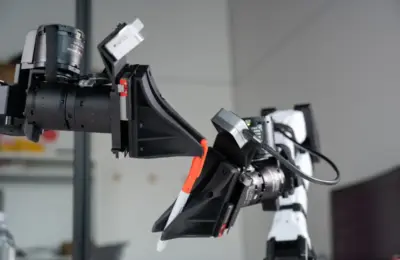
For years, the venture capital narrative was dominated by digital-native software, consumer applications, and generative AI models trained exclusively on text and code. However, the first half of 2026 marks a decisive turning point. Investors are increasingly pouring capital into "Physical AI"—the convergence of machine learning, advanced computer vision, robotics, and physical infrastructure.
Data from Crunchbase reveals that physical AI and deep-tech sectors have experienced unprecedented growth. Startups building solutions for complex 3D environments, hazardous operational fields, and heavy industry raised nearly $47.3 billion in the first six months of 2026 alone—an astonishing 80% year-over-year increase.
This month’s spotlight highlights five innovative companies capturing this macro trend:
- Greyparrot ($27 million Series B) – Transforming commercial waste and recycling facilities using real-time computer vision.
- Emesent ($17 million financing) – Enabling autonomous robotics and LiDAR mapping in GPS-denied environments like underground mines.
- SoundHealth ($12.25 million Series A) – Utilizing FDA-cleared acoustic resonance therapy and AI to treat nasal congestion and improve sleep without pharmaceuticals.
- Forge Industries ($3.85 million seed round) – Converting unrecyclable, hard-to-process plastics into drop-in industrial fuel replacements for coal.
- Cascade ($3.5 million seed round) – Predicting commercial construction projects and tracking bid opportunities months before public announcements.
Detailed Chronology & Deep-Dive Analysis
1. Greyparrot: Turning Trash Into Actionable Data ($27M Series B)
For decades, the global recycling and waste-management industry has operated on guesswork. Facilities have historically relied on manual sampling, rough approximations, and historical averages to understand the composition of the waste moving through their processing lines. London-based Greyparrot is systematically rewriting this playbook.
Last month, Greyparrot closed a £20.3 million ($27 million) Series B funding round led by prominent technology investor Omar Mir. The capital injection will accelerate the deployment of the company’s proprietary, AI-powered optical systems across North America and Europe, supporting its ambitious objective to help prevent over 1 million tons of waste from entering landfills by 2030.
How the Technology Works
Greyparrot installs high-resolution, AI-equipped camera systems directly above fast-moving conveyor belts inside commercial recycling facilities. Utilizing advanced computer vision models trained on millions of data points, the system identifies, categorizes, and tracks discarded bottles, cartons, plastic wraps, and specific product brands in real time.
The immediate operational benefit for enterprise waste giants like Waste Management and Veolia is profound: plant operators can recover higher-purity materials, optimize sorting speeds, and remain fully compliant with increasingly stringent regional environmental regulations. To date, Greyparrot’s systems have been deployed across more than 20 countries, analyzing more than 1 trillion individual waste items.
Beyond the sorting floor, the rich dataset feeds Greyparrot’s enterprise-facing analytics platform, Deepnest. Major consumer packaged goods (CPG) brands—including Unilever, L’Oréal, and Kenvue—use Deepnest to trace what happens to their product packaging post-consumption. This granular insight informs sustainable packaging redesigns and helps corporations comply with complex Extended Producer Responsibility (EPR) mandates now enforced across Canada and the European Union.
2. Emesent: Guiding Autonomous Robots Where GPS Cannot Reach ($17M Financing)
While some startups apply computer vision to waste streams, others are deploying autonomous systems into the most hazardous, inaccessible corners of the earth. Australian robotics and spatial data company Emesent announced $17 million in new financing last month, comprising a $10 million equity round alongside a $7 million venture debt facility provided by the National Reconstruction Fund Corp.
The equity financing syndicate included prominent institutional backers such as Main Sequence Technologies, QIC Ventures, Orion Resource Partners, Hostplus, and NGS Super. Emesent plans to channel the funds into scaling global manufacturing operations and expanding its advanced artificial intelligence autonomy and cloud-mapping software platforms.
Overcoming GPS-Denied Environments
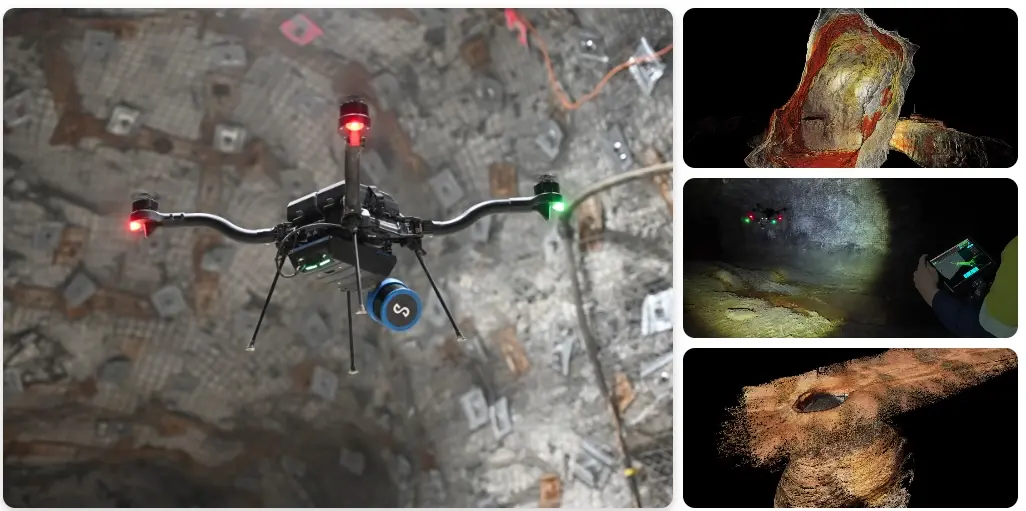
Emesent initially rose to prominence through Hovermap, a specialized LiDAR-scanning payload designed to mount seamlessly onto industrial drones, ground vehicles, or human-carried backpacks. Hovermap maps complex, subterranean environments—such as underground mines, deep tunnels, and disaster zones—without requiring GPS signals.

However, the company’s strategic trajectory is increasingly software-driven. Emesent’s Cortex AI platform empowers autonomous robots to navigate complex, changing underground environments safely and independently. Simultaneously, its Aura cloud platform processes, visualizes, and analyzes massive spatial datasets generated in the field.
Currently deployed across more than 200 active mine sites worldwide, Emesent is leveraging this fresh capital infusion to break into adjacent heavy industries, including national defense, civil construction, and critical infrastructure maintenance.
3. SoundHealth: Treating Nasal Congestion and Insomnia Through Sound ($12.25M Series A)
Shifting from heavy industrial environments to human healthcare, San Francisco-based medtech startup SoundHealth closed an oversubscribed $12.25 million Series A funding round led by Shangbay Capital.
SoundHealth is tackling one of the most common human ailments—nasal congestion and subsequent sleep disruption—through a completely drug-free, non-invasive approach that marries software intelligence with precision medical hardware.
The Science of Acoustic Resonance
SoundHealth’s flagship product, the Sonu band, is an FDA-cleared wearable device that utilizes proprietary AI algorithms to deliver targeted acoustic resonance therapy. The system analyzes individual facial anatomy and customizes specific sound waves designed to stimulate and open nasal passages naturally, relieving congestion without pharmaceutical sprays or surgical interventions.
Building on the clinical success of the Sonu band, the company is also rolling out Spatial Sleep, a newer product designed to help users fall asleep faster and maintain deep, restorative sleep throughout the night.
The oversubscribed round underscores a broader macro trend in digital health: investors are increasingly eager to back validated medtech companies that successfully fuse regulated hardware with generative and predictive AI. According to Crunchbase metrics, startups operating at the intersection of AI and medical devices secured more than $629 million in funding during the first half of the year—representing a robust 33% year-over-year increase.
4. Forge Industries: Upcycling Unrecyclable Plastics Into Industrial Fuel ($3.85M Seed Round)
While traditional recycling infrastructure handles sorted bottles and aluminum cans, a massive fraction of modern municipal solid waste remains virtually unrecyclable. Nashville, Tennessee-based Forge Industries is stepping in to bridge this gap.
Last month, Forge Industries secured a $3.85 million seed round co-led by 8090 Industries and Next Phase Capital. The company is commercializing breakthrough chemical and mechanical engineering technology capable of converting hard-to-recycle plastics and complex municipal waste streams into high-grade industrial fuel.
Decarbonizing Heavy Industry
Forge Industries produces an engineered fuel designed to serve as a direct, drop-in replacement for coal in heavy industries such as cement manufacturing and steel production. Crucially, industrial plants can utilize the fuel without requiring expensive modifications to their legacy combustion equipment.
The freshly secured seed capital will be deployed directly toward the construction of Forge Industries’ first commercial-scale biofuel production facility, strategically situated just outside Las Vegas, Nevada.
Despite steady capital inflows into sustainability and climate tech—with global cleantech, EV, and sustainability categories pulling in roughly $15 billion in the first half of 2026—early-stage breakthroughs that target hard-to-abate industrial sectors remain highly competitive and prized by specialized industrial venture funds.

5. Cascade: Predicting Commercial Construction Projects Before Public Bid ($3.5M Seed Round)
In the hyper-competitive commercial real estate, architecture, engineering, and construction (AEC) sectors, the firms that win the most lucrative contracts are invariably those that identify opportunities months—or even years—before a formal request for proposals (RFP) is publicly issued. New York-based startup Cascade aims to level the playing field using artificial intelligence.
Cascade announced a $3.5 million seed funding round backed by notable investors, including Andreessen Horowitz’s a16z speedrun accelerator, Ada Ventures, and Blitzscaling Ventures.
Signals Over Static Databases
Traditional AEC business development relies heavily on manual networking, outdated municipal databases, and reactive bidding. Cascade’s AI platform bypasses traditional workflows by continuously ingesting and analyzing massive volumes of fragmented public and private data signals.
By parsing complex documents such as municipal bond filings, property transactions, capital expenditure budgets, and local planning board meeting minutes, Cascade’s software can spot and flag commercial construction projects while they are still in their earliest conceptual phases.
The platform gives engineering and architectural firms an early-mover advantage, identifying high-potential projects and outlining optimized pathways to securing the business. The round highlights a strong resurgence in real estate technology (PropTech) seed funding through the first half of 2026, with investors favoring startups that streamline complex administrative, planning, and transactional pipelines.
Supporting Context & Venture Metrics
A macro-level analysis of these five diverse funding rounds reveals shared underlying currents in the global venture capital ecosystem:
- The Physical AI Surge: As software automation reaches maturity in digital environments, investors are aggressively backing startups applying machine learning and computer vision to physical, 3D spaces. Physical AI funding climbed nearly 80% year-over-year in H1 2026 to touch $47.3 billion.
- Robotics Momentum: Driven by persistent global labor shortages and increasingly hazardous working conditions, robotics venture funding shattered historical records in 2025 with $15 billion globally—only to surpass that pace midway through 2026.
- PropTech and Cleantech Resilience: Niche sectors like construction intelligence (Cascade) and alternative waste-to-fuel conversion (Forge Industries) prove that early-stage investors are willing to back capital-efficient, high-utility B2B models that solve structural inefficiencies in legacy industries.
Official Statements & Industry Outlook
Venture capitalists and startup founders alike emphasize that the era of speculative software hype is giving way to pragmatic, utility-driven deployment.
Commenting on the broader shift toward physical AI, market analysts note that enterprise buyers are no longer impressed by demos that merely generate text or summarize documents. Instead, enterprise budgets are flowing directly to solutions that can measure physical waste (Greyparrot), navigate underground hazards (Emesent), alleviate medical conditions (SoundHealth), decarbonize cement kilns (Forge Industries), or predict commercial building pipelines (Cascade).
As the second half of 2026 unfolds, early-stage deal flow indicates that startups capable of bridging the digital-physical divide will continue to attract premium valuations, regardless of broader macroeconomic fluctuations.
Future Outlook
Looking ahead, the trajectory of these five startups offers a clear window into where enterprise technology is heading over the next decade:
- Regulatory Compliance as a Growth Driver: Companies like Greyparrot prove that tightening global environmental regulations (such as Extended Producer Responsibility laws in Europe and Canada) transform AI compliance tools from optional luxuries into mandatory corporate expenditures.
- Autonomous Operations in Hostile Terrain: Emesent’s expansion underscores how remote-monitoring and autonomous robotics will increasingly replace human labor in high-risk environments like mines, nuclear facilities, and deep-sea infrastructure.
- Consumerized Medical Devices: SoundHealth’s success signals a continued consumer appetite for non-pharmacological, software-augmented health solutions backed by rigorous clinical validation and regulatory clearance.
- Circular Economy Scale-Up: Forge Industries highlights the growing importance of chemical and thermal upcycling in heavy industries desperate to meet net-zero carbon targets without undertaking capital-prohibitive factory overhauls.
- Proactive Market Intelligence: Platforms like Cascade demonstrate that predictive analytics will replace reactive sales funnels across real estate, construction, and heavy B2B services.
Ultimately, these funding rounds demonstrate that the most exciting venture opportunities are often found where complex code meets the physical realities of our world.