By Eric Levine, Ed.D., in collaboration with Becky Shipkosky
Executive Overview
What do a silent-era movie star accused of a horrific murder he did not commit, and a man misidentified as Venice’s first female gondolier, truly have in common? On the surface, their lives appear separated by geography, era, and circumstance. Yet, they share a devastating, unifying reality: They never were the people the world demanded they be.
Roscoe "Fatty" Arbuckle was never a murderous predator, and Alex Hai is not a woman. However, the false narratives constructed around them were so persistent, widespread, and culturally entrenched that they completely eclipsed their actual lives, inflicting profound psychological and physiological damage.
The power of an individual’s ability to author their own story extends far beyond the basic human desire to feel seen. The harms of losing narrative agency are profound—and, as historical evidence demonstrates, deadly. While the public trajectories of Arbuckle and Hai diverge in their ultimate chapters, examining their parallel struggles offers urgent, real-life wisdom about the power of narrative identity.
This deep dive investigates the mechanics of narrative theft, explores how systemic cultural biases fabricate societal villains and icons alike, and reviews the mounting body of psychological research proving that owning one’s story is not merely a matter of comfort—it is a matter of life and death.
Detailed Chronology: The Anatomy of Narrative Theft
To understand the mechanics of narrative hijacking, one must examine how society strips individuals of their authentic identities to feed sensationalist media machines, cultural prejudice, and public appetite for scandal.
Fatty Arbuckle’s Tragic Misrepresentation
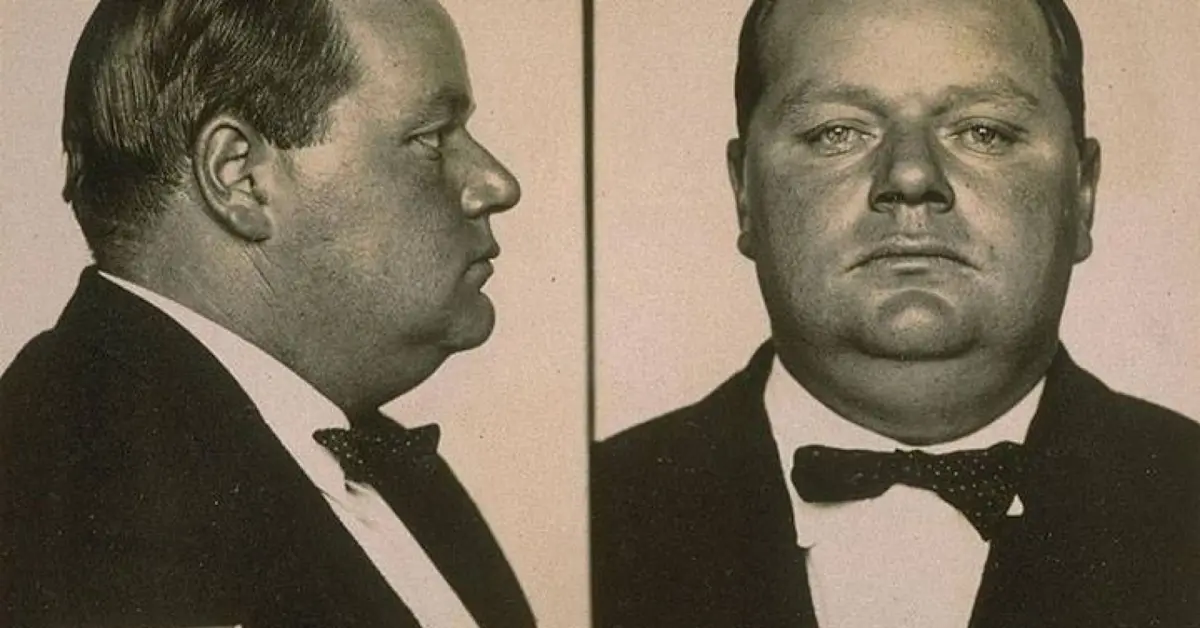
Roscoe "Fatty" Arbuckle was robbed of his narrative agency almost from the moment of birth. Born a staggering 13 pounds, his small-framed father refused to believe the child was his, accusing Arbuckle’s mother of infidelity. In a final act of paternal rejection, his father named the infant after a despised, philandering political figure of the era.
Forced to earn his own living starting at age 11, Arbuckle utilized raw talent and relentless work ethic to claw his way out of poverty. By age 32, he was the highest-salaried actor in the world, beloved for his nimble slapstick comedy. By age 34, however, he was on trial for murder.
The sensationalist media mogul William Randolph Hearst capitalized on America’s growing mistrust of Hollywood’s perceived moral excesses. Hearst’s publications weaponized the tragedy surrounding the death of actress Virginia Rappe, printing dishonest, inflammatory headlines such as “…Virginia Rappe, Victim in Arbuckle Orgy.” Editorial columns frequently targeted the actor’s physical size, subtly and falsely originating the narrative that his weight caused Rappe’s fatal ruptured bladder. The rest of the national press quickly fell in line.
Though Arbuckle was ultimately acquitted and issued a rare, formal written apology from the jury, public opinion refused to yield. Blacklisted by the industry that once adored him, Arbuckle spent eight long years in professional exile.
Finally, on June 28, 1933, Hollywood offered him a contract for a feature-length film. Out celebrating with friends that evening, Arbuckle reportedly declared, "This is the happiest day of my life." He died of a heart attack in his sleep that very night. He was just 46 years old.
Alex Hai and the Absence of a Framework for Truth
Decades later, Alex Hai suffered a parallel cycle of parental rejection and narrative theft, albeit through a different cultural lens. Assigned female at birth, Alex recalls knowing by age three that he was not a girl—a reality his family refused to accept. Fleeing home at 15, he survived in Hamburg’s red-light district before resourcefulness, resilience, and the kindness of strangers allowed him to build a stable life and study film in university.
While working on a film project in Venice, Alex fell in love with the art of the gondola and chose to stay. Still presenting as female while navigating a deeply traditional city, Alex found a boat-repair guild willing to take him in. He learned to row, eventually excelling to the point where he was widely considered one of the finest rowers in Venice.
However, by the time he tested for his official licensure, the media caught wind of a compelling angle: the "first female gondolier."
Operating in the mid-1990s, the concept of a transgender man was largely absent from mainstream public discourse. Alex flatly refused to speak with reporters, having zero desire to serve as a reluctant feminist icon. Yet, the media published the story against his explicit wishes anyway.
The consequences were immediate and catastrophic:
- Professional Alienation: The traditional gondolier guild believed Alex had orchestrated the media attention for self-promotion and turned their backs on him.
- Institutional Prejudice: Venice’s licensing judges failed him on his practical exams twice, driven by institutional bias and confusion over his identity.
- Exhausting Litigation: Alex was forced into years of costly legal battles simply for the right to work, entirely sidetracked from focusing on his craft or his transition.
Though he eventually won the legal right to work and briefly attempted to leverage the prima gondoliera moniker to build a business, the psychological toll caught up with him. Severe depression set in, compounded by the arbitrary, unexplained confiscation of his boat by local authorities. Fearing transphobic violence as awareness of his true identity grew, Alex fled back to Germany—a return he never intended to make.
Yet, unlike Arbuckle, whose story was permanently cut short, Hai’s journey took a crucial turn toward redemption.
Supporting Context & Metrics: A Broader Societal Pattern
The weaponization of false narratives against innocent individuals is not an isolated historical anomaly. It represents a recurring societal reflex wherein public institutions, media conglomerates, and frightened populations construct convenient fictions to explain complex tragedies.
Richard Jewell
During the 1996 Atlanta Olympics, security guard Richard Jewell discovered a backpack containing a pipe bomb. While the bomb did detonate and tragically claim two lives, Jewell’s swift action cleared the area and saved hundreds of others.
Instead of being celebrated as a hero, Jewell was thrust into the crosshairs of an overzealous FBI investigation. The media eagerly adopted a "lone-wolf loser" profile, relentlessly broadcasting his face and scrutinizing his every move. Though ultimately exonerated—and later vindicated through successful defamation settlements—the stress severely impacted his health. Richard Jewell died of heart disease in 2007 at the age of 44.
Lindy Chamberlain
In 1980, Australian mother Lindy Chamberlain reported that her nine-week-old daughter, Azaria, had been snatched from a campsite tent by a dingo. The Australian public and media rejected her narrative, misinterpreting her composed, stoic grief as cold, psychopathic indifference.
Fuelled by wild rumors of occult practices, public outrage pressured investigators into manufacturing a case against her. Chamberlain was wrongfully convicted of murder and served over three years in prison before the discovery of crucial evidence in an isolated dingo lair finally cleared her name. Though she eventually received a formal exoneration and dedicated her life to legal reform and advocacy, the psychological wounds of forced public villification remained lifelong.
Additional Historical Parallels
- The Central Park Five: Five Black and Latino teenagers were coerced into false confessions and wrongfully imprisoned for years following a 1989 Central Park assault. They have since reclaimed their narratives through memoirs, political office, and public advocacy.
- Monica Lewinsky: Following her consensual affair with then-President Bill Clinton in the mid-1990s, Lewinsky was thrust into the center of a media circus, subjected to relentless late-night punchlines and misogynistic public shaming. She transformed her stolen narrative into a powerful platform, emerging globally as a leading anti-bullying advocate and public speaker.
Official Statements and Psychological Research
Why do stolen narratives extract such a devastating physical and psychological toll? Modern psychological science provides clear, empirical answers.
The Science of Narrative Identity
Research spearheaded by Dr. Jonathan Adler and colleagues demonstrates that the stories we tell about our lives serve as the scaffolding of psychological health.
- Agency and Coherence: Constructing an integrated, self-authored narrative identity acts as a powerful catalyst for healing, building deep psychological resilience and enhancing self-efficacy (Adler, 2011; Adler et al., 2015).
- The Cost of Narrative Disintegration: Conversely, having one’s story silenced, invalidated, or hijacked inflicts an existential wound. It fractures the self, strips away personal agency, and leads directly to chronic self-doubt, clinical depression, severe anxiety, and complex trauma.
The Cardiovascular Connection
Mental health does not exist in a vacuum. Chronic psychological distress, prolonged trauma, and unmanaged depression directly impact cardiovascular health (Cohen, Edmondson, & Kronish, 2015).
Studies on lifetime trauma exposure and chronic stress document a clear, physiological pathway linking psychological disenfranchisement to premature mortality and cardiovascular events (Hendrickson et al., 2013; Lippi et al., 2009). As demonstrated in the tragic fates of Roscoe Arbuckle and Richard Jewell, the stress of battling a false, imposed public narrative can quite literally break a person’s heart.
Future Outlook: Redemption Through Creative Expression
While the systemic forces that distort personal narratives remain powerful, the paths forged by survivors like Alex Hai and Lindy Chamberlain point toward a universal roadmap for recovery: Redemption through creative expression.
Upon returning to Berlin, Alex Hai found a welcoming, protective community. He began to heal by returning to the act of creation, authoring a roman à clef novel designed "to protect the guilty," alongside a continuous stream of poetry and visual art. Having finally accessed medical transition and a supportive social fabric, Hai is actively reclaiming his narrative on his own terms, proving that artistic expression can serve as an antidote to historical erasure.
Key Takeaways for Society and Media
- Media Accountability: Journalistic outlets must recognize that sensationalized headlines and forced archetypes carry life-or-threatening consequences for the subjects involved.
- Empathy for Narrative Agency: Society must foster an institutional framework that respects individual self-determination, particularly regarding gender identity, trauma survival, and public representation.
- The Healing Power of Storytelling: Encouraging survivors of systemic injustice to author their own truths is not merely an act of catharsis; it is a vital public health intervention.
Ultimately, owning one’s story is about far more than simply being understood. As history repeatedly demonstrates, narrative agency is a fundamental pillar of human dignity—and one that can determine life-and-death outcomes.
References
- I, Roscoe – The Official website for Roscoe “Fatty” Arbuckle. (n.d.). https://fattyarbuckleofficial.com/
- McEwen, A., & Webster, M. (Directors). (2026, June 26). The Gondolier (D. Conrad & K. Clark, Interviewers). WNYC. https://radiolab.org/podcast/gondo
- Adler, J. M. (2011). Living into the story: Agency and coherence in a longitudinal study of narrative identity development and mental health over the course of psychotherapy. Journal of Personality and Social Psychology, 102(2), 367–389. https://doi.org/10.1037/a0025289
- Adler, J. M., et al. (2015). Variation in narrative identity is associated with trajectories of mental health over several years. Journal of Personality and Social Psychology, 108(3), 476–496. https://doi.org/10.1037/a0038601
- Cohen, B. E., Edmondson, D., & Kronish, I. M. (2015). State of the Art Review: Depression, Stress, Anxiety, and Cardiovascular Disease. American Journal of Hypertension, 28(11), 1295–1302. https://doi.org/10.1093/ajh/hpv047
- Hendrickson, C. M., et al. (2013). Lifetime trauma exposure and prospective cardiovascular events and All-Cause mortality. Psychosomatic Medicine, 75(9), 849–855. https://doi.org/10.1097/psy.0b013e3182a88846
- Lippi, G., et al. (2009). Mental Depression and Cardiovascular Disease: a multifaceted, bidirectional association. Seminars in Thrombosis and Hemostasis, 35(03), 325–336. https://doi.org/10.1055/s-0029-1222611