For years, human-AI interaction has been defined by a tedious, repetitive loop: type a prompt, receive a response, evaluate the output, and type another prompt. Users have remained the persistent driver of every micro-decision, preventing generative artificial intelligence from acting as a true autonomous teammate.
That paradigm is shifting. Emerging from Anthropic’s internal development tools—originally built under the moniker Claude Code—comes Claude Cowork, a human-friendly, agentic AI platform engineered to manage complex, multi-step workflows across an entire organization’s tech stack. Co-created and analyzed by industry experts Isar Meitis and Michael Stelzner, Cowork moves past the terminal-based command lines of its predecessor, wrapping an advanced agentic engine in an intuitive desktop interface.
By offering real-time visibility into active plans, connected folder systems, and automated task execution, Cowork transforms AI from a passive chatbot into an active operational force. This report explores how businesses can leverage Claude Cowork to plan, build, and deploy sophisticated AI automations that reclaim hundreds of hours of productivity.
Detailed Chronology & Evolution: From Developer Tool to Enterprise Agent
The genesis of Claude Cowork lies in necessity. Anthropic initially engineered Claude Code as an experimental internal environment for its software engineers. However, as external users gained access, it became immediately apparent that the underlying engine was capable of far more than merely writing code.
Despite its raw utility, the terminal-based interface of Claude Code presented a steep learning curve, alienating non-technical business leaders, marketers, and entrepreneurs. Anthropic recognized that mainstream enterprise adoption required a visual, intuitive interface. Enter Claude Cowork: a desktop application that retains the autonomous execution power of its predecessor while stripping away the need for command-line navigation.
The Anatomy of an Agentic Platform
What separates platforms like Claude Cowork from traditional chat interfaces is a triad of core capabilities:
Autonomous Planning and Execution: In legacy chat interactions, the user dictates every sequential step. Cowork reverses this dynamic. Users establish high-level goals, operational constraints, and data parameters. The AI then formulates a comprehensive execution plan, displays it to the user, and systematically ticks off milestones without requiring constant micromanagement.
Persistent Memory Architecture: Standard chat sessions wipe their context clean upon reset. Cowork, conversely, retains institutional knowledge by reading and writing to structured markdown files across multiple sessions. Brand guidelines, historical client data, internal process documentation, and pricing frameworks remain instantly accessible.
Contextual Tool Utilization: Cowork does not merely integrate with external applications; it exercises cognitive discretion regarding when and how to deploy them. It independently determines the appropriate moment to extract a call transcript from Fathom, update a Salesforce CRM record, or draft a follow-up client email.
Real-World Case Studies
The practical applications of this architecture are already yielding dramatic efficiencies in content creation and sales operations.
Automated Content Operations: By connecting Claude Cowork to an archive of podcast episodes, YouTube video transcripts, and community call logs, creators can cross-reference their core messaging with trending topics in their industry. The system curates relevant past statements, generates aligned social media posts, cuts video clips, and stages everything for human review.
Accelerated Sales Proposals: When a sales discovery call concludes, Cowork can pull the meeting transcript, research the prospect’s corporate background online, analyze the broader competitive landscape, and draft a tailored proposal. After human review and minor iterations, the system auto-generates the final document, updates the CRM, saves the file to cloud storage, and drafts a client email with the PDF attached—slashing a two-hour administrative burden down to ten minutes.
Successfully deploying agentic AI requires moving away from ad-hoc prompting and toward structured engineering methodologies. Experts recommend a disciplined, four-phase approach to building functional automations.
The ideal starting point for any automation initiative is a task that satisfies two criteria: it occurs with high frequency, and it consumes disproportionate time or generates little creative fulfillment. Once targeted, the task must be articulated in plain language—similar to briefing an expert consultant. This brief should encompass the designated role, corporate context, data sources, frequency of execution, and expected deliverables.
Because AI excels at precise execution, vagueness in initial instructions leads to wasted tokens, time, and computational effort. To circumvent this, users should leverage Claude to conduct an interactive requirements-gathering interview.
The Interview Method: The user provides a high-level concept, and Claude conducts a structured interrogation—asking roughly 40 targeted questions over the course of an hour.
The PRD Output: From these responses, Claude compiles a comprehensive 25- to 40-page Product Requirements Document. Users can bypass reading the exhaustive document by requesting an executive summary, knowing the substance has already been validated through the interview.
Phase 3: Developing the Minimum Viable Product (MVP)
Rather than attempting to automate an entire department overnight, developers should use the PRD to isolate a single, high-impact component that delivers a quick win. In the sales proposal workflow, for instance, the core MVP is simply converting a call transcript into a draft proposal. Secondary features—such as CRM integrations, automated email dispatch, and cloud storage syncing—are layered into subsequent development sprints.
Phase 4: Establishing Data Connections and File Access
Claude Cowork relies on secure, well-defined boundaries to interact with external tools and local environments. Users should organize local projects within a designated root folder (e.g., ClaudeCowork) with dedicated subfolders. Connecting Cowork at the top-level directory allows the AI to navigate project contexts while naturally containing its operational scope.
Beyond local files, system connectivity is managed through a clear functional hierarchy:
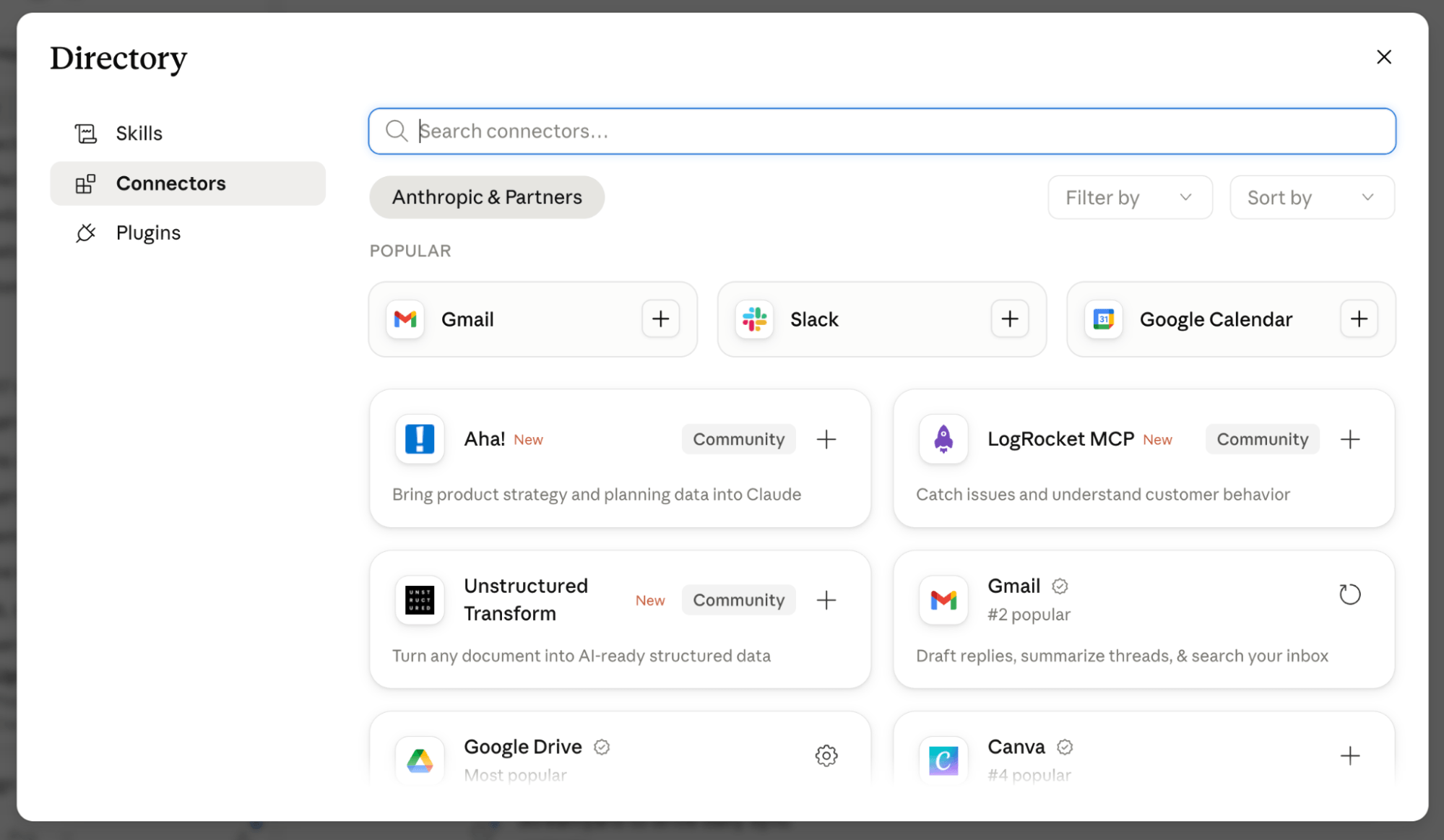
Native Connectors: Approved, pre-tested integrations with enterprise platforms including Google Drive, SharePoint, Notion, ClickUp, Asana, monday.com, and major marketing suites.
Vendor-Published Model Context Protocols (MCPs): Standardized API integration protocols developed by software vendors that allow secure, rapid platform linking.
Custom MCPs: If an official protocol does not exist, users can feed API documentation to Claude, which will write a custom MCP and generate clear usage documentation. API keys are securely isolated within local credential managers like macOS Keychain.
Chrome Browser Automation Extensions: For legacy tools lacking native APIs or MCPs, Claude can directly operate a headless or visual Chrome browser—navigating menus and clicking buttons much like a human operator, while pausing securely for manual user authentication at login screens.
Official Statements and Industry Perspectives
Business leaders and technologists emphasize that the transition to agentic AI platforms represents a fundamental democratization of software engineering.
Industry analysts point out that platforms bridging the gap between raw developer tools and user-friendly desktop wrappers are critical for enterprise scale. As agentic systems take over multi-step operational chains, the role of the human worker shifts from a tactical executor to a strategic supervisor.
"When you write requirements that clearly define data sources, workflows, and expected outputs, the AI implements them in minutes," notes tech educator Isar Meitis. "The human’s primary job is no longer doing the work—it is applying judgment, approving priorities, and steering the agentic process."
Furthermore, cybersecurity and data privacy experts stress that containerized local file access and standardized protocols like the Model Context Protocol (MCP) provide the necessary guardrails for corporate deployment, ensuring sensitive enterprise data remains protected while empowering automation engines.
Future Outlook: The Road Ahead for Agentic Workflows
As platforms like Claude Cowork continue to evolve, the boundary between human-driven tasks and autonomous machine workflows will continue to blur. Several key trends are projected to shape the immediate future of business automation:
Hyper-Personalized Business Operations: As persistent memory and advanced tool integration improve, AI agents will build deep historical profiles of company workflows, client preferences, and operational bottlenecks, predicting needs before they are explicitly voiced.
Mainstream Adoption of MCPs: Expect software vendors across all verticals to rapidly adopt Model Context Protocols as a universal standard, making plug-and-play agentic connectivity the default expectation for enterprise software.
Redefining Knowledge Work: The emergence of agentic systems capable of autonomous planning and multi-application execution signals the end of administrative busywork. Workers who master the art of writing precise Product Requirements Documents (PRDs) and managing AI agent pipelines will outpace those tethered to legacy, manual workflows.
Ultimately, tools like Claude Cowork signal the dawn of a new productivity era—one where organizations no longer rent software to perform tasks, but instead deploy autonomous digital agents capable of executing complex strategies across the entire modern enterprise.