Executive Overview
For over ten years, the personal computer industry has watched Apple maintain an unyielding boundary between its two flagship operating systems. While the iPad line embraced multi-touch interactivity with open arms, the Mac notebook ecosystem remained strictly bound to the traditional trackpad and keyboard paradigm. Steve Jobs famously dismissed touchscreens on vertical laptop displays as ergonomically flawed and exhausting for everyday use, setting a design philosophy that Apple’s engineering teams respected for generations.
That defensive wall is finally crumbling.
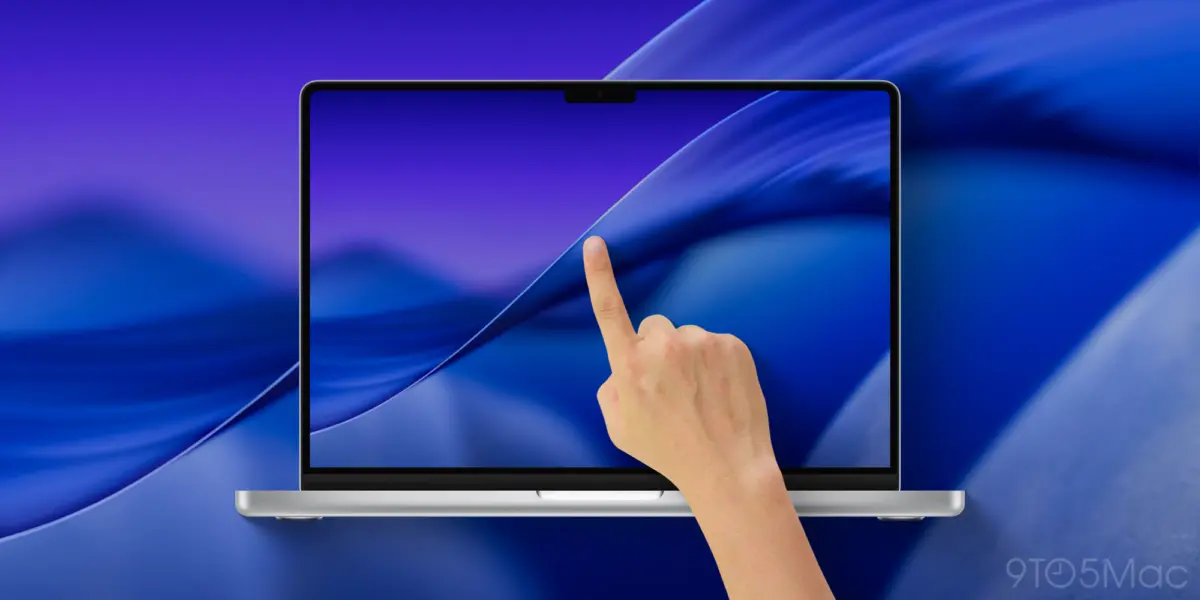
According to supply chain indicators, deep software code leaks, and insider reports from Bloomberg, Apple is preparing to launch its first-ever touchscreen MacBook Pro as early as October. This upcoming hardware release represents far more than just a routine spec bump. Paired with a sweeping industrial redesign—potentially carrying the moniker "MacBook Ultra"—the device introduces a suite of cutting-edge technologies. These include a Tandem OLED display panel borrowed from the iPad Pro, a compact Dynamic Island, custom touch-centric user interface optimizations in macOS, and a refined, slimmed-down chassis.
While the introduction of touch support to macOS will undoubtedly alter the trajectory of personal computing, it arrives amid a volatile economic backdrop. Ongoing memory crises and subsequent price adjustments mean that these high-end machines will command a steep premium, with expected starting prices hovering around $2,499 for the 14-inch model and $2,999 for the 16-inch variant. This comprehensive analysis breaks down everything we know about Apple’s monumental hardware shift, exploring the display technology, software mechanics, processing power, and market implications of the upcoming MacBook lineup.
Detailed Chronology: The Road to the Touchscreen Mac
The journey toward a touch-enabled macOS device has been a slow, calculated evolution rather than a sudden pivot. For years, Cupertino’s leadership publicly maintained that laptops and touchscreens made poor bedfellows. However, behind closed doors, prototyping and software testing have quietly evolved.

Clues Hidden in Plain Sight: macOS 27
Apple has a long-standing history of laying the software groundwork for upcoming hardware releases long before official announcements take place. The recent developer betas of macOS 27 have provided the most concrete evidence yet that touch support is imminent. Eagle-eyed developers and daily users alike have flagged several distinct system behaviors:
- Enhanced Sidecar Touch Integration: Improvements to how touch inputs are handled when an iPad is tethered as a secondary display.
- Native Pull-to-Refresh Support: A staple of mobile touch interfaces making its way into standard desktop app architectures.
- Enlarged Menu Bar Items: A subtle layout shift designed to accommodate human fingertips rather than precise mouse cursors.
While some users initially brushed these UI adjustments off as annoying quirks—particularly on smaller form-factor machines like the 13-inch MacBook Air, where menu bar items now occasionally spill past the notch—they form a cohesive pattern. They are the foundational building blocks of a unified operating system experience designed to seamlessly accept both pointer and tactile inputs.
The October Reveal and the "MacBook Ultra" Rebranding
Industry consensus now points to an October launch window for the redesigned MacBook Pro lineup. Rumors persist that Apple may lean into a new branding tier, introducing the "MacBook Ultra" designation to distinguish these revolutionary touch-enabled, OLED-equipped machines from traditional legacy models. By rolling out the hardware alongside major software updates, Apple is signaling to developers that the era of strictly non-touch macOS is officially coming to a close.
Supporting Context & Metrics: Display, Performance, and Design
The transition to a touchscreen interface required Apple to completely rethink the physical and internal architecture of the MacBook Pro. To deliver an experience that matches or exceeds the fluidity of iOS and iPadOS, Apple’s hardware engineers focused heavily on the visual canvas, processing architecture, and overall portability.
+-------------------------------------------------------------------------+
|                        MACBOOK PRO HARDWARE STACK                       |
+--------------------------+----------------------------------------------+
| Display Technology       | Tandem OLED (Stacked panels, high contrast)  |
| Biometrics / Interface   | Compact Dynamic Island (No Face ID support)  |
| Processing Power         | M5 Pro & M5 Max (Skipping M6 generation)     |
| Industrial Design        | Thinner, lighter chassis without thermal loss|
| Expected Price Points    | $2,499 (14-inch) / $2,999 (16-inch)          |
+--------------------------+----------------------------------------------+
The Tandem OLED Revolution
At the heart of the new MacBook Pro is a breakthrough display panel utilizing Tandem OLED technology. Already praised on the iPad Pro as one of the finest mobile displays on the market, Tandem OLED relies on stacked organic light-emitting diode layers. This dual-layer architecture yields staggering performance benefits:
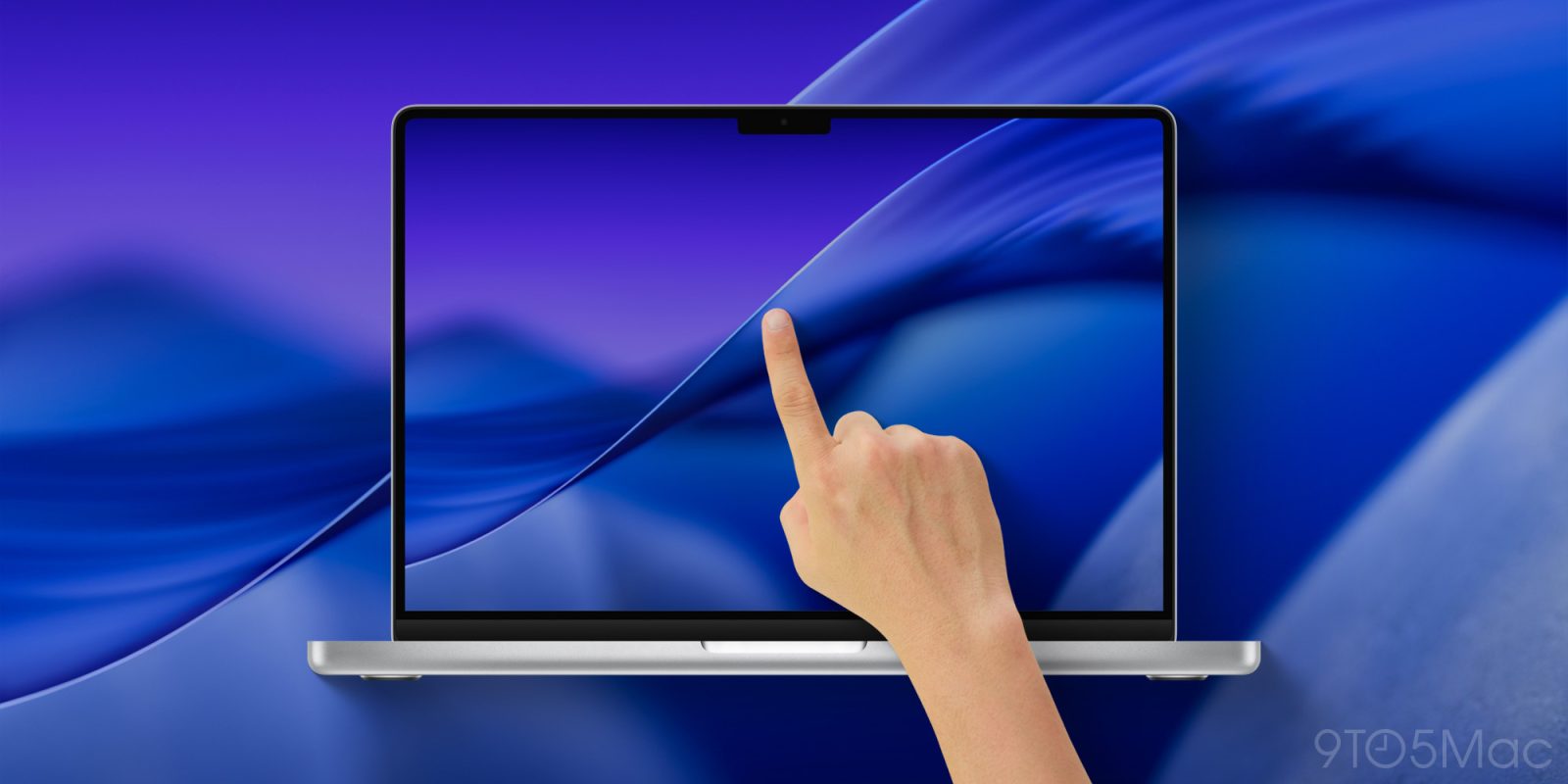
- Exceptional Color Accuracy: Deeper blacks and vibrant, true-to-life color reproduction ideal for creative professionals.
- Towering Contrast Ratios: Infinite contrast that makes high-dynamic-range (HDR) content pop with startling clarity.
- Increased Peak Brightness: Crucial for overcoming glare in well-lit environments and maintaining visibility outdoors.
The Arrival of the Dynamic Island
Breaking up the top center of the display will be a Dynamic Island, adapted directly from the iPhone lineup. Though reports indicate it will be slightly smaller than its smartphone counterpart to preserve screen real estate on a wider laptop display, it will serve as an interactive hub for system notifications, media playback controls, and background activities. Interestingly, supply chain reports confirm that this cut-out will not feature Face ID hardware, meaning users will continue to rely on Touch ID embedded in the keyboard for biometric authentication.
Navigating the Silicon Landscape: M5 Pro, M5 Max, and the M7 Strategy
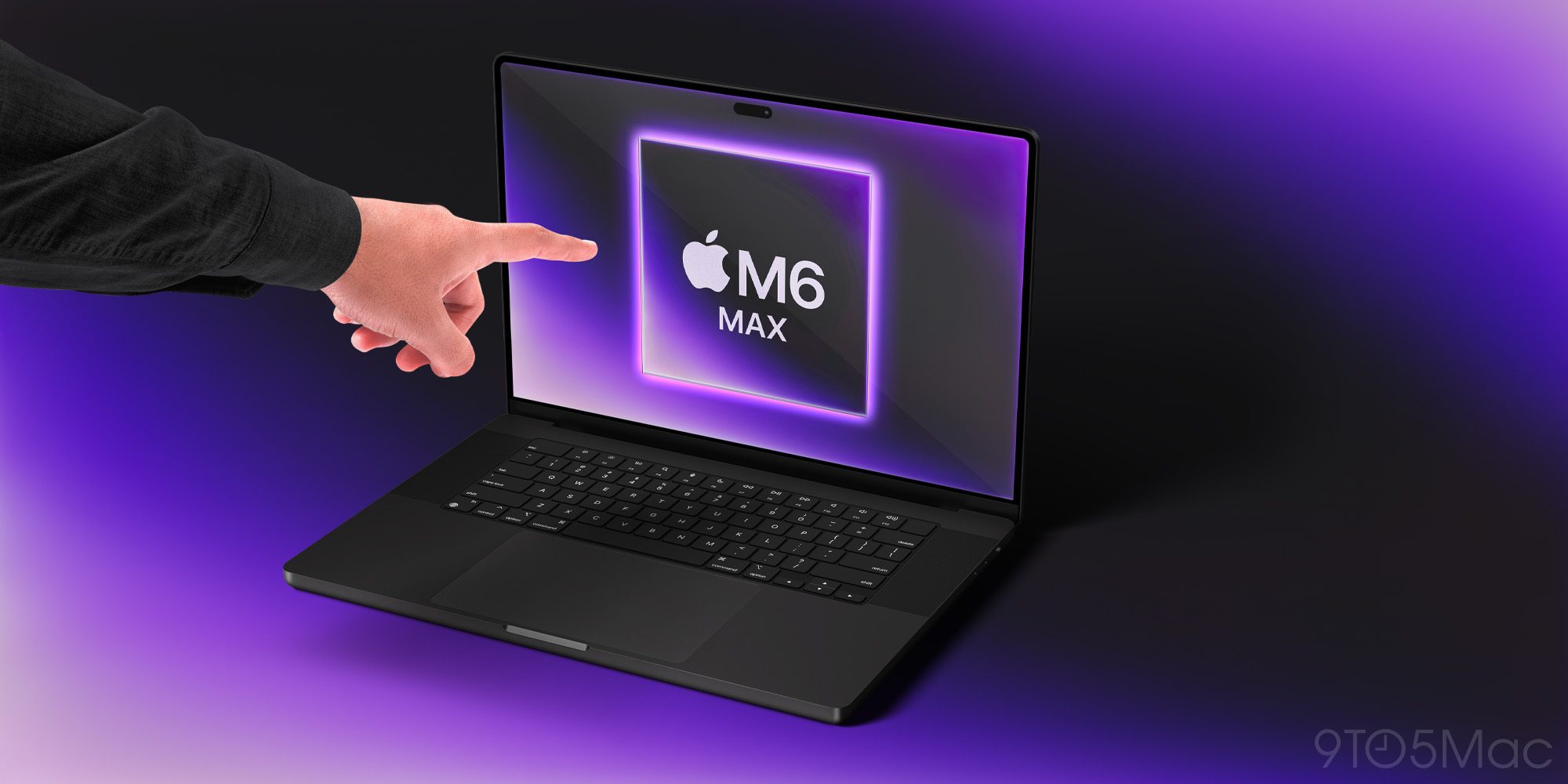
One of the most surprising disclosures surrounding the upcoming release involves Apple’s silicon roadmap. Initial industry speculation suggested that the redesigned MacBook Pro would debut with the next-generation M6 Pro and M6 Max chips built on an advanced 2-nanometer process.
However, Apple has reportedly chosen to accelerate its development timeline, effectively skipping the M6 Pro/Max generation entirely. Instead, the upcoming touchscreen MacBook Pros will ship powered by the robust M5 Pro and M5 Max chips.
For consumers looking for an entry-level option, the news is slightly more complex. There will be no base-model version of the touchscreen MacBook Pro at the initial October launch. Industry insiders indicate that Apple plans to introduce a base-model touchscreen MacBook Pro powered by the forthcoming M7 chip as early as spring, allowing the company to stagger its product rollouts across different price brackets and user tiers.
A Slimmer, More Ergonomic Chassis
Weight and thickness have always been a delicate balancing act for pro-tier laptops. The previous iterations of the MacBook Pro leaned into a boxier, more utilitarian aesthetic that some users found slightly chunky. The upcoming redesign addresses this by trimming millimeters from the profile, resulting in a significantly lighter and more portable device. Apple’s thermal engineers have reportedly managed to achieve this reduction in thickness without sacrificing cooling performance—a critical requirement for sustaining heavy workloads driven by the M5 Pro and Max processors.
Official Statements and Industry Insights
The gravity of this hardware shift has prompted extensive analysis from industry watchers and financial analysts alike. Bloomberg’s Mark Gurman has offered deep dives into the software mechanics that will govern the touch experience, providing a clear picture of how macOS will adapt to human fingertips.
According to Gurman’s reporting, Apple’s software engineering team has developed contextual UI mechanics specifically tailored for the laptop form factor:
"For instance, if users touch a button or control, the interface will bring up a new type of menu surrounding their finger that provides more relevant options for touch commands.
The software will also display the most appropriate set of controls based on users’ prior interaction. And if a person taps an item in the menu bar at the top of the screen, the set of controls will enlarge to be more easily selectable with a finger."
These intelligent context menus are designed to solve the fundamental ergonomic challenge of desktop operating systems: precision targeting. Because mouse cursors are capable of landing on single-pixel targets while human fingers require much larger touch targets, macOS will dynamically scale interactive elements the moment physical contact is registered.

Financial analysts are also closely watching the pricing strategy. Following widespread memory market supply crunches and subsequent price adjustments across Mac and iPad lines in June, components have become noticeably more expensive to source. Consequently, consumers should brace for a higher cost of entry. Baseline expectations peg the starting price for the 14-inch touchscreen MacBook Pro at roughly $2,499, with the larger 16-inch model climbing to $2,999.
Future Outlook: What This Means for the Future of Personal Computing
The release of the first touchscreen MacBook Pro marks a profound philosophical turning point for Apple. For years, the company argued that combining touchscreens with laptop form factors resulted in "ergonomic disasters." By engineering a nuanced, context-aware interface that respects both traditional keyboard-and-trackpad workflows and direct finger input, Apple is acknowledging that modern users expect fluid continuity across all their computing devices.
Looking ahead, the ripple effects of this launch will be felt across the entire software development community. Developers who have spent years building desktop-only macOS apps will now need to audit their user interfaces, ensuring that buttons, menus, and navigation elements are touch-friendly. Furthermore, the eventual filtering down of touchscreen technology to the MacBook Air and base-level consumer laptops will democratize the feature, making touch input a standard expectation rather than a premium novelty.
As October approaches, the tech world waits to see whether Apple’s execution can match its ambition. Will the touchscreen MacBook Pro redefine professional productivity, or will users default back to their trusted trackpads? One thing is certain: the era of the static laptop display is officially over.