Executive Overview
For decades, the custom-built personal computer market has been driven by a relentless pursuit of performance. As processors push higher clock speeds and graphics cards demand unprecedented wattage, managing thermal output has transitioned from a routine engineering challenge into a high-stakes balancing act. At the center of this evolution lies a persistent dilemma for enthusiasts and professionals alike: should you stick with the time-tested reliability of a massive air-cooled heatsink, or invest in the sleek, high-performance ecosystem of liquid cooling?
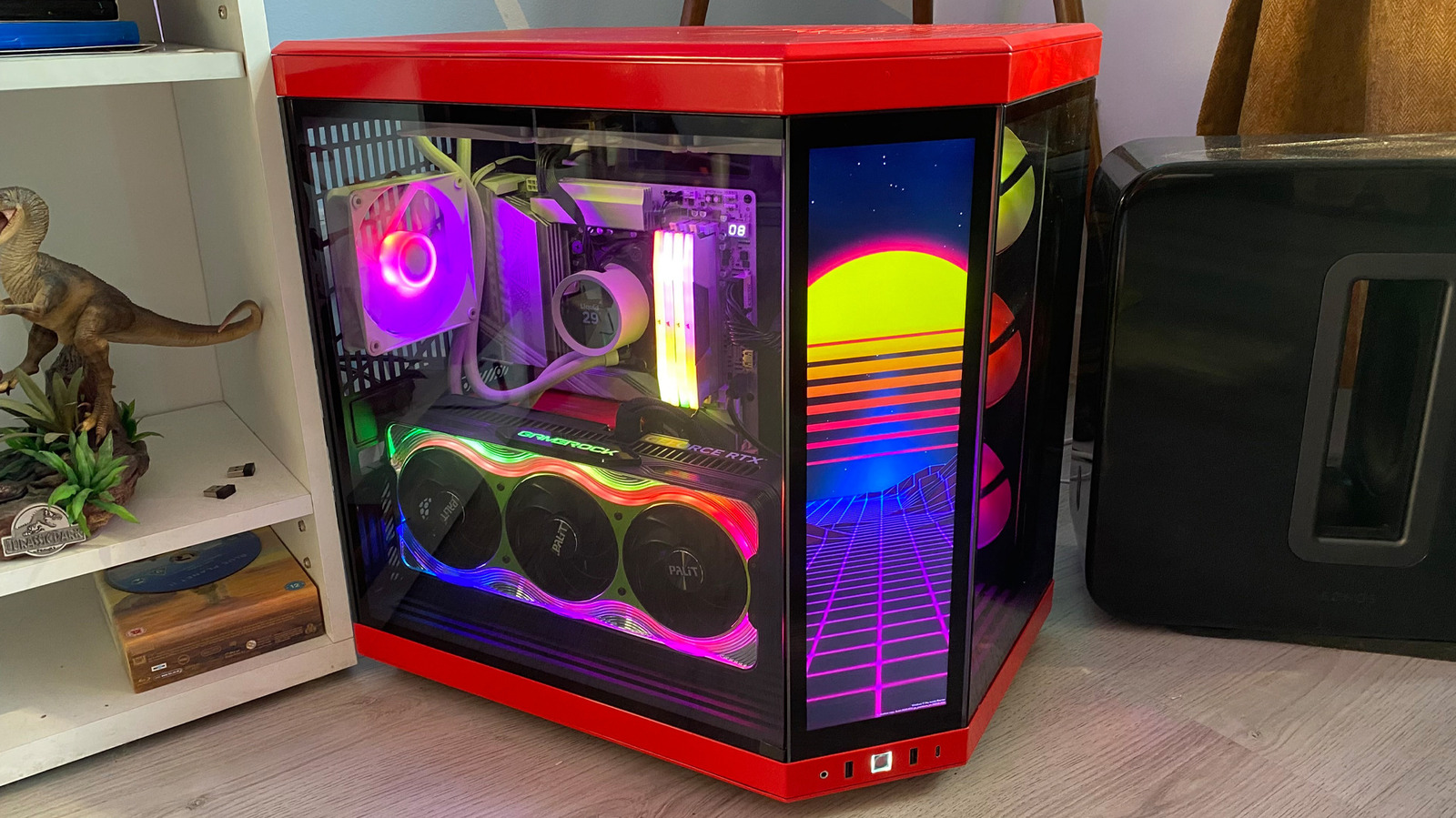
Liquid-cooled systems—ranging from plug-and-play All-In-One (AIO) units to intricate, multi-component custom loops—have undoubtedly become the aesthetic standard-bearers of modern high-end rig design. Featuring customizable RGB lighting, digital monitoring displays, and imposing radiator arrays, they look astonishing through a tempered-glass side panel. However, they come at a notable cost premium, both financially and in terms of installation complexity and maintenance overhead.
As we navigate through the hardware demands of high-refresh-rate 4K gaming, heavy video rendering, and complex machine-learning tasks, the gap between thermal management strategies has never been more pronounced. This comprehensive analysis explores how liquid cooling compares to traditional air cooling, the mechanics driving both technologies, and how to determine which cooling paradigm truly fits your next PC build.
Detailed Chronology and Technical Evolution of PC Cooling
To understand why liquid cooling commands such fervent loyalty and a steep price tag, it is helpful to trace how PC thermal management has evolved alongside semiconductor architecture.
The Era of Passive and Simple Air Cooling
In the formative decades of personal computing, CPUs generated relatively little heat. Early systems relied on basic metallic heatsinks, sometimes operating entirely passively without a fan. As clock speeds accelerated into the gigahertz range around the turn of the millennium, manufacturers introduced active air cooling: a combination of an aluminum or copper heatsink bolted directly to the processor, paired with a dedicated spinning fan to exhaust heated air.
For many years, this straightforward approach satisfied the cooling needs of nearly all consumer PCs. Air coolers evolved to include heat pipes—sealed copper tubes containing a working fluid that vaporizes and condenses to rapidly transfer heat away from the CPU base plate to the fin stack.
The Rise of Closed-Loop Liquid Coolers
As multi-core processors emerged and power consumption surged, the physical size of air coolers grew exponentially. High-end dual-tower air coolers began blocking access to RAM slots and PCIe expansion ports, prompting hardware engineers to look toward liquid cooling solutions once restricted to industrial servers and extreme overclockers.
The breakthrough came with the commercialization of All-In-One (AIO) liquid coolers. By pre-filling, sealing, and combining the water block, pump, tubing, and radiator into a single unit, manufacturers democratized liquid cooling. Builders no longer needed to manually plumb custom acrylic tubing or worry about bleeding air bubbles from a reservoir. They could simply mount a radiator to their chassis fan slots and screw the CPU block down just like a standard heatsink.
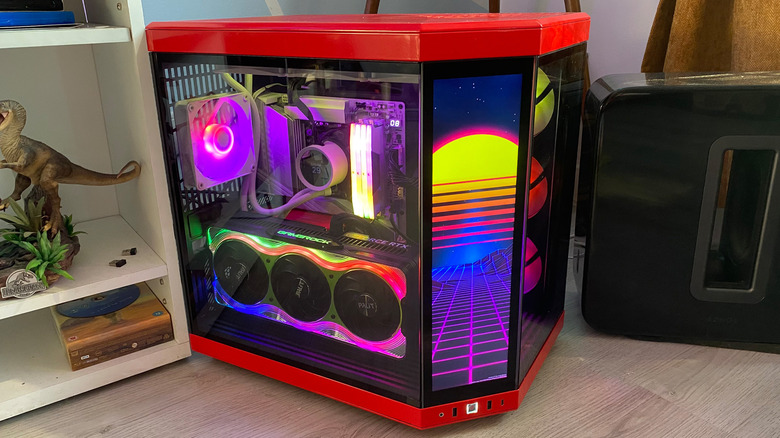
Today, advanced AIOs feature sophisticated micro-fin copper plates, variable-speed ceramic-bearing pumps, and integrated software suites that monitor coolant temperature, pump health, and fan curves in real-time, cementing liquid cooling as the go-to solution for elite computing hardware.
Liquid CPU Coolers vs. Air Coolers: The Key Differences
At their core, both liquid and air cooling systems perform the exact same fundamental function: they harvest thermal energy from a CPU’s integrated heat spreader and move it away from the processor to prevent thermal throttling or system instability. Yet, the physical architecture and execution of these two methods diverge significantly.
Structural and Mechanical Comparison
- Air Coolers: Characterized by simplicity. A typical unit consists of a metal cold plate (often copper), heat pipes running vertically, a dense array of aluminum cooling fins, and one or two attached fans. There are no pumps to fail and no liquids to contain.
- Liquid Coolers (AIO): More complex. They feature a CPU water block (housing the integrated pump and copper contact plate), flexible rubber or nylon tubing, a dedicated radiator (available in 120mm, 240mm, 280mm, and 360mm sizes), and accompanying radiator fans.
Performance Scaling Under Load
The divergence in design dictates how each system handles thermal loads. Air coolers rely entirely on the immediate surface area of the fin stack and the ambient temperature inside the PC case. While high-end dual-tower air coolers can trade blows with mid-tier liquid coolers, they are fundamentally constrained by space limitations around the motherboard.
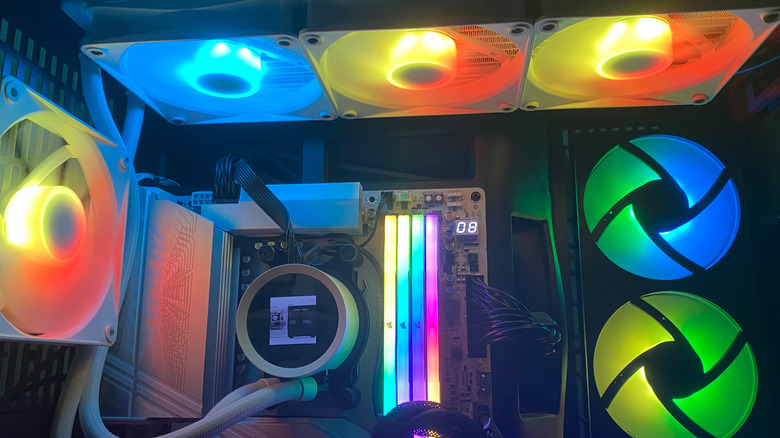
Liquid coolers, conversely, externalize the heat dissipation. By pumping heated coolant away from the crowded CPU socket to a remote radiator mounted at the top or front of the chassis, the system utilizes a vastly larger surface area. When pushing a high-end gaming processor to maintain stable frame rates in demanding 4K titles, a 360mm liquid cooler dissipates heat far more efficiently than an air cooler, keeping core temperatures lower and allowing sustained peak turbo frequencies.
How Do Liquid CPU Coolers Work?
Understanding the inner workings of liquid cooling demystifies why these systems are so effective at managing heavy thermal loads.
The Closed-Loop AIO Cycle
- Thermal Transfer: When a CPU is installed, a thin layer of thermal paste is applied to bridge microscopic imperfections between the metal chip surface and the cooler’s cold plate. Heat is rapidly absorbed by the copper base of the water block.
- Fluid Absorption: The copper plate transfers this thermal energy directly into the circulating coolant (typically a mixture of purified water and anti-corrosive glycol additives).
- Pumping: An integrated pump—often housed within the water block assembly—propels the warmed liquid through flexible tubing toward the radiator.
- Dissipation: As the fluid courses through the radiator’s internal channels, the high-speed fans mounted to the radiator force ambient air through the fins, stripping the heat from the liquid.
- Return Flow: The newly cooled liquid is then pumped back to the water block to repeat the continuous cycle.
Custom Loop Systems: The Enthusiast Frontier
For extreme enthusiasts, AIO coolers are merely a stepping stone toward custom loop cooling. Unlike pre-sealed units, custom loops allow builders to manually select every individual component: the CPU and GPU water blocks, pump-reservoirs, hard or soft tubing, fittings, and radiators.
The reservoir serves a dual purpose: it stores excess coolant to account for minor evaporation over time and acts as an easy fill point that feeds the pump. Crucially, custom loops can be expanded to cool multiple components simultaneously. By integrating a dedicated GPU water block into the loop, enthusiasts can dramatically reduce the operating temperatures and acoustic output of high-end graphics cards, creating a unified, hyper-efficient thermal ecosystem.
Supporting Context, Metrics, and Cost Analysis
When evaluating whether a liquid cooler is "worth it," prospective builders must weigh performance metrics against financial and practical realities.
Performance and Acoustic Metrics
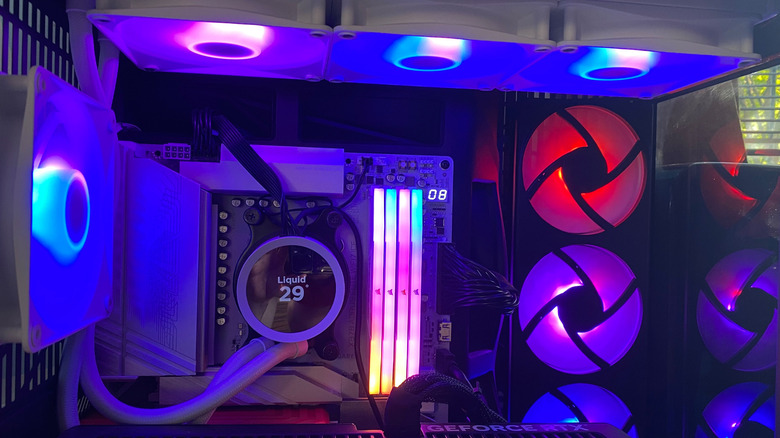
- Thermal Headroom: Top-tier 360mm AIO coolers routinely keep high-wattage CPUs several degrees cooler under sustained multi-core loads compared to standard air coolers. This extra headroom translates directly into higher sustained boost clocks.
- Acoustics: Larger radiators equipped with slow-spinning, high-static-pressure fans can move massive volumes of air quietly. However, budget liquid coolers or units with failing pumps can introduce an annoying humming or whining noise that is absent in silent air-cooling setups.
Financial and Maintenance Realities
- Cost: Premium liquid coolers can easily command anywhere from $150 to over $300, whereas elite air coolers top out around $90 to $120. Budget liquid coolers exist, but high-end air coolers frequently outperform them while offering greater long-term durability.
- Installation Complexity: Mounting an air cooler requires securing a single heavy block to the motherboard. Installing an AIO requires coordinating the CPU block installation and securely fastening a bulky radiator and multiple fans to the chassis, which can be challenging in compact cases.
- Longevity and Maintenance: Air coolers have virtually zero points of failure outside of fan bearing wear (which can be fixed with a simple replacement fan). Liquid coolers, however, feature mechanical pumps that degrade over time. Furthermore, microscopic fluid permeation means coolant levels slowly drop over years of operation, and while catastrophic leaks are rare in modern AIOs, the theoretical risk of fluid damage remains a persistent concern.
Future Outlook: Who Should Buy What?
As semiconductor manufacturers push deeper into advanced packaging and higher thermal densities, the choice between liquid and air cooling comes down to a clear segmentation of user needs.
When to Choose a Liquid Cooler
If your system houses a cutting-edge, high-end processor—such as the AMD Ryzen 7 9800X3D or power-hungry multi-core Intel silicon—paired with a top-tier graphics card, a liquid cooler is a sound, performance-justifying investment. Models like the NZXT Kraken series not only provide the necessary thermal headroom for sustained 4K/120FPS gaming and heavy professional workloads, but they also offer deep software customization, digital status displays, and striking aesthetics that elevate a custom build into a work of art.
When to Stick with an Air Cooler
Conversely, for the vast majority of mainstream gamers, casual Steam users, and mid-range system builders, a traditional air cooler remains the most sensible, cost-effective choice. Unless your rig is tasked with heavy enthusiast workloads or extreme overclocking, a robust air cooler delivers exceptional reliability, easier installation, zero maintenance, and a longer lifespan at a fraction of the cost.
Ultimately, liquid cooling is an exercise in optimization and luxury. If you have the budget, demand absolute peak performance from flagship silicon, and crave a pristine visual aesthetic, the premium is well worth paying. If practicality, reliability, and value are your guiding principles, the trusty air cooler remains an enduring champion.